This article is a good starting point for the East Palestine derailment. (Gift link, anyone can read.)

The info circulating on social media has been suboptimal, to say the least. Grab a cup of coffee and let's go over everything from vinyl chloride to electronic brake regulations.

/1

https://www.nytimes.com/article/ohio-train-derailment.html?unlocked_article_code=QAUX9RHyBl1b9fUvtoaowDVNQ7pnrrwPkArV4od2eHAxdIsqcvZ_du1RQBRo3vGRWv9KKJjCRbz1pdFxA4DMMuRrDEHjsdrLTbrI7YtViCmAVWuw9Y-u-AZEByM_eHO1TC74FTlPfvK4xeXnboaKa83KmBMqXil2Ks4M5Cx67bNIDv4AGkYqQTG8qKHa8upQx9JrAraht717TuVyEgAnpdpOuB3K21JY4MXh-70VgPkCUbp6CxfvYDkqeuMjrKhUkOPAS6Ew82vrs1tupq0pEkaNXmwSju_YyTFYWegxNvNVILvuLNy-ZNp06pY2YCcpqnNdcA&smid=url-share

Train Derailment in East Palestine, Ohio: What We Know

When a train derailed in the village of East Palestine on Feb. 3, it set off evacuation orders, a chemical scare and a federal investigation.

The New York Times

20 miles *before* it derailed, the 150-car train was already sparking/burning. A "hotbox" detector in Salem, OH, should've picked that up and alerted the crew. It's unknown if it did, but seems unlikely or they would've hit the emergency brake then.

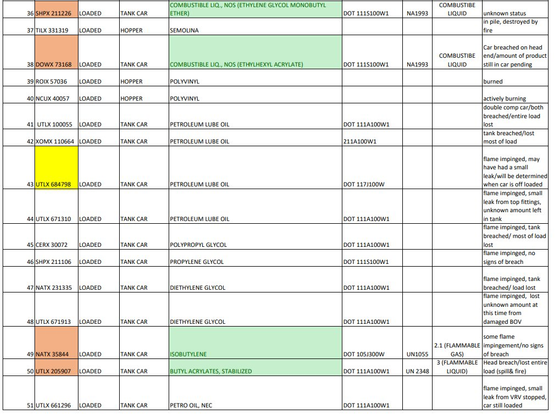
Upon derailment, a bunch of stuff was burning. Some was in the normal range of "stuff on fire," like the semolina and frozen vegetables, and some was nasty but not unusual (polyethylene & polyvinyl), but some of it was uniquely hazardous.
/2

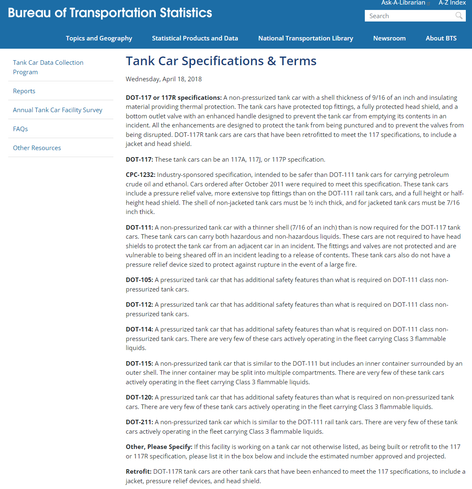
Butyl acrylate, ethylhexyl acrylate, and ethylene glycol monobutyl ether are hazardous cargo. Note the "DOT111" next to them: they're in standard (read: cheap) tanks that don't fare as well in accidents. Big surprise, the cheap tanks were compromised.

/3

https://response.epa.gov/sites/15933/files/TRAIN%2032N%20-%20EAST%20PALESTINE%20-%20derail%20list%20Norfolk%20Southern%20document.pdf

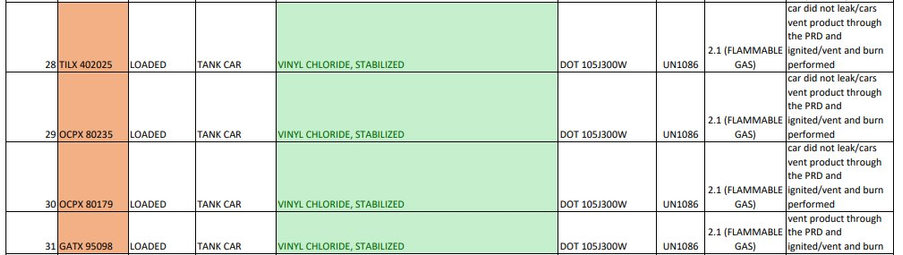
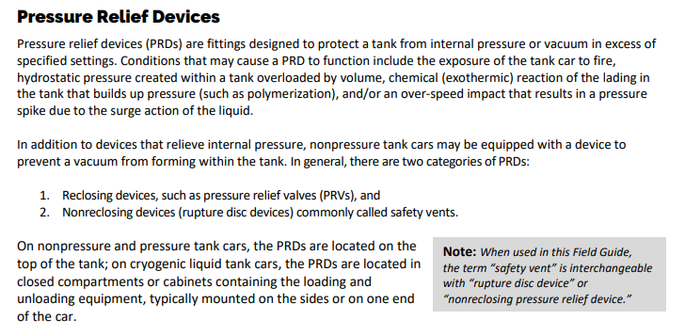
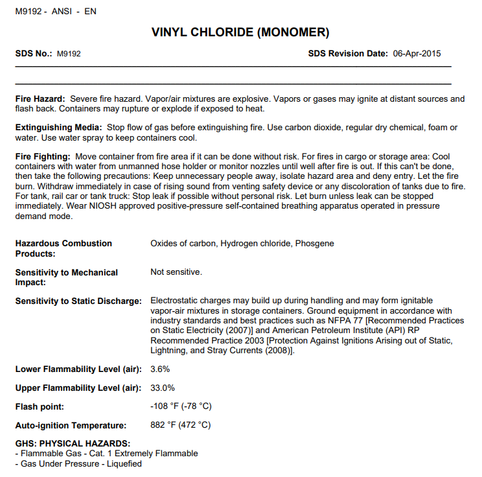
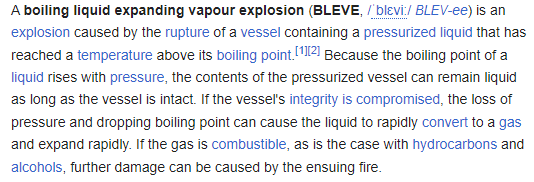
The liquified vinyl chloride was in superior DOT105 tanks. They didn't break open, but their PRD activated and vented some vinyl chloride, a carcinogen. And because they're near a fire, they're also potential giant fuel-air bombs (a/k/a BLEVE). Burning it was the only option.

There is some good news here. Vinyl chloride isn't, say, plutonium. It fares poorly outdoors, as do its byproducts.

/4

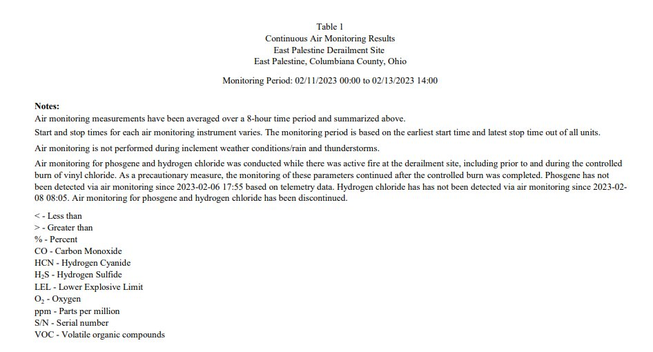
Hydrogen chloride and phosgene are rightly terrifying. EPA has been testing; they're already gone.

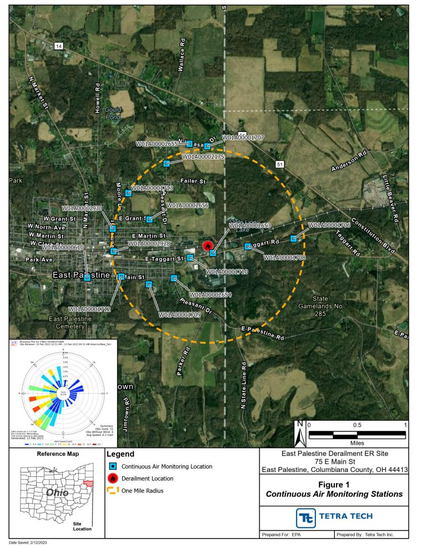
Here's the latest EPA continuous air monitoring results. No hydrogen chloride since Feb 8. No phosgene since Feb 6. No volatile organic chemicals above screening levels. Good news!

Alas, we're not done.

/5

https://response.epa.gov/sites/15933/files/Continuous%20Air%20Monitoring%20Summary%20Table_20230213%201.pdf

It's unknown the extent to which water and soil are contaminated. Three cheap DOT111 cars contained diethylene glycol, famous for being (a) brake fluid and (b) the poison that prompted the Food, Drug, and Cosmetic Act. They broke open.

FWIW, substantial efforts have been made to identify and mitigate water and soil contamination. But we just don't know the extent of it, and likely won't for some time.

/6

https://www.sciencedirect.com/topics/medicine-and-dentistry/diethylene-glycol

https://response.epa.gov/sites/15933/files/East%20Palestine%20RAWP%20Feb%2010%202023.pdf

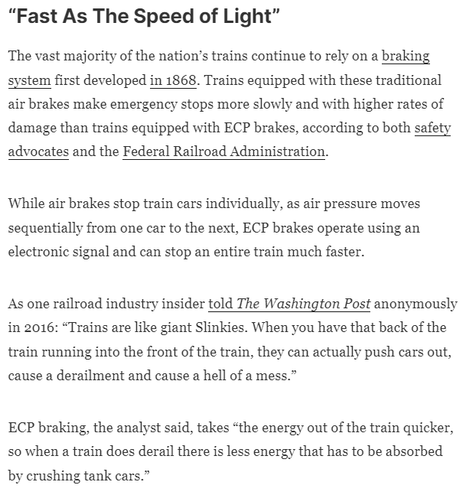
"Electronically Controlled Pneumatic Brake System Requirements for High Hazard Flammable Unit Trains" is a galling example of how captured regulatory agencies are, and how industries won't do the minimum.

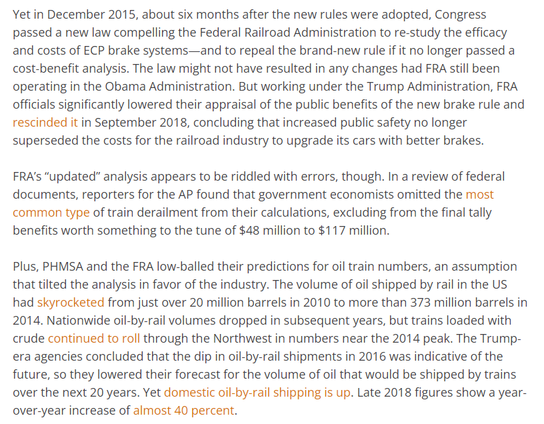
Most trains use the same braking tech used by steam locomotives. The original Obama-era electric brake proposal was already narrow in scope, then hindered more by Congress, then was ruined by the Trump admin outright lying about the numbers.

/7
https://www.levernews.com/rail-companies-blocked-safety-rules-before-ohio-derailment/
https://www.sightline.org/2019/03/28/oil-trains-trump-administration-faulty-logic-ecp-brakes/

Rail Companies Blocked Safety Rules Before Ohio Derailment

The train derailment came after Norfolk Southern helped convince government officials to repeal brake rules and lobbyists watered down safety regulations.

The Lever

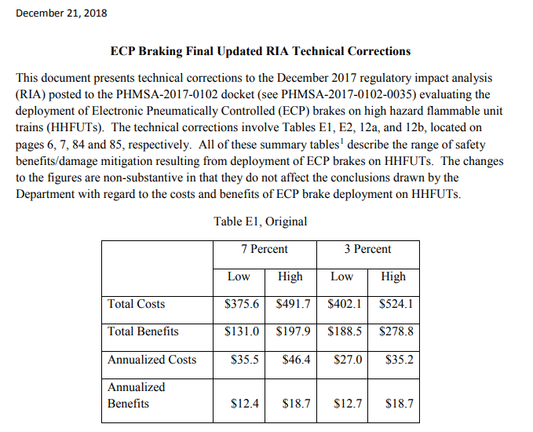
Even after Trump admin number fudging, the annualized cost of electronic brakes on highly hazardous trains was $27.0-$46.4 million.

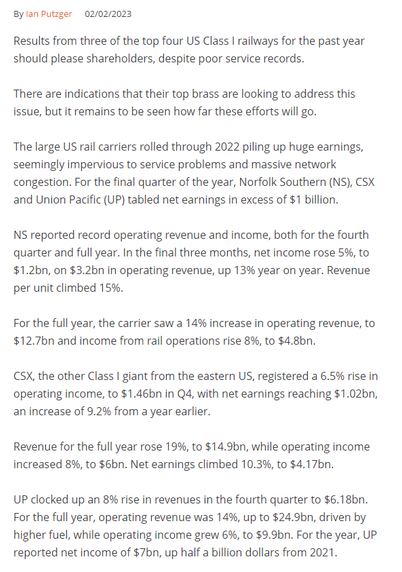
Every day, BNSF, Union Pacific, CSX, and Norfolk Southern make over $50 million in profit.

/8

https://www.regulations.gov/document/PHMSA-2017-0102-0049

https://theloadstar.com/client-anger-as-us-class-i-railways-report-huge-earnings-despite-poor-service/

Regulations.gov

Would the electric braking regulation have stopped/limited this? No—because it wouldn't have even applied to this train, it wasn't carrying enough hazardous cargo. Sure, it had carcinogenic fuel-air bombs and literal poisons, but not enough of them. Need 35 tanks for that.

Which is infuriating. None of this hazardous cargo should ever be transported in cheap DOT111 tanks or on trains with air brakes—much less both, as here. We don't need the old regulation; we need something far more strict.
/9

@maxkennerly

One thing to note is that the railroads don't own tank cars.

@Gleng2 @maxkennerly But they can refuse to carry them, which is something they already do with substandard cars.
@orc @maxkennerly DOT111’s have been the backbone of safe, hazmat rail transportation for decades. They’re currently in short supply. They’re also not cheap. New 111’s were expensive, well over 100k/car with safety features such as advanced high quality steel, insulated jackets, bottom skid protection and pressure relief devices. The newer designs are primarily a response to crude oil cars which run at higher and varied pressures.
@Gleng2 @maxkennerly Which of the tank cars ruptured and which ones didn't? If the DOT11's did and the DOT105s didn't, that would be a case where the regulators should look at them with a gimlet eye (and in the interim the carriers miiight want to reconsider using them in trains that go through (what turned out to be?) hotbox-detector-free territory.)
@orc @maxkennerly It’s all in the hands of the NTSB now. Once they do their investigation, they’ll issue a final report as to cause. Then everyone will discuss what needs to be done. The important thing now is to be patient and let NTSB do their work then let the experts in industry along with the regulators hash it out as they always do, regardless of who’s in charge politically. All aspects will be reviewed but the true cause of the derailment will be the main focus. Right now, nobody knows.