 nixCraft 🐧
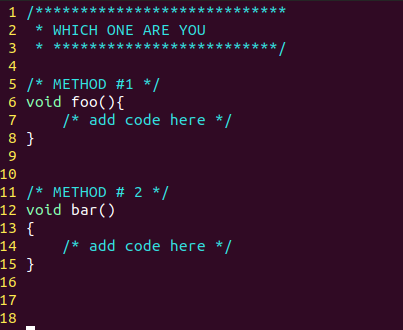
Let us set the record straight: which one are you? foo() or bar() and why?
def foo():
    […]
@nixCraft oof.
Depends on the language and standards of the rest of the code base for me…
I usually prefer 1, but 2 is sometimes a bit easier to read.
Colored brackets in the IDE are great though, makes is so easy to see what’s paired to what.
@nixCraft
Depends on the language each one has its own coding style, some allows you to do what you want, others like Go will give you an error if you dont put the brackets where 'it belongs'
I only care that the style is consistent in all the project
`foo() {` definitely. Seeing just a random '{' on a line by itself seems off for some reason.
When more arguments are needed for the acceptable line width,
`foo(
...
) {`
foo() 80%
bar() 18%
doo() 2% (for those💡moments)
@nixCraft neither, it should be
void foo() {
// code here
}
@nixCraft I'm baz( ) 😉 which means foo( ) but my closing bracket has same indentation as opening bracket.
Everything else is wrong .
@nixCraft in C,
void
bar()
{
}
Function name is always bound to the beginning of the line, braces always align.
@nixCraft Method 1.
void foo() {
/* code */
}
Because a professor in college once told me that method 2 is used in college textbooks as a way to make the book longer and therefore more expensive. And that stuck with me.
But if we're being COMPLETELY honest....
def foo():
pass
 josejuan
 nrcha
nrcha flere-imsaho 🇺🇦
 Appendix2735 🐧
 David Senk
 Ertain
 Nebraska Jones
 Greg Ar Tourter
 Chris :: IO ()
 avatastic
 Sterling
 ϻค𝔬ᑭ
ϻค𝔬ᑭ Charlie
 petur 😶🇺🇦🇵🇸🇹🇼
 IllusiveProgrammer
 リーハイ
リーハイ Jaakko Nissi
 Mackaj
 iXô
iXô 
 v̾i̾t̾r̾i̾o̾l̾i̾x̾
 Infrapink (he/his/him)
 yetzt
yetzt JJ Celery
 Budley
 Mark Sharp
 ⰎⰅ ⰀⰍⰨⰒⰎⰫ
 ADM
ADM Arnaud Launay
 🪨
🪨 Ralph is verhuisd
 Myza Nil Red
 mil
mil aquaratixc
 Brian Shaw