
PSA: take some time in 2023 to back up your/your family's CD-Rs (and other recordable media) full of memories you threw into storage 10+ years ago; there's a decent chance they've started to rot!

the tenuously thin layer of dyes/adhesives holding the data *will* break down over time, rapidly so if their environment is uncontrolled, the surface was previously nicked/contaminated, or they were cheap ones to begin with
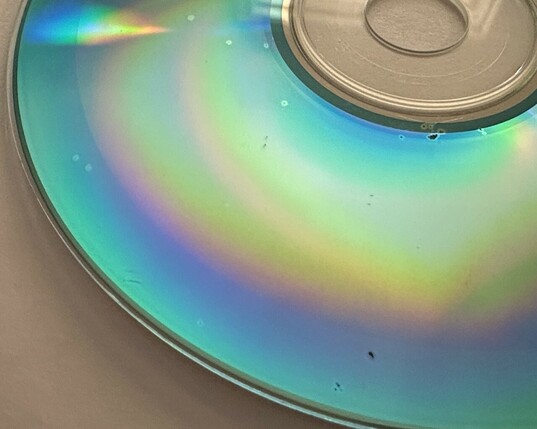

@0x56 The US government did a thorough evaluation of an alternate optical media, M-DISC, which uses different physical properties than optical dye media, and found that it has much better longevity (many decades). The M-DISC BD-R costs a lot more than cheap BD-R, but can be read and written on standard drives.
@brouhaha yeah, i'm considering a follow up long form post/resource of some sort, because the info floating around is spread out, wildly inconsistent, not particularly actionable, and comprises far more opinions than facts. i'm with you on M-DISC however, and ordered a small pile yesterday
@brouhaha i also have replies going back and forth about HDD vs SDD reliability, and while HDD platters seem probably better at retaining data, nobody seems to be accounting for the longevity of the flash storage necessary for the controller to function, nor the mechanical aspect... this topic is begging for a proper analysis of all these factors, distilled into some practical guidance, and backed by *actual* cited research
@0x56 SSD longevity is poor when the drive is unpowered; typical specs are under 1 year for consumer SSD and even less for enterprise SSD. The SSDs depend on an internal "scrub" process to run in the background to detect cells with contents going marginal and refresh or relocate them. The number of electrons delta per charge level is very small, and gets worse as more bits are stored per cell (TLC, QLC). I would NEVER use SSD for unpowered archival storage.
@0x56 The flash used for HDD firmware is usually NOR flash, which is SLC and should have much better data retention than the NAND flash used in SSDs (even SLC NAND). I'd expect electromechanical faults (including lubrication) in HDDs would usually result in failure before the drive firmware flash loses bits.
If you want a high probability of long-term data survival, you have to use multiple strategies including both online and offline, with periodic copies to new drives/media.
@brouhaha @0x56 dumb question, butwhen you have consumer devices like desktops, laptops, phones or even a NAS, do these keep the SSDs/HDDs inside them some level of powered when the device is turned off (assuming no power loss/battery not empty)? Or is it just really bad for your laptop's SSD if you don't boot it for half a year?
@siguza @0x56 No. When a PC is off, the SSD is unpowered. So leaving it off for a long time (more than four months) is not recommended.

@brouhaha @0x56 that is quite useful to know, thanks.

But hmm, this makes owning a laptop slightly more annoying when working from home. Not to mention all the phones I have that I keep on specific versions...