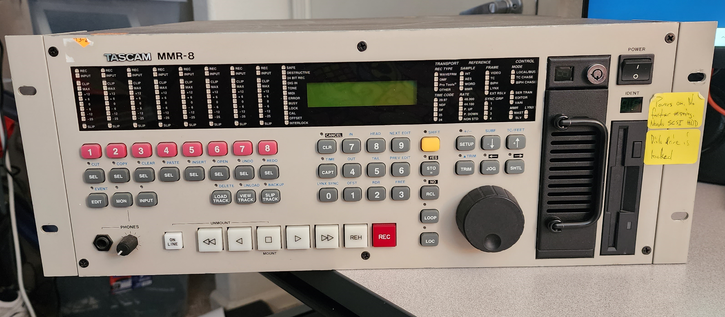
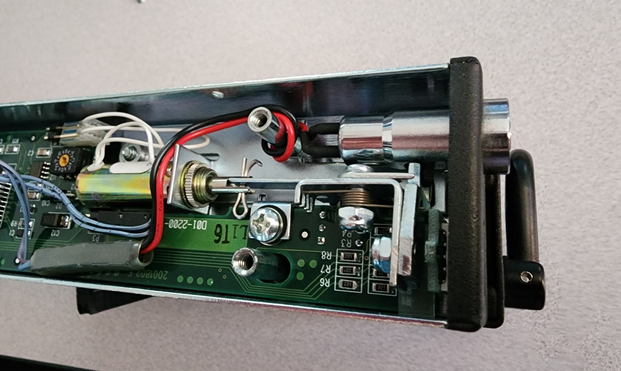
check out this wackiness in a removable hard drive sled inside a TASCAM MMR-8: It has a key lock, but the key lock doesn't lock the door, as you'd expect. Instead the lock is just a switch, and it communicates back with some board, which controls a solenoid to unlock the door. Now that's some paranoid over-design!
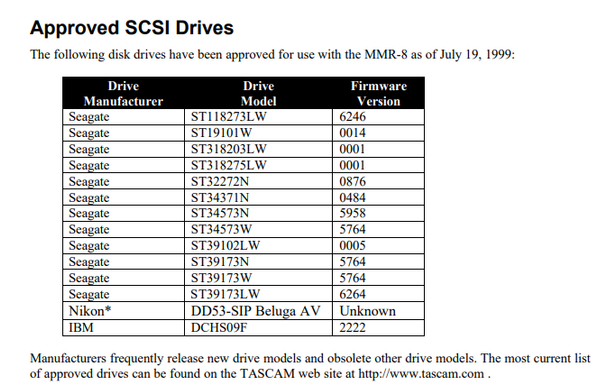
heh. The manual lists the approved hard drives for use with it.
I guess none of the letters in "SCSI" are "standard"!

also the weird one in that list is the Nikon thing with the asterisk.
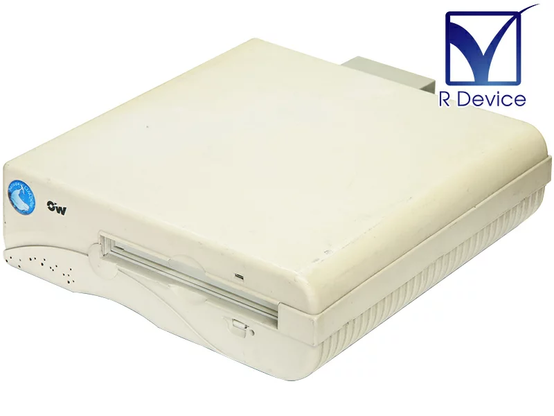
It turns out it's a 2.5gb magneto-optical drive that I think was only released in japan?

https://item.rakuten.co.jp/waysas/10015260/?scid=s_kwa_pla_unpaid_211514

Anyway, this is the TASCAM MMR-8.
Sadly it's not as useful (for me) as I was hoping: it has a lot of video support, but it's not really for doing video: it's for syncing audio TO video. This is specifically an audio device, not a video device. Whoops.
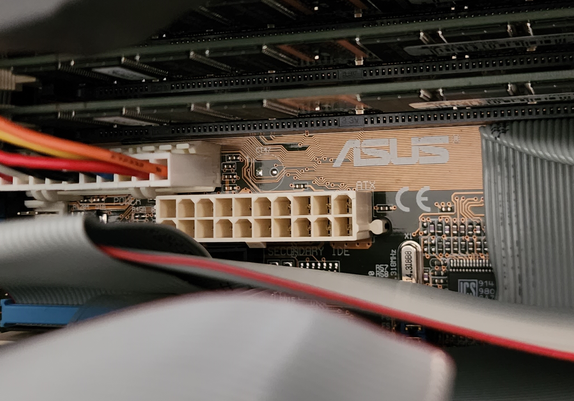
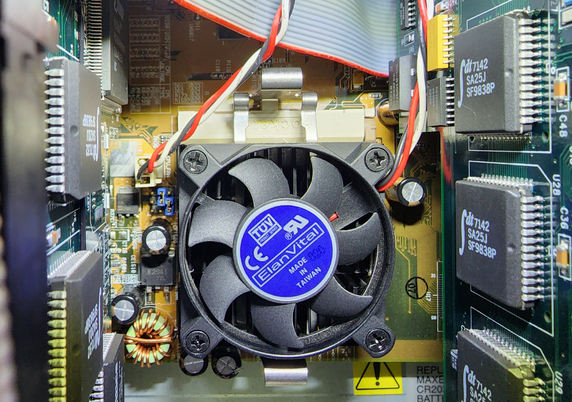
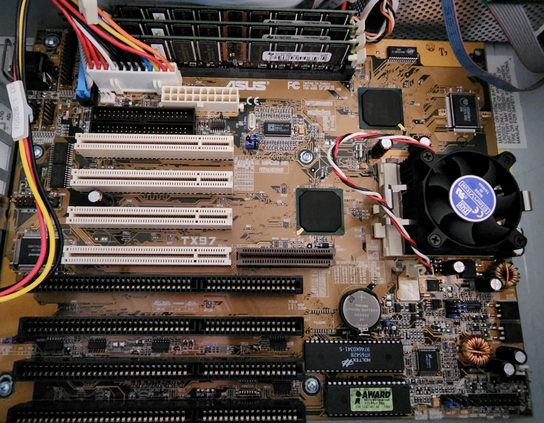
fun fact: it turns out that inside it's built on a Socket 7 motherboard. From ASUS!
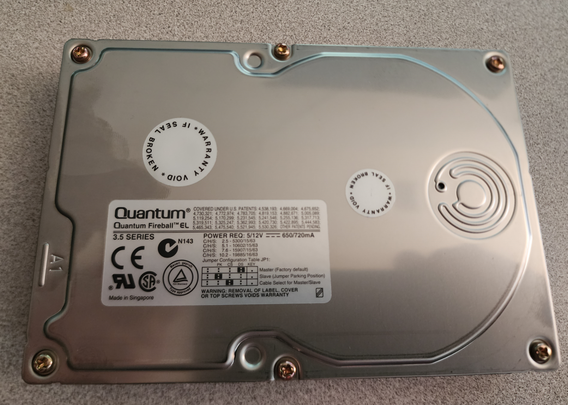
Also apparently the OS is stored on a Quantum Fireball IDE drive.
So the motherboard is an ASUS TX97. That's based on an Intel 430TX chipset, and can run Pentiums throughs AMD-K6.
It supports up to 256mb of RAM in 168-pin SDRAM slots. 3 ISA slots, 3 PCI slots, and one combination PCI/MediaBus/ISA slot.
Built in IDE, can be powered by AT or ATX power supplies.
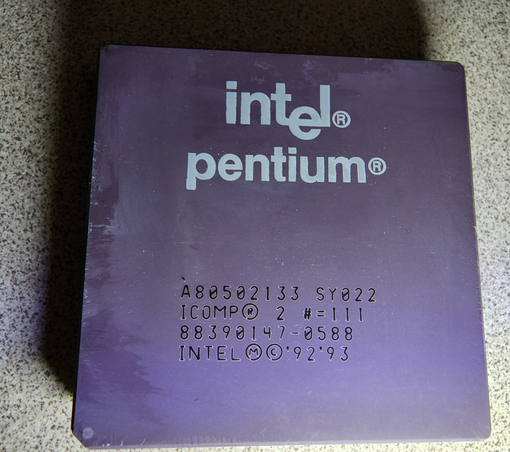
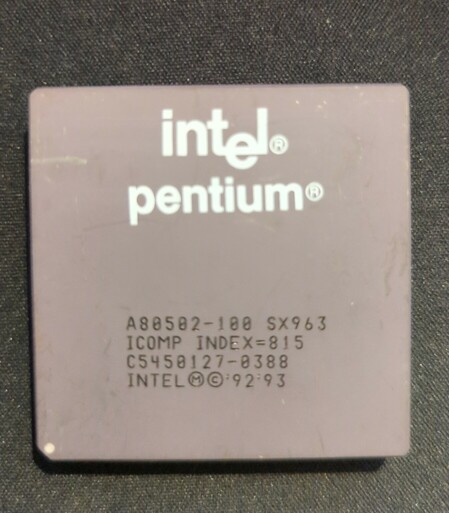
And it turns out that CPU is a Pentium 133mhz, SY022.
Let's go through the boards.
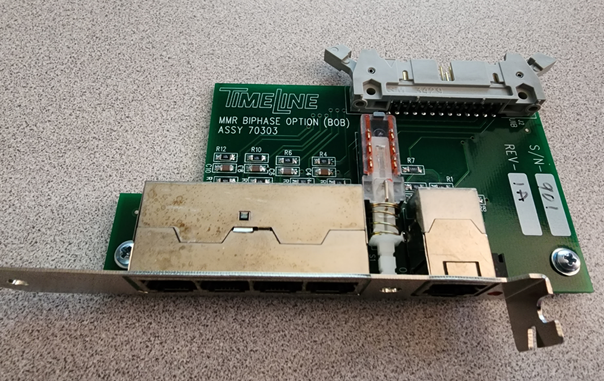
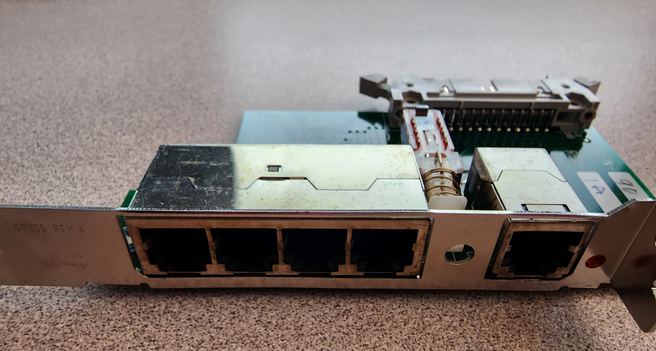
The smallest one is this MMR Biphase Option (BOB), ASSY 70303.
Seems to have a bunch of RJ-?? plugs.
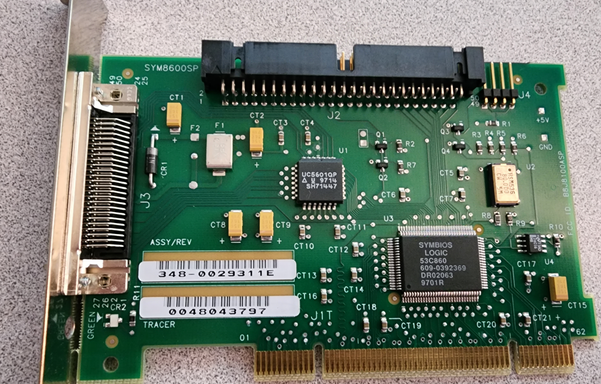
Then a Symbios SYM8600SP SCSI board. Seems to be pretty standard, this is probably just an off the shelf component.
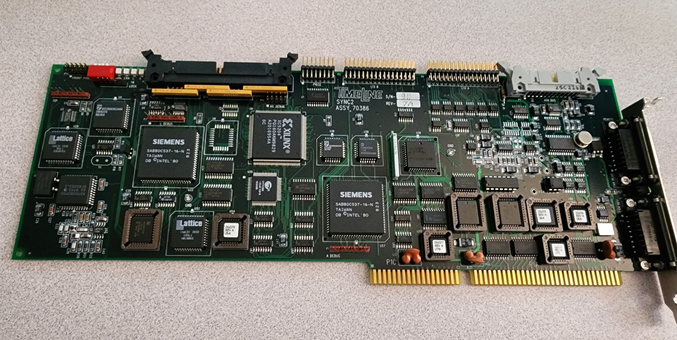
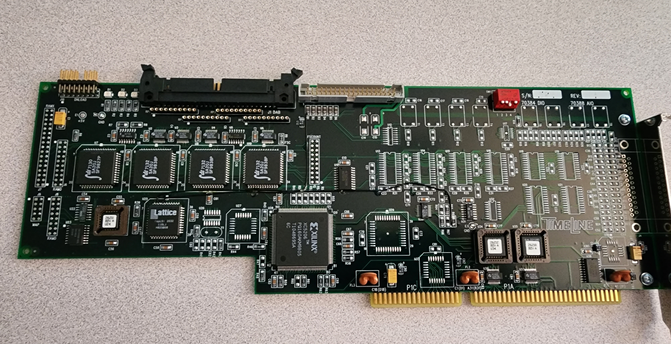
The first big custom board is this TimeLine Sync2 ASSY 70386.
A bunch of FPGA chips, custom ASICs, and EEPROMs.
It's 16-bit ISA, but it seems to talk to other boards through that big locking IDC connector on the top left, so that probably doesn't matter much.
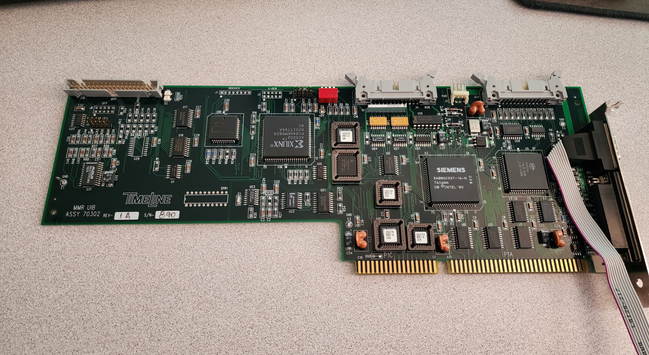
Then the MMR UIB, ASSY 70302.
More FPGAs, ASICs, and EEPROMs.
They integrated the serial port from the motherboard into this card, it seems.
Then the 70384 DIO.
Digital I/O, I suspect.
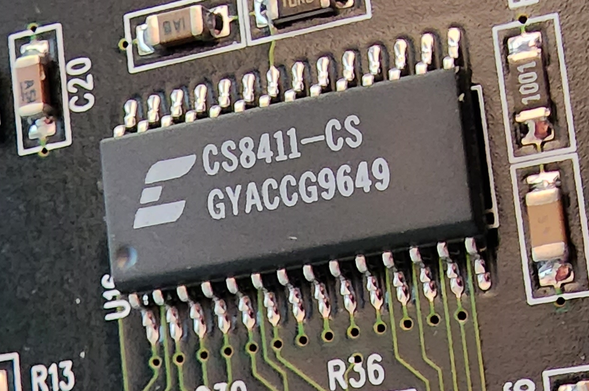
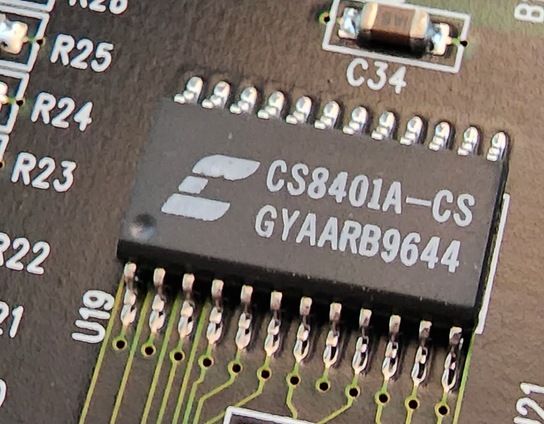
It's got 4 of these CS8411-CS digital audio receivers, and then 4 of these CS8401-CS digital audio transmitters.
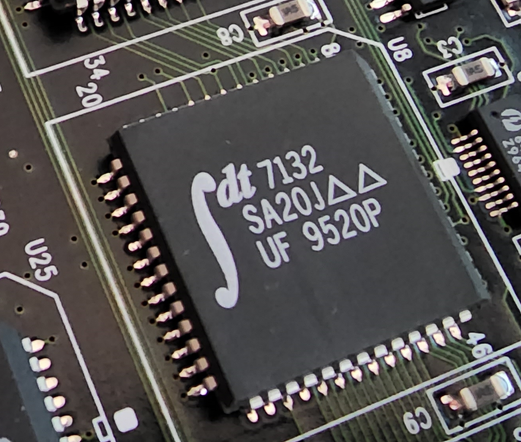
And four of these IDT7132SA20J 2 kilobyte dual-ported static-ram chips. Probably for audio buffering/processing at super-low latency
Then another of the same board, but this one is missing the receiver/transmitter chips. It's just got the RAM and FPGA.
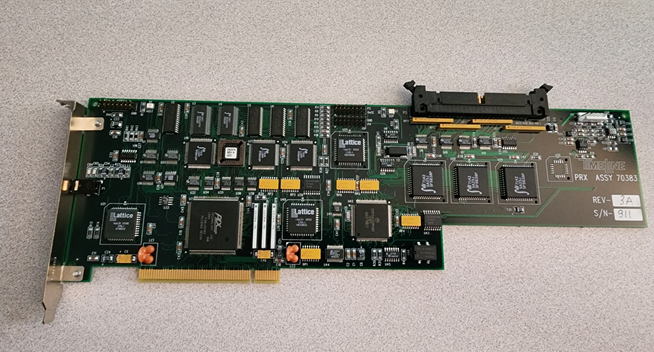
Then the final board is a Timeline PRX ASSY 70383.
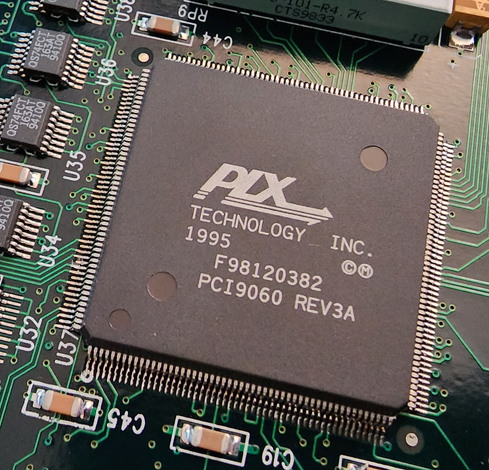
More SRAMs and lattice chips, and a PLX PCI9060 bus controller.
So I suspect that many-pins backplane they use to connect all the boards may be a second PCI bus.
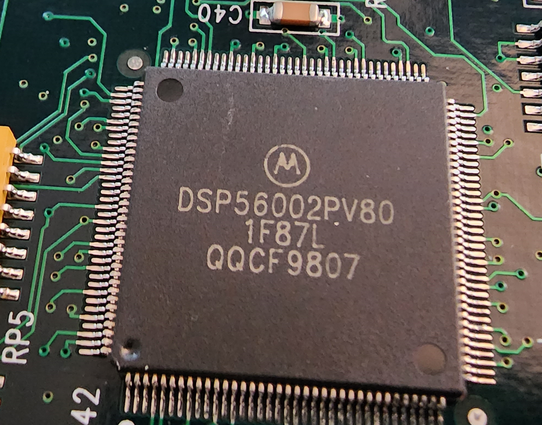
It's also got a Motorola DSP56002PV80, a 24-bit DSP.
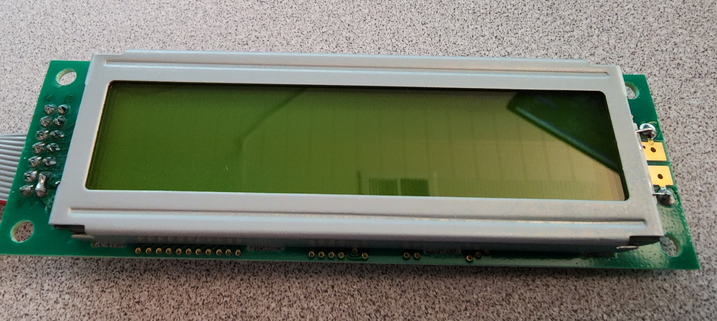
The front-panel display is a Optrex DMC-2026I display. 20x20 characters, each character being 5x8 pixels. This variant has a backlight, and it's built on the standard Hitachi HD44780 chip.

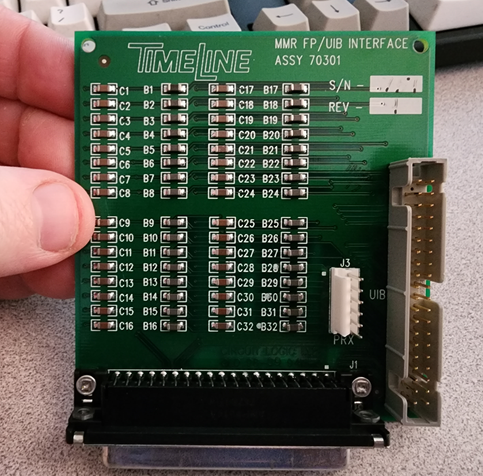
The front panel is communicated with through this MMR FP/UIB Interface, Assy 70301.

It's just a bunch of caps and resistors?

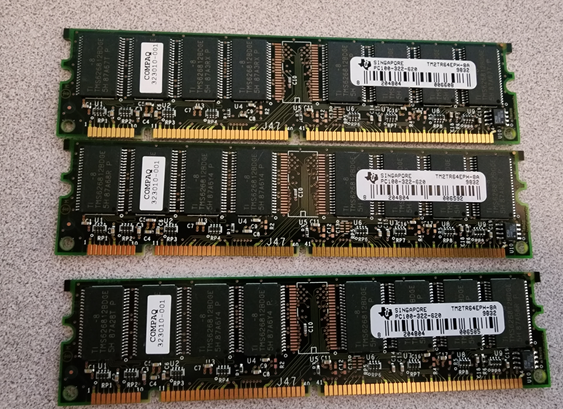
and it's got three 32mb SDRAMs.
So 96mb in total. That's a bunch for a Pentium 1!
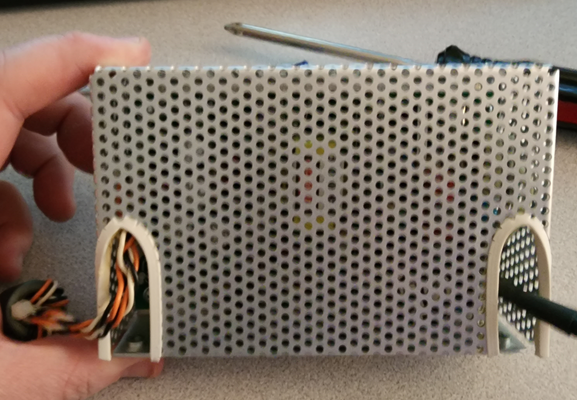
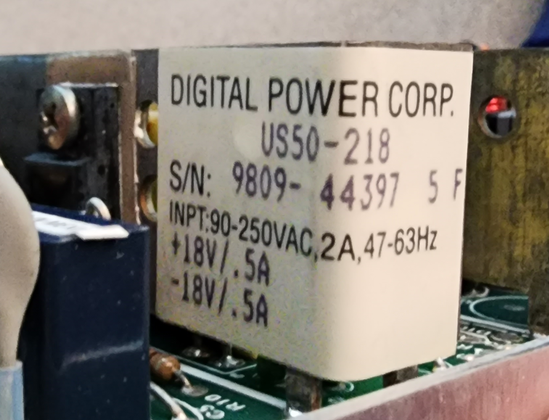
So it's got a separate power supply inside the case, plugged into a splitter on the power button line. (which, on an AT system, carries the full AC wall voltage)
It provides ±18v at half an amp.
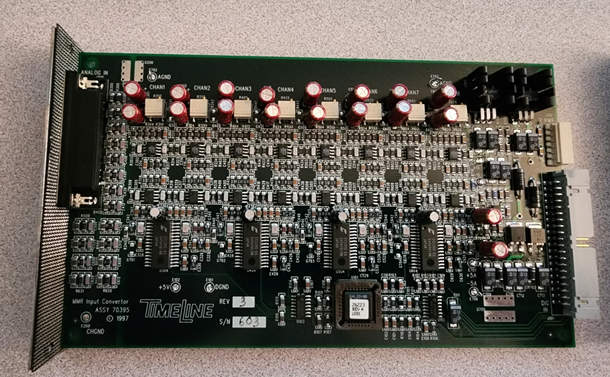
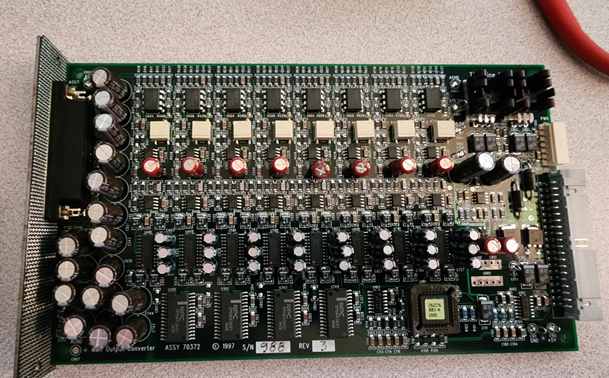
Those power these two boards (with room for a third, missing on this model)
This one is the MMR Input Converter, ASSY 70395. 8-channels.
And an MMR Output Converter, ASSY 70372.
And the floppy drive is a TEAC FD-235HF, one of the most common models of 3.5" floppy disk drives.

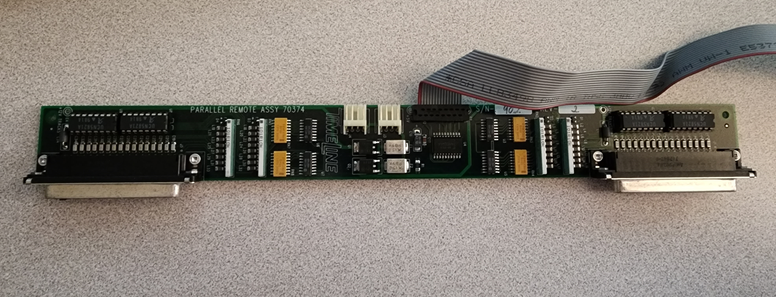
The back panel has two PCBs.
The top one is a Parallel Remote board, ASSY 70374

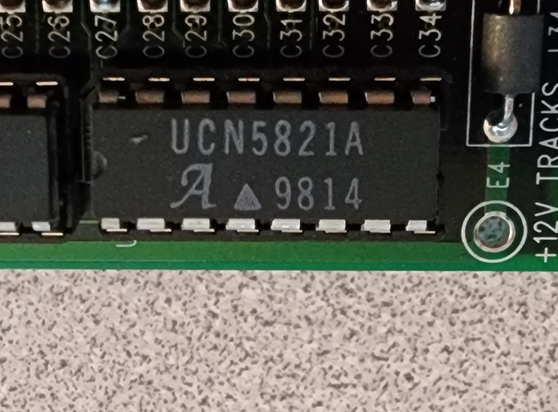
It's got 4 of these UCN6821A 8-channel line drivers.

@foone seeing your electronics photos makes us bird site refugees feel at home here. 👍
@foone huh, I actually expected something beefier from a system this large and of this age, especially on the positive rail. the bipolar supplies make total sense, of course. is there a separate switching stage to derive logic Vcc/Vdd, or is it all linear?
@foone I was thinking "Huh, that's similar to my current workstation 🤨" and then I remembered there's a diff between mb and gb
@foone this brings back memories
@foone my K5-PR166 had 96MB before it was retired for a Thunderbird Athlon
@foone Hmm, I can't tell if those are AC coupling caps and termination resistors, or if this is a big bank of RC low pass filters.
@gsuberland @foone Probably EMI filtering. Thia was likely made for a film or TV studio where EMI mattered a lot. Also I wonder if those aren't resistors but actually ferrites.
@48kRAM @foone oh right they say B not R, should've put my glasses on. basically a Pi filter then.
@gsuberland @foone That would be my guess too
@48kRAM @foone given the layout, I actually wonder whether this is a case of poor decoupling & referencing on the far side causing conducted emissions back through the IOs, which they've tried to remedy with this filter bank. with the data rates involved and this era of silicon the Tr/Tf should be low enough not to be a considerable worry in terms of transmission line effects; the lines are probably lumped elements for all intents and purposes.
@48kRAM @foone (it could also be related to a mismatch in gate drive strength vs the termination impedance... idk if these DSP chips typically have IO drive strength attenuation options)
@foone I love the soldered wire fix for a bad trace! :)

@foone Integral symbol I see...

Also SA20J*delta**delta*

@foone if you want to make it work you have to install a “Holy Driver”
@foone I LOVE IT that I don't have to do without you in my feed!
@foone RJ-12? Is it a modem with fax and phone pass through
@foone mine is slower
@foone Besides I like that the imprints differ so much

@foone hey, I hope it's not a bother, but what range of ram do you reckon a pentium II 233MhZ could have had?

The other day somebody asked me about my first pc and I could almost recite the processor and hard drive but I can't remember the RAM, could be 32MB, 2GB or anything in between as far as I remember

@Frikisada @foone
p2 233 would fall into 32-64mb PC66/PC100 ram, though some luxury oems pigged out and had 128mb *cough*FNW*cough*. These are all realistic 1997 numbers. What's "2GB" would likely be about FAT16 partitions. Micron oddly didn't embrace FAT32 much that year. They had top built PCs with MMX and 3dfx with MS software still from 1995.

A Win9x machine could top out at 512MB before going unstable (9x ram limit patches were yet a thing)

@leilei @foone then it was PII233MhZ, 3.2GB HDD and 32MB RAM

Back then I didn't know what was a partition (I was 9) so I can't tell you if it was fat16 or 32

Thanks for that 

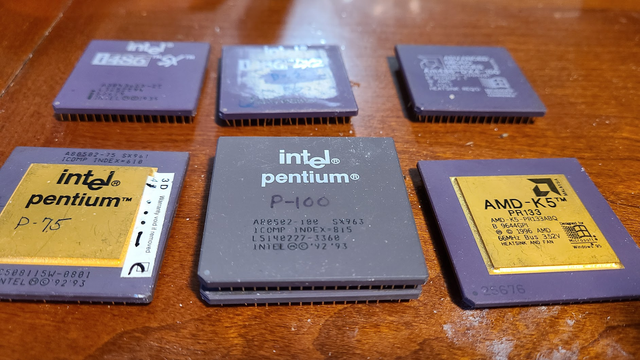
@foone I had to take a picture of these before I scrapped them last May. Found a promotional backpack that was slightly newer.
@foone I've actually learned riding on that one <3
@foone the left half of that hard drive looks like another hard drive
@foone i can hear this picture

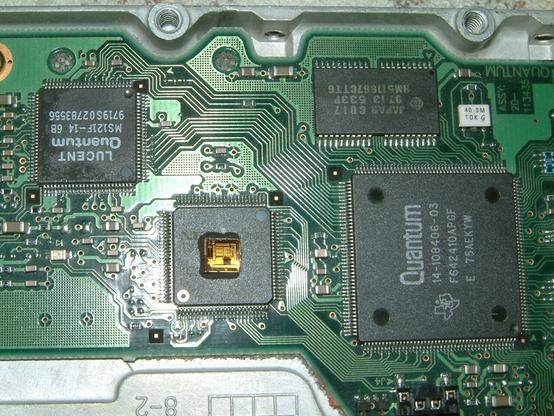
@foone i just had a very visceral memory of the series of Quantum Fireball 4.3GB drives that all popped on the exact same spot on the biggest chip on the pcb - several PCs and even a mac that had done it came thru the shop in those days (over 20 years ago)

i'm sure this one is fine <_<

@fit7 Seems like a good opportunity to recycle this old picture of one of my Quantum disks that Fireballed (though I think it was an earlier model)...

I had no idea this was something that happened more often...

@foone

@galaxis so the ones i remember (just a handful over a few years) had the pop on the big TI chip over on the right there, and it was a small lil 'pock' -- THAT is an impressive pop wow dang
@foone More likely the data _was_ stored on the Quantum Fireball before it failed after 6 months use.