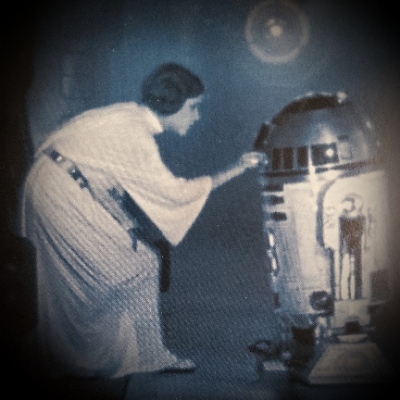
This quote by Carl Sagan hangs in my office. #science
@Sheril
Not only that, it seems a quality rare and almost lost in social media. Polarized and not able to see the other side. It has been puzzling me especially lately.
most people who make arguments in politics do so to accomplish some ulterior motive, for example to change the culture.

in scholarship, arguments are often made to explain new insights and share knowledge

these differences by the speaaker make a big difference to the listener, and says much about the sort of talks about politics and religion that sagan engaged in.
@fluffy @Sheril
The thing is only via communication we will be able to come to mutual understanding. This is a universal truth, also in politics. Those that shout out and point out are often blind and deaf to others arguments. It is the wrong path…
@xs4me2 @Sheril I think social media is simply showing us just how polarised most people were in their thinking before social media came along to show just how multifaceted, nuanced, chaotic and paradoxical the world is and, naturally terrified, many people have doubled down and closed ranks as a defence mechanism. It will pass - it's a phase - a baptism of fire for many - dragged kicking and screaming towards critical thinking the hard way because education, or its lack thereof, has failed them
@xs4me2 @Sheril it doesn’t help that the MSM treat it like a sporting event with opposing teams .
@CatDragon @xs4me2 @Sheril It should be clear behind the feigned concern , they live for the spectacle. It wasn't a minute and already retired generals walking people through the potention game plans. The unspoken proposition you have to pick a side, their side. It should be obvious to any thinking person that we can despise both equally for destruction of innocent civilians and children.

@CatDragon @Sheril

True, the attitude of the modern media...

@Sheril Damn! That is good. He was a force.
@Sheril Nice quote. But the pessimistic last line reveals that Sagan May not have paid very close attention to areas outside of science. Just to take a huge sea shift in his own lifetime, attitudes on race relations in the US changed enormously. Since his death, attitudes on same sex marriage dramatically adjusted. There are many other examples; not as many as there should be, because we are all human, as he says.
@hughfmurrayiii @Sheril
Good point Hugh. We're all a little inclined to see the world as we'd rather have it - I do think, despite the inimical headlines we see every day, that the world is in a better place in so many ways than it was say 50, 200, 500 years ago.
That said, we need to get our shit together on climate change, social inequalities and many other issues clammering for our attention now. Sagan's gripe re the polarising POVs of religion & politics is still a worthy observation.

@hughfmurrayiii @Sheril

Religion and politics often aided and abetted by big (and generally fossil fooled) business.

@Sheril Certainly not religion.
@thusband @Sheril In the Talmud often enough.
@project1enigma @thusband @Sheril exactly what i came here to say. also, that some ideas in capitalist science persist despite strong evidence to the contrary. science is not a pure field of open inquiries.

@project1enigma @thusband @Sheril

Good point!

Moreover, it happens in the Christian Bible all the time too and in numerous later conversion stories - one way or the other.

It also happens frequently in politics. Not only do positions shift and shift recurrently. Often, politicians need to change parties because they or their party have shifted postions. Often at a harsh personal cost.

I have the greatest respect for Sagan, but this quote isn't his finest moment.

@project1enigma @thusband @Sheril

And yes, obviously, it happens in scholarship and science all the time too. In fact, many of us working in the academy are gluttons for getting to new insights and changing old opinions.

@project1enigma @thusband @Sheril

But - fortunately - we are not the only ones doing it, and we'd be fools to disregard others' ability and willingness to change their views.

@thusband @Sheril Many religious people become irreligious over time, like me. I also saw people moving in the political spectrum. Many call changing opinion weak or untrustworthy, for me it is a sign of evaluating your own views and taking consequences. Sometimes people make wrong evaluations in my opinion. But, I see way more good changes, like many people going vegan.

@Sheril
I've thought of it as time constant. Science has a short time constant with discoveries dominating in a short time. Science can only progress with a solid foundation.

Politics has a longer time constant. It is very slowly becoming more liberal. Politics is very wastefully cyclic, struggling periodically with the same issues all over again.

Religious people like to think their truths are fixed, but they are not. Over time religion bends to social will. Else the pews would be empty.

@stargazersmith @Sheril Not only social will, but knowledge and conditions. A religion fixed in time dies because the conditions around it change, and a religion with ANY rationality will change with it as the mores of the people who are its adherents change, and as the conditions of knowledge change as well; a religion based on the idea that the sun is a chariot would HAVE to change or die, and would indeed change.
@stargazersmith @Sheril what do you mean science: short time? some developments/shifts in theory in science take >100 yrs.
@barrygoldman1 @Sheril
I'm mostly interested in physics and astronomy. Those fields have changed considerably in my lifetime. And computer science changes very rapidly.

@stargazersmith @Sheril on the other hand we still don't understand what qm is nor galaxies rotating too fast and even some people say fundamental physics is in a current 40 yr slump!

but astronomy discoveries... that's maybe true. they keep coming.

@Sheril It's been happening in the Catholic Church in rather large ways since Vatican II. Politics, though...yea...people are more concerned with power maintenance than solving problems.
@dubiago @Sheril In politics, if you change your mind, you're promptly perceived as insincere.

@irina @dubiago @Sheril

Yes. The incentive structure between science and politics is different. In science, adopting a new position, might hurt in the short run, but will hopefully be rewarded in the long run.

In politics, one is usually punished for changing ones position, which often means loosing ones career.

We need to ask ourselves if we reward politicians that are open to new ideas and change their positions or do we reward consistancy and telling us what we most want to hear.

@dubiago @Sheril yeah, the quote is about scientists, not science. And on that basis, I actually don't know any religious people who *haven't* changed their minds over a reasonable time period.

Politicians change their minds a lot too but don't admit it was a change!

@dubiago @Sheril sounds like you are talking about politics in general.

@Sheril

Religions could learn much from scientific methodology, I think. And if, under science’s bright light, religions were to wither and die, then I would be saddened by it. But so be it. However, I suspect an existential coreβ€”inexpressibleβ€”might remain, or more.

But isn’t it ironic that as science digs for the fundamental laws of reality, it takes on some characteristics of religion, as Roger Penrose and others have noted.

@cgsmall @Sheril are there aspects of religion inherent in science? Specifically concepts in physics or physical science that lend it self or are parallel to religious concepts?

@cgsmall @Sheril science always has shared characteristics with some religion: born in wonder, seek to know the universe, tools to get outside our petty minds..

it even began with some amount of faith that there was enough stable pattern in phenomena that persistant experiment and observation would pay off. that faith probly came from christianity, i.e. god created world and said it was good. (judaism really)

@Sheril While I agree with Carl's assessment, it seems truest on an institutional level. I've certainly made big changes personally in terms of politics and religion, and I know many individuals who have. Interesting to think about the difference between a group and a person in that group.
@kevinashworth @Sheril but science IS an institution, not personal. or at least it is a community, with traditions. i can't call a single person making discoveries without communicating with community... a scientist. vertebrates been doing that for millions of years.
@Sheril Yes, Sheril, it's absolutely correct! Before it was discovered that the Earth was like a Sphere, ancient people believed that the Earth was Flat & if anyone crossed the edge, he will fall flat in Space! When Galileo made a statement that the Earth was round, he was compelled to drink poison as his statement was considered blasfamouse against religious belief of that time!πŸ€”πŸ˜œ
@SKV @Sheril
This is not correct. The Earth has been known to be round since Classical times, and this has always been accepted by mainstream Christianity.
@timglauert @Sheril Small Correction. I have discovered in Google/ Wikipedia posted below:-
Aristotle (384-322 BC) was among the first to recognize the fact of our planet being a round sphere. He observed lunar eclipses and noticed that only a round sphere could imply a circular shadow. This astronomical observation was confirmed by general observations made at sea.
My apologies please.πŸ˜œπŸ™
@timglauert @Sheril .Another correction about Galileo:-
For his heresy in claiming that Earth orbits the Sun, Galileo was sentenced to life imprisonment by the Roman Catholic Church in 1633. He was not tortured or executed. He served his sentence under house arrest and died at home in 1642 after an illness. My apologies again.πŸ™
@SKV @Sheril
No need to apologise, it is a very common misconception. It is used by Flat Earthers to erroneously claim that the Catholic Church once supported Flat Earth.
@timglauert @SKV @Sheril The Catholic Church did, however, declare Galileo's assertion that the Earth revolves around the Sun (and not the other way around) to be heresy. Galileo was forced to live out the rest of his days under house arrest.

@SKV @Sheril well, actually... No one serious considered earth flat after 500B.C. https://oceanservice.noaa.gov/education/tutorial_geodesy/geo02_hist.html

Galileo's heresy was earth revolving around sun.

NOAA National Ocean Service Education: Global Positioning Tutorial: The History of Geodesy

Throughout history, the shape of the Earth has been debated by scientists and philosophers. By 500 B.C. most scholars thought the Earth was completely spherical. The Greek philosopher Aristotle (384-322 B.C.) is credited as the first person to try and calculate the size of the Earth by determining its circumference (the length around the equator) He estimated this distance to be 400,000 stades (a stadia is a Greek measurement equaling about 600 feet). With one mile equal to 5,280 feet, Aristotle calculated the distance around the Earth to be about 45,500 miles (Smith, 1988).

@SKV @Sheril
People knew earth was round well before Galileo's time. His trial was because his observations of Jupiter's moons led him to believe Earth went round the Sun, contradicting Catholic dogma at that time. And he was put under house arrest after recasting, not forced to drink poison.
@andy_theengineer @Sheril . Yes you are right.πŸ‘πŸΌπŸ˜Š. I have already sent the corrections yesterday. Thanks.😊
@SKV @Sheril no worries, I didn't see the correction! πŸ™‚
@SKV @Sheril I'm pretty sure Sheril would know that. She teaches science at Michigan State University.
@anne_twain @Sheril. I am well aware of her talent as clear from her Posts. I only corrected my mistake. πŸ˜‹πŸ˜Š
@Sheril Saying "I was wrong" is the fundamental act of a Christian.
@Sheril A few politicians have done this, and gotten blasted for flip-flopping.
@Sheril I need to put this up in my office as well. Working around a bunch of deniers for everything.

@Sheril

So true.

Sagan, in his role as a scientific communicator, showed time and again the power of the scientific method and its adaptability in the face of facts.

As opposed to politicians and religious... err... 'self-proclaimed authorities'... who try to twist facts to meet their dogma.

@Sheril That's kind of sad, because it says he didn't look very well. Most major religions change and mutate over time - gently, to be sure, but it happens. And in politics, it happens fairly often, although far less glacially than with religion.

Funny quote, but not a good one.

@Sheril
This claim confuses individual behaviour with the behaviour of organisations. For example most scientists accepted that Covid-19 is airborne in the first few months of the pandemic, but the WHO were very slow to change the official view and still place masking above ventilation in their advice.
@Sheril In the Jehovah's Witness cult, they have had several doctrine changes, particularly since the 1970s, however they don't admit they were wrong. They claim they were correct, at the time, but God has "made the light brighter" so now they're just more right. πŸ™„ #ExJW