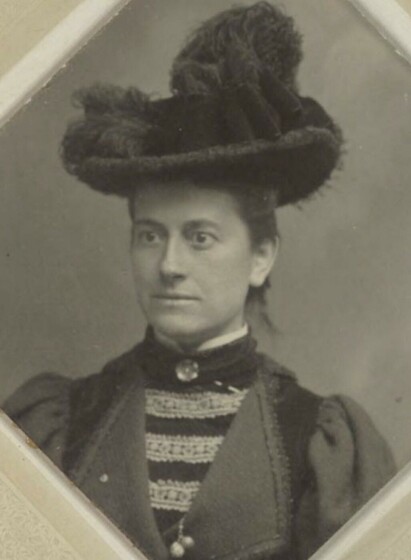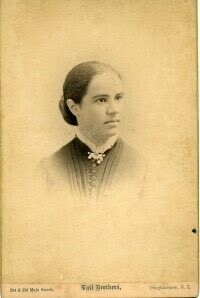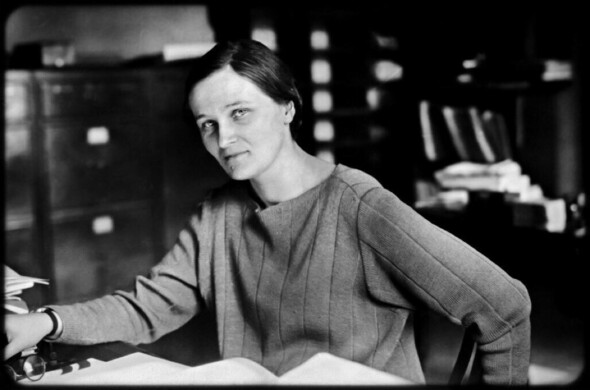
Astronomer Annie Jump Cannon was born #OTD in 1863. She was a pioneer of stellar classification and co-creator of the Harvard Classification Scheme. Over her lifetime she *manually* classified around 350,000 stars.

Image: Harvard University, Radcliffe Archives
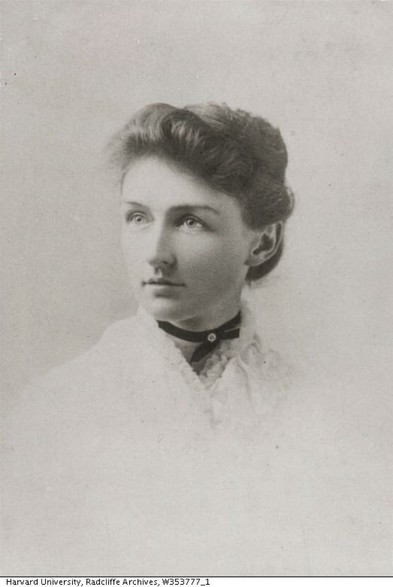
Cannon expanded on the classification used by Edward Pickering (director of the Harvard Observatory from 1877-1919) and Williamina Fleming, adding the O, B, A, F, G, K, M spectral classes.

The Harvard Classification system, adopted by the International Astronomical Union in 1922, is still in use today.

Annie Jump Cannon learned the basics of astronomy from her mother Mary, who taught her to recognize constellations. Together they built a little observatory in the attic of their home.

Her father encouraged her to attend a new college for women in Massachusetts –– Wellesley. She liked the school but not the weather. She was often sick during her first year there. These illnesses may have contributed to the eventual loss of her hearing.

At Wellesley she studied Physics and Astronomy, working with Sarah Frances Whiting.

https://en.wikipedia.org/wiki/Sarah_Frances_Whiting

Cannon excelled and graduated in 1884 as the valedictorian of her class. But she didn't pursue a career in science. Instead, she moved home to Delaware where she led an active social life.

In 1892, after traveling through Europe and publishing a collection of her photography, Cannon contracted scarlet fever and soon lost her hearing. Then in 1894 her mother died.

Sarah Frances Whiting - Wikipedia

Annie and her mother had been very close. She decided she had to leave Delaware, so she wrote to Whiting who offered her a position as a physics instructor at Wellesley.

Cannon returned to Massachusetts and enrolled at Radcliffe for graduate study in physics and astronomy. She began to work at the Harvard observatory under the direction of Edward Pickering, and was surprised to find several other women working there.

(Pickering often said that he employed women at the observatory because they were more patient and attentive to detail, and better at working with delicate equipment because of their "small hands." But he was also quick to note that he could pay them a quarter of a man's salary.)

Pickering put Cannon to work classifying stars according to their spectra. He had a ten year backlog of spectrograms that needed to be sorted according to the system he had developed with Williamina Fleming.

But there was a disagreement over how exactly the stars should be classified, with Antonia Maury advocating for a more complex system than the simple scheme used by Fleming.

Annie Jump Cannon proposed a third system, a refinement of the Fleming-Pickering system that gathered stars into seven groups – O, B, A, F, G, K, M – according to the strength of the Balmer lines in their spectra.

Later, Cecelia Payne would show that the OBAFGKM classification corresponds to descending temperature, with type O stars the hottest and type M the coolest.

Cannon's classification system was rapidly adopted by astronomers. In 1922 the International Astronomical Union passed a resolution formally adopting the system, which is still (with some modifications) in use today.

Annie Jump Cannon was known for her ability to quickly classify stars. Edward Pickering said "Miss Cannon is the only person in the world — man or woman — who can do this work so quickly."

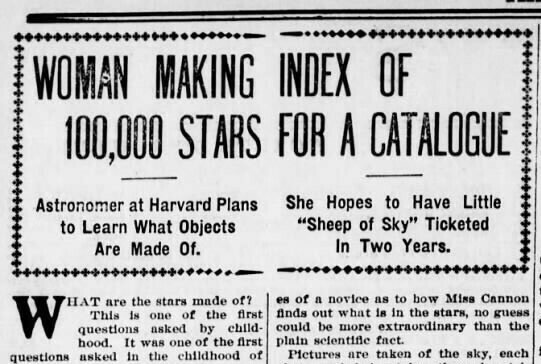
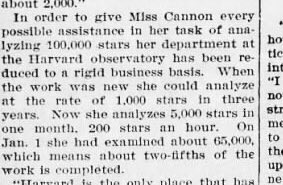
There are stories of her classifying a star in as little 3 seconds. This newspaper article from 1913 describes her working at a rate of 200 per hour.
https://www.newspapers.com/clip/10248290/the-danville-morning-news/

Clipping from The Danville Morning News - Newspapers.com

Clipping found in The Danville Morning News in Danville, Pennsylvania on Feb 10, 1913.

Newspapers.com

During her career, Annie Jump Cannon classified about 350,00 stars.

350,000.

That's a lot of stars to manually classify.

If you could classify one star per minute nonstop for 8 hours per day, 7 days per week, it would take you two full years to classify 350,000 stars.

Cannon received numerous awards and honors throughout her career.

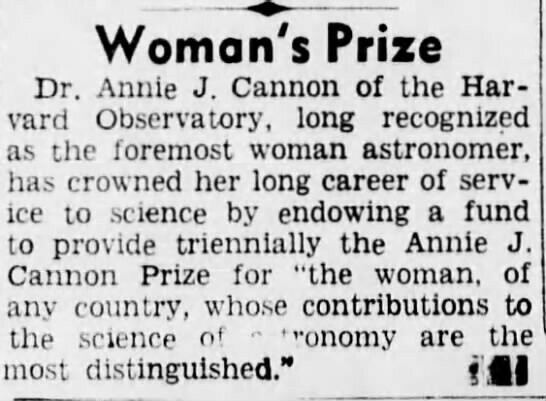
In 1932 she won the Ellen Richards prize from the Association to Aid Scientific Research by Woman, and used the prize money to endow an award of her own: The Annie Jump Cannon Prize.

Image: The Brooklyn Eagle

The Annie Jump Cannon Prize was initially awarded every three years. Starting in 1974 it was awarded every two years, and since 1988 the prize has been awarded annually.

https://aas.org/grants-and-prizes/annie-jump-cannon-award-astronomy

Annie Jump Cannon Award in Astronomy | American Astronomical Society

The Annie Jump Cannon Award is for outstanding research and promise for future research by a postdoctoral woman researcher. It is given to a North American female astronomer within five years of receiving her PhD in the year designated for the award. For example, the recipient of a PhD in 2014 would be eligible for the 2019 award (which must be applied for in calendar year 2018), but not for the 2020 award (which would be applied for in calendar year 2019).

Annie Jump Cannon retired in 1940, and passed away in 1941.

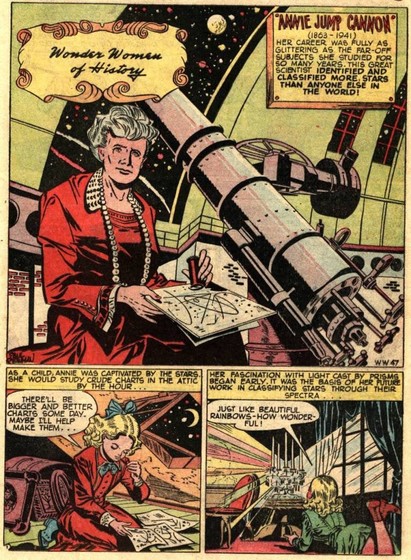
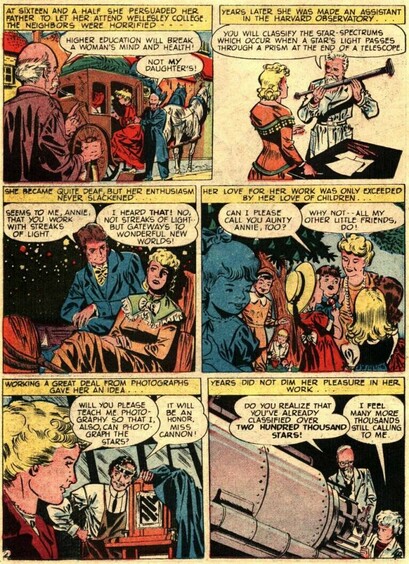
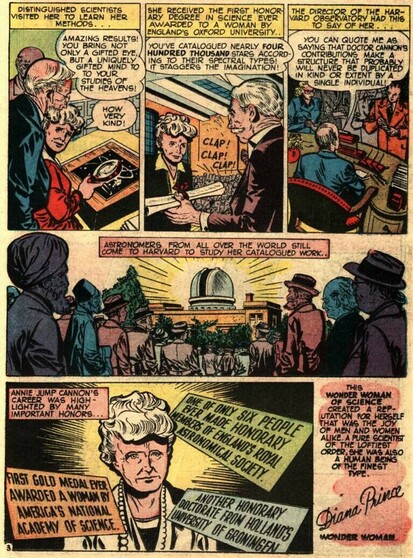
Here is a "Wonder Woman of History" profile of Annie Jump Cannon from a 1949 issue of the the Wonder Woman comic book.

Credits: Julius Schwartz (writer), Paul Reinman (pencils), Bernard Sachs (inks)

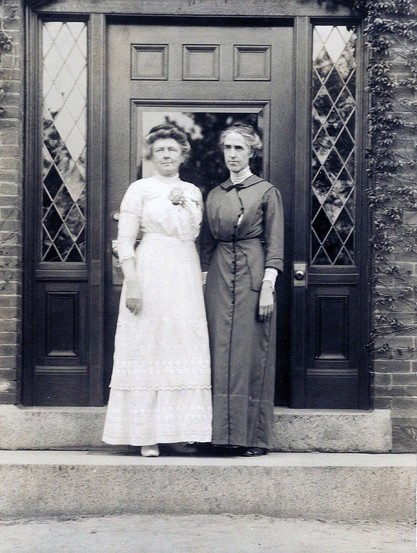
Annie Jump Cannon with her colleague Henrietta Swan Leavitt, who was also deaf.

Image: Annie Jump Cannon and Henrietta Swan Leavitt In 1913 (Harvard University Library)

I don't know how active she is, but I see at least one Annie Jump Cannon Prize recipient here on Mastodon. Dr. Laura Lopez, the 2016 winner, is on Mastodon as @ohdearz.

Please let me know if there are others!

Okay, I went back as far as 2006. The 2021 recipient Dr. Laura Kreidberg is on here as @lkreidberg.

I'm just searching for the names listed on the prize page (https://aas.org/grants-and-prizes/annie-jump-cannon-award-astronomy) so I may have missed others.

Annie Jump Cannon Award in Astronomy | American Astronomical Society

The Annie Jump Cannon Award is for outstanding research and promise for future research by a postdoctoral woman researcher. It is given to a North American female astronomer within five years of receiving her PhD in the year designated for the award. For example, the recipient of a PhD in 2014 would be eligible for the 2019 award (which must be applied for in calendar year 2018), but not for the 2020 award (which would be applied for in calendar year 2019).

@mcnees Any way to make these long strings of posts into blog articles with an introductory post to set the topic and add hashtags to let people find them easily?
@mcnees Fascinating person, and for those of us with an interest in #Photography her 1893 book of her travels in Spain can be read online here: https://archive.org/details/infootstepsofcol00cann/mode/2up?ref=ol&view=theater
In the footsteps of Columbus : Cannon, Annie Jump, 1863-1941 : Free Download, Borrow, and Streaming : Internet Archive

33 p. incl. illus., plates. 13 x 18 cm

Internet Archive
@mcnees It seems there is no close connection between the Edward Pickering who ran the Harvard Observatory until 1919 and the William Pickering who ran the Jet Propulsion Laboratory from 1954 to 1976.
@mcnees May the stars shine bright and light her eternity.
@mcnees @nazgul 🤯 that's something like 50/day for decades. On the order of 10 minutes each. Mind blowing persistence.
@mcnees That’s also a top shelf name.