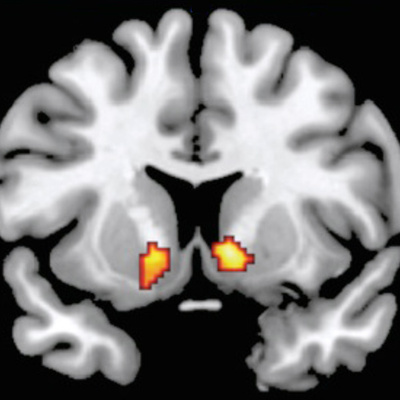
Unlike @PessoaBrain, we argue that reductionism remains a valuable and viable approach to understanding brain function.
Like him, however, we suspect there is a better way (link to "Disentangling the brain” w/ Srirangarajan)...
http://stanford.edu/group/spanlab/Publications/bk22jcn_preprint.pdf

@knutson_brain @PessoaBrain reductionism allowed us to understand that it was not enough to understand Nature above the elementary particle scale.

Thanks, Reductionism.

#ComplexSystems #NetworkScience @neuroscience @complexsystems

https://royalsocietypublishing.org/doi/full/10.1098/rsta.2020.0410

From the origin of life to pandemics: emergent phenomena in complex systems | Philosophical Transactions of the Royal Society A: Mathematical, Physical and Engineering Sciences

When a large number of similar entities interact among each other and with their environment at a low scale, unexpected outcomes at higher spatio-temporal scales might spontaneously arise. This non-trivial phenomenon, known as emergence, characterizes a ...

Philosophical Transactions of the Royal Society A: Mathematical, Physical and Engineering Sciences

@manlius @knutson_brain @PessoaBrain @neuroscience @complexsystems

I worry that we are getting tangled 😉 in words like reductionism and emergence. Once we acknowledge that nearly any system w/ recurrence and dynamics has emergence, the question is: how to we study the very large space of systems with it (like brains)? @knutson_brain is offering up a proposal that acknowledges some complexity. Anything wrong with it?
@kordinglab @SussilloDavid @sganguli @DrYohanJohn @Neurograce @tyrell_turing

@NicoleCRust
Perhaps one of most confusing parts is to use fMRI as a guide to how the brain works. It's not a terrible technique (I use it as my main technique) but it does not provide a basis to think of most things in the brain.

I think Brian puts to much faith in the contribution computational capabilities of "chunks of brain". My reminder will be coming soon.

@manlius @knutson_brain @neuroscience @complexsystems @kordinglab @SussilloDavid @sganguli @DrYohanJohn @Neurograce @tyrell_turing

@PessoaBrain @NicoleCRust @manlius @neuroscience @complexsystems @kordinglab @SussilloDavid @sganguli @DrYohanJohn @Neurograce @tyrell_turing
Here's the thrust of the argument. We want to predict and control human choice. #FMRI plus linear models work surprisingly well. If something fancier worked better, we'll adopt it.

@knutson_brain @NicoleCRust @manlius @neuroscience @complexsystems @kordinglab @SussilloDavid @sganguli @DrYohanJohn @Neurograce @tyrell_turing

My goal is a bit different and to understand complex brains, including human ones in evolutionary perspective.

@PessoaBrain @NicoleCRust @manlius @neuroscience @complexsystems @kordinglab @SussilloDavid @sganguli @DrYohanJohn @Neurograce @tyrell_turing
Our goal is much more modest, but centrally relevant to human health and well-being (and some would claim, urgent).
@knutson_brain @PessoaBrain @manlius @neuroscience @complexsystems @kordinglab @SussilloDavid @sganguli @DrYohanJohn @Neurograce @tyrell_turing
Demonstrating yet again that these conversations are impossible to have w/out stating the goal up front.
@wandell @NicoleCRust @PessoaBrain @manlius @neuroscience @complexsystems @kordinglab @SussilloDavid @sganguli @DrYohanJohn @Neurograce @tyrell_turing
An example (which also requires minimal psychological inference, more causal examples require more invasive methods or animal models):
http://web.stanford.edu/group/spanlab/Publications/bk08nr.pdf

@knutson_brain
But Brian, what we've learned in that little can be concluded from fmri students involving such small numbers. For one estimating mediations is a huge challenge unless you have substantial sample size.

@wandell @NicoleCRust @manlius @neuroscience @complexsystems @kordinglab @SussilloDavid @sganguli @DrYohanJohn @Neurograce @tyrell_turing

@kordinglab
In practice meditation analysis in psychology is a simple "path model" involving 3 pairwise relationships and a couple of critical statical tests. It provides an interesting evaluation of the pairwise relationships but the impact of the results imo are often overblown. Sometimes even causing is inferred!

@knutson_brain @wandell @NicoleCRust @manlius @neuroscience @complexsystems @SussilloDavid @sganguli @DrYohanJohn @Neurograce @tyrell_turing

Nucleus accumbens D2R cells signal prior outcomes and control risky decision-making

A marked bias towards risk aversion has been observed in nearly every species tested[–] . A minority of individuals, however, instead seem to prefer risk (repeatedly choosing uncertain large rewards over certain but smaller rewards), and even ...

PubMed Central (PMC)