 Ruth Carden 🦴
But there is still very limited research on our fauna and flora from pre- and post-LGM/Ice Age, that we cannot answer certain questions as yet. But this 2020 paper gives massive hints and will be explored further on the ongoing #IrishCaveBones project. And caves only provide ...
a snapshot, limited snapshot, of what species was present (or their absence) here. Something we must always remember. We will continue tomorrow evening with some of our more recent research & finish up on Friday evening. Thanks for reading & I'm sure lots of Qs!
More tomorrow night. If you have gotten this far, thank you for taking time to read the journey, and origins story of this project.
Thurs. eve - how time flies by!!
The year 2020, brought yet another huge loss in terms of a great supporter of my/our cave research, loss of knowledge and invaulable regular discussions, the sudden passing of the geologist, Dr Matthew Parkes of the National Museum of Ireland.
Matthew was always so interested & willingly to help in any way he could. Great to have that backbone of support in the Museum. A huge loss to the community & I will miss his prank scares of me in the stores,in one sense,always ended in laughter shared between us.
Meanwhile, in the pandemic time, my research physically on the bones ceased but not on the paper research end of things, or the thinking, teasing out, reviewing the work I had already achieved. I reached out to Helen Lewis again in UCD and much chats were had.
I also had continued my collaborative research with Richard Jennings in Liverpool John Moores University, along with Allan McDevitt. Allan and I had devised a piece of research back in 2017 and things were moving along, slowly, but moving. The only funding we ...
we got for this new piece of exciting research was 7 radiocarbon dates from the Royal Irish Academy & the Irish Quaternary Association and that's it, yet again research on a shoe string, but that shoe string turned out to be VERY significant. Because both Allan and I were working full time ...
in other jobs at the time, the research and what was needed to eventually form a strong paper for submission to a suitable international journal, things moved slowly. Always in the right direction but given lack of dedicated funding we could only do so much.
To address other lines of supporting evidence we invited certain colleagues for specific jobs onto this peice of work. Things were moving very nicely and in good time up to early 2020 (then Covid hit and we were stalled at cruical times). But in Winter 2019,
I had taken part in a Irish TV documentary series by Katrina Costello of Silver Branch Films, and thought there was loads of time prior to airing in April 2021, so finish the research, and submit the paper and have it published for all to see. Then the pandemic hit - hard stop!
As Ireland-based viewers (and indeed some based in America who have watched it on PBS) know, the wonderful Heart of Stone 2 part TV series was aired in April 2021 and a small, but significant part of our research was aired. As was then, and still now, I did not do any interviews, as it's not right before the paper has been published. So I'm going to leave this massive cliffhanger here and deflect any questions asked.
#IrishCaveBones
#IrishCaveBones
Next year this paper will shine in all its glory and I'd love to discuss it then :)
So, the people I have been working with closely, Allan, Richard, Helen on the #IrishCaveBones project, we have others we collaborate and work with too - an extended network of people, including ancient geneticists - Prof. Dan Bradley in Trinity College Dublin, Ireland and others
Dan is involved in the previous research that must not be named as yet, as is Patrick Randolph-Quinney et al., which will complete that research that got severely delayed due to COVID.
Another really cool collaboration was with Pontus Skoglund
and Anders Bergstrom
and others, where Richard and I contributed knowledge and samples towards a wolf-dog project - this was published this year in a fantastic Nature paper led by Anders. Albeit we had small parts ...
to play in this, Irish samples were included. As Ireland is situated on the far edge of NW Europe and became a island shortly after the Ice Sheet and LGM ended, we are an important area for how species adapt and survive. It all ties in and it's great to still be collaborating ...
with Pontus and his team on many levels using wolves and dogs from the caves and elsewhere. The Nature wolf - dog paper is below, and with 100,000 years of genomic ancient DNA shows dual ancestry in dogs from wolves.

So where does this leave us now on #IrishCaveBones, we are nearly up to date... almost .... we have learnt so much to date, and yet the more we learn the more unknowns there are and more knowledge gaps. But we are persisting ... just like some Irish species persisted thru time.
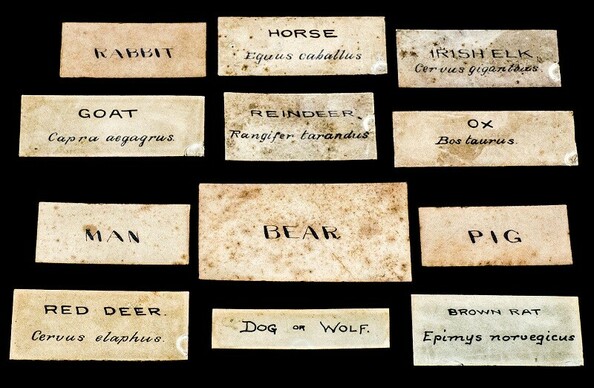
Now we are in the realm of recent and ongoing active research including fieldwork in Irish caves. Richard, Helen and I co-applied to the @RIAdawson
for archaeological excavating funding in 2021, and we were successful.
In early summer 2022, we followed in RJ Ussher's footsteps in Castlepook cave, Co. Cork and started our first season of a research archaeological excavation at the cave.
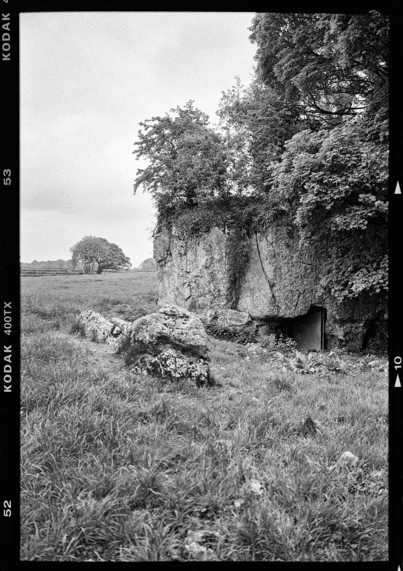
We had/have an amazing team of people we are working with on this project - we are working in conjunction with the Cork Speological Group who volunteer their time with us, to make the cave safe for our brilliant cave archaeologists to work in & are on hand.
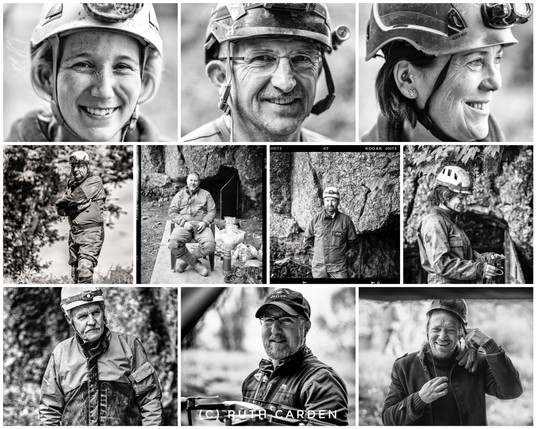
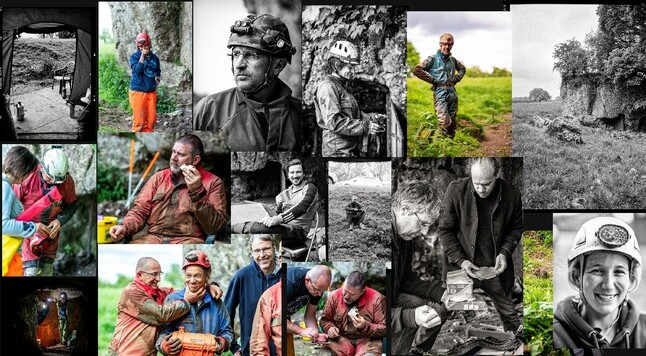
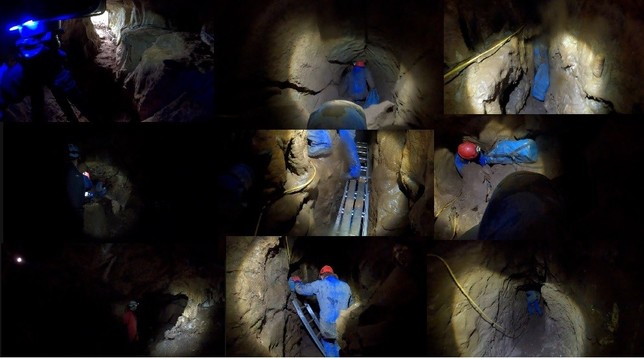
To give an idea of conditions inside Castlepook cave where our cave archaeologists had to work, and the assists at very tricky/difficult points provided by the Cork Speological Group which we are extremely grateful for, see the photos... our cave archaeologists were very brave!
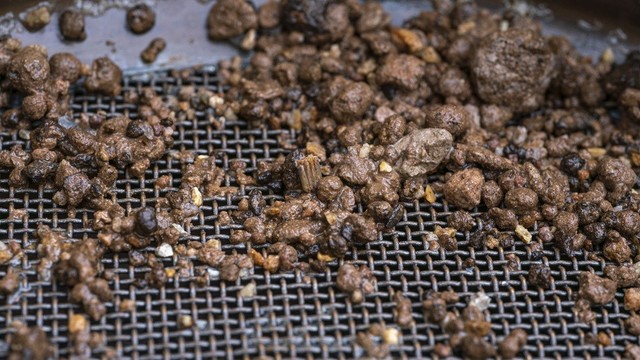
Our analysis on samples obtained from our first season is ongoing. Pleistocene and Holocene animal species' bones were found and identified - spot the Arctic lemming tooth in the cave sieved sediment sample - (Hint: it's near the middle of the photo)
We took soil/sediment micromorphology samples, sediment for ancient DNA analysis, excavated animal bones (select few will be subjected to radiocarbon dating), we also laser mapped the cave interior, and photogrammetry of the exterior. All analysis should be ...
completed by first quarter of 2023 and we are planning our next field season at Castlepook cave already.
Tomorrow I shall finish up this story, but it's not the end. If you have kept up this week, I thank you for your interest in our research. See ye tomor eve!
I have a nice warm 3-mint tea to accompany me on this last part of the origins story of #IrishCaveBones. I hope you too, have a nice suitable beverage.
In 2021, Assoc. Prof. Helen Lewis (Sch. Archaeology, University College Dublin, Ireland with named collaborators applied for another larger grant for #IrishCaveBones. The grant was Irish Research Council
COALESCE INSTAR+.
COALESCE INSTAR+.
And....the grant was successful!!! WOOHOO!! Granted in 2022 and I was successful in applying for the Research Scientist position (50% parttime post) with University College Dublin and my official start date was Sept. 8th 2022. I was/am so delighted. #IrishCaveBones
I had been appointed Adjunct Research Fellow in March 2017 to the Sch. of Archaeology, UCD. But this wasn't a paid position but still gave me important access to Library & to colleagues. For so many years, I worked more or less alone with the #IrishCaveBones, and only for the ..
'paper-that-must-not-be-named-yet' SIGNIFICANT results, I was starting to think no one cared about all these bones, filled with Ireland's past and knowledge. How could I get funding to let me devote time even to the initial sorting, assessment and identification? #IrishCaveBones
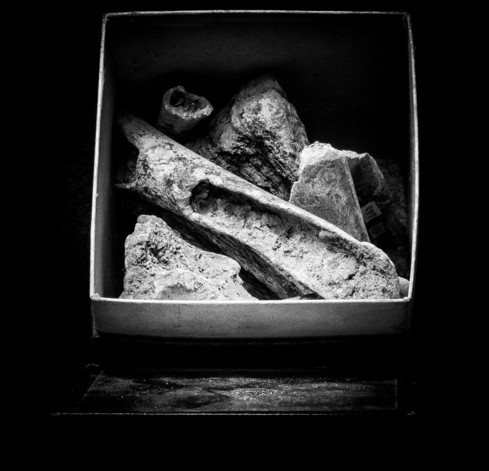
I'm not going to sugarcoat it, but I became very disheartened. I thought have the publication of the Upper Palaeolithic human cut brown bear knee cap from Alice and Gwendoline cave (Edenvale cave complex, Co. Clare), which was amazing and #IrishCaveBones
https://www.sciencedirect.com/science/article/abs/pii/S0277379116300610
indicated how much potential these #IrishCaveBones had/have and can still contribute so much to Irish archaeology and palaeo scientific studies on past Irish ecosystems. And still after I applied for larger grants, nothing. I had persisted for so long, mainly on my own, how could
I continue, when no one cared.... but I couldn't give up. I was addicted. #IrishCaveBones was also and still is, my happy place. I had come so far, for so long. I also have fun with my work, and did play with all the deer phalanges as my personal army at one stage on the desk...
..I couldn't abandon the #IrishCaveBones project - there were still so many questions left unanswered. So I did reach out to Helen Lewis again and I was working with Richard Jennings (Liverpool John Moores Uni) on Ballynamintra cave and this gave me hope again. These colleagues
and other colleagues that I still worked with (Allan McDevitt) and friends I talked to (Daniel Buckley) also saw how important #IrishCaveBones were and what we could accomplish together. They, combined, let me recharge and to continue and so why do I say this, is so you can see ...
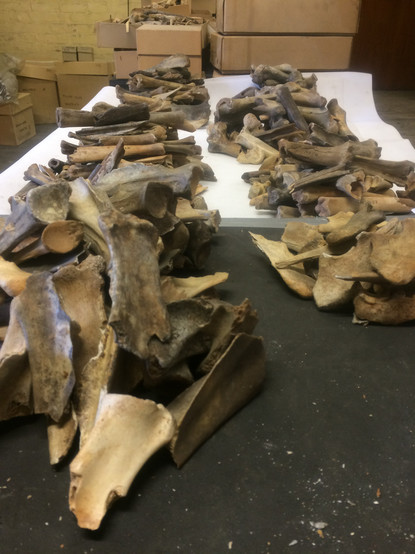
how important it was to me, and excited I was to get the Research Scientist position in UCD
on the FUNDED #IrishCaveBones project. Finally, the funding is in place so I can devote 50% of my time for next 2 years with something so close to my heart and soul - finally I can
on the FUNDED #IrishCaveBones project. Finally, the funding is in place so I can devote 50% of my time for next 2 years with something so close to my heart and soul - finally I can
devote time, and concentrate, tease out, read other research, develop ideas and models, without having to worry too much where my next paying contract will come from. I can actually fully immerse myself in #IrishCaveBones - what can we accomplish together and we have such a team!
And the project is still called #IrishCaveBones - a name that is so simple, it does what it says on the tin. The heart of this 2 year funded project all focuses on the excavated animal bones (& some plant data) from across the full island of Ireland. We are delving deeper into
Ireland's palaeoecoystems from an all-island perspective, faunal relationships (predator-prey, herbivores, carnivores), all the size ranges of the fauna, human-animal relationships, zooarchaeological analysis, statistical GIS spatial modelling, #IrishCaveBones
biometrical analysis of the bones, ancient DNA, stable isotopes, radiocarbon dating and another surprise. AND, we are excavating Irish caves - yes previously excavated caves and new caves (so exciting!!). #IrishCaveBones
We really have an excellent team of colleagues on this amazing project, gathered over the years and now all working together - we continue to work & collaborate with the Cork Speleological Group @CavingIreland
of cavers - who are sound to work with & keep us safe #IrishCaveBones
of cavers - who are sound to work with & keep us safe #IrishCaveBones
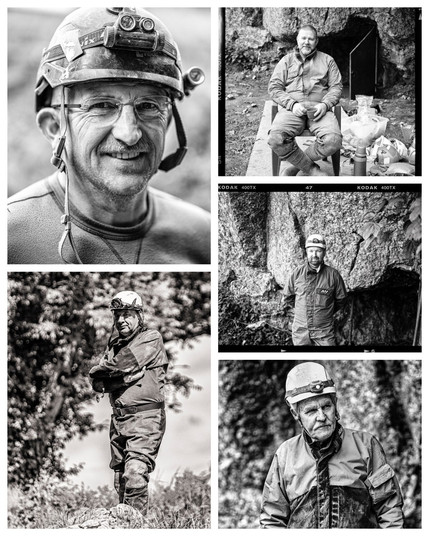
Assoc. Prof. Helen Lewis, the PI on the 2 year funded Irish Research Coucil
project, at UCD Sch. of Archaeology, Dublin, Ireland. Helen is a geoarchaeologist and a highly experienced cave archaeologist. https://people.ucd.ie/helen.lewis #IrishCaveBones
project, at UCD Sch. of Archaeology, Dublin, Ireland. Helen is a geoarchaeologist and a highly experienced cave archaeologist. https://people.ucd.ie/helen.lewis #IrishCaveBones
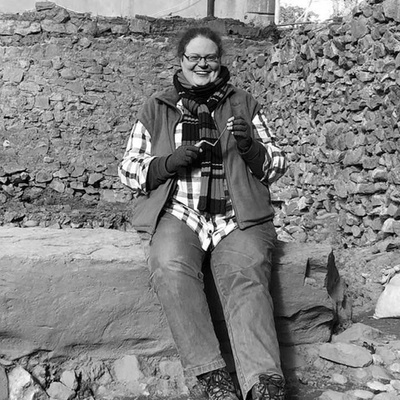
Then there's me... the Research Scientist based at UCD Sch. of Archaeology on the #IrishCaveBones project funded by the Irish Research Council
COALESCE INSTAR+ grant - which is funded by the National Monuments
https://people.ucd.ie/ruth.carden
COALESCE INSTAR+ grant - which is funded by the National Monuments
https://people.ucd.ie/ruth.carden
Dr Richard Jennings, a Kiwi native and highly experienced Palaeolithic archaeologist and a licenced archaeologist in Ireland. Richard is in @LJMU
https://ljmu.ac.uk/about-us/staff-profiles/faculty-of-science/school-of-biological-and-environmental-sciences/richard-jennings #IrishCaveBones
https://ljmu.ac.uk/about-us/staff-profiles/faculty-of-science/school-of-biological-and-environmental-sciences/richard-jennings #IrishCaveBones
Radiocarbon dating is essential to place these animals in time in Ireland's prehistoric past - can't do this research without dating. And today, we are delighted to welcome our new excellent collaboration with 14CHRONO at Queen's University Belfast, Northern Ireland, with Dr Maarten Blaauw & Dr Gerard Barrett #IrishCaveBones
For stable isotopes based palaeo-food webs we are collaborating with @DrHaydo
- an Irish native in Canada, eh! https://unb.ca/faculty-staff/directory/science-fr-bio/hayden-brian.html #IrishCaveBones
- an Irish native in Canada, eh! https://unb.ca/faculty-staff/directory/science-fr-bio/hayden-brian.html #IrishCaveBones
And Darren Grocke - an Australian working in Uni. Durham, UK - for other stable isotope analysis https://durham.ac.uk/staff/d-r-grocke/ #IrishCaveBones
Ancient DNA and ancient genomics we are working with for canids species @pontus_skoglund
in The Francis Crick Institute in London, UK https://crick.ac.uk/research/labs/pontus-skoglund #IrishCaveBones
in The Francis Crick Institute in London, UK https://crick.ac.uk/research/labs/pontus-skoglund #IrishCaveBones
For other species' ancient DNA we are working with Prof. Dan Bradley @tcddublin
https://tcd.ie/research/profiles/?profile=dbradley #IrishCaveBones
https://tcd.ie/research/profiles/?profile=dbradley #IrishCaveBones
We have unidentifiable bone fragments from the #IrishCaveBones Project, we can subject these to special analysis by mass spectrometry called ZooMS, this technique is strategically important as we can identify to genus/species fragments for further analysis. #IrishCavebones
We are working with Dr Mike Buckley in Univ. of Manchester, UK on the ZooMS part of the research. https://research.manchester.ac.uk/portal/m.buckley.html #IrishCaveBones
Cave mapping using cutting-edge technqiues - laser 3D scanning mapping and photogrammetry - will be used to record caves we are working in and is in collaboration with and lead by Dr Patrick Randolph-Quinney
at https://northumbria.ac.uk/about-us/our-staff/r/patrick-randolph-quinney/ #IrishCaveBones
at https://northumbria.ac.uk/about-us/our-staff/r/patrick-randolph-quinney/ #IrishCaveBones

A relatively new and becoming steadfast analytical techique is ancient sedimentary DNA which might divulge all sorts of secrets!! We are collaborating with Dr Rui Martiniano at Liverpool John Moores University, UK on this asepect https://ljmu.ac.uk/about-us/staff-profiles/faculty-of-science/school-of-biological-and-environmental-sciences/rui-leite-portela-martiniano #IrishCaveBones
Soil micromorphology and bulk geochemistry samples will/have been taken in the caves we are working on and this is Helen's research area as expert archaeological soil micromorphologist. #IrishCaveBones
Not least forgetting the actual #IrishCaveBones (I got carried away with all the other research)- IDs, sorting, recording, spatial modelling, developing palaeo-ecosystem models (with the others), exploring & investigating human-animal relationships, that's my areas of expertise.
And where are we getting these #IrishCaveBones from? Well, from our new excavations over 2 years, with our ongoing long collaboration with Richard Jennings on Ballynamintra cave and our Castlepook cave excavations. And ...
delighted to say we have a new collaboration with the National Museums of Northern Ireland on the #IrishCaveBones project, thus making this a all-island research project. Dr Mike Simms, NMNI, is a expert cave geologist & researching with us in the field on how these caves formed.
We are very lucky, to have a special collaborator & new colleague working with us on this exciting and cutting-edge Irish cave & palaeoenvironmental #IrishCaveBones project - our own artist-in-residence, the excellent John Flynn @JohnFlynnArt
https://instagram.com/johnflynnart/?
https://instagram.com/johnflynnart/?
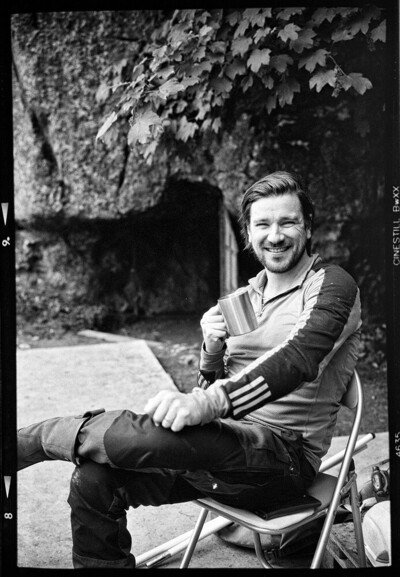

We will also will be looking at some bones from the National Museum of Ireland antiquarian caves, which need to be sorted, identified and documented to Museum standards. #IrishCaveBones
We are also working with the highly regarded archaeological & heritage photographer, Ken Williams
https://shadowsandstone.com , who gleefully enters the caves to take highly detailed photographs! #IrishCaveBones
https://shadowsandstone.com , who gleefully enters the caves to take highly detailed photographs! #IrishCaveBones
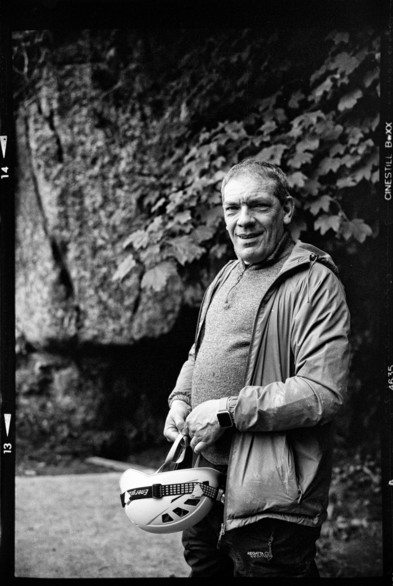

And I’m not forgetting the most important #UnseenHeritageHeroes cave archaeologists on our excavations, who brave the dark underbelly of our island’s palaeo/lands - our magic team - Phil Kenny, Clare Ryan, Louise Callan and Keziah Warburton. #IrishCaveBones
So there ye have it, we are up to date on the long running #IrishCaveBones project, 2007 to today and into the next two years of exciting cutting edge research and investigations. Stay tuned here or elsewhere (see Alt text on photo below for details). Thank you for reading! Ruth