After the Condolences End

What happens to a foreign widower when communal duty quietly expires

By Cliff Potts, CSO, and Editor-in-Chief of WPS News

The Moment the Crowd Disperses

There is a moment after a funeral that rarely gets discussed. The food is gone. The chairs are stacked. The well-wishes stop arriving. The phone goes quiet. What follows is not closure—it is absence. For a foreign widower living inside a tight-knit barangay, that absence is not neutral. It is structural.

I did not expect grief to be shared indefinitely. I did expect a minimum level of continued human acknowledgment. What I encountered instead was a sudden social vacuum—one where I was still visible as a resource, but no longer visible as a person.

From Community to Transaction

In the weeks following my wife’s death, interactions shifted tone. Conversations that once carried warmth began to revolve around obligation, money, and silence. Questions about how I was doing stopped. Requests did not.

This was not overt hostility. It was something colder: transactional normalcy. The unspoken assumption seemed to be that my role had narrowed—to pay bills, keep the household functioning, and not ask for emotional reciprocity. Grief, it appeared, had an expiration date, and mine had passed.

Respect for Elders: A Historical Expectation

Historically, respect for elders in the Philippine archipelago predates Spanish colonization and was embedded in pre-colonial barangay structures, where older members served as custodians of memory, mediation, and customary law. Age conferred social authority tied to experience and communal continuity rather than wealth or force. Spanish colonization did not erase this framework but reframed it through Catholic moral theology, reinforcing filial obligation, care for parents and elders, and the moral duty of the community to protect the aged. The result was a hybrid system in which respect for elders became both a cultural norm and a religious expectation, persisting across centuries and surviving multiple political regimes.

That context matters, because what I experienced runs counter to that tradition.

Who Receives Deference—and Who Does Not

Respect for elders remains real and visible here—when those elders are local, embedded, and culturally legible. It does not reliably extend to an older foreigner, even one who has married into the community, contributed financially, and remained present after loss.

This is not about skin color alone. It is about classification. I occupy an ambiguous category: old, but not “one of us”; responsible, but not authoritative; expected to provide, but not entitled to care. In practice, this means deference flows around me rather than toward me.

The Language Gap That Never Closed

I was repeatedly encouraged to learn the local language. When I tried, assistance was inconsistent or absent. Over time, it became clear that language was not simply a barrier—it was a gate. Without fluency, I remained dependent on intermediaries, and dependence limits agency.

Misunderstandings compounded. Requests were interpreted as impositions. Clarifications were framed as embarrassment. Silence became the default response to discomfort. The result was not integration, but containment.

Grief Without a Net

My wife acted as a cultural bridge. She translated tone, intention, and expectation in both directions. When she died, that bridge collapsed. What I encountered afterward was not cruelty, but indifference shaped by habit: once the ritual obligations were fulfilled, the system moved on.

Grief, in this environment, is private unless it aligns with collective rhythm. Mine did not.

What This Is—and What It Is Not

This is not an attack on Filipino culture. It is an observation from inside a specific moment, in a specific place, under specific conditions. It is not an argument that people here are malicious. It is an argument that systems can fail quietly, and that failure has consequences for those who fall between categories.

I am still here. I am still functioning. I am still contributing. What is missing is not resilience, but reciprocity.

Why This Matters

Foreign retirees, spouses, and long-term residents are often told that the Philippines is uniquely communal and caring. That can be true—until it isn’t. When loss occurs, and when the person grieving lacks cultural insulation, the gap between expectation and reality can be severe.

This essay exists to document that gap. Not to inflame, but to record. Not to demand sympathy, but to insist on clarity.

Because what happens after the condolences end is where the real story begins.

For more social commentary and high-quality horror stories, please see Occupy 2.5 at https://Occupy25.com

#barangayLife #culturalObservation #elders #expatriateLife #FilipinoCulture #grief #Philippines #socialNorms #widower #WPSNews


After the Condolences End

By Cliff Potts, Editor-in-Chief, WPS News

When the Visitors Leave

Baybay City, Leyte, Philippines — There is a moment after a death that never makes it into the stories people tell. The funeral is over. The prayers are said. The visitors stop coming. The food is gone. The chairs are stacked. The house exhales—and what fills the space is not peace, but absence.

That is when the real test begins.

I did not notice it immediately. Grief is loud at first. It overwhelms the senses. It blurs cause and effect. But within days, patterns emerged. Conversations changed. Requests replaced condolences. Silence replaced presence. What had felt like community during the wake became distance once the rituals were complete.

This is not about grief being different for different people. It is about what happens when social obligation ends.

From Care to Accounting

The shift was subtle but unmistakable. Where there had been concern, there were now expectations. Where there had been help, there were assumptions. Interactions became transactional almost overnight.

Who was paying for what. Who owed whom. Who was responsible. Who should “just handle it.”

Questions about money began to arrive indirectly, through intermediaries, through teenagers, through embarrassment rather than conversation. Bills appeared without documentation. Responsibility was asserted without proof. And any attempt to clarify or slow the process was framed as disrespect.

The implication was clear: compliance mattered more than truth.

The Convenient Target

As a widower, I became something easier to manage if ignored and useful only when accessed. Visibility was no longer welcome. Speaking up was treated as a breach of etiquette. Silence was preferred, except when silence interfered with someone else’s expectations.

This was not cruelty in the dramatic sense. It was something colder: disengagement. The quiet understanding that once the person who connected me to this place was gone, my standing changed with her.

I was no longer family by presence—only by obligation.

The Role of Shame

One of the more revealing dynamics was the use of shame as a control mechanism. Not outrage. Not argument. Shame.

I was told that asking questions was embarrassing. That defending myself created problems. That refusing to pay unverified claims reflected badly on others. The issue was never whether something was true, but whether it disrupted the appearance of harmony.

Harmony, it turned out, required someone else to absorb the cost.

What Is Not Being Said

There is an unspoken rule in many systems: grief has an expiration date. Once that date passes, the bereaved are expected to self-contain. To stop naming loss. To stop needing. To stop being visible.

But grief does not end when the casseroles do. It deepens. It changes shape. And when support is withdrawn at that moment, the damage compounds.

What followed the condolences was not healing. It was abandonment dressed as normalcy.

Why This Is on the Record

This is not written to solicit sympathy or assistance. It is written to document a pattern.

What happens after the rituals end matters. What communities do when obligation fades reveals more than what they do when eyes are watching. And systems that rely on silence, shame, and transaction over care cannot be fixed by politeness.

They can only be survived—or recorded.

This is the record.

For more social commentary and high-quality horror stories, see Occupy 2.5 at https://Occupy25.com

#barangayLife #communityBreakdown #expatriateExperience #grief #loss #personalEssay #Philippines #socialDynamics #transactionalCulture #widower

85-year-old widower kidnapped and murdered in apparent case of mistaken identity in Australia

https://misryoum.com/us/world/85-year-old-widower-kidnapped-and-murdered-in/

Australian detectives arrested two men Wednesday over the alleged kidnapping and murder of an elderly grandfather in a suspected case of mistaken identity.Chris Baghsarian, 85, was taken from his home in Sydney's North Ryde suburb on February 13, but...

#85yearold #widower #kidnapped #and #murdered #apparent #case #mistaken #identity #Australia #US_News_Hub #misryoum_com

85-year-old widower kidnapped and murdered in apparent case of mistaken identity in Australia

Australian detectives arrested two men Wednesday over the alleged kidnapping and murder of an elderly grandfather in a suspected case of mistaken

US News Hub
I despise the word "widower" it makes it sound like I go around making widows #widower #widowerwisdom #WidowWisdom

The Muse who illuminated my entire life passed away on October 31, 2024.

38 years of life together, 6 children..
She was my love, my life, my balance, my oxygen, my light in the darkness. My sunshine..
May peace be with you, Catherine.
I kiss you tenderly.
I love you. ❤

#love
#grief
#widower
#widowhood
#solitude
#wound
#life
#music #muse

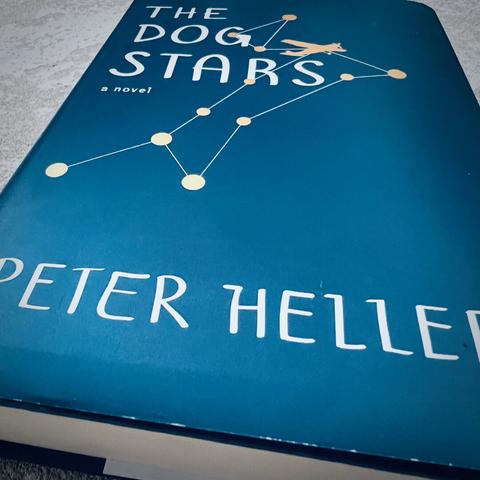
I recently read that Ridley Scott is going to direct a film based on this book. So I read it. I think it has the bones of a good screenplay, with accelerations into high energy action sequences and decelerations into flashbacks and contemplative musings, but overall the story was a bit thin.

Heller has a nice style which tread into literary territory while staying grounded in popular writing. His protagonist, the widower Hig, is an appealing one, with a big heart — almost naively so. And the story reads more like a memoir than an adventure novel. We are handed plenty of passages about the inner emotional life of Hig, both from his past as well as present. But the challenge our author was not able to meet was to construct more of the context this individual was residing within. One doesn’t get a sense there’s any critique of disease control in modern society, or civilization’s tenuous existence, or a commentary the tension between humans’ base and higher abilities. These opportunities appeared to be passed over to where I wonder if the book really could only exist within this post-pandemic societal collapse context. I bet a period western might be able to be crafted just as easily, for example.

In most instances, the book is better than the movie. I’m eager to see the movie in mid-2026 to see if this plays out or if fortune will reverse the normal stereotype.
.
.
.
.
#thedogstars #peterheller #sciencefiction #scifi #apocalypse #pandemic #cessna #airplane #colorodo #widower #ex_libris_jz
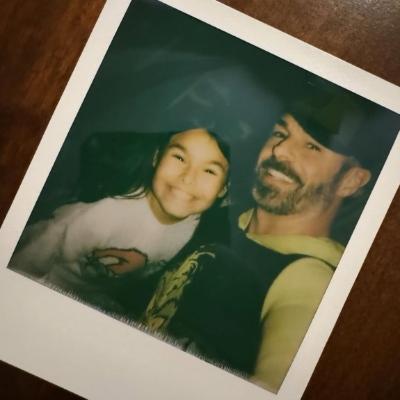
Carrying my little girl's dreams and mine quiet scars. I’m real, not a facade ready to explore, embrace, and find a genuine connection that lights up our lives. 💕 #Widower #reallove #girldad #newhere

April 2025
# 70

SOMOS DOIS ABISMOS (WE ARE TWO ABYSSES)
dir Kopal Joshy, 2025

Round and round the hole we go.

#IndieLisboa2025 #documentary #portugal #personalhistory #widower #death #love #writing #landscape

[14:45] Extension to eligibility for Widow's, Widower's pensions

Government approval has been given to extend the eligibility for the Widow's and Widower's pension.

https://www.rte.ie/news/politics/2025/0304/1500129-pension-eligibility/

#Widower

Solo Dad; The Journey of a Widowed Father
https://youtube.com/watch?v=mUolwJmc4WQ #widowhood #widower #soloDad
Solo Dad; The Journey of a Widowed Father

YouTube