 slyborg
https://link.springer.com/article/10.1007/s10886-026-01717-3
Japan wins again. Thousand-times folded matatabi preferred to catnip by Japanese cats.
Free-Roaming and Captive Cats Prefer Silver Vine to Catnip for Self-Anointing - Journal of Chemical Ecology
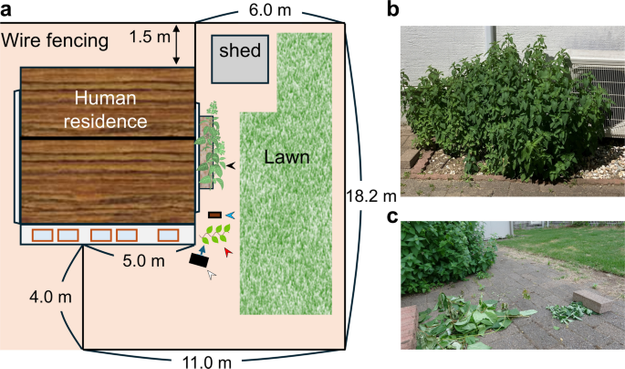
Chemical cues that appear potent in controlled laboratory bioassays do not necessarily function as effective behavioural cues under natural conditions, where animals can freely approach or ignore stimuli. How chemical detectability translates into voluntary behavioural engagement, therefore, remains an important unresolved question. Plant-derived semiochemicals provide a tractable system for examining this issue because the same compounds can be presented either as intact natural sources or as purified chemicals. Domestic cats (Felis silvestris catus) show a characteristic self-anointing response to iridoid-producing plants, including catnip (Nepeta cataria) and silver vine (Actinidia polygama), both widely regarded as cat-attractants. Here, we tested whether these plants differ in their ability to induce voluntary engagement under free-choice conditions. Free-roaming cats rarely showed self-anointing behaviour (face-rubbing and rolling) toward intact catnip plants, but consistently engaged with silver vine. The same bias toward silver vine was observed in captive cats presented simultaneously with plant extracts. Chemical analyses confirmed that catnip contained abundant bioactive nepetalactone, indicating that weak responsiveness was not explained by a lack of bioactive compounds. These findings demonstrate that chemical abundance and laboratory bioactivity do not necessarily predict behavioural reliability under natural encounter conditions. Instead, whether a cue consistently elicits voluntary engagement may determine its ecological effectiveness as a behavioural cue.
 Fossekall