 Strum
Strum CB
CBJune 6, 2025 New York, NY
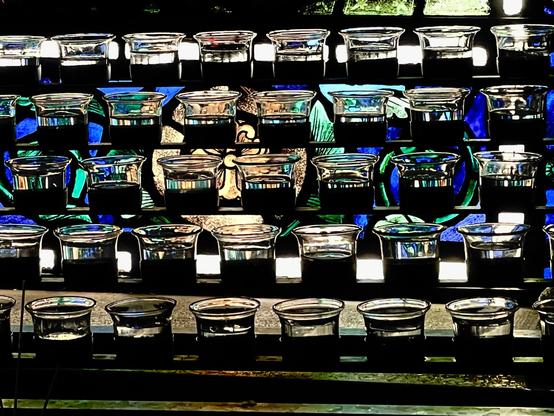
#votives #stainedglass #manhattan #stbarts #stbartholemews #parkavenue #church #photography #iphone
 Wendy Palmer
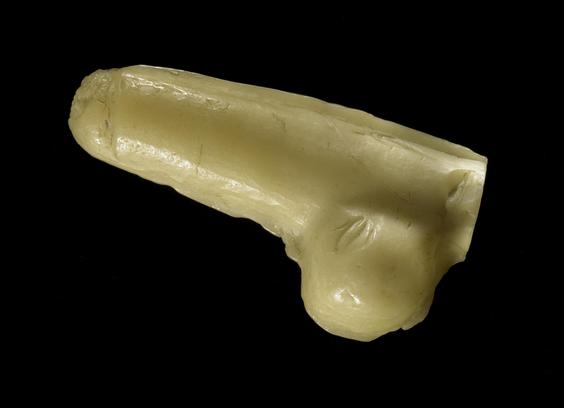
#TIL that certain anatomical votives were classified by the British Museum as “big toes”.
Behold, St Cosmo’s big…toe
#history #votives #priapus #IsThatABigToeInYourPocketOrAreYouJustGladToSeeMe
https://www.britishmuseum.org/collection/object/H_WITT-320
© The Trustees of the British Museum. Shared under a Creative Commons Attribution-NonCommercial-ShareAlike 4.0 International (CC BY-NC-SA 4.0) licence.
 Donnodubus
Having covered the Gallo-Greek votives, I'll be resuming the #eurises series now with Gaulish votives in the Latin alphabet.
For now, I will only cover the so-called "lapidary" (stone monument) inscriptions, since the RIIG has not added their data on instrumenta yet. (Hopefully that data will be available before too long, but there is probably a large body of it).
That handful of inscriptions concludes the more-or-less complete or intelligible Gallo-Greek #votives I could find so far. To recap:
The #eurises (dedicants) named were:
Alleteinos
[C]artaros Illanuiacos
Cassitalos Uersicnos
Cornelia
Ecillios Roumanios
Segomaros Villoneos
Vebrumaros
Voteporix Iugilliacos
The gods they offered to were:
Ala[-]inos
Andounnas
Belenus
Bēlēsama
Carnonos Alisonteas
Matres Glanicas
Matres Namausicas
[Ro]Cloisias
Taranus
The Gaulish God to Whom Vebrumaros offered is typically called "Taranis" today, following the spelling in Lucanus' Pharsalia. But Gaulish votive inscriptions like the above imply a nominative of Taranus instead.
It's anybody's guess why Lucanus spelled it as Taranis, and he wasn't necessarily wrong! But the form found in #Gaulish #votives themselves should be given more attention and precedence than they have heretofore received.
I'll be "tooting" a series of ancient Gaulish votive inscriptions that I originally posted to Twitter. This series is called:
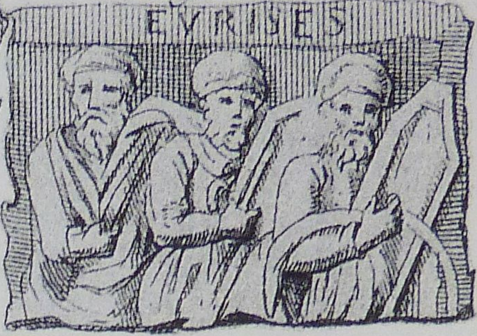
EVRISES (Dedicants)
My hope is to help shine a light on the attested religious devotion of Celtic people in antiquity.