𝗪𝗜𝗞𝗜𝗣𝗘𝗗𝗜𝗔 𝗣𝗜𝗖𝗧𝗨𝗥𝗘 𝗢𝗙 𝗧𝗛𝗘 𝗗𝗔𝗬

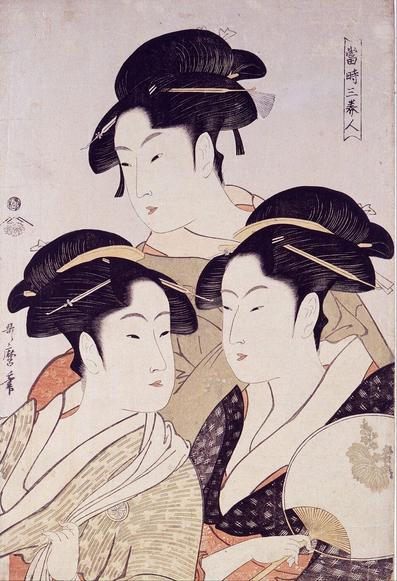
✧ Three Beauties of the Present Day ✧

Three Beauties of the Present Day is a nishiki-e colour woodblock print produced circa 1792–93 by the Japanese ukiyo-e artist Kitagawa Utamaro. The triangular composition depicts the busts of three celebrity beauties of the time: geisha Tomimoto Toyohina (middle), and teahouse waitresses ...

#presentday #nishiki #utamaro #ohio #japaneseukiyo-eartist #wikipedia
https://en.wikipedia.org/wiki/Three_Beauties_of_the_Present_Day

“Ase o fuku onna” (Japanese: 汗を拭く女) literally means:
• 汗 (ase) = sweat
• を (o) = object particle
• 拭く (fuku) = to wipe
• 女 (onna) = woman
#Utamaro print is titled “a woman wiping sweat” or “the woman who wipes sweat.”
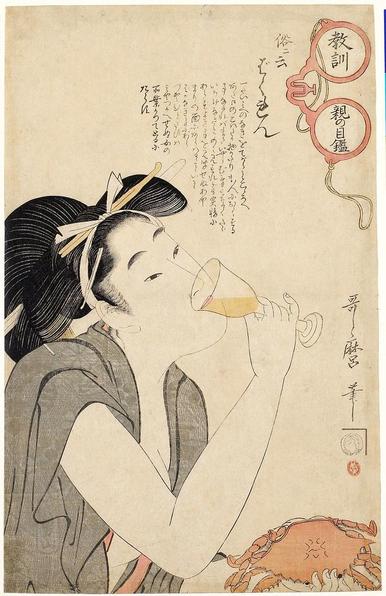
continuing #Utamaro series Lessons Learned from a Parent's Perspective focusing on https://objecthub.keio.ac.jp/object/7533 here translated "The so called Shrew" also known as "the rascal" or "the so called saucy girl." the open "blouse" of this flapper from Edo is embossed with the logos for manufacturers of sake

this is my third post from #Utamaro series Kyokun oya no megane (A parent's moralizing spectacles). this individual is called "The Clever One." She reads the Illustrated Life of Hideyoshi. Shugo Asano and Timothy Clark translated the text
describing she:

"Knows it all" and is "constantly opening her mouth to speak" or "interfering in others' business".
that her behavior is a sign of a "lack of restraint" or "ill-breeding" that a parent would find concerning

Okita was a waitress and the main draw at the Naniwaya teahouse in Edo. #Utamaro featured her in other series like "Beauties Likened to the Six Immortal Poets" and in many other settings with Ohisa and The Lady Tomimoto Toyohina
Tomimoto Toyohina, from #Utamaro triptych Young Women of the Present Day Who Have Made their Mark, a Triptych (Tôsei shusse musume, sanpuku no uchi) the best image i could find on the internet here https://collections.mfa.org/objects/206423. i am happy with the work on the kimono textile, but i fear the work on the obi is lacking
Takashima Ohisa is the central print from the #Utamaro triptych "Young Women of the Present Day Who Have Made their Mark" i was fortunate to find an image with excellent resolution with which to work here https://prod.test.creazilla.com/media/traditional-art/7775825/kitagawa-utamaro---takashima-ohisa-from-the-series-young-women-of-the-present-day-who-have-made-their-mark-a-triptych-from-ukiyo-e-shuka.-museum-of-fine-arts-boston-iii. in time i will be uploading the other images plus my version of the triptych

Czas poczynić w historii sztuki w komiksie pewne zmiany. A właściwie to wrócić do korzeni.

Jak być może pamiętacie, jakiś czas temu podjąłem wyzwanie, by w ramach cyklu prezentować tylko zestawienia nawiązujące do jednego z wcześniejszych pięciu. Eksperyment ten można uznać za zwieńczony sukcesem – długo udało mi się utrzymać ten rygor, a odnotowane mam jeszcze kilkanaście materiałów, w przypadku których mógłbym zachować ciągłość tematyczną...

Ale mi się już nie chce. Bo było to ograniczające. Bo czasem musiałem podrzucić coś, na co w danym momencie nie miałem ochoty, a innym razem wstrzymywać się z czymś, co chciałem Wam pokazać.

Koniec. Od teraz w ramach cyklu będę znów pokazywał coś, co mi w danym momencie w sercu, duszy czy głowie zagra.

A dziś zagrał mi temat (około)japoński.

U góry: Utamaro Kitagawa, dziesiąty drzeworyt z serii "Zapiski spod wezgłowia" ("Utamakura"), 1788.

Na dole: "Les contes du 7ème souffle", t. 1: Aohige, scen. Éric Adam, rys. i tusz Hugues Micol.

#komiks #comics #historiasztukiwkomisie #utamaro

Kitagawa Utamaro: Master of Bijin-ga

In the previous post, we briefly explored the world of ukiyo-e. To further tribute to this art form and delve deeper into its history, I thought we could shortly study the biographies and styles of some of the most celebrated artists of the genre. Today, we will start with Kitagawa Utamaro (1753-1806), one of the most celebrated ukiyo-e artists, known for his exquisite portraits of beautiful women (bijin-ga).

Fabrizio Musacchio
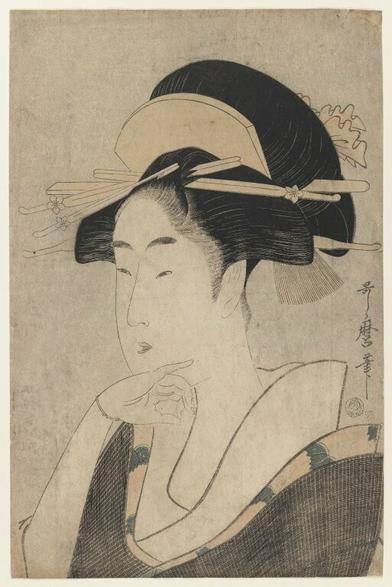
Large Head and Bust Portrait of Beauty, 1791 - 1797 - Kitagawa Utamaro - WikiArt.org

‘Large Head and Bust Portrait of Beauty’ was created in 1797 by Kitagawa Utamaro in Ukiyo-e style. Find more prominent pieces of portrait at Wikiart.org – best visual art database.

www.wikiart.org