When the Battle Looks Too Big

The Bible in a Year

“When thou goes out to battle against thine enemies, and sees horses, and chariots, and a people more than thou, be not afraid of them; for the Lord thy God is with thee, which brought thee up out of the land of Egypt.”
— Deuteronomy 20:1

As we journey through Scripture together in this “Bible in a Year” walk, we occasionally encounter passages that speak directly into the struggles of daily life. Deuteronomy 20:1 is one of those passages. On the surface, it addresses Israel preparing for military conflict. Yet beneath the historical setting lies a timeless principle for every believer who faces overwhelming circumstances. The verse reminds us that troubles are certain, fear is natural, but God’s presence provides strength greater than anything we face.

The verse begins with a small word that carries enormous meaning: when. God did not say if Israel would go into battle; He said when. This simple wording acknowledges a reality that Scripture never tries to hide—life involves conflict. Trials and hardships are part of the human experience. Job captured this truth clearly when he said, “Man that is born of a woman is of few days, and full of trouble” (Job 14:1). Another passage echoes the same reality: “Man is born unto trouble, as the sparks fly upward” (Job 5:7). Trouble is not an exception to life; it is woven into the fabric of living in a fallen world.

Even faithful believers experience hardship. The psalmist wrote, “Many are the afflictions of the righteous: but the Lord delivereth him out of them all” (Psalm 34:19). That verse contains both realism and hope. The Christian life does not eliminate every struggle, but it changes how we face them. Instead of meeting trouble alone, we face it with the presence of God beside us.

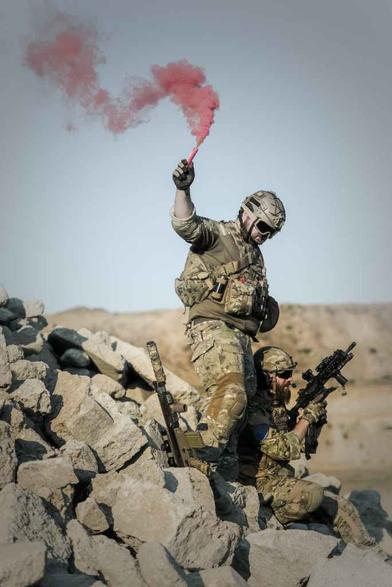
The second truth this passage reveals is that trouble often frightens us. Moses describes Israel looking across the battlefield and seeing horses, chariots, and a larger army. In the ancient world, these were symbols of overwhelming military strength. Horses and chariots represented speed, power, and technological advantage. When Israel saw these forces lined up against them, the situation looked impossible.

In our lives, troubles often appear the same way. They come suddenly and seem larger than our ability to handle them. It might be a health crisis, financial strain, family conflict, or a season of uncertainty about the future. Like Israel standing before an enemy army, we sometimes look at our circumstances and feel outnumbered.

Yet God’s command was clear: “Be not afraid of them.” Fear was not to control Israel’s response to the battle. The same truth applies to our lives today. Fear often grows when we focus only on the size of the problem. But Scripture continually redirects our attention from the size of our troubles to the greatness of our God.

The final and most important truth in this passage is the strength God provides in the midst of trouble. Moses reminds the people, “For the Lord thy God is with thee, which brought thee up out of the land of Egypt.” God points them back to a defining moment in their history—the Exodus. Israel had once been powerless slaves under the authority of Egypt, the most powerful empire of their time. Yet God delivered them through miracles that demonstrated His power over kings, armies, and nature itself.

This reminder carries an important spiritual principle. When facing present difficulties, believers are encouraged to remember God’s faithfulness in the past. What God has done before becomes a testimony of what He can do again. The same Lord who parted the Red Sea for Israel is the Lord who walks with His people today.

Charles Spurgeon once wrote, “If the Lord be with us, we have no cause for fear. His presence is better than chariots and horses.” Spurgeon understood that God’s presence changes the entire equation of life’s battles. What appears overwhelming from a human perspective becomes manageable when we remember who stands with us.

This perspective also appears throughout the New Testament. The Apostle Paul declared, “If God be for us, who can be against us?” (Romans 8:31). Paul did not deny that opposition exists. Instead, he emphasized that God’s presence outweighs every adversary. The strength believers rely upon is not their own but God’s power working through them.

For the Christian, this truth becomes intensely personal. The same God who delivered Israel from Egypt now dwells within believers through the Holy Spirit. The battles we face may look different than Israel’s military conflicts, but the principle remains unchanged. Our confidence does not rest in our resources, abilities, or strategies. It rests in the presence of God.

As we read this passage today, it invites us to examine how we view our own troubles. Do we measure them only by their size, or do we measure them against the greatness of God? The difference between those two perspectives often determines whether we respond with fear or with faith.

When we focus only on the difficulty before us, discouragement easily takes hold. But when we remember who God is and what He has done, hope begins to rise again. The Lord who delivered His people in the past continues to guide and strengthen His people today.

Our journey through Scripture continually brings us back to this central truth: God’s presence is the believer’s greatest source of courage. The battles of life may be unavoidable, but we never face them alone.

For further study on trusting God during life’s battles, see this helpful resource:
https://www.gotquestions.org/fear-not-in-the-Bible.html

FEEL FREE TO COMMENT, SUBSCRIBE, AND REPOST, SO OTHERS MAY KNOW


#BibleInAYearStudy #Deuteronomy201Devotion #encouragementInTrouble #overcomingFearWithFaith #trustingGodInTrials

When Obedience Brings You to the Edge

The Bible in a Year

“Fear ye not, stand still, and see the salvation of the Lord … for the Egyptians whom ye have seen today, ye shall see them again no more forever.” Exodus 14:13

There are moments in Scripture that feel uncomfortably familiar because they mirror seasons of our own lives. Israel at the Red Sea is one of those moments. Hemmed in by geography and hunted by an enemy, the people believed the journey had ended. Yet Exodus is careful to tell us something essential: Israel did not arrive at this crisis through rebellion or neglect, but through obedience. God Himself had led them there. That detail matters. It reframes how we understand hardship, especially in light of today’s unifying theme—what has been committed to your trust. Sometimes faithfulness places us precisely where we would rather not be, not as punishment, but as preparation for a deeper knowledge of who God is.

Moses’ words to the people give us what the study rightly calls precepts before promises. This ordering runs counter to our instincts. We prefer assurances before obedience, outcomes before trust. Yet Scripture consistently teaches that God’s promises are not detached from God’s instructions. The first precept—“Fear ye not”—is not a denial of danger but a reorientation of allegiance. Fear, in biblical terms, often reveals who or what we believe holds the final word over our lives. Israel had every visible reason to panic. But fear would have scattered them, fractured their unity, and drowned out God’s voice. To guard what God had entrusted to them—their identity as His people—they had to release fear’s grip.

The second precept—“Stand still”—may be even harder. Standing still feels irresponsible when trouble is closing in. Yet stillness in Scripture is rarely passive. It is attentive. It creates space to hear God and to respond in step with His direction. If Israel had rushed about in panic, they would have been unprepared to move when God opened the sea. Stillness, then, becomes an act of trust. It is the discipline of refusing to act before God speaks. As the psalmist later wrote, “Be still, and know that I am God” (Psalm 46:10). Stillness guards discernment.

Only after these precepts are given do the promises emerge. “See the salvation of the Lord.” Salvation here is not abstract theology; it is God’s decisive intervention in real history. The Hebrew term yeshuah carries the sense of deliverance that only God can accomplish. Israel could not engineer this escape. They could only witness it. This promise invites obedience not by minimizing the danger, but by magnifying God’s faithfulness. When we follow God into difficult terrain, we are invited to watch—not anxiously, but expectantly—for His hand at work.

The second promise is even more striking: “The Egyptians, whom ye have seen today, ye shall see them again no more forever.” God does not merely promise relief; He promises finality. What pursued Israel would not define their future. This is often how divine deliverance works. God not only rescues His people from immediate danger but removes the authority of what once enslaved them. The Red Sea becomes a boundary line between bondage and freedom. As Matthew Henry observed, “Those enemies that are once conquered by divine power shall be utterly destroyed.” Deliverance, when God brings it, is thorough.

As we read this passage in our year-long journey through Scripture, it invites personal reflection. Many of us face “Red Sea” moments—situations where options appear exhausted and fear feels justified. This text reminds us that such moments are not evidence of abandonment. They may, in fact, be signs that God is inviting us to trust Him more fully. What He has committed to our trust—our faith, our calling, our witness—must be guarded precisely in these moments. Fear and frantic action are often the first threats to that trust.

The Exodus story also teaches us something about timing. God did not part the sea until Israel stood still. He did not remove the enemy until the people stepped forward in obedience. Deliverance unfolded in God’s order, not Israel’s urgency. As Charles Spurgeon once wrote, “God is too good to be unkind, and too wise to be mistaken. And when we cannot trace His hand, we must trust His heart.” This is the posture Exodus 14 calls us to adopt.

For those walking through Scripture with us this year, this passage encourages perseverance. The Bible is not merely a record of ancient miracles; it is a testimony to God’s consistent character. The same God who delivered Israel remains faithful today. Our task is not to force outcomes, but to attend carefully to God’s precepts so that we may witness His promises. When we guard our trust in Him—refusing fear, practicing stillness—we position ourselves to see His salvation unfold in ways we could not have orchestrated ourselves.

For further study on the Red Sea crossing and its theological significance, see this resource from a trusted Christian source:
https://www.thegospelcoalition.org/article/red-sea-crossing/

FEEL FREE TO COMMENT, SUBSCRIBE, AND REPOST, SO OTHERS MAY KNOW


#BibleInAYear #biblicalDeliverance #Exodus14 #fearAndFaith #obedienceToGod #trustingGodInTrials

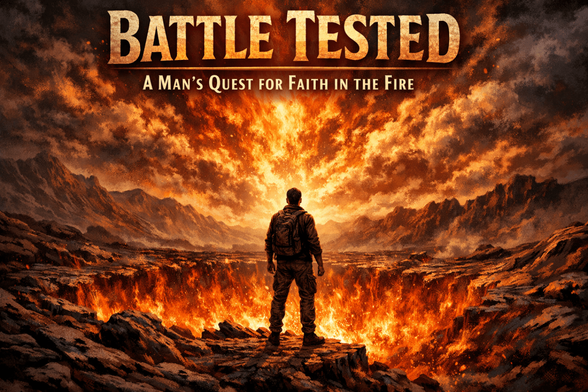
Battle Tested: A Man’s Quest for Faith in the Fire

806 words, 4 minutes read time.

The Lord is my light and my salvation—whom shall I fear? The Lord is the stronghold of my life—of whom shall I be afraid? (Psalm 27:1, NIV)

Introduction

I’ve walked through fire. Not the kind that melts metal or burns buildings—though I’ve faced moments that felt just as destructive—but the fire of life’s trials: betrayal, loss, fear, and the gnawing uncertainty that leaves your knees shaking and your heart questioning everything. It’s in these moments that I’ve learned what Psalm 27:1 means in real, raw life: the Lord is my light and my salvation. Not maybe, not someday—now.

Life doesn’t pause while you muster courage. The flames come anyway. But the good news, the radical, life-changing news, is that the same God who guided David through enemies, darkness, and the unknown is the same God who walks with you now. He is your stronghold. Your safe place. The one who steadies you when the ground beneath your feet feels like it’s on fire.

Understanding Psalm 27:1

David penned this psalm from a place of vulnerability. He faced enemies, personal danger, and seasons where life felt overwhelmingly hostile. When he says, “The Lord is my light and my salvation—whom shall I fear?” he isn’t speaking theoretical faith. He’s speaking hard-won confidence born from seeing God show up in the trenches.

The phrase “light” isn’t just poetic. In the Hebrew context, it represents guidance, clarity, and safety in a world that can feel chaotic and threatening. Light cuts through darkness. It reveals the path. When you feel swallowed by fear, God’s light exposes what’s real and what’s illusion.

“Stronghold” speaks to protection and refuge. David isn’t relying on himself, his reputation, or his strength. He’s leaning into God as the ultimate fortress, the place where even the fiercest enemies cannot breach. And here’s the kicker: when you internalize this truth, fear loses its grip. The threats are still real, but they no longer dictate your response.

Faith in the Fire

I’ve found that God often calls men to faith in the fire, not before or after. You don’t wait for perfect conditions; the heat comes first. And here’s where most of us trip up: we think faith is only proven when life is easy, when the path is clear. But faith is forged when flames press against your back, when you’re exhausted, and the voices in your head whisper, “You can’t make it.”

When I’ve faced fear—career setbacks, relationship pain, grief, and personal failure—I’ve learned a hard lesson: courage isn’t the absence of fear. It’s stepping forward because God is present, not because the fire has cooled. The Lord’s light doesn’t remove the flames—it guides you through them.

Practical Applications for Men

Faith isn’t a Sunday sermon. It’s a daily, battle-tested commitment. Here’s what it looks like in practice:

  • Face your fear honestly. Write down what scares you. Name it. Don’t mask it with distractions. Then bring it to God in prayer. He doesn’t demand denial—He offers perspective and power.
  • Build a rhythm of dependence. Daily time in Scripture, prayer, and reflection isn’t optional. It’s armor. You don’t wait for crisis to lean on God; you practice now, so when the fire comes, your reflex is faith, not panic.
  • Lean on godly men. Strength in isolation is fragile. Find brothers in Christ who will speak truth, pray with you, and hold you accountable. Courage is contagious, and wisdom multiplies when shared.
  • Use your scars to guide others. Nothing you endure is wasted. Your story of faith in fire can inspire another man, a son, a coworker, or a friend. Vulnerability isn’t weakness—it’s a light in someone else’s darkness.
  • Real-Life Reflection

    Think about your own fire. Maybe it’s a broken relationship, a grueling season at work, the weight of fatherhood, or the gnawing question of purpose. God is there. He is the light that reveals the way forward and the stronghold that shields you from being consumed by fear.

    I’ve walked through sleepless nights praying for clarity. I’ve felt betrayal slice like a blade. I’ve wondered if God even noticed the small choices I made every day. And time and again, He’s shown me: faith is survival, and courage is obedience.

    Your fire isn’t just a trial—it’s training. Every challenge strengthens you, hones your discernment, and teaches you to trust God’s presence more than your own understanding.

    Reflection / Journaling Questions

  • What is the “fire” in your life right now? Where do you feel fear pressing on you?
  • How can you let God’s light guide your decisions instead of relying solely on your own strength?
  • In what ways have you experienced God as a stronghold in past trials? How can that memory sustain you now?
  • Who are the men in your life you can share your struggles and victories with?
  • How might your current trial be shaping you to encourage or guide others?
  • Write down one fear and surrender it to God in prayer. Revisit it daily for a week—what changes?
  • Closing Prayer

    Lord, You are my light and my salvation. When fear presses on me, remind me that You are my stronghold. Teach me to trust You in the fire, to lean on Your presence, and to let my scars and struggles guide others toward hope. Give me courage to stand firm, knowing You never leave me. Amen.

    Call to Action

    If this devotional encouraged you, don’t just scroll on. Subscribe for more devotionals, share a comment about what God is teaching you, or reach out and tell me what you’re reflecting on today. Let’s grow in faith together.

    Sources

    Disclaimer:

    The views and opinions expressed in this post are solely those of the author. The information provided is based on personal research, experience, and understanding of the subject matter at the time of writing. Readers should consult relevant experts or authorities for specific guidance related to their unique situations.

    Related Posts

    #battleTestedFaith #battleTestedSpiritualGuidance #biblicalEncouragement #biblicalEncouragementForMen #biblicalGuidanceForMen #biblicalWisdom #ChristianCourage #ChristianDevotionalBlog #ChristianGrowthDevotional #ChristianLifeGuidance #ChristianLiving #ChristianMentoring #ChristianMentorship #ChristianPerseverance #ChristianReflection #ChristianReflectionForMen #ChristianResilience #ChristianStrength #courageousLiving #dailyChristianPractice #dailyDevotionForMen #devotionalBibleStudy #devotionalForMen #devotionalForWarriors #devotionalGuide #devotionalInspiration #devotionalInspirationForMen #faithInHardship #faithMentorship #faithUnderFire #faithBuildingDevotional #fearAndFaith #GodAsStronghold #GodCenteredLife #GodSLightInDarkness #GodSProtection #guidanceInFear #journalingPrompts #lifeApplicationBible #masculineFaithDevelopment #menOfFaith #menSDevotional #mentoringInFaith #mentoringMenInFaith #overcomingFear #personalDevotion #prayerForCourage #Psalm271 #reflectionQuestions #resilienceInTrials #spiritualDiscipline #spiritualGrowthDaily #spiritualGrowthForMen #strengthInTrials #strengthThroughGod #trustingGod #trustingGodDaily #trustingGodInAdversity #trustingGodInTrials

    When God Works Good From What We Cannot Understand

    Afternoon Moment

    Some afternoons feel longer than others. The morning’s energy begins to fade, responsibilities press in from every side, and the weight of unfinished tasks sits heavy on our shoulders. It is often in these later hours of the day—when the body slows and the mind grows cloudy—that our frustrations speak the loudest. Yet it is also here, in this tender space, that the Lord invites us to pause, breathe, and remember that He is near.

    Today, as the Church approaches the beginning of Advent, we turn to a theme central to this season: hope. Not wishful thinking, not optimism, but anchored hope—the kind that steadies the soul when life grows difficult. The writer of Hebrews gives us this promise: “This hope we have as an anchor of the soul, both sure and steadfast, and which enters the Presence behind the veil” (Hebrews 6:19). Our hope is not anchored in circumstances but in Christ who stands behind the veil, interceding for us.

    And this afternoon, perhaps that is exactly what you need: not answers, not explanations, but an anchor.


    Faith in the Middle of the Unseen

    Our Scripture reading from Hebrews 11:23–29 reminds us that the people of faith often walked through long seasons of uncertainty. Moses’ parents hid him for three months, not because they could guarantee the future, but because they trusted the God who governed it. Moses himself chose mistreatment with God’s people rather than comfort in Pharaoh’s courts. He walked through the sea before the waters parted. He obeyed before understanding.

    Their faith reminds us that obedience always precedes clarity. When life feels heavy, it is tempting to demand explanations from God, but the saints of old learned to walk by trust long before they saw the outcome. The anchor of Hebrews 6:19 was not placed in calm seas but in the storm’s center.

    As Oswald Chambers wisely wrote, “Suffering either makes fiends of us or it makes saints of us; it depends entirely on our relationship towards God.” Trouble has a way of revealing what we have been relying on. If our confidence rests on comfort, ease, or predictability, suffering will unravel us. But if our hope rests in Christ, suffering becomes a deep well from which God draws spiritual strength, compassion, humility, and wisdom.

    Many believers, if asked, would deny being angry with God when trouble enters their lives. Yet irritation often seeps out in the way we pray, in the tone we use when we speak of God’s sovereignty, or in the weariness that whispers, “Lord… why didn’t You stop this?” Somewhere in our hearts, we know God is capable of halting any trial with a single word. So when He doesn’t, frustration creeps in, not because we doubt His power but because we don’t understand His plan.

    But Hebrews reminds us that faith does not silence honest questions; faith simply refuses to let them turn us bitter.


    When Hurt Presses In—Kneel Instead of Run

    The study invites us to take a posture we often resist: kneeling in prayer. When disappointment, heartache, or confusion knocks on the door of your afternoon, your first instinct may be to search for an escape route—something to fix, someone to call, a distraction to reach for. But searching for a way out often magnifies the problem.

    Prayer, however, places the problem in God’s hands instead of your own.

    In prayer, we do not come as experts, strategists, or survivors—we come as children. God is your heavenly Counselor, the One who understands the entire landscape of your circumstances. He sees the beginning, the middle, and the end. He knows what this moment will produce in your life if committed to Him.

    The study encourages us to ask God why He allowed certain things into our lives. Not with accusation, but with humility. God would rather we come to Him with our confusion than hide from Him in our pain, the way Adam hid in Eden. Honest prayer opens the door for God to reshape our perspective.

    And sometimes, God uses people to help in that process. Talking through your struggles with someone who honors Christ, seeks His best for you, and values confidentiality can be deeply healing. Wisdom often flows through relationships, and many burdens become lighter when shared.

    But even good conversations must return to God in prayer. The study reminds us that the healthiest way to end such moments is by placing the hurt in the Lord’s hands, asking Him to bring good from it.


    When God Works All Things for Good

    Romans 8:28 is not a sentimental phrase or a spiritual bumper sticker. It is a pillar of hope for the hurting. “God works all things together for good…” does not mean all things are good. Pain, betrayal, injustice, illness, and loss are not good. They are wounds in a fallen world. Yet in His unsearchable wisdom, God enters the cracks of our suffering and begins weaving redemption into the places that hurt the most.

    He brings compassion out of sorrow.
    Strength out of weakness.
    Perseverance out of trial.
    And character out of disappointment.

    He does not merely repair what was broken—He transforms it.

    This is why Hebrews speaks of hope as an anchor. When we face suffering, hope keeps us from drifting into despair. When life feels senseless, hope keeps us from collapsing inward. When disappointment grows heavy, hope whispers that God is still writing the story.

    Afternoons can be long, but God is longer.
    Days can feel overwhelming, but God is deeper.
    Our strength may fade, but His strength renews us.

    Let this be your moment to breathe, pray, and remember that God is at work—even here, even now, even in this.


    A Simple Prayer for This Afternoon

    Dear Lord, please take my hurt and frustration and bring something good out of them. Give me a new perspective on my circumstances and renewed strength to face the challenges ahead. Anchor me in Your hope, and keep my heart steady in Your presence. Amen.


    FEEL FREE TO COMMENT SHARE SUBSCRIBE


    #afternoonDevotional #hebrews619 #romans828 #sufferingAndFaith #trustingGodInTrials