I love the things I get to learn about when I produce podcasts for work. AI, cybersecurity, networking, the way everything works. 🎧
https://youtu.be/ta8HcGfYyq4

👉 Part of that is the Tech Field Day Podcast, one of the podcasts I produce for my job at Tech Field Day and The Futurum Group.

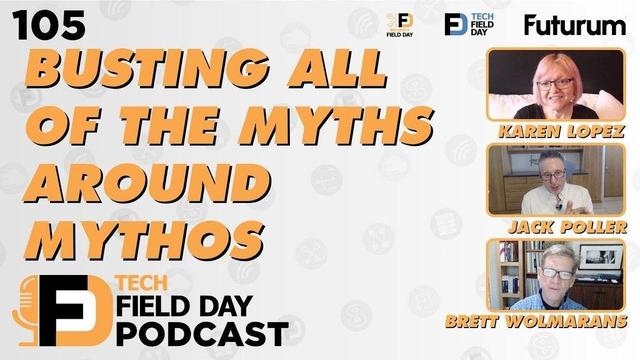
🎙️ In this episode, host Tom Hollingsworth, Jack Poller, Karen Lopez, & Brett Wolmarans break down the truth behind Anthropic Mythos model.

#TFDPodcast #XFD15 #Cybersecurity #Mythos #AISecurity #ClaudeSonnet

Security goes beyond AI. Identity and user security are hot topics at this year’s RSAC Conference.
👉 https://youtu.be/t8yJxa0xG7o?si=yq-ZUPXD5uNzdq4R

▶️ On the Tech Field Day Podcast, Tom Hollingsworth, Jack Poller, and Drew Conry-Murray discuss non-AI security trends—from identity-based and non-human users to securing the browser—and how AI may add future context.

#TFDPodcast #IdentitySecurity #Cybersecurity #EnterpriseSecurity

Billion-Dollar AI Headlines Obscure Real Business Value - Tech Field Day Podcast #AIIFD4 #TFDPodcast

YouTube

Agentic AI Spells the End of Dial Twiddlers 🧠 🌐

🌐 🔗 https://buff.ly/cOjGbxX

ICYMI: Guy Currier, Jay Cuthrell, and Alastair Cooke discuss how infrastructure abstractions, GenAI, and business-as-code are reshaping the specialist roles who are used to “twiddling the dials.”

#TFDPodcast #AI #GenAI #AgenticAI

Agentic AI Spells the End of Dial Twiddlers 🧠 🌐

🌐 🔗 https://buff.ly/cOjGbxX

Guy Currier, Jay Cuthrell, and Alastair Cooke discuss how infrastructure abstractions, GenAI, and business-as-code are reshaping the specialist roles who are used to “twiddling the dials.”

#TFDPodcast #AI #GenAI #AgenticAI

Listen to the #TFDPodcast on the go on all major podcast apps 🎧 ➡️ https://podcasters.spotify.com/pod/show/techfielddaypodcast
Tech Field Day Podcast • A podcast on Spotify for Creators

The Tech Field Day Podcast is the only podcast that dares to be both on topic, or on premise, and sometimes on location, bringing together a group of independent IT luminaries and experts in their field from around the Enterprise to discuss a single idea revolving around their technological knowledge base and skillset. This podcast is hosted by Stephen Foskett, Organizer of the Tech Field Day event series, and Tom Hollingsworth, Tech Field Day Event Lead.

Spotify for Creators

Network Engineers are Facing an Identity Crisis 🔸 🔌 🎧

NEW ▶️ https://youtu.be/nTTHMCWiMG8?feature=shared

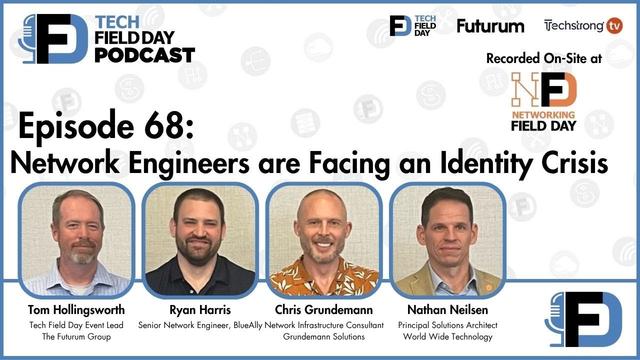
In this episode, Tom Hollingsworth talks with Ryan Harris, Chris Grundemann, and Nathan Nielsen about how the evolving role of Network Engineers and if the CLI is really dead.

@techfieldday @networkingnerd #tfdpodcast #nfd38 #networkengineering #networking #ai

Was on the @TechFieldDayPod talking abt the upcoming SHARE conference. Mainframe is AI. The new @IBM z17 will show how the two can merge together. Walk into a store and they know what you need? Get on an airplane without issue?

#TFDPodcast #SHAREcle2025 #Mainframe #AI

📺 https://buff.ly/0i2vGgD

From Tech Field Day - Networking Field Day 38 7/9-7/10:

NEW: Enterprises Shouldn't Be Outsourcing Their IT Anymore 🎧🎙️

Watch ➡️ buff.ly/aFsxzaB

Enterprise networks are complex and fully outsourcing ops doesn’t always guarantee better results.

@networkingnerd
@chrisgrundemann
@avalonhawk
@ghostinthenet

#TFDPodcast #NFD38

Company Acquisitions are a Necessary Evil in Enterprise Tech

The IT industry’s reliance on acquisitions is a necessary driver of innovation, though they often seem to get in the way of competition and progress. This episode of the Tech Field Day podcast, recorded during Cloud Field Day 21, features Ray Lucchesi, Jon Hildebrand, Ken Nalbone, and Stephen Foskett considering whether acquisitions in the IT industry are a necessary evil or a detriment to innovation. Acquisitions are often seen as a double-edged sword, with both positive and negative implications. On one hand, acquisitions can fuel innovation by providing smaller companies with the resources and market access they need to scale their ideas. On the other hand, they can stifle competition, lead to cultural clashes, and sometimes result in the disappearance of promising technologies or products.

https://youtu.be/Iy5z_Xbaib0

Apple Podcasts | Spotify | Overcast | Amazon Music | YouTube Music | Audio

See more from Cloud Field Day 21 on the Tech Field Day website or YouTube channel.

We May Not Like Acquisitions in Tech But We Need them!

The IT industry has long been shaped by the cycle of acquisitions, with large companies absorbing smaller, innovative startups to bolster their portfolios. This practice is often seen as a double-edged sword. On one hand, acquisitions can inject fresh ideas and technologies into established organizations, enabling them to stay competitive in a rapidly evolving market. On the other hand, the process can stifle innovation, as smaller companies with promising technologies are often absorbed and their products either languish or are subsumed into larger, less agile corporate structures. The debate over whether acquisitions are a necessary evil or simply detrimental to the industry remains a contentious topic.

One of the key arguments in favor of acquisitions is their role in fostering innovation. Startups often emerge with groundbreaking ideas but lack the resources or market reach to scale effectively. Being acquired by a larger company can provide the necessary capital, infrastructure, and customer base to bring these innovations to a broader audience. However, this process is not without its pitfalls. Many acquisitions result in a clash of corporate cultures, leading to inefficiencies and, in some cases, the eventual dissolution of the acquired entity’s unique value proposition. This raises questions about whether the industry might benefit more from encouraging organic growth rather than relying on acquisitions as a growth strategy.

Critics argue that acquisitions often prioritize short-term financial gains over long-term innovation. Large corporations may acquire smaller companies not to integrate their technologies but to eliminate potential competition. This practice can lead to market consolidation, reducing diversity and stifling the competitive landscape. Furthermore, the focus on financial returns, driven by venture capital and private equity investments, often pressures startups to position themselves as acquisition targets rather than sustainable, standalone businesses. This dynamic can skew the priorities of emerging companies, emphasizing exit strategies over product development and customer satisfaction.

The role of private equity in driving acquisitions adds another layer of complexity. Private equity firms often seek to maximize returns by cutting costs and streamlining operations, which can lead to a loss of innovation and employee morale within the acquired company. While some private equity firms take a more hands-on approach to foster growth and innovation, others focus solely on financial metrics, potentially undermining the long-term viability of the companies they acquire. This dichotomy highlights the need for a more balanced approach to investment, one that prioritizes sustainable growth and innovation over short-term financial gains.

In an ideal world, the IT industry would thrive on organic growth, with companies building sustainable business models and scaling through customer acquisition and market expansion. However, the reality is that acquisitions are deeply ingrained in the industry’s fabric, driven by the need for rapid growth and the financial incentives of venture capital and private equity. While acquisitions may be a necessary evil in the current landscape, the industry must strive to ensure that they are conducted in a way that fosters innovation, benefits customers, and supports the long-term health of the market. The challenge lies in finding a balance that allows both startups and established companies to thrive without compromising the industry’s overall dynamism.

Podcast Information:

Stephen Foskett is the President of the Tech Field Day Business Unit and Organizer of the Tech Field Day Event Series, now part of The Futurum Group. Connect with Stephen on LinkedIn or on X/Twitter.

Ray Lucchesi is the president of Silverton Consulting and the host of Greybeards on Storage Podcast. You can connect with Ray on X/Twitter or on LinkedIn. Learn more about Ray on his website and listen to his podcast.

Jon Hildebrand is an automation and observability expert. You can connect with Jon on LinkedIn or on X/Twitter. Learn more about Jon by reading his personal blog.

Ken Nalbone is a Senior Solutions Architect at AHEAD. You can connect with Ken on X/Twitter, Bluesky, and on LinkedIn. Learn more about Ken on his personal website.

Thank you for listening to this episode of the Tech Field Day Podcast. If you enjoyed the discussion, please remember to subscribe on YouTube or your favorite podcast application so you don’t miss an episode and do give us a rating and a review. This podcast was brought to you by Tech Field Day, home of IT experts from across the enterprise, now part of The Futurum Group.

#CFD21 #TFDPodcast #GestaltIT #KenNalbone #RayLucchesi #SFoskett #SnoopJ123 #TechFieldDay #TechFieldDayPod

https://wp.me/p4YpUP-mQu

Company Acquisitions are a Necessary Evil in Enterprise Tech - The Tech Field Day Podcast

YouTube