
Studying Acts 20 33-35 & 2 Thessalonians 3 6-12

This week we’re studying two statements by the Apostle Paul, in Acts 20:33-35 (part of a farewell speech by Paul to the elders of Ephesus) and 2 Thessalonians 3:6-12 (almost the conclusion to the 2nd letter to the Thessalonians), along with a cluster of individual verses (Genesis 2:15, Exodus 20:9, John 5:17, and John 9:4) that all mention “work.” That is, we are looking at texts that, taken together, might help us think through the “social teaching of the Christian church” that presents “useful work as a Christian duty.”

A few notes on the isolated verses are here; here are a few notes on the longer texts from Acts and 2 Thessalonians:

Acts 20:33-35 is part of the scene in which Paul says farewell to the elders of Ephesus, for what turns out to be the last time. He’s been traveling, with a set of companions, back and forth through Macedonia and Greece from his more-or-less home base in Antioch, Syria. Now, they are on their way to Jerusalem, which they hope to reach by Passover.

This is all part of the final section of the book of Acts, Part II of Luke-Acts, the “orderly account” of the life and ministry of Jesus, and then the life and ministry of the apostles sent by Jesus to be his witnesses in Judea, Samaria, and to the ends of the earth. The full account will wind up over the next eight chapters, as Paul arrives in Jerusalem, meets with James and other leaders of the church there, agrees to participate in an important Temple ritual to demonstrate his respect for and adherence to Jewish practice, gets arrested, and then tried several times, and then appeals to the emperor and so is eventually sent to Rome, having some hair-raising adventures on the way.

The farewell address to the Ephesians includes a statement of his purpose on this trip, a recap of his ministry there, and instructions to the elders to watch over the spiritual health of the believers, in particular to safeguard them from “savage wolves” – which perhaps means the purveyors of false teaching, or bad practices.

Our verses are his reminder that when he was working there in Ephesus, he didn’t take material advantage of them, but rather supported himself. He’s not in ministry for the money, but rather to serve Christ, and others.

This address to the Ephesians, along with the saying of Jesus it includes, is something we wouldn’t know was in the Bible if all we knew were the lectionary. Bible Content Examinees, take note.

CLOSER READING: In v33, the word translated “coveted” is a general term; in other contexts it could be translated “desired.” [Maybe this could remind us that simply “desiring” things is closer to what we mean by “coveting” than we often think.]

In v34, the Greek grammar emphasizes, first the needs of the apostle and then of his colleagues, and then the serving of those needs done by his hands. This “serving” is an infrequent verb, used only in the book of Acts, which carries with it an image of someone who labors at another’s direction. Later – in Acts 24:23 – Felix will give permission for Paul’s friends serve [“take care of”] his needs in this way.

In v35, the “such work” Paul commends is specifically the kind of laboring we do to the point of exhaustion; in this context it is for the support of the weak. This is a kind of support that reaches out and grabs hold, like of someone about to fall down, actively meeting the need of the situation. The weak might in other contexts be the sick, or the feeble or infirm; that is, people who definitely need help and support.

Then Paul quotes Jesus – fortunately for us, because we don’t have this statement in any of the canonical gospels – as saying “It is more blessed to give than to receive.” This is the kind of blessedness – in Greek, makarios – that shows up in the Beatitudes, too, and that is sometimes translated into English as “happy.”

Paul in these few verses, then, names what he did not do, and what he did, and presents that pattern of activity as a model for the Ephesians. The practical purpose is the support of the weak. The impetus for the practice is the command of Christ. We should note, too, that Paul’s discussion here implies that it’s the Ephesians themselves who were, under the circumstances, the “weak” he was supporting. In this case, perhaps, weak because of their newness to the faith.

2 Thessalonians 3:6-12 is almost the conclusion of this short second letter to the church in Thessaloniki. [A detailed analysis of the letter as a whole is here, from the Bible Project.]

Our verses make up the bulk of the [customary, to be expected] instructive material here at the end of this letter. Paul has just encouraged the Thessalonians to persevere through the persecution they’re experiencing, and not to be anxious about the Day of the Lord – which is yet to come, but hasn’t come yet. Now, he turns to how they ought to go about living their lives in the meantime.

One key term in the text, clearly negative, appears in v6 and v11 as an adverb describing some Thessalonians who are behaving badly, and in v7 as a verb, telling us what Paul was doing properly. It’s translated “irresponsibly” or “was not irresponsible.” Sometimes the word can have the sense of “idle;” it always seems to have the sense of people being disorderly, unruly, or undisciplined. Its etymology is from military life, where it’s used to describe people who fall out of line, out of formation. [But I can’t shake the impression of the Sharks and the Jets and the leather-jacketed hipsters who spend too much time hanging out on street corners instead of sha-na-na-na-na-getting a job.]

Don’t be like that, says Paul. Be like us, like Paul and maybe also his colleagues, who with labor and toil – words that connote extreme exertion, to the point of pain, the way we say at the end of a long, hard shift “I’m beat” – made sure they were not “burdensome” – an infrequent word, used only three times in the New Testament. Rather, they supported themselves, pulled their own weight [to use some of our own linguistic terms that talk about providing for oneself and others by reference to the struggle against gravity].

The irresponsible are not weighty, but flighty. They are meddlesome busybodies, a term that literally means something like “working around” the outer edges of actual work.

The command Paul gives in v10 and also in v12 is the kind that could sound like a “warning” (as in v6, where the same word is used) or “instruction,” and has the force of a message. [It shares a root with words like “news” and “messenger” or angel.] We ourselves might well use the verb “tell” in a context like this, as in “I told you …” or “I’m telling you …” [And by the way … if that language of “I’m telling you …” sounds or feels different to us than the language of “warning” or “command,” we might want to think about that, and ask ourselves why.]

Here’s the message: If anyone is not willing to work, neither should they eat. [Presumably there are some exceptions to this, though … we could think about what the legitimate exceptions might be.] Bread doesn’t just grow on trees. If we won’t help the Little Red Hen plant the seed and cut the wheat and thresh the wheat and carry the grain to the mill and make the bread … then neither should we eat the bread.

Paul is trying to tell people to do their work quietly and [literally] eat their own bread. This quiet way of life, by the way, is the Greek word that names meditative prayer in the Orthodox tradition, hesychasm.

Why we have left off v13 – “do not grow weary in doing what is right” – is anyone’s guess. That seems like a good thing to say about useful work.

Some questions on the texts are here.

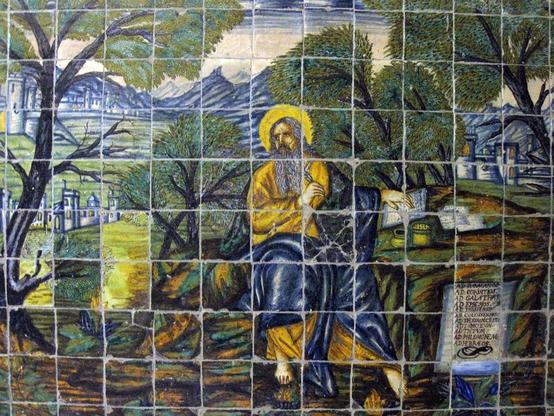
Image: “Casa de Convalescència, arrambador ceràmic” Enfo, CC BY-SA 3.0, via Wikimedia Commons

#2Thessalonians3612 #Acts203335 #BibleStudy #commentary #exegesis #meaning #readingTheBible #textsThatArenTInTheLectionary #work
Studying Genesis 2 15, Exodus 20 9, John 5 17, and John 9 14

This week we’re studying a cluster of individual verses, including Genesis 2:15, Exodus 20:9, John 5:17, and John 9:4, along with a couple of almost-whole texts, Acts 20:33-35 (part of a farewell speech by Paul to the elders of Ephesus) and 2 Thessalonians 3:6-12 (almost the conclusion to the 2nd letter to the Thessalonians).

What links these disparate de-contextualized and re-contextualized texts is their mention of work, as something people, and Christian people specifically, ought to be doing. That is, these texts presumably speak to our “social teaching” of the week, “useful work as Christian duty.”

[Although … I myself feel duty-bound to point out that these verses don’t speak to work as a specifically Christian duty. They are more about work as Torah observance, first as taught in the actual Torah, and then as practiced by the we-think-perfectly-Torah-observant Jesus, and then as practiced and encouraged by Paul, the more-Torah-observant-than-not Jewish Christian.]

Anyway, here are a few notes on these isolated verses’ meaning in their [otherwise missing] contexts:

Genesis 2:15 is taken from about the middle of the second Biblical account of God’s creation of the earth and all its inhabitants, Genesis 2:4-25, the one in which God makes an earth-and-breath creature from the dust of the ground first, then causes plants to spring up, including a couple of significant trees, and then, in our verse, takes the earthling (the adam) and sets him in the garden to serve it/her and keep/guard it/her. The Hebrew word translated “to till” is a frequently used one, typically translated “to serve.” The two infinitive verbs “to serve” and “to keep/guard” have a feminine singular object ending, corresponding to the feminine noun “garden”.

So, the original earth-and-breath creature has a God-given agenda: to serve and to keep the creation, which at this point includes plants but no animals. The chapter progresses with God seeing that “it is not good for the adam to be alone,” making animals, and then a woman, whom the adam, now also an ish, a man, poetically receives as “bone of my bone and flesh of my flesh.”

Exodus 20:9 is part of the longer commandment about keeping the Sabbath [same as the way the adam is to keep the garden]. The whole article (one of the well-known “ten words,” #4 by one way of counting those) reads

“Remember the Sabbath day and keep it holy. 9 Six days you shall labor and do all your work. 10 But the seventh day is a Sabbath to the Lord your God; you shall not do any work—you, your son or your daughter, your male or female slave, your livestock, or the alien resident in your towns. 11 For in six days the Lord made heaven and earth, the sea, and all that is in them, but rested the seventh day; therefore the Lord blessed the Sabbath day and consecrated it.

Exodus 20:8-11

This reminds us that, as anyone’s rabbi will affirm, the commandment to keep Shabbat is, reciprocally, a commandment to work the other six days of the week. The word translated “labor” in v9 is the word that names what the earth-and-breath creature is set in the garden to do: to serve. The word translated “work” names a particular kind of activity, and also the result of that activity. Famously, it includes what God accomplishes in the work of creation (see Genesis 2:2), and what the Israelites do in making the Tabernacle in the wilderness, from which the sages derive the 39 general categories of [creative, productive] work that are to be avoided on Shabbat.

John 5:17 is basically the punchline of the story that opens this chapter (John 5:1-18). Jesus heals a lame or paralyzed man at the pool of Bethesda. About half-way through the story, we find out this healing has happened on the Sabbath, when the man normatively shouldn’t be carrying anything (including his sleeping mat) and when maybe healers ought not to be healing people (although there could be some dispute about that – Jesus obviously seems to think so).

Jesus’ answer to the opposition his action provokes seems to be a reference back to Genesis 2:2-3, and Exodus 20:11, to the effect that, “as a matter of fact, God (“My Father”) isn’t actually resting just yet, and so, neither am I.”

[Presumably, this verse isn’t a prooftext for Jesus’ opposition to people’s taking a regular day of rest, Jesus’ support for repealing fair labor practices legislation, etc.]

In the next verse, Jesus’ opponents interpret Jesus’ calling God his father as overstepping a line. Maybe they are not taking seriously enough the texts that identify Israel – of which Jesus is a member – as God’s son. [See e.g., Hosea 11, Isaiah 63:16, Isaiah 64:8.]

We’d never know Jesus had ever said this, by the way, if all we knew were the lectionary.

John 9:4 is right at the beginning of the much longer narrative of “the man born blind.” “Working the works of him who sent me while it is daymay be yet another reference to God’s ongoing creative activity, including a reference to God’s creative time-keeping. (See Genesis 1, in which “evening and morning” define the “days” of God’s creative work.)

Jesus’ statement also, of course, resonates with the recurrent theme of light and dark, day and night, in the gospel of John. The entire story might even be read as a reference to the creation story, as it includes a “let there be light” moment, the beginning of something new for the sightless man, making this particular Sabbath a new first day. We might start to get the idea that days in the gospel of John are reckoned less by the visibility of the earth’s nearest star than they are by the appearance and activity of the Sun of Righteousness.

Some notes on the almost-whole-texts are here. Some questions on the texts are here.

Image: “Old book – Basking Ridge Historical Society,” William Hoiles from Basking Ridge, NJ, USA, CC BY 2.0, via Wikimedia Commons

#BibleStudy #commentary #exegesis #Exodus209 #Genesis215 #John517 #John94 #meaning #readingTheBible #textsThatArenTInTheLectionary #work
Studying Deuteronomy 16 18-20, 17 8-13

We will be thinking about what it means to provide for the doing of justice in a community, as we study Deuteronomy 16:18-20 and Deuteronomy 17:8-13 for Sunday, January 23. [Some notes on the text are here.] Here are a few notes on these texts:

BACKGROUND AND CONTEXT: The book of Deuteronomy presents itself as Moses’s recitation and review of the Torah with the Israelites just before entering the land of Canaan. Scholars estimate the text was composed at a later date, however. The text of Deuteronomy prescribes centralized institutional worship, and prohibits local sanctuaries as places of sacrifice and of judgment; it also calls for the three pilgrimage festivals. None of these practices seem to have been the rule for the earliest Israelites, who apparently had local sanctuaries that played a role in ritual and in justice. So scholars date the earliest text of Deuteronomy closer to the time of the reforms made by King Josiah, in the 7th century BCE. Subsequently, the text seems to have been edited in light of the exilic experience, and incorporated into the larger unit of the Torah. Its themes of loyalty to Adonai, its emphasis on suppressing idolatry and unorthodox practice, and its promotion of centralized worship and legal practices, also make it a fitting introduction to the Deuteronomistic history. That theological history of ancient Israel also responds to the exilic experience.

Our texts are an important part of the establishment of the central judicial apparatus. They emphasize the importance of justice as a community value; they acknowledge the role of the local community in settling disputes; but they also establish a centralized procedure for settling disputes that go beyond what the local judiciary can manage.

According to Bernard M. Levinson, in his notes on Deuteronomy in the Jewish Study Bible, cases were usually decided empirically, on the testimony of witnesses. But sometimes, evidence was lacking, and cases like that would be settled “before God,” with the aid of a priest, who might administer a trial by ordeal (e.g., see Numbers 5:11-31) or cast lots or use some other method of discerning God’s view of the matter. After worship was centralized in Jerusalem, there were [supposed to be] no local sanctuaries that could perform this task.

Cases that do not meet that empirical standard, and that once would have been remanded to the local sanctuary for divine resolution, must now be remanded instead to the central sanctuary (17.8-13). Deuteronomy is thus completely consistent in its transformation of sacrifice and in its revolution of the judicial system (Levinson, 405).

The presumptions of this legal system are fundamentally different from the presumptions we are used to in our secular society. In our society, we presume, at least theoretically, that authority to judge disputes between members of the community derives from the community itself. The members of the community are bound to acknowledge commonly available standards of empirical authority – the rules of evidence. If the evidence is insufficient, we can go no further. We don’t acknowledge any higher authority in legal matters.

The Israelite system outlined in Deuteronomy assumes that the authority for judgments derives from God, who always holds the final judicial authority. And God can render judgments “super-empirically” – that is, unconstrained by humans’ lack of empirical evidence.

Think about that.

If we haven’t thought about that for a while, or ever, it may give us a lot to discuss. In particular, we may find ourselves having to think hard about what value we place on our own fully secular legal system – and why.

No part of Deuteronomy 16 or 17 is in the lectionary. This whole matter is something you wouldn’t know about the Bible if all you knew were the lectionary. Bible Content Examinees, be warned. [And seriously: doesn’t this seem like something you’d want to know about the Bible? Or even, need to know?]

CLOSER READING: In v18, the word translated “officials” is the same word used back in Exodus for the “overseers” or “foremen” who supervised the Hebrew slaves. Robert Alter notes that the word derives from a root that means “to write down,” and might have meant something like a secretary or administrator who worked alongside the judge (674).

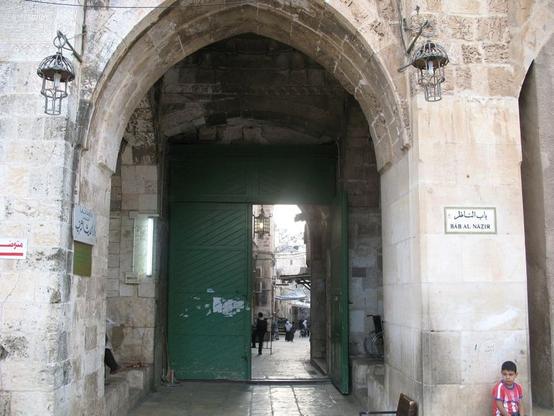
The word translated “in all your towns” is literally “in all your gates.” The gates are a feature of walled towns, presumably; and are referred to over and over as the places where the community and in particular the elders assembled for conferring and transacting business and making decisions. This makes more sense if you can have in mind the kind of big, spacious gates that would have been built into ancient walls. [See the image below – one of the gates in the wall around the Temple Mount. This picture shows the basic structure of these gates better than most. They are deep and tall, like big rooms, usually with alcoves on either side. This gives a better idea of how people could be sitting “in the gates” palavering and deliberating and trying cases and generally administering the affairs of the community. It also, just by the way, gives a whole new meaning to the poetry of “Lift up your heads, O ye gates, and the King of Glory will come in!” (Psalm 24:7)]

NRSV translates “just decisions” as what these “given” or “placed” officials are to render, using the word for “just” (tzedek) that in other contexts can be and is translated “righteous.” Upright, true; also, compassionate. (Don’t forget that tzedakah boxes (justice-and-righteousness boxes) are the banks we put money in to give to the poor.)

In v19, “distort justice” is literally “slant” or “lean” justice; we use this image sometimes, when we talk about “a level playing field” or “leaning towards” some outcome. Justice isn’t supposed to give one party an advantage before the fact. “Not showing partiality” is literally “not recognizing face” – maybe giving us an image of someone coming into a dispute who’s a friend, or someone you know from past experience, for better or worse. You are not supposed to “recognize” that. [It shouldn’t matter if one is fat and the other slim; one is wearing a rumpled t-shirt and the other a suit and tie; one is neatly groomed and polite, the other slovenly and crude; one is … you know the drill. It is not supposed to matter, when it comes to justice.]

The proverb “a bribe blinds the eyes of the wise and perverts the words / cause of those who are in the right” (or, “the innocent,” or “the righteous”) is almost a direct quote of Exodus 23:8, which was in our text last week. But here, the eyes are those of the wise rather than “the sighted” – re-emphasizing the need for the judges to exercise wisdom. Commentators have traditionally read the second clause as referring to the innocent disputants. When someone sees that the judgment won’t be fair, they are less likely to argue their case well, for instance. (So says Rashi.) It looks, however, like it could also mean that a bribe makes the “words of the righteous,” the arguments the judge would use, fall apart – that is, that it ruins an otherwise good person’s legal reasoning. And that reading seems like it would make more sense, honestly – that the bribe works its pernicious work on the [supposed to be] wise and good, on the judges, rather than on the disputants.

V20 is famous, and a good motto: Justice, justice, you shall pursue. The word tzedek is flat out repeated there – it might remind us of a parent or teacher, trying to get a point across, repeating a key word for good measure. “Pursue” means literally “run after,” strive for, follow – “pursuit” is a dead metaphor for us in many contexts, but here it does seem to be a live one; following justice is active. So that you may live.

[What comes to mind when we think of “justice” will probably affect our reading of this text. If when we hear the word “justice” we think of punishment, and purging evil from among you, and “an eye for an eye,” we may end up with one set of ideas. If we hear the word “justice” and think of tzedakah and jubilee and “care for the widow, and the orphan, and the stranger within your gate” we will end up with a different one. All of that is in the Bible, too, so another question before us might be … when does justice seem to demand which response, and whose task is it to decide that. These texts address that last bit, who has to decide.]

In v8 of chapter 17, different commentators give different interpretations as to the concrete meaning of what can’t be decided. Alter translates “between blood and blood, between case and case, between injury and injury,” which is nice, and says “[t]hese three phrases are meant to mark out the whole range of nonritual law,” from capital cases through assaults to torts (677). JPS translates “a controversy over homicide, civil law, or assault” and Levinson says that “in each of these pairs, the distinction is between premeditated and unintentional offenses” (405). Rashi seems to have a really different reading (!) The main point is that resolving the case goes beyond the competency of the local court. This might be a little bit like the distinction in the US between a matter for a state court, and one for a federal court. A little bit.

V9 seems to mean that both the priest and the judge – that is, someone who isn’t a priest, and who doesn’t have worship ritual responsibilities, but who exercises this function of judging disputes – are in place in the central location.

Commentators refer to the judge as a “layman” or a “secular” official, but it seems to me that our modern categories break down here. This high court seems to be acting as an agent of divine justice, so calling the official “secular” seems technically incorrect. Saying that this is a distinction between “religious” and “civil” authority also seems … misleading. That is, if we think that by “religious” we mean “having to do with God or Ultimate Reality or ‘the sacred’” or whatever, then this allegedly “civil” official seems quite “religious” as well. Just not a priest.

In vv10-13, the text is at pains to make clear that the verdict of this court is final, and shall be executed, or there shall be the most extreme penalty. Contempt of court in this case would be fatal.

I expect we can see why it would be a bad thing for judicial officials, whether priests or judges, to take bribes.

Also, why people might be motivated to offer them.

A PERSONAL WORD: This all brings us back to the question, which seems enormous to me at this point, of how earthly communities ought to conduct their affairs. According to what basic principles.

“Justice, justice, you shall pursue” seems like a good watchword. Tzedek. It’s a tall order. Also, a marathon, not a sprint.

But when it comes to the structure of the legal system, I have to admit [being modern, and post-Enlightenment, and all that]: I trust God. But people, not as much. “If men were angels, we would have no need of government.” But we’re not, and we do. And when people claim the official power to speak for God … well, see above.

So the idea of a justice system where the verdicts of human beings, however highly and centrally placed, would have to be accepted as the verdicts of God, on penalty of death … that sounds scary to me. Not that the human all too human justice system we have is non-scary. Just scary in a different way.

That’s not even to mention the idea of Judgment Day, and “from thence He shall return to judge the quick and the dead,” and possibly even “the fear of the LORD is the beginning of wisdom.” Although, as we also know, “perfect love casteth out fear.” And maybe even, along those lines, “justice is what love looks like in public.”

We’ll have plenty to talk about on Sunday, anyway.

WORKS CITED

Alter, Robert. The Hebrew Bible. Volume I: The Five Books of Moses. A Translation with Commentary. W.W. Norton & Company, 2019.

Levinson, Bernard M. “Introduction and Notes – Deuteronomy.” The Jewish Study Bible. Adele Berlin and Marc Zvi Brettler editors. Oxford University Press, 2004.

Torah scroll

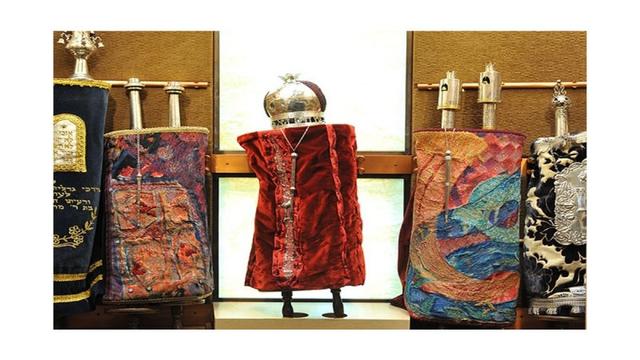
Images: “Torah scrolls in the Reconstructionist Synagogue of Montreal,” Genevieve2, CC BY-SA 3.0, via Wikimedia Commons; “Gates of Old City of Jerusalem, Palestine,” by عماد الدين المقدسي, CC BY-SA 4.0, via Wikimedia Commons; “Jerusalem Western Wall” (detail) By Berthold Werner [Public domain], from Wikimedia Commons

#BibleStudy #Deuteronomy161820 #Deuteronomy17813 #justice #readingTheBible #religionAndPolitics #textsThatArenTInTheLectionary