https://www.clubhouse.com/invite/1djuwJ4Vryd67KE608qDDzqKzwWIZ85XYd:cSGta-n3TL7ldlndrmNr5ld8d4YBmt6eECfXak3tS-U hey - you should join us Jan 31, 10:00 am for Proteomics Old-Time Radio Hour.

Man why do they always use my pic and not you @benneely.com 🤣 #proteomics #teamProteome

Proteomics Old-Time Radio Hour - Clubhouse

Huuuge group voice notes with all of your friends

Clubhouse

I am listening to this great lecture by Michelle Heck, and it made me think about some other great lectures I've missed (I still have a list from lockdown). One big one I haven't tracked down is the Jimmy Eng talk at HUPO 2020 (I think @pwilmart recommended it at the time). But... I have no idea where this video is! Any help from the masses, and sorry to be lazy.

#Proteomics #teamproteome

Check me please #teamProteome: “quant” at the protein level seems normally distributed across most sample types (high and low abundance tails), but adding depth (new MS) doesn’t preserve the low abundance tail.

Is the drop off tail biologically “real”?

Ex. blood/secretome from Anderson^2 to Uhlén.

#Proteomics

I’m the late 00’s I was enamored with AFFF-MALS (or DLS), and am always surprised I am not hearing about folks using it upstream of proteomics. Could definitely work (and did for me in 2008) for EVs and likely work for some organelles and even some cell types (I don’t actually know the upper limit on size range).

Is it something Wyatt did or…?

#proteomics #teamproteome #teammassspec

Real need for a Mammalian Protein Naming Authority. #teamProteome
Neither species is fond of initiating at M1. #teamProteome
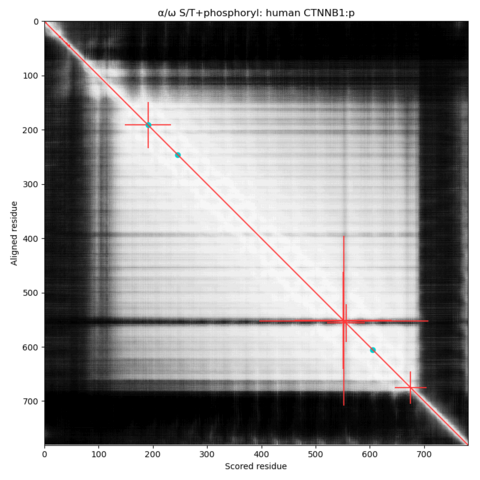
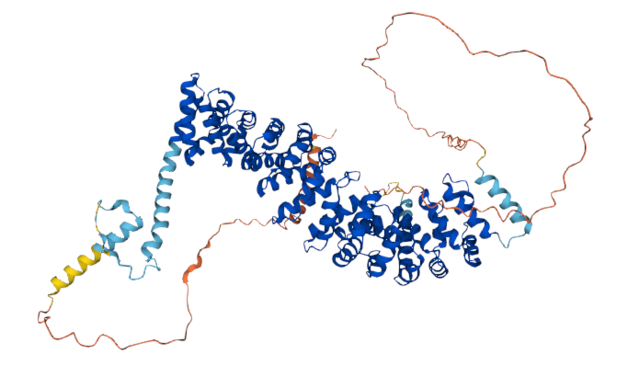
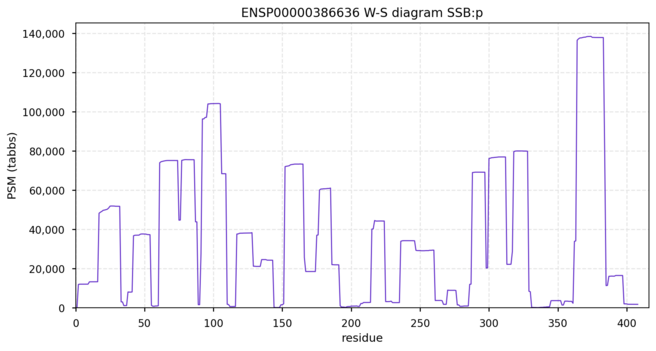
α⧸ω S/T phosphorylation diagram of human β-catenin (CTNNB1:p). The diagram is dominated by a large bright patch corresponding to a domain of armadillo repeats. The repeats are composed of anti-parallel α-helixes with rather short unstructured loops. The 3 S/T+phosphoryl acceptors are situated on these loops: the helixes themselves are (as usual) kinase-resistant.
#teamProteome
MS-based proteomics has its own equivalent of a "dark" proteome, i.e., the set of residues in a proteome not normally observed using tryptic peptides. #teamProteome

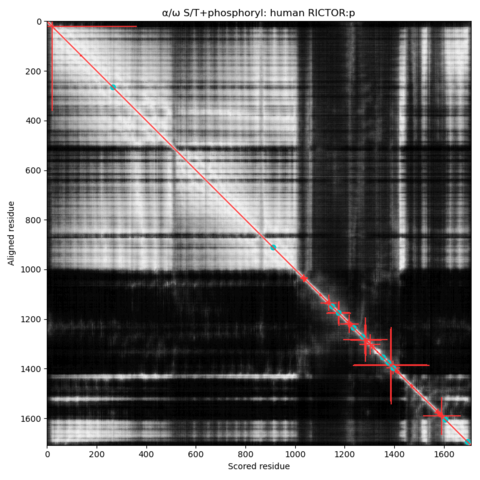
α⧸ω S/T phosphorylation diagram of human regulatory associated protein of mammalian target of rapamycin―complex 1―independent companion of mammalian target of rapamycin―complex 2 (RICTOR:p). Bigly phosphorylated across the shadowy cward IDR (1000-1600) & a single acceptor in a narrow N-terminal IDR. The shiny, α-helical structured domains remain kinase resistant:

(71-533) Armadillo-type
(660-1001) Armadillo-type fold

#teamProteome

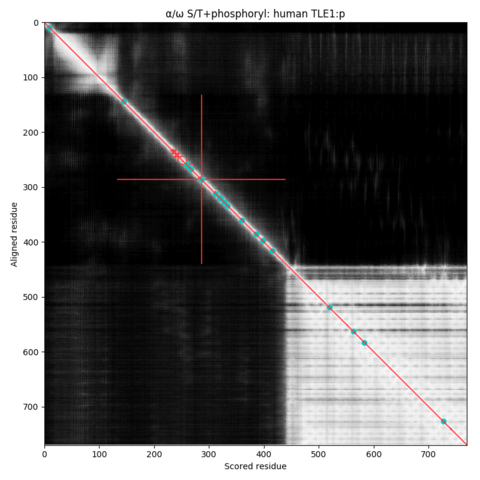
α⧸ω S/T phosphorylation diagram of human transducin-like enhancer of split family member 1 (TLE1:p). This protein has a pattern characteristic of most TLE family members: phosphorylation acceptors in a central IDR and a shiny, cward, kinase resistant WD40-repeat-containing domain (434-768) that forms a β propeller.
#teamProteome