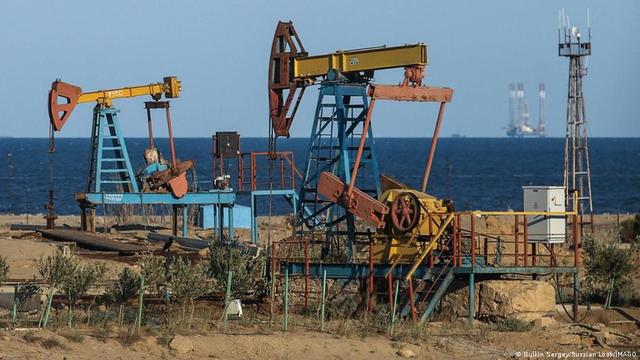
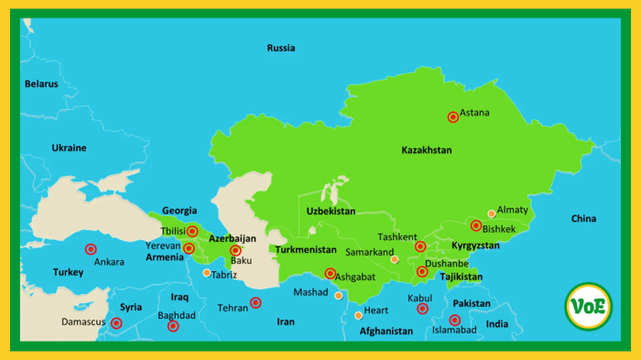
"Iran war boosts strategic significance of South Caucasus

With war raging in Iran, the South Caucasus has become one of the few stable corridors between Asia and Europe. Nowhere are the conflict's opportunities and risks more visible than in Azerbaijan."

https://www.dw.com/en/iran-war-boosts-strategic-significance-of-south-caucasus/a-76518386

#SouthCaucasus #Azerbaijan

Iran war boosts strategic significance of South Caucasus

With war raging in Iran, the South Caucasus has become one of the few stable corridors between Asia and Europe. Nowhere are the conflict's opportunities and risks more visible than in Azerbaijan.

Deutsche Welle

#CfA #Masterclass with Bryan Ward-Perkins: “The Cult of Saints in Late Antiquity database"

📌 8 May 2026 | in Yerevan, Georgia | organised by #MWSGeorgiaBranchOffice | for students from #Armenia and #SouthCaucasus

📅 Deadline: 17 April 2026

🔗 https://mwsgeorgien.hypotheses.org/files/2026/03/CfA_Masterclass-with-Prof-Bryan-Ward-Perkins.pdf

Yazids

Also spelled Yesidis.

They’re a Kurdish-speaking endogamous religious group indigenous to Kurdistan, a geographical region in Western Asia that includes parts of Iraq, Syria, Turkey, & Iran, with small numbers living in Armenia & Georgia (the country). Endogamy is the cultural practice of only marrying within a specific social group, religious denomination, caste, or ethnic group. The majority of the Yazidis remaining in the Middle East today live in Iraq, primarily in the governorates of Nineveh & Duhok.

Yazidism came about through a complex historical process involving a pre-Islamic Kurdish religious substratum & teachings of Sheikh Adi ibn Musafir. Generally, scholars regard Yazidism as an independent religious tradition with deep roots in ancient Iranian beliefs, shaped by later Sufi influences. Yazidism was adopted by many Kurdish tribes & Emirates. It reached as far west as Antioch & as far east as Sulaymaniyah. Sulaymaniyah/Slemani is a city in the East of the Kurdistan region of Iraq.

Yezidi manuscripts (called misurs) were written in the 13th century. It contains lists of Kurdish tribes affiliated with Yezidi Pir saints. Only 2 of the 40 total manuscripts have been published so far. Namely, the Misur of Pir Sini Darani & the Misur of Pir Xetib Pisi. The list in the Misur of Pir Sini Darani includes several large tribes that have been largely or fully Islamized today.

From the 14th century on, Yazidis developed their own religious & political institutions in the areas where they lived. The Yezidi territories were divided into 7 administrative centers. Each has its own Sincaq (This is an administrative division of the Ottoman Empire). More commonly known as Tawis among the Yezids. Sincaqs are sacred bronze effigies bearing the image of a bird or peacock to symbolize Tawusi Melek. They serve as symbols of power for each administrative center.

Every 6 months, the Yezidi Quwals, who are trained reciters of Qewls & other forms of sacred oral Yezidi tradition, were sent out to other Yezidi-inhabited areas with military protection from the central administrative region of Shekhan & the spiritual center of Lalish.

This tradition serves to preserve the Yazidi faith & doctrine. The Qewals, supported by voluntary alms, led a Sincaq through Yazidi villages to maintain spiritual legitimacy & symbolize the authority of Lalish & the Mir.

During WWI, the Armenian genocide of 1915 caused a mass exodus of Yazidis from Van, Kars, & Bazid, Turkey. Together with many Armenians, they fled from the Ottoman Empire in masses to Transcaucasia (a.k.a. South Caucasus. This is located on the border of Eastern Europe & West Asia, which straddles the southern Caucasus Mountains.).

They followed their families/relatives who had already migrated to the territories of the Russian Empire after fleeing during the Russo-Turkish wars in 1828-1829 & 1877-1878. In May 1918, Ottomans crossed the Akhuryan River to invade the Armenian Republic. The Yezidi participation in the decisive Battle of Sardarabad is still commemorated by Armenians.

Yazidism is a monotheistic faith based on belief in 1 God, who created the world & entrusted it into the care of a Heptad of the 7 Holy Beings. Often known as angels or heft sirr (the 7 Mysteries). Preeminent among these is Tawusi Melek (also known as Melek Taus), the Peacock Angel. Traditionally, Yazidis who marry non-Yazidis are considered to have converted to the religion of their spouse.

Make a one-time donation

Your contribution is appreciated.

Donate

Make a monthly donation

Your contribution is appreciated.

Donate monthly

Make a yearly donation

Your contribution is appreciated.

Donate yearly #14thCentury #1828 #1829 #1877 #1878 #7HolyBeings #7Mysteries #AkhuryanRiver #Antioch #Armenia #ArmenianRepublic #Armenians #BattleOfSardarabad #Bazid #Duhok #EasternEurope #Georgia #HeftSir #Heptad #Iran #Iraq #Islam #Kars #Kurdish #Kurdistan #Lalish #May1918 #MelekTaus #MiddleEast #Mir #MisurOfPirSini #MisurOfPirSiniDarani #Misurs #MustOfPirSIniDarani #Nineveh #OttomanEmpire #Ottomans #PeacockAngel #Qewls #RussianEmpire #RussoTurkishWars #Saints #Shekhan #Sincaq #Slemani #SouthCaucasus #SouthernCaucasusMountains #Sufi #Sulaymaniyah #Syria #Tawis #TawusiMelek #Transcaucasia #Turkey #Van #WestAsia #WesternAsia #WorldWarI #Yazidism #Yazids #YesidiPir #Yesidis #YezidiQuwals
A drone strike in Azerbaijan’s Nakhchivan has escalated tensions between Baku and Tehran, raising concerns about stability in the South Caucasus https://ow.ly/GxkK50Yroih #Azerbaijan #Iran #Nakhchivan #SouthCaucasus #Geopolitics #Baku #Tehran #DroneStrike

How an Incident on the Azerbai...
How an Incident on the Azerbaijan-Iran Border Became a Test for Diplomacy in the Region - The Times Of Central Asia

The drone strike on Azerbaijan's Nakhchivan Autonomous Republic on March 5 has become one of the most serious incidents in relations between Baku and Tehran

The Times Of Central Asia
A drone strike in Azerbaijan’s Nakhchivan has escalated tensions between Baku and Tehran, raising concerns about stability in the South Caucasus https://timesca.com/how-an-incident-on-the-azerbaijan-iran-border-became-a-test-for-diplomacy-in-the-region/ #Azerbaijan #Iran #Nakhchivan #SouthCaucasus #Geopolitics #Baku #Tehran #DroneStrike

TRIPP Alone Should Change Russia’s Southern “Near Abroad” Strategy

TRIPP Alone Should Change Russia’s Southern “Near Abroad” Strategy

By Andrew Korybko

He’s one of Russia’s top experts, yet his latest Valdai report on this subject didn’t even make passive mention of Trump 2.0’s flagship megaproject that’s expected to expand Western – including NATO – influence throughout the South Caucasus and Central Asia, which suggests that he’s oblivious of it.

Timofei Bordachev is one of Russia’s top experts. Not only is he a Programme Director at the Valdai Club, Russia’s main think tank which hosts Putin for a Q&A at its annual meeting every fall, but his work is also regularly translated and republished by RT. One his latest such ones on their site contrasts the fates of Mexico vis-à-vis the US with the South Caucasus’ and Central Asia’s vis-à-vis Russia to argue that Russia treats its “Near Abroad”, which is a euphemism for its “sphere of influence”, better than the US does.

The purpose was to challenge those in Russia who’ve “argued that the Central Asian republics receive too much from Russia while offering little in return”, ergo why “Moscow should adopt a more pragmatic, even harsher, approach toward its southern neighbours. Something akin to the way the United States has treated Central America for the past two centuries…Critics argue that these states play a ‘multi-vector’ game, extracting benefits from Russia while hedging politically and offering little in return.”

Bordachev himself published a piece in mid-February asking, “Towards Genuine Multi-Vector Alignment?”, which was analysed here as being most relevant to Azerbaijan since the form that its aforesaid policy takes poses a serious challenge to Russia. In particular, its armed forces conformed to NATO standards in November, and last August’s “Trump Route for International Peace & Prosperity” (TRIPP) has the dual role of expanding Western influence into the South Caucasus and Central Asia.

This arguably emboldened Kazakhstan to declare a month later in December that it’ll begin producing NATO-standard shells, thus possibly placing it on an irreversible collision course with Russia that was analysed here. Kazakhstan’s TRIPP-emboldened challenge to Russian interests was then followed up on here last month when analysing why its president is suspiciously going overboard trying to please Trump. Here are five background briefings about all the ways in which TRIPP threatens Russia’s national security:

* 9 August 2025: “The TRIPP Corridor Threatens To Undermine Russia’s Broader Regional Position

* 10 December 2025: “How Can The US Manage Turkish-Russian Tensions In The South Caucasus & Central Asia?

* 11 February 2026: “Vance’s Trip To The South Caucasus Tightens The West’s Encirclement Of Russia

* 12 February 2026: “Armenia’s Pro-American Pivot Might Entail Radical Socio-Cultural Costs

* 13 February 2026: “The US-Azerbaijani Strategic Partnership Could Destabilize Russia’s Southern Periphery

Even if one disagrees with the extent to which TRIPP threatens Russia’s national security, there’s no doubt that this megaproject will enable the expansion of Western influence – including NATO influence – along its entire southern periphery and is a major part of Trump 2.0’s foreign policy. At the very least, one would think that it would have been at least passively referenced in Bordachev’s latest Valdai report about Russia’s “Near Abroad”, which extensively covered its partners to the south.

As surreal as it may sound, this report that was published between Bordachev’s previously mentioned pieces about multi-vector alignment and Mexico didn’t make any mention whatsoever to TRIPP, which one can easily confirm by doing a CTRL+F search for “Trump” and “TRIPP”. Given that he’s surprisingly oblivious of TRIPP, thus also of Trump 2.0’s foreign policy towards Russia’s entire southern periphery by extrapolation, it therefore makes sense why he challenged critics of Russia’s policy there.

He accordingly doesn’t assess there to be any latent national security challenges to Russia along that front, but he’s mistaken as was explained throughout this analysis. As one of Russia’s brightest minds, his work is presumably relied upon to a degree by officials when formulating policy, which is why it’s crucial for him to acknowledge TRIPP and the ways in which it threatens Russian national security without delay. TRIPP alone should change Russia’s southern “Near Abroad” strategy and hopefully he’ll soon agree.

Disclaimer: The views expressed in this article are author’s own and do not necessarily reflect the editorial policy of Voice of East.


#CentralAsia #DonaldTrump #Geopolitics #NATO #Russia #SouthCaucasus

Azerbaijan’s “Multi-Vector Alignment” Poses A Serious Challenge To Russia

Azerbaijan’s “Multi-Vector Alignment” Poses A Serious Challenge To Russia

By Andrew Korybko

The “Trump Route for International Peace and Prosperity” is poised to become a military-logistics corridor for expanding NATO influence along Russia’s southern periphery and could thus force Putin into the zero-sum dilemma of accepting this or authorizing military action in an attempt to preempt it.

Valdai Club Programme Director Timofei Bordachev recently published an insightful piece asking whether former Soviet Republics are moving “Towards Genuine Multi-Vector Alignment?” This is described as “systematic efforts to create and maintain, insofar as possible, balanced and mutually beneficial relations with different global centres of power and regional actors, without obvious orientation towards any single bloc, and relying on tactical manoeuvring to ensure security and achieve core development goals.”

He claims that “The fact that this habit began to take shape (among the post-Soviet states) through opposition to traditional Russian influence could be regarded as an ‘inevitable evil’ which, in essence, could not inflict truly fundamental damage on Russia…Today, however, the management of multi-vector alignment may confront Russia’s neighbours—and, one step further, Russia itself—with new challenges.” These include US coercion and “a readiness to significantly enhance one’s status in regional affairs.”

Bordachev didn’t name any of the post-Soviet states other than Russia in his article, but the argument can be made that his concerns are most relevant with respect to Azerbaijan. Its decision to replace Russian mediation with Armenia with American mediation, agree last August to the “Trump Route for International Peace and Prosperity” (TRIPP) which replaces Russia’s envisaged regional corridor and role therein, and the outcome of Vance’s recent trip there collectively pose a serious challenge to Russia.

All of these moves are framed by Azerbaijan as part of what Bordachev describes as the “multi-vector alignment” policy, which is factually correct. It’s also true what he wrote about how “signalling one’s own foreign-policy autonomy and the capacity to make decisions based on national interests as shaped by domestic political development” is “by no means objectionable”. The problem therefore rests in this policy’s practical implementation by Azerbaijan in the current geostrategic context of the New Cold War.

Trump 2.0 is tightening the West’s encirclement of Russia in an attempt to coerce Putin into concessions in Ukraine that would leave unfulfilled the maximalist national security goals of the special operation. That was the purpose of Vance’s trip to the South Caucasus as was explained here. Azerbaijan now functions as a launchpad for expanding US economic, political, and inevitably, military influence across the South Caucasus, the Caspian Sea, and Central Asia, which is Russia’s entire southern periphery.

Nearby Kazakhstan, which announced in December that it plans to produce NATO-standard shells, might soon be emboldened to more openly defy Russia in Azerbaijani-inspired ways that challenge its security interests even more seriously under the pretext of implementing its own “multi-vector alignment” policy. This risks replicating the NATO-Russian security dilemma that ultimately led to the special operation when it became unmanageable, except this time along two southern fronts at once, Azerbaijan and Kazakhstan.

Azerbaijan’s “multi-vector alignment” policy and consequent “readiness to significantly enhance [its] status in regional affairs”, albeit at the expense of Russia’s security interests, is responsible for setting this scenario into motion. TRIPP is poised to become a military-logistics corridor for expanding NATO influence along Russia’s entire southern periphery so Putin might therefore soon be forced into the zero-sum dilemma of accepting this encirclement or authorizing military action in an attempt to preempt it.

Disclaimer: The views expressed in this article are author’s own and do not necessarily reflect the editorial policy of Voice of East.


#Azerbaijan #CentralAsia #Geopolitics #NATO #Russia #SouthCaucasus

Here’s How Karabakh Became The Catalyst Of Russia’s Southern Peripheral Setbacks

Here’s How Karabakh Became The Catalyst Of Russia’s Southern Peripheral Setbacks

By Andrew Korybko

The previously unresolved Karabakh Conflict might in retrospect be seen as a several-decades-delayed grand strategic game-changer that revolutionized regional geopolitics.

Vance’s recent trip to the South Caucasus, which saw him visit Armenia and Azerbaijan to accelerate implementation of the “Trump Route for International Peace and Prosperity” (TRIPP) that’ll expand US influence into Central Asia, drew attention the US’ recent strategic gains at Russia’s expense. Everything’s now moving so fast that few remember how it all started with 2020’s Continuation War in Karabakh, the internationally recognized part of Azerbaijan that was then controlled by Armenia for three decades.

To over-simplify the sequence of events, Armenian Prime Minister Nikol Pashinyan rose to power in 2018 through a Colour Revolution on the back of Western diaspora-driven anti-Russian sentiment, but Moscow tried to work with him anyhow since his country is a CSTO member. Around that time, it became obvious that Azerbaijan would soon militarily outmatch Armenia, hence why Russia proposed that Armenia compromise with Azerbaijan over Karabakh. Pashinyan, who was already pivoting to the West, refused.

Armenia’s loss in 2020’s Continuation War saw it and Azerbaijan agree to a Moscow-mediated ceasefire for deploying peacekeepers to Karabakh. That deal also obligated Armenia to unblock regional transport routes for connecting “mainland” Azerbaijan with its exclave of Nakhchivan. This new regional corridor would then be guarded by Russia. As with Russia’s pre-war proposal that Armenia compromise with Azerbaijan over Karabakh, Pashinyan also refused to comply with this too due him pivoting to the West.

Azerbaijan predictably lost patience and exploited Russia’s focus on the special operation to launch a one-day military operation in Karabakh in September 2023 for expelling the rest of Armenia’s forces. Even then, Pashinyan still refused to unblock regional transport routes, emboldened as he was by support from the Biden Administration. They were in turn operating under the influence of California’s powerful Armenia diaspora lobby and ties with Azerbaijan were also greatly worsened at this time.

Had Kamala won, the US would probably have continued supporting Armenia over Azerbaijan and thus attempted to transform it into their bastion of influence for dividing-and-ruling the region, possibly by one day emboldening Armenia to launch a doomed-to-fail revanchist war. Trump 2.0 reversed his predecessor’s policy by repairing ties with Azerbaijan, perhaps after being convinced of the wisdom in doing so by Qatar, which wields lots of influence with them and is close with Azerbaijan’s Turkish ally.

They then saw the chance to replace Russia’s role in the Armenian-Azerbaijan peace process and also in the corridor that it proposed, thus enabling what came to be known as TRIPP to obtain a dual military-logistics function for expanding NATO influence along Russia’s entire southern periphery. To review, this was set into motion by Pashinyan’s successful Colour Revolution, his repeated US-backed refusals to comply with Russia’s advice to compromise with Baku, and then Trump 2.0’s regional policy reversal.

It remains a subject of debate whether Russia could have decisively intervened, even if only diplomatically, at each of these three stages to preemptively avert this major regional setback that might expose its entire southern periphery to radical Ukrainian-like NATO influence in the worst-case scenario. In any case, this all stems from the previously unresolved Karabakh Conflict, which might in retrospect be seen as a several-decades-delayed grand strategic game-changer that revolutionized regional geopolitics.

Disclaimer: The views expressed in this article are author’s own and do not necessarily reflect the editorial policy of Voice of East.


#Armenia #Azerbaijan #CentralAsia #Geopolitics #KarabakhConflict #NATO #Russia #SouthCaucasus #Turkey #Turkiye #USA
Drones reportedly launched from Iran struck Azerbaijan’s Nakhchivan exclave, injuring civilians and raising fears the widening conflict could spill into the South Caucasus https://ow.ly/bXqU50YpHcY #Azerbaijan #Iran #Nakhchivan #SouthCaucasus #Geopolitics #droneattack

Azerbaijan Accuses Iran of Dro...
Azerbaijan Accuses Iran of Drone Attack on Nakhchivan - The Times Of Central Asia

Drones allegedly launched from Iranian territory struck Azerbaijan’s Nakhchivan Autonomous Republic around noon on March 5, Azerbaijan’s Foreign Ministry has

The Times Of Central Asia
Drones reportedly launched from Iran struck Azerbaijan’s Nakhchivan exclave, injuring civilians and raising fears the widening conflict could spill into the South Caucasus https://timesca.com/azerbaijan-accuses-iran-of-drone-attack-on-nakhchivan/ #Azerbaijan #Iran #Nakhchivan #SouthCaucasus #Geopolitics #droneattack
Azerbaijan Accuses Iran of Drone Attack on Nakhchivan - The Times Of Central Asia

Drones allegedly launched from Iranian territory struck Azerbaijan’s Nakhchivan Autonomous Republic around noon on March 5, Azerbaijan’s Foreign Ministry has

The Times Of Central Asia