Pressed Petals

On Art, Obscurity, and Faithful Release

I am trying to understand the pressure within me.

I do not think the problem is that I want to complete things. Completion is not wrong. It is good to finish. It is good to give form to what has been stirring within me. It is good to bring a story, a song, a piece of art, a sermon, a reflection, or a book to the point into the world outside of me.

I also do not think the problem is that everything I see or do becomes inspiration. That is not really true. I am not endlessly turning every bird, every headline, every conversation, every historical fact, every passing image into a mandate. But I am a creative person. I do receive the world creatively. I do carry within me stories upon stories, art upon art, songs upon songs. I am full to the brim.

I could burn all my writings. I could get rid of all my wood and tools, my instruments, artist pens, notebooks, and unfinished manuscripts. I could live in an empty house. But I would still be me.

I would still be full.

So the question is not simply, “How do I get rid of the pressure?” The pressure is not only in the objects around me. The pressure is in the love, the longing, the calling, the imagination, and the grief within me. It is in the fact that I have created so much, imagined so much, begun so much, and hoped so much.

Maybe the deeper issue is timing.

Maybe it is not forcing things to be seen. Maybe it is not demanding that every creation immediately justify itself in the world. Maybe it is about creating because creating is part of who I am, and then learning when and how to release what I have made.

But even that is difficult, because my creations are not merely products to me. They are not just content. They are not just files, posts, pages, songs, or images. They feel like children.

And if they are children, then do I not owe them a life?

Do they not deserve to be born, released into the world, seen, growing, making children of their own? Is that not what seeds are supposed to do? A seed is not meant to remain forever in its packet. A song is not meant to remain forever unheard. A story is not meant to remain forever unread. A painting is not meant to remain forever unseen.

A child is not meant to remain forever in the nursery.

This is where the theology of less becomes hard for me.

I can understand becoming less before God. I can understand humility. I can understand that fame is not salvation, that platform is not faithfulness, that applause is not the measure of a life. I can understand that hiddenness can be holy and smallness can be faithful.

But I do not know how to make peace with the utter unfairness of being unknown.

It feels unfair that shallow things are seen while deep things disappear. It feels unfair that loud things are rewarded while quiet, careful, soulful things are ignored. It feels unfair that some people seem born with platforms, networks, confidence, and an audience, while others carry whole worlds inside them and can barely find a door. It feels unfair that my creations might never have the chance to become what they could become in the world.

Not to compare, but it seems others will always have more. Their gardens will be bigger. Their opinions will be loud. Their books will be published. Their children will be giants. Their lives will be important. Their plans will be successful. Their family will enlarge. Their church will be mega. Their ministry will be blessed. Their corporation will grow. Their house will be comfortable.

And I fear that I will become less.

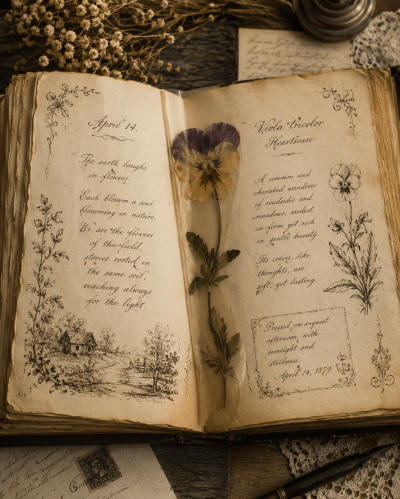
A pressed faded flower in a dusty book.

My words without weight. My writings unknown. My children tufts of grass in city sidewalks. My life hidden. My hopes dashed. My name ended. My chapel tiny. My faith questioned. My business failed. My home feeling like old dead skin. And I, a creature curled in some coffin hole.

That is the fear underneath the pressure.

It is not only that I want success. It is that obscurity feels like abandonment. It feels like my creations have been born into a world that has no room for them. It feels like I have been faithful to them by bringing them forth, but the world has not been faithful in receiving them.

And yet, perhaps I am being asked to distinguish between faithful release and guaranteed reception.

I can birth the work.
I can name the work.
I can feed it, clothe it, revise it, shape it, bless it.
I can give it a door.
I can show it a road.
I can release it into the world.

But I cannot make the world welcome it.

That is where the pain is. That is where the unfairness lives. I want not only to create the work, but to protect it from neglect. I want to be artist and audience, parent and world, sower and weather, seed and soil. I want to make sure that what I have loved does not disappear.

But maybe that is too much for me to carry.

Maybe my creations are my children, but they are not my saviors.

Maybe I owe them faithful release, but I do not owe them guaranteed success.

Maybe I can grieve obscurity without hearing it as a verdict.

That sentence matters to me: I can grieve obscurity without hearing it as a verdict

Because obscurity speaks like a judge. It says, “No one knows this, therefore it does not matter. No one read this, therefore it has no weight. No one heard this, therefore it was not a real song. No one saw this, therefore it was not real art. No one published this, therefore it was not a real book. No one noticed this life, therefore this life was wasted.”

But obscurity is not God.

Obscurity does not get to name the value of my work.

Still, I cannot pretend that visibility does not matter at all. That would be dishonest. My creations do need windows. They do need doors. They do need pathways. They do need some way to move beyond me. If I keep everything hidden forever out of fear, confusion, perfectionism, or despair, then I am not being faithful to them.

So perhaps the theology of less is not to “make peace with never being seen.”

Perhaps it is: make doors without worshiping doors.

Make the book.
Make the post.
Make the song page.
Make the archive.
Make the submission.
Make the collection.
Make the small press.
Make the reading.
Make the gathering place.
Make the simple, faithful path by which the work can walk into the world.

But do not demand that the door become a throne.

Do not demand that every release become vindication.

Do not demand that every creation prove my life was worth living.

That is where I become Atlas beneath a planet of creation. I carry not only the work itself, but its future, its reception, its audience, its influence, its children, its grandchildren, its whole imagined destiny. I am not only trying to make things. I am trying to guarantee what they will become.

No wonder I feel incapacitated.

Perhaps the faithful question is smaller.

Not, “What will become of all my creations?”

But, “What does this one need next?”

This one story.
This one song.
This one image.
This one reflection.
This one book.
This one child of my imagination.

Does it need finishing?
Does it need editing?
Does it need a cover?
Does it need to be posted?
Does it need to be submitted?
Does it need to be gathered with others?
Does it need to rest until its season comes?
Does it need to remain a seed a little longer?

That is not abandonment. That is attention.

I cannot parent the whole household of my imagination all at once. I cannot carry every child at the same time. I cannot give every creation its full future today. But I can turn toward one and ask what faithfulness looks like now.

This is not less love.

It may actually be a better stronger love.

Panic says, “I must get everything out before it is too late.”

Faithfulness says, “I will give this one the care it needs today.”

Panic says, “If this is not seen widely, I have failed.”

Faithfulness says, “I will give it a real path into the world, and then I will release what I cannot control.”

Panic says, “My birthings are dying in obscurity.”

Faithfulness says, “Some seeds sleep before they rise.”

I do not want to use seed language too cheaply. Seeds are supposed to grow. I know that. That is exactly why it hurts. Seeds want soil, light, water, air, room. My creations want communion. They want to meet other lives. They want to make children of their own.

But perhaps the timing of growth is not always mine to command.

Some seeds grow quickly. Some grow slowly. Some are carried by birds. Some lie hidden until fire, flood, winter, or strange mercy opens them. Some become roots long before they become leaves. Some feed the soil that feeds another tree.

This does not remove the ache.

But maybe it removes some of the accusation and guilt.

I am not betraying my creations simply because they are not yet widely known. I betray them only if I refuse to love them truthfully, shape them faithfully, and give the ones that are ready a way outside myself.

So I will try to live by a gentler discipline.

I will create because creating is part of who I am.

I will complete what I can, not because completion saves me, but because form and formation is a kind of love.

I will release what is ready, not because release guarantees success, but because communion is part of the nature of art.

I will build openings, but I will not worship doors.

I will grieve obscurity, but I will not hear it as a verdict.

I will remember that my creations may be my children, but they are not my saviors.

I will remember that I owe them faithful release, not guaranteed success.

I will remember that I am not artist and audience, parent and world, sower and weather, seed and soil. I am not Atlas. I am a finite creature with a full heart, a crowded imagination, and one life.

So perhaps my prayer is this:

God of seeds and seasons,
teach me how to love what I have made without being crushed by it.
Teach me how to complete what is mine to complete.
Teach me how to release what is ready to be released.
Teach me how to wait without calling waiting failure.
Teach me how to build openings without worshiping doors.
Teach me how to grieve the unfairness of being unknown without letting obscurity become my judge.

Bless my stories, my songs, my art, my sermons, my reflections, my unfinished fragments, my hidden children.

Give them life where life is possible.
Give them readers, listeners, viewers, companions, and future children if that is their path.
And where they must wait, let them wait as seeds, not broken corpses.

Let me be faithful to them.
Let me be free from needing them to save me.
Let me create because I am alive.
Let me release because love seeks communion.
Let me rest because I am not God.

I give you this one thing I make today.

I bless it.

I open the door.

I let it walk.

I return to the waiting room within.

More at Medium

#artAndFaith #artistLife #becomingLess #belovedness #ChristianReflection #creativeCalling #creativeLife #creativeOverwhelm #creativeStruggle #Creativity #faithfulRelease #Faithfulness #GriefAndGrace #hiddenCreativity #hiddenLife #Hope #Lament #Obscurity #Prayer #reflection #seedsAndSeasons #smallness #soulfulCreativity #spiritualFormation #SpiritualReflection #storiesSongsAndArt #theologyOfLess #unseenWork #vocation #WordPressTagsForPressedPetalsOnBecomingLessWithoutBecomingNothingPressedPetals #writingLife


From Kingship to Smallness: The 14-Year Journey from Saul to Paul

1,716 words, 9 minutes read time.

This deep dive into the life of the Apostle Paul is built on the archaeological, cultural, and theological reality of the first-century Roman world. It is a world of harsh lines and absolute ownership. While historical records do not confirm a physical ear piercing with 100% certainty, the internal logic of the Eved (Love-Slave) ritual and the cultural weight of the term doulos provide a compelling framework for understanding Paul’s radical transformation.

The religious elite of the first century were not looking for a savior; they were looking for a judge who could crush dissent. Saul of Tarsus was that judge. He lived in the “kingship” of his own heritage, a high-ranking Pharisee with the legal authority to hunt, bind, and destroy those who followed the Way. This was not a man drifting through life; this was a man of absolute power who was eventually leveled by a light that blinded his physical eyes to open his spiritual ones. The Damascus road was the end of Saul the King. What followed was not an immediate rise to stardom but a systematic 14-year dismantling of his pride, his rank, and his very name. This article deconstructs that journey—the transition from the high-commanded hunter to the “Love-Slave” of Christ. It is a map of decrease, moving from the top of the social ladder to the position of a bondservant, a status held in utter contempt by the world. Face this truth: the wreckage of a life built on self-importance must be cleared before the Master can build anything of value.

The Saul to Paul Name Change and Social Demotion

The transition from the Hebrew name Saul (Sha’ul) to the Latin Paul (Paulus) was not a divine light-switch moment but a calculated, functional shift into radical smallness. Saul was a name of heritage and kingship, likely honoring the first king of Israel from the tribe of Benjamin. By adopting the name Paul, which literally means “small” or “little,” he was signaling a total social freefall. This was a verbal declaration of his bondservice, a public “receipt” that the man who once held the highest religious credentials now viewed them as skubala—a gritty, visceral term for “crap” or “dung”. In a Roman society that worshipped status, Paul chose a name that physically matched the humble submission of a slave.

This name change occurred roughly 14 years after his conversion, appearing in the record as he launched into his mission to the Gentiles. It served as proof of his maturity, showing that the “smallness” was no longer a badge he was trying on but a lived reality. He traded a name of authority for a title of contempt because he realized that for Christ to increase, his own ego had to be ground into the dirt. Stop clutching your titles and your “rank” in a world that is rotting; Paul’s name change proves that true power only comes when you are small enough to be used by the Master.

The 14-Year Silent Period and the Bondservant Proving Ground

Paul did not walk off the Damascus road and into the pulpit; he disappeared into the desert and the shadows for over a decade. This 14-year “silent period” was the spiritual equivalent of the six years a Hebrew servant worked before legally choosing to stay with a master forever. In Arabia, he underwent an intense period of direct revelation, where Jesus personally re-taught him the Scriptures through a new lens. This was not a time of self-reflection but of divine leveling, where the “ear” as the organ of obedience was trained to hear only one voice. After Arabia came a decade of obscurity in Tarsus, a time of ministry where the theory of “smallness” became a daily practice.

This duration of hidden training ensured that by the time he re-emerged with Barnabas in Antioch, his commitment was no longer an impulsive reaction but a settled identity. He had reached the point of freedom and explicitly chose to stay, a voluntary surrender rooted in love for the Master who had intercepted him. This period of silence was the crushing of the old Saul, making way for the bondservant who would eventually be “pinned” to the household of God. If you think your “potential” is enough without the discipline of silence and the weight of obedience, you are sleepwalking toward a mediocre end.

The Theological Pierced Ear and Cultural Marks of Ownership

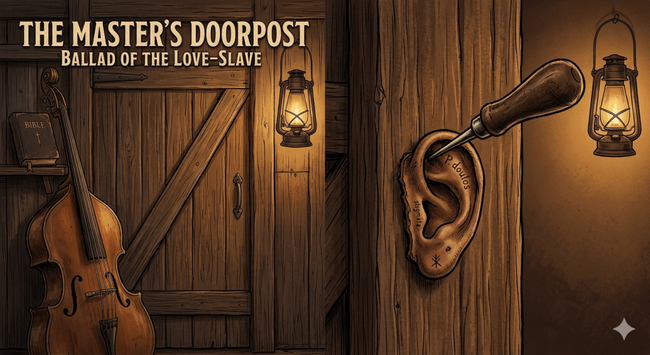
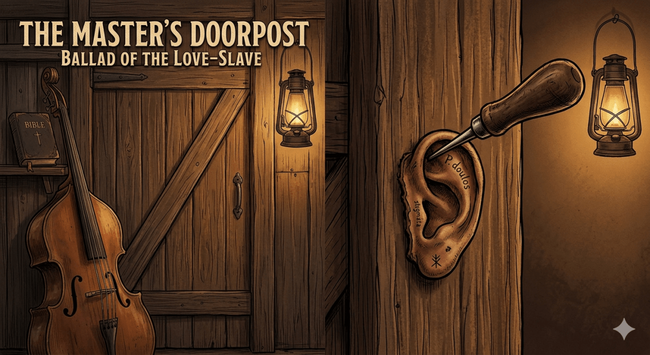
The core of Paul’s identity as a doulos rests on the ritual of the “Love-Slave” found in Exodus 21, where a servant’s ear was pinned to a doorpost with an awl. While we cannot verify with 100% certainty that Paul wore a physical hole in his ear, his constant identification as a bondservant to a Gentile audience made a physical or social “mark” a legal necessity. In the Roman world, a slave’s status was often worn on the body; without a direct cultural receipt, his claim of total ownership by Christ would have been legally inconsistent. Paul pointed to his stigmata—the scars from lashings, stonings, and beatings—as the physical proof that he belonged to the household of God.

These were his “piercings,” the evidence that he was no longer a free agent or a “hired hand” but the literal property of a Master. Unlike Roman brands used for punishment, the Hebrew ear piercing was a badge of love, signaling that the servant refused to go out free. This voluntary mark would have been the ultimate visual testimony to a skeptical church and a watching world that the hunter had become a servant. Whether the mark was a ceremonial hole or the scars of service, his body was a map of his surrender, testifying that his ear was permanently fixed to the doorpost of the Kingdom. Stop hiding behind flowery language and churchy platitudes; if your life doesn’t carry the “marks” of your service, you aren’t a bondservant, you’re a tourist.

Radical Humility: Reclaiming the Fisher of Men Identity

The life of the Apostle Paul is a direct challenge to the modern church’s obsession with gatekeeping and social rank. Paul traded the “kingship” of a high-ranking persecutor for the “smallness” of a marked slave because he understood that the “doorpost” of God’s household is open only to those willing to be pierced. He bypassed the religious gatekeepers to reach the outcasts—the tax collectors and the “vile”—because he was no longer competing with God for authority. His 14-year descent into obscurity was the necessary training to embrace a status that society held in utter contempt.

The name Paul, the potential piercing, and the scars of his mission all scream one thing: he belonged to another. Get on your knees and face the mirror. If you are still “choosing” who gets grace instead of being a “fisher of men,” you have missed the point of the Gospel. For Christ to increase in the wreckage of this world, you must decrease. The choice to be “pinned” is yours—but once the awl hits the wood, there is no going back to the mediocrity you once called freedom.

Call to Action

Stop hiding behind your credentials and your “rank” in a world that is rotting. If your life doesn’t carry the “marks” of your service, you aren’t a bondservant, you’re just a tourist. The Damascus road was the end of Saul the King, and the next 14 years were a systematic dismantling of his pride to make room for a new Master. Paul’s name change to “Smallness” and his potential pierced ear weren’t just religious fashion; they were a public “receipt” that he had traded his high-ranking authority for the humble submission of a “Love-Slave”.

Get on your knees and face the mirror. Are you still trying to be the one who “chooses” who gets grace, or are you ready to become a “fisher of men” at the bottom of the social ladder? For Christ to increase in the wreckage of your life, you must decrease. The choice to be “pinned” to the Master’s doorpost is yours, but once the awl hits the wood, there is no going back to the gutless mediocrity you once called freedom. Hit your knees tonight and surrender your pride before the Master. Stop competing with God for authority and start listening with the ear of a servant.

Choose smallness. Get to the doorpost. Become the bondservant you were called to be.

SUPPORTSUBSCRIBECONTACT ME

D. Bryan King

Sources

Disclaimer:

The views and opinions expressed in this post are solely those of the author. The information provided is based on personal research, experience, and understanding of the subject matter at the time of writing. Readers should consult relevant experts or authorities for specific guidance related to their unique situations.

#14YearsOfSilence #AcousticAmericana #AntiochChurch #ApostlePaul #BarnabasAndPaul #bibleStudyForMen #BiblicalMarks #BiblicalSubmission #Bondservant #ChristianOutlawCountry #ChurchAuthorityVsDivineAuthority #CulturalContextOfNewTestament #damascusRoadConversion #Deuteronomy15 #divineRevelation #Doulos #EarPiercingRitual #Exodus21 #FindingPeaceInLowliness #FishersOfMen #GraceForTaxCollectors #GrittyChristianMusic #HeartSEmbrace #HebrewSlaveLaws #LoveSlave #MarksOfJesus #MasterSDoorpost #MinistryToGentiles #NameChangeSymbolism #Outcasts #Paulus #Philippians38 #PinnedToTheDoor #PreparationInArabia #RadicalHumility #ReligiousGatekeeping #RomanCitizenship #SaulOfTarsus #ScalesFallingFromEyes #ScripturalPrep #skubala #Smallness #SoulBaringLyrics #SouthernApologetics #SouthernGothicChristianSong #spiritualMaturity #spiritualTraining #Stigmata #TheologyOfDecrease #VoluntaryServitude

From the kingship of Saul to the radical "smallness" of Paul. Discover the power of becoming a bondservant and choosing the Master’s doorpost over human status. 🎸🔥 #Bondservant #Smallness #RadicalGrace

https://bdking71.wordpress.com/2026/05/24/from-kingship-to-smallness-the-14-year-journey-from-saul-to-paul/

From Kingship to Smallness: The 14-Year Journey from Saul to Paul

Explore the Apostle Paul’s radical 14-year transition from the “kingship” of Saul to the “smallness” of a bondservant. This study examines the “Love-Slave” ear-p…

Bryan King

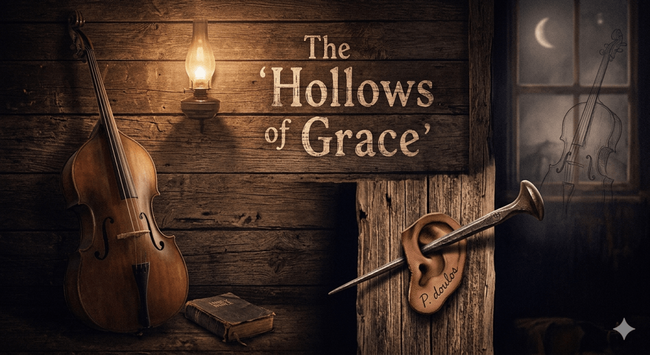
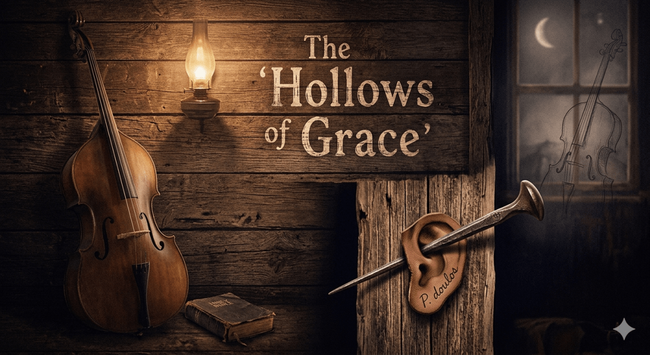
The Hollows of Grace

The Hollows of Grace

[Intro]

(Slow, haunting fingerstyle guitar with a deep, woody tone)
(Low hum of an upright bass)
(Distant, mournful cello note)

[Verse 1]

I stood tall in the halls of the heavy-handed
With a name that tasted like a king
I was the judge, the hunter, the high-commanded
Until the silence started to sing
Three days of dark to break my pride
Then fourteen years to wither inside
I traded my rank for a lowly place
And found my name in the hollows of grace.

[Chorus]

So pin my ear to the Master’s door
I don’t want my freedom anymore
Let me grow small while He grows tall
I’m a servant now, at the beck and call
I’m a love-slave bound by a choice I made
To reach the ones that the church mislaid.

[Verse 2]

The religious men, they love their gates
Choosing who’s worthy and sealing their fates
But I see the taxman, the outcast, the “vile”
And I meet their eyes with a brother’s smile
My former life?
It’s nothing but waste Just skubala (crap) with a bitter taste
I won’t look down from a judging floor
When I’m just a slave at the Master’s door.

[Bridge]

(Music thins out to just piano and a single guitar string)
The elites are gonna be in for a shock
When they see the outcasts on the Rock
The ones they called a “sin” and a shame
Are the ones who carry the Master’s name
My mark isn’t silver, my mark isn’t gold
It’s a hole in my ear that says I’ve been sold.

[Chorus]

(Vocal becomes more raw and raspy)
So pin my ear to the Master’s door
I don’t want my freedom anymore
Let me grow small while He grows tall
I’m a servant now, at the beck and call
I’m a love-slave bound by a choice I made
To reach the ones that the church mislaid.

[Outro]

I’m little, I’m small, I’m finally Paul Just a marked-up man at the Master’s call Listening close with a pierced-up ear To tell the outcasts: “The Master’s here”.

Disclaimer:
The Lyrics of this music is licensed under a Creative Commons Attribution-NonCommercial 4.0 International License. You are free to use, share, remix, or build upon this work—even commercially—as long as credit is given to the original creator: Bryan King, the suggest format is: “The Hollows of Grace” by Bryan King, used under CC BY 4.0

Also, I kindly ask that if you choose to use it, please let me know by using the “Contact Me” feature on this site. Thank you!

#14YearsOfSilence #AcousticAmericana #AntiochChurch #ApostlePaul #BarnabasAndPaul #bibleStudyForMen #BiblicalMarks #BiblicalSubmission #Bondservant #ChristianOutlawCountry #ChurchAuthorityVsDivineAuthority #CulturalContextOfNewTestament #damascusRoadConversion #Deuteronomy15 #divineRevelation #Doulos #EarPiercingRitual #Exodus21 #FindingPeaceInLowliness #FishersOfMen #GraceForTaxCollectors #GrittyChristianMusic #HeartSEmbrace #HebrewSlaveLaws #LoveSlave #MarksOfJesus #MasterSDoorpost #MinistryToGentiles #NameChangeSymbolism #Outcasts #Paulus #Philippians38 #PinnedToTheDoor #PreparationInArabia #RadicalHumility #ReligiousGatekeeping #RomanCitizenship #SaulOfTarsus #ScalesFallingFromEyes #ScripturalPrep #skubala #Smallness #SoulBaringLyrics #SouthernApologetics #SouthernGothicChristianSong #spiritualMaturity #spiritualTraining #Stigmata #TheologyOfDecrease #VoluntaryServitude

From the kingship of Saul to the radical "smallness" of Paul. Discover the power of becoming a bondservant and choosing the Master’s doorpost over human status. 🎸🔥 #Bondservant #Smallness #RadicalGrace

https://bdking71.wordpress.com/2026/05/06/the-hollows-of-grace/

The Hollows of Grace

Explore the profound transformation of the Apostle Paul from “Saul the King” to “Paul the Small.” This song examines the “Love-Slave” bondservant ritual, the the…

Bryan King

A quotation from A. A. Milne

“It is hard to be brave,” said Piglet, sniffing slightly, “when you’re only a Very Small Animal.”

A. A. Milne (1882-1956) English poet and playwright [Alan Alexander Milne]
Winnie-the-Pooh, ch. 7 “Kanga and Baby Roo Come to the Forest” (1926)

More about this quote: wist.info/milne-a-a/80809/

#quote #quotes #quotation #qotd #aamilne #winniethepooh #piglet #braveness #courage #pluck #size #smallness #weakness

Winnie-the-Pooh, ch. 7 "Kanga and Baby Roo Come to the Forest" (1926) - Milne, A. A. | WIST Quotations

"It is hard to be brave," said Piglet, sniffing slightly, "when you're only a Very Small Animal."

WIST Quotations

I made a video of 'On Smallness and Power'.

I used lots of #timelapse footage of skies over #Edinburgh, and a couple of short clips of @scrappapertiger and our dog, Kifl, and a few little #slomo clips of other things.

I hope you enjoy it.

#Smallness, #power, #politics, #clouds
https://youtu.be/HoQsYG0oGKQ

On Smallness and Power

YouTube

I wrote 'On Smallness and Power' back in 2018.

I think a lot of effort has gone into convincing people to feel powerless, or to feel empowered by things which don't actually achieve much, and certainly don't threaten the status quo.

It's easy to feel small, in a neoliberal society. To feel like none of the options we're presented with will make much difference. Which they probably won't - that's why we need to look out for courses of action that we're *not* presented with.

Anyway, I made a recording and put it on #SoundCloud. I'll be turning it into a video soon, but for now here's the #audio:
On #Smallness and #Power -
https://on.soundcloud.com/88GXd

On Smallness and Power

In a world of 7.6 billion people, does it really matter what each of us does? I argue that it does, and that it's very convenient for extremely powerful people when they're able to convince us otherw

SoundCloud

Fediverse server admins: have you considered putting a limit on the number of people that can join your instance?

If not, please do.

(This should really be a feature in fediverse servers like Mastodon, etc. “Max occupancy” or something with an auto-shutoff when it’s reached.)

Remember, small is beautiful ;)

If nothing else, I’m sure none of you want to become mini Zuckerbergs or Musks – eww – so let’s make sure we set the right incentives from the start.

#fediverse #scale #smallness