A Better Way To Freeze Organs For Transplantation. Could make off-the-shelf organs a reality. #sciencebreakthrough #medicalinnovation #organtransplant #futuretech #healthnews
https://www.instagram.com/p/DYVJ6bWOBJ1/
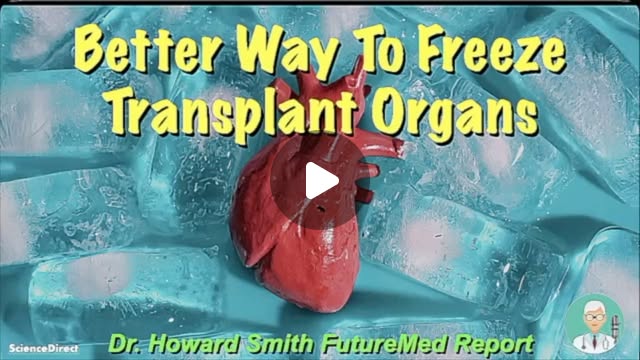
Howard G. Smith MD, AM on Instagram: "A Better Way To Freeze Organs For Transplantation A real organ bank of ready to use kidneys, hearts, and livers is the dream of every patient on a waiting list and the surgeons who want to keep them alive. The problem is: freezing organs to ultra-low temperatures irreversibly damages them by inducing cracking. Now, new research from Texas A&M University, published in the journal Nature, shows that thermal stress and organ fracturing can be prevented freezing the tissue to a so-called “glass transition temperature.” The researchers developed the optimal strategy using a glass model and testing various solutions and temperature lowering procedures. In reporting this advance, the investigators give a nod to their University of Minnesota colleagues who have achieved successful transplantation of a previously frozen kidney in an animal model. Hopefully, this technique will lead to larger supply of transplantable organs…..someday soon The references for this report are available on my website. #sciencebreakthrough #medicalinnovation #organtransplant #futuretech #healthnews"

0 likes, 0 comments - drhowardsmithreports on May 14, 2026: "A Better Way To Freeze Organs For Transplantation A real organ bank of ready to use kidneys, hearts, and livers is the dream of every patient on a waiting list and the surgeons who want to keep them alive. The problem is: freezing organs to ultra-low temperatures irreversibly damages them by inducing cracking. Now, new research from Texas A&M University, published in the journal Nature, shows that thermal stress and organ fracturing can be prevented freezing the tissue to a so-called “glass transition temperature.” The researchers developed the optimal strategy using a glass model and testing various solutions and temperature lowering procedures. In reporting this advance, the investigators give a nod to their University of Minnesota colleagues who have achieved successful transplantation of a previously frozen kidney in an animal model. Hopefully, this technique will lead to larger supply of transplantable organs…..someday soon The references for this report are available on my website. #sciencebreakthrough #medicalinnovation #organtransplant #futuretech #healthnews".

Instagram

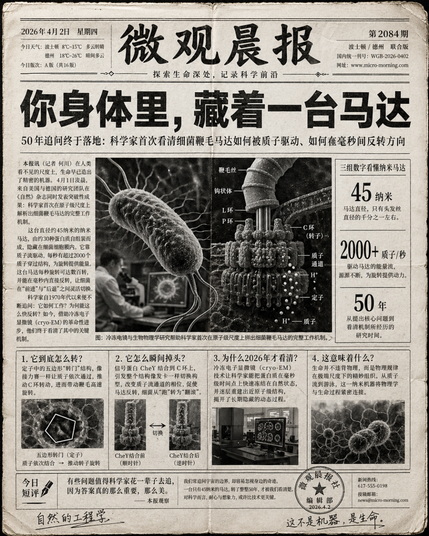
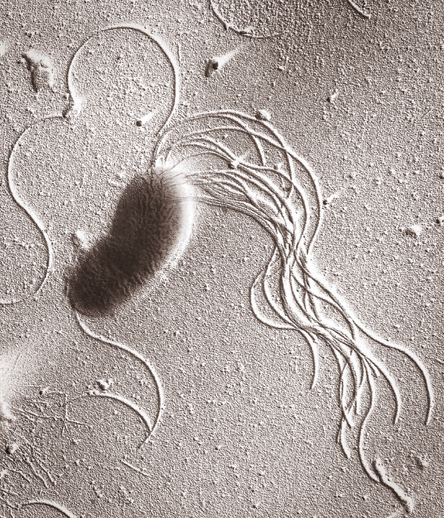
There’s a motor on this thing’s tail. 🦠⚙️
Scientists studied it for 50 years. Last month? They finally figured out how it spins.
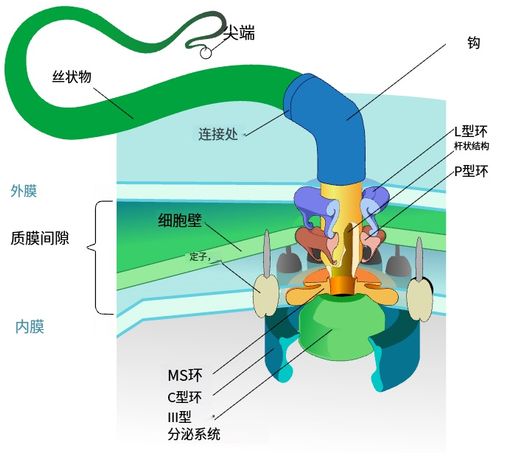
The bacterial flagellar motor. 45 nanometers wide. 30 proteins, self-assembled. Runs on protons, not batteries. Reverses direction instantly.
After 50 years of work, one researcher said: "My lifelong pursuit is now realized."
Nature’s nano-engineering. Absolute perfection.

#BacterialMotor #MolecularBiology #CryoEM #NatureEngineering #ScienceBreakthrough #FlagellarMotor

Meta-Optics Break Boundaries: Paths for Light Reimagined

Researchers create new meta-optics that can bend and twist light into multiple paths at once. This changes how we control light for future tech.

#MetaOptics, #LightControl, #OpticalTech, #ScienceBreakthrough, #FutureTech

https://newsletter.tf/new-meta-optics-control-light-paths-simultaneously/

New Meta-Optics Control Light Paths Simultaneously

Researchers create new meta-optics that can bend and twist light into multiple paths at once. This changes how we control light for future tech.

NewsletterTF

Scientists have created new 'meta-optics' that can control light in ways never seen before. This is a big step beyond normal lenses and prisms.

#MetaOptics, #LightControl, #OpticalTech, #ScienceBreakthrough, #FutureTech
https://newsletter.tf/new-meta-optics-control-light-paths-simultaneously/

New Meta-Optics Control Light Paths Simultaneously

Researchers create new meta-optics that can bend and twist light into multiple paths at once. This changes how we control light for future tech.

NewsletterTF

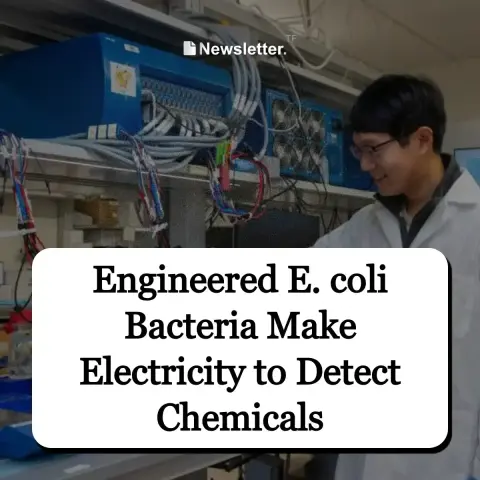
Two Bacteria Team Up for Electrochemical Signals

New E. coli bacteria can detect specific chemical pairs by making electricity. This could lead to cheap sensors for water testing and health.

#EcoliBiosensors, #ChemicalDetection, #EnvironmentalMonitoring, #LowCostSensors, #ScienceBreakthrough

https://newsletter.tf/e-coli-bacteria-make-electricity-to-detect-chemicals/

Scientists have made E. coli bacteria that produce electricity when they detect certain chemicals together. This is like a tiny alarm system for pollution or disease.

#EcoliBiosensors, #ChemicalDetection, #EnvironmentalMonitoring, #LowCostSensors, #ScienceBreakthrough
https://newsletter.tf/e-coli-bacteria-make-electricity-to-detect-chemicals/

Engineered E. coli Bacteria Make Electricity to Detect Chemicals

New E. coli bacteria can detect specific chemical pairs by making electricity. This could lead to cheap sensors for water testing and health.

NewsletterTF

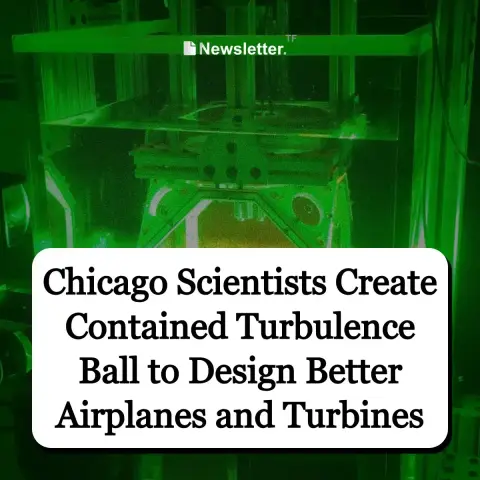
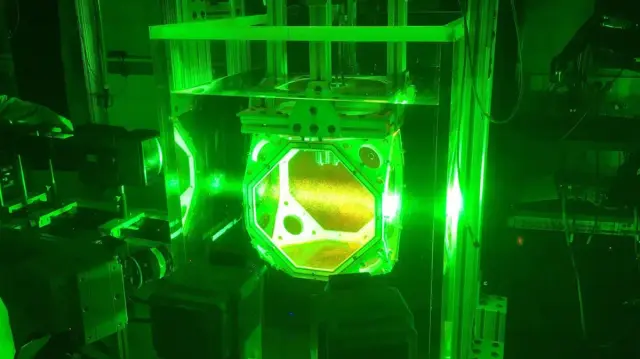
Scientists Forge Contained Turbulence, Offering Glimpse into Fluid's Chaos

How can scientists study fluid turbulence better? University of Chicago physicists made a contained turbulence ball, helping design better airplanes, turbines, and fusion reactors.

#uchicagoturbulence #fluidmechanics #sciencebreakthrough #aerodynamicsresearch #fusionenergy

https://newsletter.tf/chicago-scientists-create-turbulence-ball-better-design/

Scientists at the University of Chicago made a special 'ball' of turbulence. This is a new way to study how fluids move, much clearer than before. It helps understand complex things like weather.

#uchicagoturbulence #fluidmechanics #sciencebreakthrough #aerodynamicsresearch #fusionenergy
https://newsletter.tf/chicago-scientists-create-turbulence-ball-better-design/

Chicago Scientists Create Contained Turbulence Ball to Design Better Airplanes and Turbines

How can scientists study fluid turbulence better? University of Chicago physicists made a contained turbulence ball, helping design better airplanes, turbines, and fusion reactors.

NewsletterTF

Proton Size Shrunk: Long-Standing Physics Discrepancy Potentially Resolved

German scientists used a super-precise laser to measure the proton's size. This could solve a 16-year-old physics mystery about its radius.

#ProtonRadius, #PhysicsNews, #StandardModel, #QuantumPhysics, #ScienceBreakthrough

https://newsletter.tf/new-proton-size-measurement-germany-physics-puzzle/

New Proton Size Measurement in Germany May Solve 16-Year Physics Puzzle

German scientists used a super-precise laser to measure the proton's size. This could solve a 16-year-old physics mystery about its radius.

NewsletterTF

A new measurement of the proton's size is much more precise than previous ones, potentially solving a long-standing physics puzzle.

#ProtonRadius, #PhysicsNews, #StandardModel, #QuantumPhysics, #ScienceBreakthrough
https://newsletter.tf/new-proton-size-measurement-germany-physics-puzzle/

New Proton Size Measurement in Germany May Solve 16-Year Physics Puzzle

German scientists used a super-precise laser to measure the proton's size. This could solve a 16-year-old physics mystery about its radius.

NewsletterTF