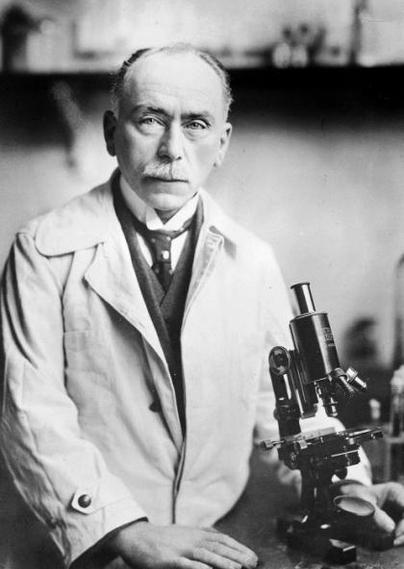
@WhatisBiotechnology In his heyday, he didn't believe in "invisible" bacteria-eating phages. Microscopes weren't capable of imaging things that small.

#Science #ScienceAdvances #Biology

Ever wonder how your brain navigates the real world? 🧠

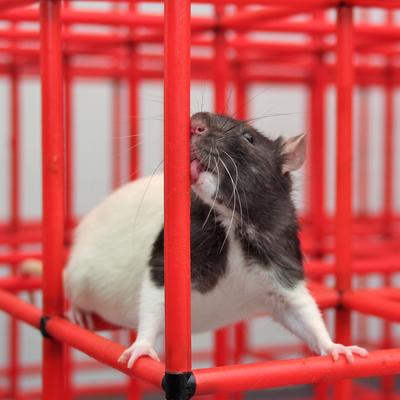
Most laboratory neuroscience studies look at spatial navigation in flat, 2D mazes.

But the real world is hilly, irregular, and bumpy! ⛰️

In our new paper out in #ScienceAdvances we asked a simple question: How does the brain map uneven terrain? 🗺️🐀
📄 https://doi.org/10.1126/sciadv.adz9893
🧵👇️️1/
#Neuroscience #science #spatiaCognition

Physicists reversed the way energy flows through turbulence, bending an 80-year rule

https://www.martincid.com/science/turbulence-energy-flux-reversed-tensor-geometry-2/

#EnergyCascade #FluidDynamics #ScienceAdvances

Physicists reversed the way energy flows through turbulence, bending an 80-year rule

Turbulence was thought to carry energy in one fixed direction set by the shape of the flow. A new experiment shows that direction can be flipped on command, by

Martin Cid Magazine

Agi: Se i bruchi attaccano il fagiolo, la pianta richiama le vespe

AGI - La pianta di fagiolo, quando viene attaccata dai bruchi, può emettere segnali chimici in grado di richiamare vespe predatrici. E' quanto emerge da uno studio pubblicato sulla rivista Science Advances e condotto dagli scienziati della University of Washington e della Henan University.
Il team, guidato da Natalia Guayaza'n Palacios e Brian Behnken, ha descritto il meccanismo immunologico che attiva la segnalazione nella Phaseolus vulgaris, la comune pianta di fagiolo. Le piante, spiegano gli esperti, non possono sottrarsi agli insetti erbivori e reagiscono agli attacchi attraverso il rilascio di segnali chimici.
Il meccanismo
Questo processo inizia quando gli insetti mordono i tessuti vegetali o vi depongono le uova, lasciando molecole caratteristiche. Quando il sistema immunitario della pianta riconosce queste sostanze, attiva una risposta difensiva che favorisce la cicatrizzazione delle ferite e stimola ulteriori meccanismi di protezione.
Alcuni recettori vegetali, come l'inceptina receptor INR1 presente nelle leguminose, possono inoltre innescare l'emissione di composti volatili capaci di attrarre i nemici naturali degli insetti erbivori. I ricercatori hanno scoperto che i bruchi della specie Spodoptera frugiperda, mentre si nutrono delle foglie, rilasciano oralmente un peptide chiamato In11.
Questa molecola attiva non solo la risposta immunitaria della pianta, ma anche un percorso biochimico che produce una miscela specifica di composti organici volatili, tra cui due omoterpeni che funzionano come segnali di richiamo per diverse specie di vespe predatrici.
"Il nostro lavoro - conclude Guayaza'n Palacios - conferma la funzione ecologica delle emissioni di composti volatili vegetali indotte dagli erbivori e mediate dai recettori. Abbiamo dimostrato che il sistema immunitario della pianta ospite svolge un ruolo cruciale nelle interazioni tritrofiche e potrebbe essere sfruttato per sviluppare strategie sostenibili di protezione delle colture".

If caterpillars attack the bean, the plant calls for wasps.

AGI - The bean plant, when attacked by caterpillars, can emit chemical signals capable of summoning predatory wasps. This is what emerges from a study published in Science Advances and conducted by scientists from the University of Washington and the Henan University.

The team, led by Natalia Guayaza'n Palacios and Brian Behnken, has described the immunological mechanism that activates signaling in Phaseolus vulgaris, the common bean plant. The plants, experts explain, cannot evade herbivorous insects and react to attacks through the release of chemical signals.

The mechanism
This process begins when insects bite plant tissues or lay eggs, leaving characteristic molecules behind. When the plant’s immune system recognizes these substances, it activates a defensive response that promotes wound healing and stimulates further protective mechanisms.

Some plant receptors, such as the inceptina receptor INR1 found in legumes, can also trigger the emission of volatile compounds capable of attracting the natural enemies of herbivorous insects. Researchers have discovered that the caterpillars of the species Spodoptera frugiperda, while feeding on leaves, release orally a peptide called In11.

This activating molecule not only activates the plant’s immune response but also a biochemical pathway that produces a specific mixture of volatile organic compounds, including two homoterpenes that function as call signals for several species of predatory wasps.

“Our work – concludes Guayaza'n Palacios – confirms the ecological function of volatile compound emissions from plants induced by herbivores and mediated by receptors. We have shown that the immune system of the host plant plays a crucial role in tritrophic interactions and could be exploited to develop sustainable crop protection strategies.”

#ScienceAdvances #theHenanUniversity #Natalia #Palacios #BrianBehnken

https://www.agi.it/scienza/news/2026-05-28/bruchi-fagiolo-vespe-37257989/

La gigantesca ferita della Luna può aiutare Artemis: cosa rivela il bacino South Pole-Aitken

https://fed.brid.gy/r/https://www.galaxyaddicted.it/2026/05/luna-bacino-south-pole-aitken-artemis/

La gigantesca ferita della Luna può aiutare Artemis: cosa rivela il bacino South Pole-Aitken

Un nuovo studio sul bacino South Pole-Aitken suggerisce che l’impatto abbia portato verso il polo sud lunare materiali profondi, preziosi per le future missioni Artemis.

Galaxy Addicted

Agi: Il virus dell'aviaria trasmesso nel latte ovino, rischio negli allevamenti

AGI - Le pecore possono trasmettere virus dell'influenza aviaria ad alta patogenicità attraverso il latte e gli agnelli, nutrendosi, possono diffondere ulteriormente l'infezione ad altre ghiandole mammarie, favorendo una possibile trasmissione diffusa all'interno degli allevamenti.
È quanto emerge da uno studio guidato da Tamiru Alkie del National Centre for Foreign Animal Disease, pubblicato su Science Advances, che analizza il comportamento dei virus H5N1 e H5N5 in ovini.
Infezione nelle pecore in lattazione
Nel lavoro, le pecore in lattazione infettate attraverso la ghiandola mammaria hanno sviluppato mastite e iniziato a rilasciare elevate cariche virali nel latte. Gli agnelli infettati durante la suzione hanno poi contribuito a propagare il virus ad altre mammelle.
Risposta immunitaria negli animali
Sia pecore che agnelli hanno sviluppato anticorpi contro i virus H5Nx.
Trasmissione respiratoria negli ovini
I ricercatori hanno inoltre osservato che pecore non in lattazione, esposte per via aerosol, sviluppano infezioni respiratorie con bassi livelli di replicazione virale, suggerendo che possano rappresentare un modello utile per studiare la trasmissione per via aerea.
Rischi per gli allevamenti e biosicurezza
Secondo gli autori, questi risultati indicano un potenziale rischio di diffusione più ampia del virus negli allevamenti, soprattutto nei sistemi zootecnici misti, e rafforzano la necessità di intensificare la sorveglianza e le misure di biosicurezza, anche alla luce delle implicazioni per il consumo di latte crudo

The avian flu virus transmitted in sheep’s milk, a risk in farms.

AGI - Sheep can transmit highly pathogenic avian influenza viruses through milk and lambs, feeding, can further spread the infection to other mammary glands, facilitating a possible widespread transmission within farms.
This is revealed by a study led by Tamiru Alkie of the National Centre for Foreign Animal Disease, published in Science Advances, which analyzes the behavior of H5N1 and H5N5 viruses in sheep.
Infection in Lactating Sheep
In the study, lactating sheep infected through the mammary gland developed mastitis and began to release high viral loads into the milk. Lambs infected during suckling then contributed to propagating the virus to other udders.
Immune Response in Animals
Both sheep and lambs developed antibodies against H5Nx viruses.
Respiratory Transmission in Sheep
Researchers also observed that non-lactating sheep, exposed via aerosol, develop respiratory infections with low levels of viral replication, suggesting that they can represent a useful model for studying airborne transmission.
Risks for Farms and Biosafety
According to the authors, these results indicate a potential risk of wider virus spread in farms, especially in mixed livestock systems, and strengthen the need to intensify surveillance and biosecurity measures, given the implications for raw milk consumption.

#TamiruAlkie #ScienceAdvances

https://www.agi.it/scienza/news/2026-05-09/aviaria-pecore-latte-36952326/

#ScienceAdvances Dynamic breaking of mirror symmetry in spin-dependent electron transport through chiral media causes enantiomeric excesses science.org/doi/10.1126/... "How did life become homochiral? Electrons’ motion through a chiral system depends on their spin."

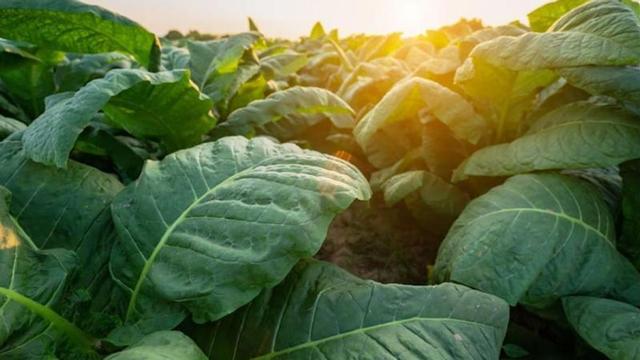
Reprograman Nicotiana benthamiana con genes de varios reinos para producir 5 psicodélicos (DMT, psilocibina…) en una semana; AlphaFold3 elevó 5‑MeO‑DMT x40. https://aidoo.news/noticia/xZdVG6

#ScienceAdvances #AlphaFold3 #InteligenciaArtificial #SaludMental #Investigacion

Una planta de tabaco logra producir cinco psicodélicos al mismo tiempo

Científicos reprogramaron Nicotiana benthamiana introduciendo genes procedentes de plantas, hongos y del sapo del desierto de Sonora para reconstruir rutas bios

Aidoo Noticias

Reprograman Nicotiana benthamiana con genes de varios reinos para producir 5 psicodélicos (DMT, psilocibina…) en una semana; AlphaFold3 elevó 5‑MeO‑DMT x40. https://aidoo.news/noticia/xZdVG6

#ScienceAdvances #AlphaFold3 #InteligenciaArtificial #SaludMental #Investigacion

Una planta de tabaco logra producir cinco psicodélicos al mismo tiempo

Científicos reprogramaron Nicotiana benthamiana introduciendo genes procedentes de plantas, hongos y del sapo del desierto de Sonora para reconstruir rutas bios

Aidoo Noticias