“When Grace Walks Into the Courtroom”
Thru the Bible in a Year
Today’s journey through Romans 1–3 leads us into one of the most important theological corridors in all of Scripture. These chapters are not merely a doctrinal outline; they are a spiritual mirror. They show us who God is, who we are, and why the Gospel is not just helpful—it is necessary. On this November 23 morning, as we draw near to the beginning of Advent, we hear Paul’s voice rising above the centuries with a message that prepares our hearts for Christ’s coming: “All have sinned… and all may be justified freely by His grace.” It is a word for weary hearts and searching souls.
Romans was written by Paul during his third missionary journey, likely from Corinth. He had never been to Rome, but he longed to visit. In this letter, he gives us the clearest, most structured presentation of the Gospel found anywhere in the New Testament. It is part testimony, part theology, part pastoral letter—and all Gospel. Today’s reading covers three major themes: Paul’s greeting, humanity’s universal condemnation, and God’s gracious gift of justification.
Let’s walk through them together, as fellow travelers wanting to understand what God is saying to us through these early chapters.
Paul’s Greeting: A Window Into His Heart (Romans 1:1–16)
Paul opens this letter not with formal niceties but with a testimony. He identifies himself first as “a servant of Christ Jesus.” The word translated as “servant” is literally slave. Paul belonged wholly to Christ. His life, purpose, and identity were wrapped entirely in the One who met him on the Damascus road. When Paul speaks, you can almost hear the humility in his tone. His authority as an apostle rests not on personal greatness but on surrender.
Paul then points our attention to Jesus Himself—both divine and human. In verses 3 and 4, he affirms Christ’s lineage as the Son of David (His humanity) and Christ’s authority as the resurrected Son of God (His deity). In just a few lines, Paul affirms two essential truths about Jesus that the early church held tightly: He is fully God and fully man.
Then Paul addresses the believers in Rome. He calls them saints. Not future saints. Not “trying-to-be saints.” Simply saints. Called, set apart, cleansed, and belonging to God. Salvation does not wait on our performance; sainthood begins the moment God saves us.
But Paul’s heart is pastoral, not just theological. He tells them he prays for them, longs for them, and has been prevented from coming to them. In that small remark, we see a man who feels deeply about the people God has placed on his heart. Ministry to Paul wasn’t academic—it was personal.
And then he says something many believers still stumble over: “I am not ashamed of the Gospel.” The Gospel is not a burden to hide but a treasure to share. In a city like Rome—where power, intellect, wealth, and prestige ruled—Paul boldly declares that he is proud of the message of a crucified, risen Messiah. As one commentator said, “Paul turned the world upside down because the Gospel had first turned him right side up.”
The World on Trial: Condemnation (Romans 1:17–3:21)
After the greeting, Paul leads us into a courtroom. Not the courts of Caesar or the Sanhedrin, but the courtroom of God. Humanity stands before the Judge, and the verdict is devastating: “There is none righteous, no, not one.”
Paul outlines the cause of condemnation—a willful rejection of God. People suppress the truth, exchange the glory of God for idols, and reshape God into cultural, personal, or philosophical images. Sin is not merely the breaking of rules; it is the abandonment of God Himself.
The consequences of condemnation are sobering. Three times in chapter 1, Paul says, “God gave them over…” He allowed people to chase the desires they insisted on. That is perhaps the scariest judgment possible—God letting us have our own way.
Paul describes a world where hearts are darkened, minds become foolish, and actions spiral downward. We feel the weight of it today—in broken families, violence in the streets, moral confusion, and the emptiness that hangs over a world that has lost its center.
Then Paul brings us to the courtroom’s fairness. God’s judgment is “according to truth” (2:2). God is not arbitrary. He has no favorites. The Jew is not exempt. The Gentile is not overlooked. The court is fair. The judgment is just. “He will render to each person according to their deeds.” No prejudice. No injustice. Nothing hidden.
Finally, Paul addresses the crowd in condemnation—and here, the room becomes silent. All people, without exception, stand guilty. Jews, Gentiles, moral people, immoral people, religious, irreligious—“there is none righteous.” All stand on level ground before a holy God.
This is not written to crush us but to awaken us. We cannot appreciate grace until we see our desperate need for it.
The Door Opens: Justification (Romans 3:22–31)
If Romans 1–3:21 is the darkest valley, then Romans 3:22–31 is the sunrise.
Into this courtroom of judgment, God Himself steps forward—not to condemn, but to save. Justification becomes the central theme. And justification does not mean “just as if I never sinned”—though that is a helpful shorthand. It means God declares us righteous based on what Christ has done, not what we have done.
Paul outlines four truths about justification, each one transforming:
The Condition for Justification is Faith.
We are justified “by faith without the deeds of the law.” Faith is not a work—it is the empty hand that receives grace. Paul insists that no amount of moral effort, religious activity, or self-improvement can erase sin. Faith looks to Christ alone.
The Cost of Justification is Grace.
We are “justified freely by His grace.” Grace is free, but it is not cheap. It cost the blood of the Son of God. Grace is God giving us what we do not deserve because Jesus paid what we could not pay.
The Capability for Justification is the Work of Christ.
Paul says justification comes “through the redemption that is in Christ Jesus.” Redemption means a ransom paid, a rescue accomplished. Jesus’ death satisfied the justice of God and opened the way for mercy to flow.
The Character of Justification Upholds the Law.
Far from abolishing the law, justification confirms its value. The cross shows that God takes sin seriously. Grace does not lower the standard—it satisfies it in Christ.
In these verses, Paul shows us the Gospel as the great bridge between human guilt and divine mercy. The Judge becomes the Justifier. The guilty are declared righteous. Grace walks into the courtroom, and everything changes.
Walking This Out Today
As we travel “Thru the Bible in a Year,” Romans reminds us why we keep coming back to Scripture: because the Word reveals the God who saves us, forms us, corrects us, and strengthens us. Paul diagnoses the problem of the human condition with honesty—and then offers the cure with equal clarity.
This is why your commitment to reading the Word matters. God promises that His Word “will not return void,” and every time you open the Scriptures, He is shaping you—from the inside out. Romans 1–3 lays the foundation for the life-changing truths Paul will unfold in the chapters to come. Stay with the journey. Let God do His work.
Thank you for walking faithfully through the Scriptures today. God honors this hunger for His Word.
Relevant Article
For further reflection on justification and the message of Romans, you may enjoy this article from The Gospel Coalition :
https://www.thegospelcoalition.org/
FEEL FREE TO COMMENT SHARE SUBSCRIBE
#condemnationAndSalvation #gospelOfGrace #justificationByFaith #romans13 #thruTheBibleInAYear
 Scott Tibbs

 Intentional Faith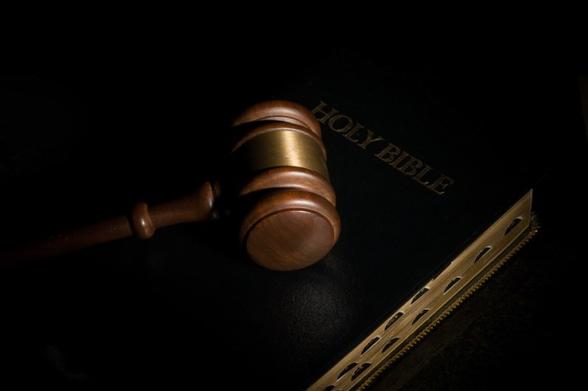

 Alex Christoyannopoulos

 nachodon