Mackenzie House: Victorian Era Home of Toronto’s First Mayor

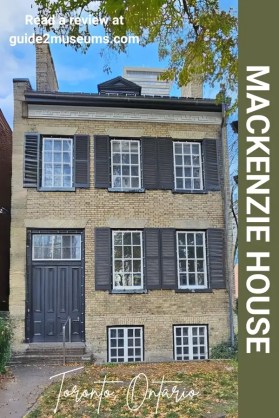
The Mackenzie House seems to be squeezed between skyscrapers in the spot it was built some 165+ years ago in 1858. Brick walls dwarfed by its neighbours, the restored townhouse was the final home of William Lyon Mackenzie.

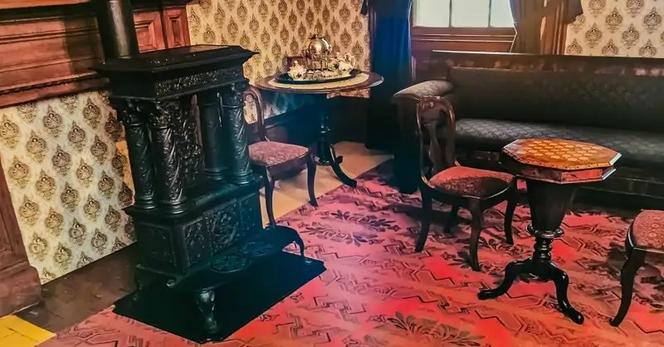
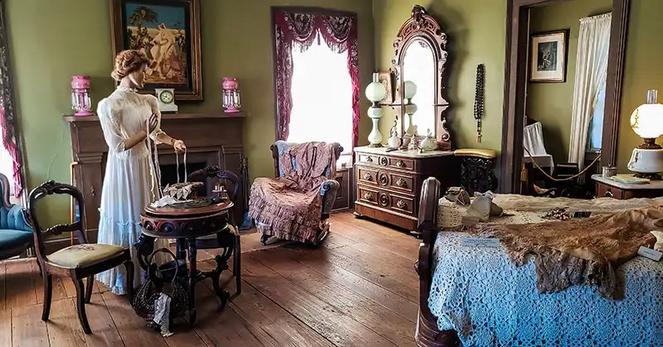
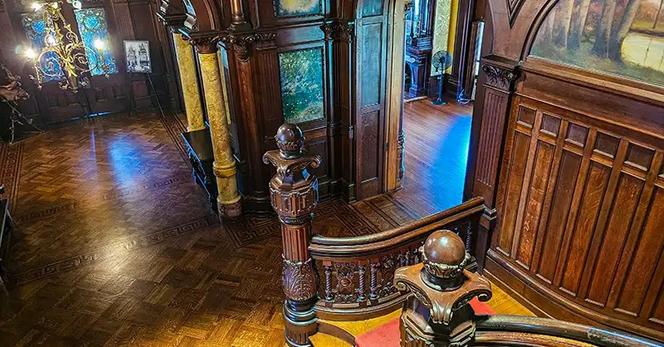
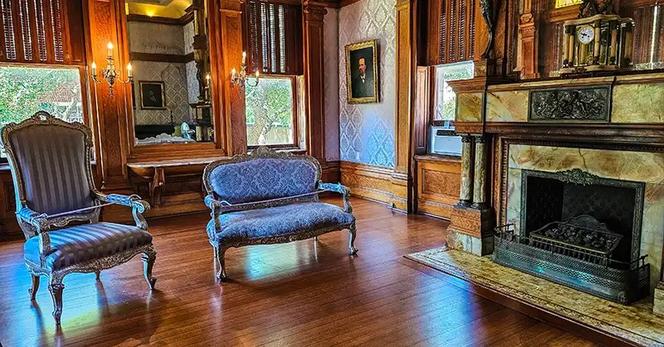
Parlour in Mackenzie House in Toronto. Photo by Linda Aksomitis.

Linda’s Pick of the Exhibits

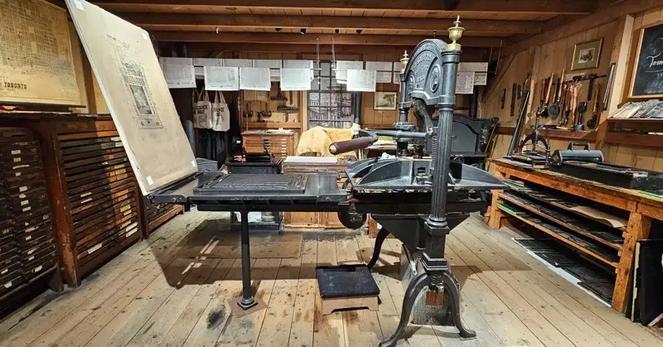
Being a writer, it’s no surprise that my favorite exhibit was the printing press room. Why a printing press in an historic house? Because William Lyon Mackenzie was a printer and newspaper editor. So, to honor that part of his life and work, the house includes an historic printing press.

Printing Press exhibit and demonstration area in Mackenzie House. Photo by Linda Aksomitis.

The printing press is from 1845. Along with the press itself, I found various other printing tools. They included type cabinets, trays of metal type, and printing supplies like ink rollers.

An interpreter was in the house during my visit to give demonstrations. I, along with other visitors, was able to do some printing myself!

Setting type for printing a newspaper. Photo by Linda Aksomitis.

Various items on display had been created with the press.

What’s at Mackenzie House?

Mackenzie House is a restored Victorian-era Georgian-style home just steps from Sankofa Square (formerly Yonge-Dundas Square) in downtown Toronto.

Pin me!

The three-storey brick townhouse is far from flashy, but it was built as the centre of three townhouses.

Its interior is furnished with period pieces, with a few originals.

One of the original pieces includes a bible owned by Mackenzie when he occupied the home.

The City of Toronto added a small building on the back of the original building in 1967.

An addition was required to turn the historic home into a museum while retaining its historic authenticity.

It has three functional spaces that include:

  • The recreated 19th-century print shop
  • A narrow gallery for temporary and thematic exhibits
  • A reception and gift shop area for visitors to check in
Dining room at Mackenzie House. Photo by Linda Aksomitis.

If you’ve studied Canadian history, you may remember some of Mackenzie’s colorful history, although you’ll learn a lot more at the house.

Fast Fact: The house museum displays a proclamation that offers: One Thousand Pounds, to any one who will apprehend, and deliver up to Justice, WILLIAM LYON MACKENZIE.
~ Mackenzie House Museum

Mackenzie was, by all accounts, a fiery editor whose newspaper attacks against the “Family Compact” elite resulted in a Tory mob smashing his printing press in 1826.

Why was Mackenzie exiled from Canada?

William Lyon Mackenzie became a leading voice in a Canadian Reform movement and was elected to the House of Assembly for York County in 1828. His political career resulted in libel suits, threats, and physical assaults. While many disliked his political stance, he was continually re-elected to the provincial Parliament.

In 1834, Mackenzie was elected as an alderman for St. David’s Ward in Toronto. His fellow council members then elected him to be Toronto’s first mayor.

But back the exile that happened after he was defeated at the polls in 1836.

Convinced he’d have the support of the people, Mackenzie led the 1837 Upper Canada Rebellion on December 5, 1837. However, the rebellion fell apart quickly and loyalist troops under Sir Francis Bond Head easily defeated the rebels at Montgomery’s Tavern.

Not ready to give up, Mackenze fled and declared a provisional government. His demands? American-style democratic reform. However, the Canadian militia sank his rebel supply ship, Caroline, and bombarded Navy Island in the Niagara River. Two fellow rebels were captured and executed for treason after pleading guilty to being part of the rebellion.

Mackenzie was exiled to New York. However, he was soon convicted of violating US neutrality laws. The result? He spent a year in prison and the next 10 years in the US.

In 1849, the government pardoned Mackenzie and he returned to Canada. Quickly picking up where he’d left off before the exile, Mackenzie served as an MLA for Haldimand until he retired in 1857.

~ The Canadian Encyclopedia

Who was Mackenzie, really? Some call him one of the most colorful and controversial people in 19th-century Canadian politics. Others called him a “national mistake.” Still others considered Mackenzie a hero for pushing for responsible government and the rights of ordinary people.

Fast Fact: Mackenzie House was actually a gift purchased with funds raised by a relief committee of Mackenzie's friends and relatives in 1858. They raised $7000+ to gift him the house "as a token of gratitude by the people of Canada, for his unswerving loyalty and consistency during a long period of useful public life."
~ Canadian Encyclopedia

Linda’s Road Trip Tips

The Mackenzie House is just a block or two from many of Toronto’s key attractions.

Head west to Sankofa Square if you’d like to experience Canada’s busiest intersection.

I always take the Toronto Transit Commission (TTC) subway when I go downtown, so my visit was on foot.

Even without navigating traffic, I found the intersection definitely busy!

Of course, fitting in some shopping is important in Toronto.

So, the CF Toronto Eaton Centre, directly across the square is a must-do.

It’s also a great place to check out some neat food selections in the Urban Eatery Food Court.

Pin me!

Love live music concerts and cultural performances? You’ll find them a few minutes walk away to Massey Hall. This historic site opened in 1894 and hosted a long list of famous musicians.

And of course, there are more great museums nearby including the Royal Ontario Museum and Bata Shoe Museum.

Who Should Visit Mackenzie House?

Mackenzie House is an interesting addition to any itinerary exploring Canada’s early history and its growth to becoming a country. After Mackenzie’s 1837 Upper Canada Rebellion and Durham Report a couple of years later, the British merged Upper and Lower Canada into the Province of Canada in 1840. This was the first step toward a more unified political structure.

Fast Fact: Mackenzie's grandson, William Lyon Mackenzie King, was Canada's longest serving Prime Minister (1921-26, 1926-30, 1935-48), leading the country through WWII.

While a radical, Mackenzie was an early advocate of self-government and the union of colonies. He helped shape the idea that Canadians could govern themselves.

Pin me!

The Mackenzie House provides a great example of Victorian-era architecture and design.

So, it’s an important historic home for anyone interested in that period.

And of course, we can’t forget the ghosts.

Indeed, the Mackenzie House is often called the “Most Haunted House in Canada” or the “Most Haunted House in Toronto.”

I spent about an hour at Mackenzie House as I participated in the printing press demo.

Depending on your interests, your visit could be shorter or longer.

How Do You Visit Mackenzie House?

Mackenzie House is situated conveniently next to many attractions in downtown Toronto. If you’re on Toronto’s PATH, you could go up to street level at the Toronto Eaton Centre and be just a couple of minutes walk away.

Parking: The most convenient parking options are the parking lots and garages around Dundas/Yonge. Try apps like BestParking, SpotHero, or Green P for hourly rates.

If you're taking the TTC Subway system the best stop is Dundas Station.

Street Location: 82 Bond Street, Toronto, Ontario.

Parts of Mackenzie House are under restoration, so you can check availability and special events and exhibits on the Toronto History Museums website. Note that the print shop in the addition is always available during open hours.

Go inside Mackenzie House with CanTravelsHub on YouTube or learn more about its ghosts with The Mackenzie House Haunting with She’s Got Spirits on YouTube.

Plan your visit to Mackenzie House with Google Maps.

Read More Ontario Museum Reviews

Check out all these museum reviews for the Canadian province of Ontario!

Explore More Historic House Museums

#Canada #history #lifestyles #museums #Ontario #richAndFamous #Toronto #travel

Grand Coteau Heritage & Cultural Centre: Shaunavon, SK

Saskatchewan towns the size of Shaunavon don’t usually have a museum. But Shaunavon does, and it’s not only open year-round, but is free for visitors!

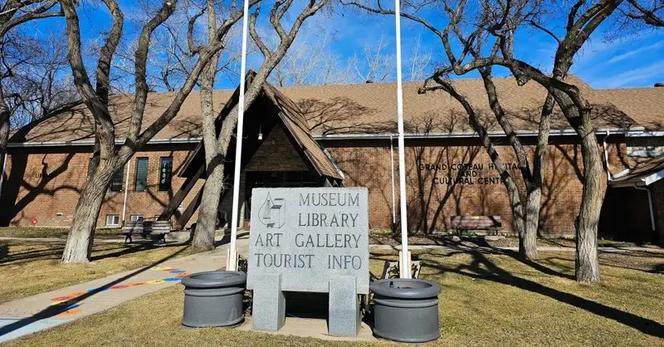
Housed with the local art gallery, library, and visitor centre, there’s always something happening in this southwest Saskatchewan economic hub.

Shaunavon museum, library, art gallery, and tourist information building. Photo by Linda Aksomitis.

Linda’s Pick of the Exhibits

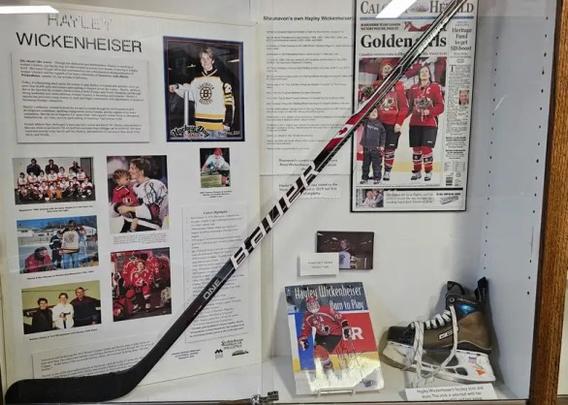
Small town museums often celebrate the names of people who’ve put them on a national–or international–map. In Shaunavon, that person is Hayley Wickenheiser.

Artifacts that belonged to Hayley Wickenheiser. Photo by Linda Aksomitis.

Who’s Hayley Wickenheiser? She’s most noted for being a five-time Olympian athlete, winning four gold medals and one silver in ice hockey for Canada. She was also the first woman to play full-time professional men’s ice hockey. Indeed, some say she’s the “greatest woman’s ice hockey player of all time.

“I have never been so proud to be Canadian! To stand there with my son Noah in my arms, the gold medal around my shoulders and the Canadian anthem playing was amazing. It was the fulfillment of all my childhood dreams growing up in a farming town called Shaunavon, Saskatchewan.”

~ Quote from Wickenheiser on Canada Gold

Wickenheiser was born in 1978 in Shaunavon. When did she start skating? At two! By the time she was five, she was playing on the boys’ hockey team. At 12, she moved to Calgary, playing in both girls’ leagues and boys’ leagues.

What was Hayley Wickenheiser’s nickname when she joined the Canadian National Women’s Hockey Team at age 15?

The team nicknamed Hayley “High Chair Hayley!”

In 1998, when Hayley was 20, the Candian Women’s hockey team captured Silver in the Japan Olympics. Hayley stayed on the team for 23 years.

Hayley retired from hockey in 2017 and became a resident medical doctor. Her specialty? Emergency medicine. She also held a senior role with the NHL’s Toroto Maple Leaf hockey team.

She was inducted into the Hockey Hall of Fame in 2019. In July 2022, Wickenheiser was named assistant general manager for the Toronto Maple Leafs.

What’s in the Shaunavon Museum?

The Grand Coteau Heritage & Cultural Centre is a small, but professionally curated museum in Shaunavon. It’s thematically divided into moments from the area’s past, covering its people and history with artifacts and signage.

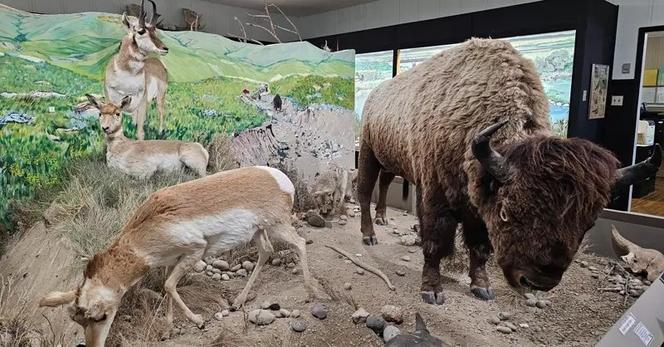
Wildlife display at the museum. Photo by Linda Aksomitis.

The Natural History exhibit is one of the most important in the collection. Its earliest artifacts include fossils from the area.

Taxidermy mounts positioned in front of painted scenes portray the area’s wildlife today.

Fast Fact: The bison speciman displayed in the museum is from a herd in Wainwright, Alberta, in 1932. He's named "Frank" after Frank Bransted, Chairman of the Museum Board from 1936 - 1957.

The Local History Exhibit is another key area in the museum. It provides information on early town businesses, from the Crystal Bakery to the Grand Coteau General Store to Hillcrest Farms.

Fast Fact: In 1940 the Cyrstal Bakery supplied an average of 500 loaves per day in the winter and 700 per day in the summer!

In between, the museum covers early household appliances, communications, millinery styles, the RCMP, war veterans, and more. Some exhibits rotate, which keeps the museum new for visitors.

Machines used to make clothing in pioneer days. Photo by Linda Aksomitis.

The art gallery in the Grand Coteau Heritage & Cultural Centre in Shaunavon covers about 1,000-square-feet (93 sq. m).

Presentation in the art gallery. Photo by Linda Aksomitis.

It features exhibitions by local, Saskatchewan and Canadian artists. 

Linda’s Road Trip Tips

I visited Shaunavon for a critique session with my writers’ group, so spent four days in the community.

Pin me!

While I really enjoy the Canalta Hotel chain on the prairies, the Canalta Hotel Shaunavon was booked during our visit. So, we stayed at the Bear’s Den Lodge. It was a budget-priced option, but comfortable.

And the dining? There are lots to choose from. I particularly enjoyed the Harvest Eatery, which serves what it describes as gourmet comfort food.

I highly recommend the Lake Diefenbaker Steelhead trout fillet–their spicy pickled peach relish is a tasty addition.

The T.rex Discovery Centre in Eastend, just 20 minutes away, is one of the southwest’s most popular summer attractions. It’s home to “Scotty,” the world’s largest Tyrannosaurus rex.

You can also see the Buzzard Coulee Meteorite that crashed near Buzzard Coulee in west-central Saskatchewan in 2008.

Who Should Visit the Grand Coteau Heritage & Cultural Centre?

The Grand Coteau Heritage & Cultural Centre (GCHCC) is about 45 km (28 miles) off of the Trans-Canada Highway in southwest Saskatchewan.

So, for those on a road trip who like to explore smaller communities, the town and museum are the perfect stop.

Anyone looking for prairie history will find some interesting artifacts and information at the museum.

I spent about an hour going through the collection, so a visit can provide a short break and stretch if you’re traveling.

GCHCC has various archival materials that researchers will find valuable. From its large collection of history books to the entire span of the Shaunavon Standard newspaper dating back to 1913, there’s lots of local history.

Pin me!

For genealogy researchers, there’s also a collection of obituaries.

How Do You Visit the Shaunavon Museum?

The Shaunavon Museum is part of the town’s multi-purpose complex that also houses the library, art gallery, and visitor centre.

Parking: There's lots of free street parking at the museum.

Street Location: 401 – 3rd St West, Shaunavon, Saskatchewan.

The museum is open seasonally. You can check out the Grand Coteau Centre website for information on open days and hours.

Keep up to date with what’s happening at the Grand Coteau Heritage and Cultural Centre Facebook page.

Take a quick virtual tour of the Grand Coteau Heritage and Cultural Centre on YouTube.

Plan your trip with Google Maps.

More Places to See in Saskatchewan

Check out all of guide2museum.com’s reviews of museums in Saskatchewan.

Read More Reviews of Heritage Museums

#Canada #history #lifestyles #museums #pioneers #richAndFamous #Saskatchewan

Historic Home of 1800s Governor in Lafayette, LA: Alexandre Mouton

Alexandre Mouton was a statesman and governor in Louisiana. His Lafayette home, known now as the Lafayette Museum as well as the Alexandre Mouton House, has been restored to its 1848 grandeur. This makes it a key Lafayette attraction for visitors.

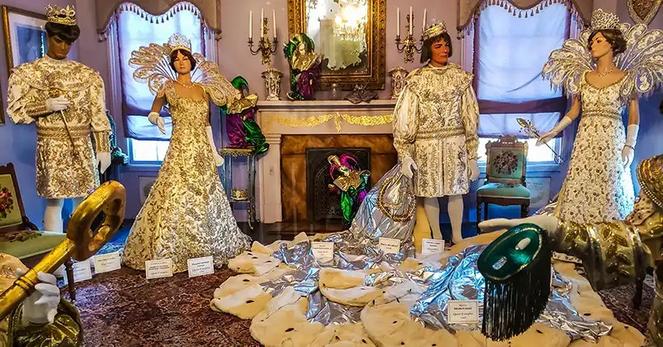
Mardi Gras costumes displayed at the Lafayette Museum in Louisiana. Photo by Linda Aksomitis.Fast Fact: The costumes in the Mardi Gras room are elaborate creations from various local krewes, spanning eras from the 1960s to the present.

Linda’s Pick of the Exhibits

My favorite exhibit is typically one that’s unique and expands my knowledge of a place’s history — in the Mouton House, that was the Nun’s Room. It helped remind me of the diverse cultural and religious influences throughout Lafayette’s history. While Jean Mouton, who built the original parts of the Mouton house, was Acadian, Lafayette had many other influences.

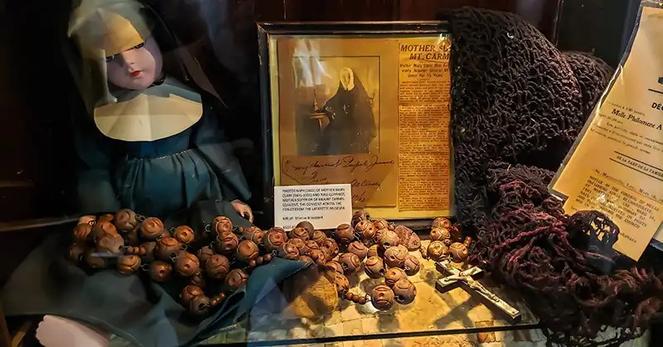
Display of doll dressed as a nun and photograph with clippings about Mother Mary Clare (1875 – 1935). Photo by Linda Aksomitis.

The room honors the Mt. Carmel sisters who lived across the street for over 100 years. The Carmelite order traces back to Mount Carmel in northwestern Israel about 1155. Their rule was written between 1206 and 1214 by St. Albert.

Fast Fact: When a daughter entered the convent early in the 20th century, her hair was cut and customarily sent to New Orleans to be tatted into a wreath. Wreaths were often displayed in a shadow box with the nun's picture.

Other interesting artifacts and details included:

  • Picture of a young nun hand painted on porcelain
  • Mannequin dressed in a traditional nun’s habit worn up to 1967
  • Intricately crafted quilts
  • Small statue of Saint Frances Xavier Cabrini (1850 – 1917) who founded the Missionary Sisters of the Sacred Heart of Jesus
  • Rosary passed down through generations, donated by Annamay Lucia (formerly Sister Mary Celestine)

What’s in the Lafayette Museum?

The city of Lafayette was founded by Jean Mouton. The original village (named Vermilionville) was laid out by Mouton and his surveyor, John Dinsmore, Jr. in 1821.

What’s the history of the Mouton House?

Jean Moutin’s original family home, a modest one-room house with a kitchen, was built around 1800. The purpose of this Acadian-style cottage was to provide a place for the family to stay when they went to town for Sunday church services.

It was built with traditional briquette entre poteaux construction? What was that? Brick infill between wooden posts. The kitchen, as was common in Louisiana, was a separate building connected with a covered walkway.

While the original house grew, the original kitchen is still on the site.

Alexandre Mouton, Jean’s son, was born there in 1804.

In 1820, Alexandre Mouton added three rooms to accommodate his growing family. The home was sold to Dr. W.G. Mills in 1849. He added a second floor, the third-floor cupola, and additional rooms that make up the house we visit today.

The house is an important piece of architecture, showing the evolution of buildings in the region.

The Mouton House was listed on the National Register of Historic Places in 1975. An historical marker provides insights into the importance of the house in preserving local history.

Bedroom in the Mouton House. Photo by Linda Aksomitis.

Things you’ll note in the house as you explore the rooms include:

  • Hand-made functional furniture made by Cajun craftsmen
  • Recessed panels on doors
  • Crown moldings and tapered legs
  • Wrought iron butt hinges and locks
Lafayette Museum – Alexandre Mouton House by QuesterMark. Licensed under the Creative Commons Attribution-Share Alike 2.0 Generic license.

You can view period furnishings and design in three historic structures:

  • Two-story main house with wooden porches on both the first and second floors
  • Acadian house connected by a covered wooden porch
  • Brick smokehouse

Linda’s Road Trip Tips

Pin me!

Lafayette is at the heart of Acadiana, a Louisiana region known for its strong Cajun and Creole influences.

The city has a relaxed, fun vibe that you can’t resist.

In fact, you’ll likely find a festival or celebration happening in Lafayette whenever you decide to visit!

I was lucky to be visiting during the Festival Acadiens et Creole, with its food, music, and dancing. It was simply amazing!

Fast Fact: Zydeco music was born in rural Southwest Louisiana. It blends Louisiana French accordion and Afro-Caribbean music. Indeed, zydeco is a little bit Creole, Cajun, gospel, and blues!

When it comes to museums and historic sites, these were my favorite in Lafayette:

Who Should Visit the Lafayette Museum / Mouton House?

The Lafayette Museum is an attraction that contributes a lot to showcasing two centuries of Louisiana history.

Starting with the Acadian influences, you’ll also find a lot of information on the Civil War. Artifacts link to Governor Alexandre Mouton and his son, Confederate General Alfred Mouton.

For those interested in architecture, the three historic structures are must-sees.

Some exhibits are interactive, so Mouton House is a good family destination. The guides are great and happy to answer any questions.

There’s limited accessibility for those with mobility issues, due to the preservation of the historic structure.

Pin me!

There isn’t an elevator, so visitors unable to climb stairs will only be able to view the first floor.

How Do You Visit the Lafayette Museum / Mouton House?

Lafayette, Louisiana, is a key transportation hub in the Southern United States. So, it’s intersected by several major highways, including I-10 and I-49.

Parking: The museum has street parking and bus parking.

Street Address: 1122 Lafayette Street, Lafayette, LA

Pin me!

The museum is open year-round, but check the Lafayette Museum website for days and hours open, as well as admission costs.

Check the Lafayette Museum Facebook page for the latest updates.

Take a short virtual tour of the Lafayette Museum with Explore Louisiana on YouTube.

Plan your visit with Google maps.

Find More Museum Reviews for Louisiana

Check out more reviews for museum attractions in Louisiana on guide2museums.com.

Read More Historic House Reviews

#history #I10 #I49 #lifestyles #Louisiana #museums #richAndFamous #travel #US_

Bishop’s Palace in Galveston, Texas: Victorian Era Castle

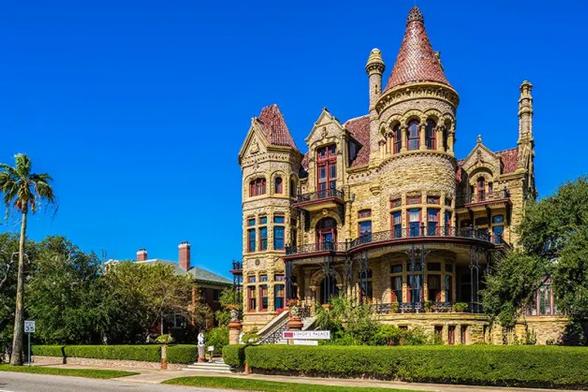
The East End Historic District of Galveston, Texas, covers 50 city blocks of beautiful historic properties. None, however, is more impressive than the Bishop’s Palace, or Gresham’s Castle as it’s also known.

This historic house has been called one of the hundred most important buildings in America by the American Institute of Architects.

The Bishop’s Palace (Gresham’s Castle) in Galveston, Texas. Photo by Fotoluminate on DepositPhotos.

Linda’s Favorite Part of the Castle

I love castles whether they’re centuries-old and in a state of disrepair, or a century old and ornate like Gresham’s Castle. And I find the insides even more fascinating.

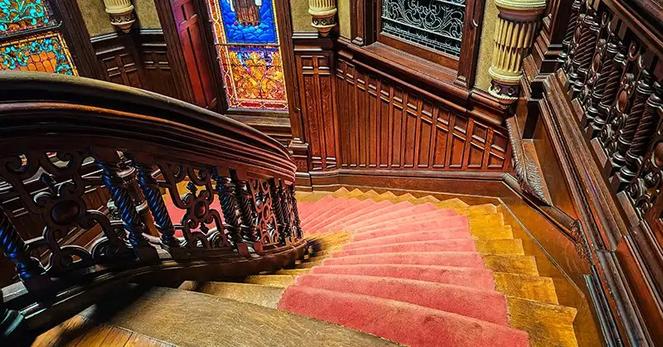
So what’s my favorite part of this historic house? The mahogany stairwell, which is recognized as one of its notable architectural features. It’s one of the first things to see inside the main entrance’s octagonal rotunda.

Mahogany stairwell in the Bishop’s Palace. Photo by Linda Aksomitis.

The staircase rises forty feet from the floor to the domed ceiling and even has an octagonal skylight above it. So, playful shadows fell around my feet as I climbed the stairs. And of course, lights flickering in the stained glass windows also caught my eye.

Entrance area of the Bishop’s Palace. Photo by Linda Aksomitis.

As the stairway wound up to the second floor, I had to admire the carved banister and spindles. And while I know skin oils can cause build-up on the wood, I was sure tempted to hold the handrail!

Fast Fact: A baluster— also called spindle or stair stick—is the moulded shaft that's square or lathe-turned. The handrail is the bar used by people to hang onto, while the spindles are the posts between the top and bottom rails.

I couldn’t help but admire the rare woods used in the construction of the castle. They included rosewood, satinwood, white mahogany, American oak, and maple. 

And while the wood is beautiful, it was the carvings that really made the staircase stand out for me.

What’s at the Bishop’s Palace?

The Bishop’s Palace is a 19,082 square feet Victorian-style home. It took from 1897 to 1892 to build it for Walter Gresham. Who was he? A Texas lawyer and politician who spent around $250,000 on this home for his wife, Josephine, and nine children.

Living area with fireplace. Photo by Linda Aksomitis.

A three-story Victorian era home, the palace was designed by prominent Galveston architect, Nicholas Clayton.

Its exterior features such things as a steep roof and long sculptural chimneys. From its irregular shaped rocks to the Tudor arches with animal carvings, it’s truly an architectural gem.

Fast Fact: Gresham's Castle survived the 1900 Galveston Hurricane due to its robust stone structure. Between 8,000 and 12,000 people died in the hurricane. The Greshams welcomed hundreds of survivors into their home in its aftermath.

While the exterior impressed citizens of the time, visitors to the house would have found the interior just as amazing. The two main floors feature various types of wood, lots of ornate designs, and tons of stained glass.

Built-in cupboards and silver serving pieces. Photo by Linda Aksomitis.

Today, the furnishings are a mix of original from the Greshams and additions from later owners.

Original house owner, Josephine Gresham, added her own touches.

Chandelier, stained glass, and mural by Josephine Gresham. Photo by Linda Aksomitis.

An accomplished artist, she painted several murals. The dining room ceiling mural depicted her nine children as angels.

Why is Gresham’s Castle known as the Bishop’s Palace?

Walter Gresham’s family lived in the house until 1923, three years after his death. Then, the house was sold to the Roman Catholic Diocese of Galveston. It became the home of Bishop Christopher Byrne.

The key change made by the Bishop was to convert a second-floor bedroom into a chapel. He added an altar along with six prie-dieu (kneelers). Above, a ceiling mural depicted the four Evangelists—Matthew, Mark, Luke, and John. The room was completed by a gold-lacquered brass and onyx crucifix.

The Roman Catholic Diocese of Galveston owned the Bishop’s Palace for 90 years, from 1923 until 2013. After serving as a residence, it housed diocesan offices.

Then, in 1963, the diocese opened the mansion to the public for tours. Tour proceeds supported the University of Texas Medical Branch’s Newman Center, which operated in the basement.

In 2013, the Galveston Historical Foundation acquired the property. They continue to maintain it and offer public tours.

This historic house museum was declared a Recorded Texas Historic Landmark in 1967. In 1970 it was also added to the National Register of Historic Places.

Linda’s Road Trip Tips

Pin me!

Galveston is a great destination! We stayed at the Moody Gardens Resort where we were attending a conference.

However, you don’t have to stay to enjoy the three pyramids, their attractions, or the five-story ropes course and 500 ft (150 m) zipline. While we were there, we saw a steady stream of school buses dropping kids off for the day.

We found Galveston easy to drive in, and visited a number of attractions.

Here’s a list!

Who Should Visit the Bishop’s Palace Historic House Museum?

Anyone interested in Victorian era architecture will be able to spend hours in the Bishop’s Palace! Likewise, if you just love to explore the historic homes of the rich and famous.

While the house is packed with irreplaceable artifacts, you can walk through without a guide. This gives you lots of time to spend taking photos or just soaking up the atmosphere.

Families with small children won’t likely find it a great destination, as kids will have to be watched closely. The stairs, while beautiful, are steep and have lots of steps. In order to keep the historic authenticity of the house there isn’t an elevator.

Pin me!

Those with mobility issues (or baby strollers) will have difficulty entering the building as there aren’t any ramps. However, the exterior beauty of the building is readily enjoyed on a driving tour of the East End Historic District.

We spent about an hour and a half in the historic house.

How Do You Visit the Bishop’s Palace?

The East End Historic District was Galveston’s first residential area. In addition to the Bishop’s Palace, there are numerous historic homes still standing to see on a driving tour. Many of them also withstood the 1900 Galveston Hurricane.

Parking: Free street parking is available at the historic house. Pin me!

Street address: 1402 Broadway, Galveston, Texas

The historic house is open year-round, but check days and hours on the Galveston History website.

Get the latest on the Bishop’s Palace Facebook page.

Take a YouTube tour with the Texas Bucket List video.

Plan your visit now with Google maps.

Find More Museums in Texas

Check out more museum reviews for museum attractions in Texas on guide2museums.com

Read More Historic House Museum Reviews

#history #lifestyles #museums #richAndFamous #Texas #travel #US_

Diamond Platnumz Biography, Age, Wife, Songs, Album, Children, Girlfriend, Real Name, Tribe, Parents, Mother, Net Worth

Early Life

Diamond Platnumz (born October 2, 1989, 35 years old). He was born at Dar es Salaam’s Amana Hospital. His grandmother raised Diamond Platnumz in the western section of Tandale as his mother’s only child.
#DiamondPlatnumz #PopMusic #CelebrityNews #RichAndFamous

https://creebhills.com/2023/05/diamond-platnumz-biography-age-net-worth?utm_source=dlvr.it&utm_medium=mastodon

Diamond Platnumz Biography, Age, Wife, Songs, Album, Children, Girlfriend, Real Name, Tribe, Parents, Wikipedia, Mother, House, Cars, Net Worth, and Career

Diamond Platnumz (Naseeb Abdul Juma) is a Tanzanian-born Bongo Flava music artist and vocalist best known for his hit song Number One, which featured Nigerian

CreebHills
As much as my heart breaks for the victims of the #CaliforniaWildFires , having seen that some of the #RichAndFamous were unable to get fire insurance, how long will it be before the #USTaxpayers are asked to pony up for the bill? It's always been #socialism for the rich and rugged individualism for the #poor.

EAA Aviation Museum in Oshkosh, Wisconsin: Airplanes from All Eras

The EAA Aviation Museum in Oshkosh, Wisconsin, curates all eras of flight. From aviation pioneers like the Wright Brothers to SpaceShipOne, visitors will find airplanes at the cutting edge of achievement.

Northrop F89 Scorpion airplane at the EAA Aviation Museum in the EAA Airventure Museum collection. Photo by Linda Aksomitis.

Linda’s Pick of the Exhibits

We always find machinery of the past fascinating. David studies the technology and I look for the stories of the people who created, built and used the machines. And the EAA Aviation Museum provided a rich hunting ground for both of us.

With a collection as diverse as that of the EAA Aviation Museum, it’s hard to pick a favorite. David, of course, always heads straight for the motors.

Airplane motors on display at the EAA Aviation Museum. Photo by David Aksomitis.

In addition to motors, many of the technological highlights are illustrated in the museum.

Fast Fact: The Woodstock, built Andy Keech, set three transcontinental records. It’s one of only two airplanes to hold records in all parameters in performance flight: speed, distance, climb, and altitude.

And for me, I found the Johnson Expedition story of this replica S-38 airplane fascinating. The “Johnson” here, was H. F. Johnson who owned Johnson Wax. He took an expedition into the jungles of Brazil in 1935 looking for — you guessed it — something related to wax.

After a lot of airplane research, Johnson picked the Sikorsky S-38 to fly. It was powered by two Pratt and Whitney radial “Wasp” engines rated at 420 h.p. Even more important, it could take off from land or water. As a plus, it could fly on one engine.

But back to the mission. Johnson was looking for the carnauba palm. Why? The carnauba leaves provide the finest natural wax in the world!

Sikorsky S-38 Replica. Photo by Linda Aksomitis.

And what did Johnson accomplish? The expedition flew 15,550 air miles into mostly in inhospitable territory. However, they returned with a wealth of knowledge that helped ensure a plentiful supply of carnauba wax.

And this is just one of the many stories in the EAA Aviation Museum!

What’s in the EAA Aviation Museum?

The idea for the EAA Aviation Museum was born more than seventy years ago, in September of 1953. At that time, a handful of innovators attended the first Experimental Aircraft Association (EAA) fly-in with their aircraft.

These innovators shared two main things: their passion for flight and their skills at creating revolutionary airplane designs.

Overview of airplanes from the gallery. Photo by Linda Aksomitis.

Today, the museum has more than 200 airplanes. They range from homebuilts, the original focus of the organization, to air racing and aerobatics, to their innovations gallery. We found the museum’s key strength, though, in the amount of information provided with each artifact in the collection.

Indeed, their library has more than 100,000 images of the aircraft and the people who flew them. It also includes 11,000 books, various magazines, journals, and manuals.

PQ14 unmanned WWII plane with world map on the wall behind. Photo by Linda Aksomitis.

The eight exhibits range from KidVenture Gallery to the Pioneer Airport. Indeed, families will love the interactive exhibits! Kids will enjoy the half-scale model of an F-22 where they can climb into the cockpit. This is just one fun option in the Raptor Gallery.

Fast Fact: The EAA Air Academy runs a variety of events every year for aviation enthusiasts between 14 and 18.

And the event that started the EAA Aviation Museum is still running with the name EAA Airventure. It makes the air control tower at Oshkosh, Wisconsin, airport the busiest in the state for a week each summer!

How Can Aviation Lovers Learn More About the EAA Collection?

While visiting the museum in person is an amazing experience, the EAA website has lots to see, too.

More Aviation Stories in the EAA Collection

The EAA Collection is as much about the aviators as it is about the history of flying machines. These are just a few of them.

  • Ernest K. Gann Story. Gann was a commercial pilot, author, sailor, screen writer, and film maker. Nine of his novels were turned into motion pictures or adapted for television. There’s a whole exhibit of his collection of photographs and mementos. They’re stored in Gann’s original converted chicken coop/writing office!
  • The Rutan Voyager story – first aircraft to fly around the world without stopping or refueling. The plane, built by Jeana Yeager and the second pilot, Dick Rutan, took 18-months to build. They were using lightweight graphite-honeycomb composite materials. The Rutan Voyager left December 14, 1986, from Edwards AFB in California. Then, it flew without stopping, or refueling, around the world. The record setting flight took almost exactly nine days to return back to Edwards AFB.
Fast Fact: Warren Rasor (1859-1938) was a ballooning enthusiast from Brookville, Ohio. He developed a varnish finish for the rubberized fabric envelopes that helped reduce the loss of gas in the balloons.

His longest flight in officially sanctioned events was in 1919.

That balloon flight traveled 850 miles from St. Louis, Missouri, to Parry Sound, Ontario.

Additional Collection Artifacts

In addition to airplanes, the EAA Aviation Museum has many other artifacts. A number of them are military vehicles from World War II, such as a 1942 Army Staff Car.

Many are small memorabilia including things like:

  • Wiley Post Winchester 21 commissioned as a “presentation” shotgun commemorating Wiley Post’s “Around the World” flight
  • Stub B Helmet produced by the Mondi Manufacturing Company of Oshkosh
  • Voyager 200 4 cylinder, 110 horsepower engine

Linda’s Road Trip Tips

We visited the EAA Aviation Museum by accident on a road trip through Wisconsin and Michigan. In fact, we were just cruising when we saw a sign for Oshkosh. Since we have a friend who often attends the EAA AirVenture Oshkosh fly-in, we knew it was a big airplane community. And, as I said to David, that likely meant there was a pretty good museum there too.

Pin me!

I checked the Web, found the museum address, and plugged it into the GPS.

What we found went well past “good” and well into fantastic!

After leaving, we made a quick stop off I-41 at the Bergstrom-Mahler Museum of Glass in Neenah.

The necklace I purchased is still one of my favorite pieces.

And I just had to take a few minutes to see the working windmill in Little Chute.

We stopped for the night a hundred miles further east in Marinette, Wisconsin. The Budget Inn was small and a little on the pricey side for what it offered, but we slept well. Dinner was great pizza at The Brothers Three in Marinette.

Who Should Visit the EAA Aviation Museum?

The EAA Aviation museum is a must-see for anyone interested in the history of aviation. You’ll find a lot of “aviation firsts” and information about the people behind them.

Spirit of St. Louis replica aircraft in a featured Lindburg From New York to Paris display. Photo by Linda Aksomitis.

With its many interactive exhibits it’s a great museum for families. From grandparents to kids, everyone will learn a lot about the history of flying in fun ways. We spent a couple of hours, but there’s lots to keep you busy for two or three times that.

Anyone interested in military aviation history will enjoy the Eagle Hangar. It includes Allied fighters, bombers, liason aircraft, trainers, Army and Navy aircraft, along with examples from German and Japan.

All areas of the museum are accessible for wheelchairs, using either ramps or elevators. There are also free wheelchairs and strollers for visitor use.

How Do You Visit the EAA Aviation Museum?

The EAA Aviation Museum has a community of dedicated aviators in Oshkosh, Wisconsin.

Parking: There are five parking lots on the grounds with on-site shuttles and trams during events. Daily or weekly passes can be purchased for cars, trucks, motorhomes, and motorcycles.

Street Address: 3000 Poberezny Road, Oshkosh, Wisconsin.

The EAA Aviation Museum is open year round. Check specific days and hours open on the EAA Museum website.

Keep up-to-date with what’s happening with the EAA – The Spirit of Aviation Facebook page.

See EAA videos on YouTube.

Plan your visit with Google maps.

Pin me!

Find More Museum Reviews for Wisconsin

Check out more reviews for museum attractions in Wisconsin on guide2museums.com.

Read More Technology Museum Reviews

#airplanes #history #museums #richAndFamous #travel #US #Wisconsin #WWII

Art Gallery of Ontario: Art Museum in Toronto, Ontario
The Art Gallery of Ontario in Toronto, Canada, provides an open, inviting space for visitors. That’s no surprise as it’s one of the largest art museums in North America. The museum has 480,000 sq ft of physical space to display art!

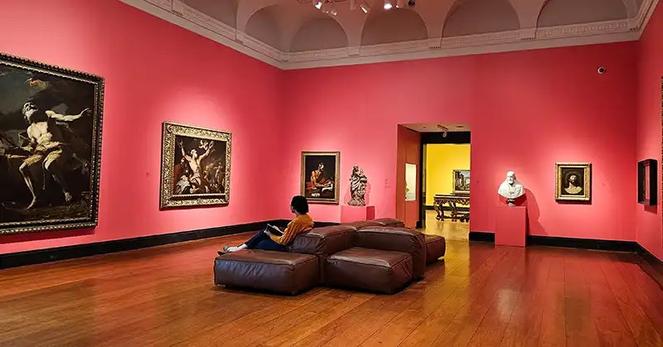
1600s European religious art. Photo by Linda Aksomitis.

Linda’s Pick of the Exhibits

Art is in the eye of the beholder, however everyone has favorite styles and pieces. My favorite pieces in the Art Gallery of Ontario (AGO) were part of the Thomson Collection.

But let’s start with the Thomson Collection as a whole.

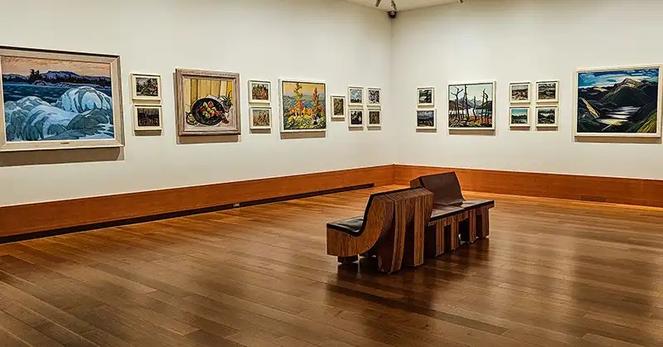
Thomson Gallery. Photo by Linda Aksomitis.

The collection was gifted to the Art Gallery of Ontario by Kenneth Thomson, 2nd Baron Thomson of Fleet. It consisted of about 2000 works valued at CA$300 million. Thomson also gave CA$50 million to the gallery for expansion and renovations, as well as CA$20 million for operations.

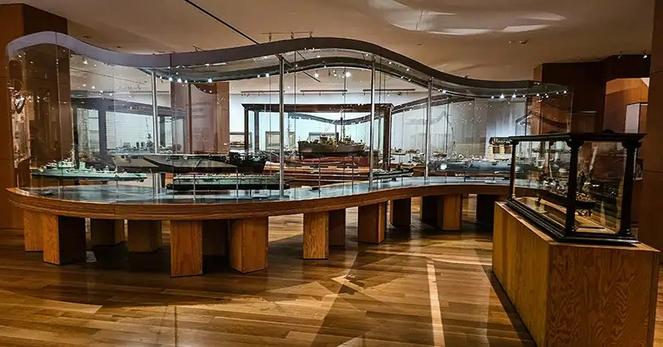
While there are many important pieces in the Thomson Collection, my favorite was the British ship models. The 3-D model collection is considered to be one of the finest of its kind.

Fast Fact: The Bristol ship model was made in 1774 by George Stockwell (1729 - 1805). Stockwell worked at Sheerness Dockyard as a professional shipbuilder and also produced scale models. As well as the scale model, the museum has a VR model. It was created by virtual-reality designers to show life aboard the real Bristol after it was converted to a floating prison docked near Chatham, in Kent, England.
~ OMA

When you think about it, without the 350 years of maritime history recreated here, North America would look very different! In my historical research, I often end up back at ships and experiences on the ocean.

I love today’s ocean cruises, but can’t imagine the weeks and months of living on these steamers!

Thomson Collection of Ship Models – lower level of the AGO. Photo by Linda Aksomitis.

Even the display cases are part of the “feel” of ocean travel. Designed by architect, Frank Gehry, the cases curve like the crest of a wave as they move across the wide open floor space.

What’s in the Art Gallery of Ontario?

The Art Gallery of Ontario has more than 120,000 works! The permanent collection includes historic and current artists.

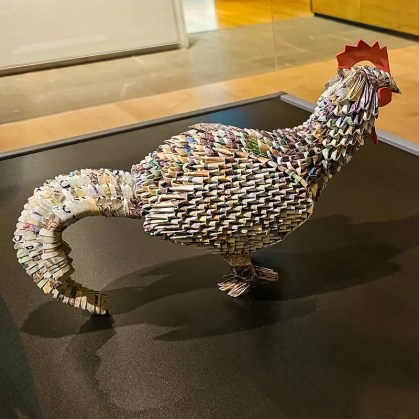
Paper Menagerie – created by Colombian craftsman and street vendor, Luis Orlando Ortega. He used Venezuelan money (worth very little) to create the sculpture. Photo by Linda Aksomitis.

These are the different galleries.

  • Canadian art
  • Indigenous art
  • European art
  • Modern art
  • Contemporary art
  • Arts of Global Africa & the Diaspora
  • Photography
  • Prints & Drawings
  • The Thomson Collection
  • Henry Moore Sculpture Centre
Fast Fact: The Thomson Collection features 300+ works from the Group of Seven and Tom Thomson. They were some of Canada's most influential early artists.

In addition, the Art Gallery also has a library and archives. It includes 380,000+ pieces. There are many rare books, catalogues, magazines, and more from the 17th century to now.

A dozen curators are in charge of the collection, each one working in the area of their expertise.

Various events open to the public are held in the art museum. They also have a number of educational programs to serve adults and young people.

Linda’s Favorite Artist

Tom Thomson is a name I remember well from my art history classes growing up in Canada. His work continues to influence Canadian art.

Woods in Winter. Painted spring 1917 by Tom Thomson. Public Domain work of art archived on Wikimedia Commons.

He used vibrant colors liberally, something I also like to do in my travel photography.

Thomson grew up in rural Ontario and enjoyed the outdoors. He took a lot of inspiration from his work. What did he do? Thomson worked as a fishing guide and forest ranger in Algonquin Provincial Park.

Thomson wasn’t one of the famous Canadian Group of Seven. Unfortunately, he drowned at the age of 39 in 1917, before the group was founded.

His work consists of around 400 oil sketches on small wood panels and about 50 canvas larger works. Most of his paintings are landscapes.

How can I learn more about Tom Thomson’s art?

If you’d like to see more of Tom Thomson’s work and learn more about his life, here are some of my favorite sources.

VIDEO: Canadian video profile of Tom Thomson on YouTube.

VIDEO: Tom Thomson: A Collection of 179 Works on YouTube.

WEBSITE: Tom Thomson Life & Work by David P. Silcox.

ON AMAZON:

https://www.amazon.com/Treasury-Tom-Thomson-Joan-Murray/dp/1553658868?crid=17XSRXDI6INJU&dib=eyJ2IjoiMSJ9.115aXiFieuX_vbKGpo3SytvtcOWuVrzbe-I9maKC-iuWv660cpjg4y1zM6XUDzl6p0Y9K254RvEM7a4oEjR_pfNCF08hYFLAahHQF_wczqS_qXaMzU6MkRWPrHvydxT9m72DaZuBpoJS7iLrl77BSNVaBVUrYvATsY_XAwPWMIA_6aYaCk3PQTRV9q70aFJHnO8ETY6rqHswJoe1IziNahNU9I1gaGjObLyJ_UOnRbM.Fkr4ihoPHXSOTm-qgRlQ4p499c24Fxj23LbnT6qVW4Q&dib_tag=se&keywords=tom+thomson&qid=1734123055&s=books&sprefix=tom+thomson%2Cstripbooks-intl-ship%2C176&sr=1-3&linkCode=ll1&tag=snowmaga-20&linkId=576a2698d9bf32bae70119e792d11e66&language=en_US&ref_=as_li_ss_tl

Linda’s Road Trip Tips

I visit Toronto regularly, and rely on the subway rapid transit system to get around. It’s operated by the Toronto Transit Commission (TTC). On this visit, I took the subway to Toronto Union Station, then used the PATH to walk to the museum.

Fast Fact: The PATH is a 30+ km (18.6 miles) pedestrian walkway that's mostly underground in downtown Toronto. It links to public transit and 1200+ shops, restaurants and services.

From the art museum, it’s only a five minute walk to the Toronto Eaton Centre. The Toronto Eaton Centre is a large shopping mall in downtown Toronto that links to the subway and the PATH.

As well as having the perfect location, the shopping is also great. There are 230 stores and restaurants!

But rather than a restaurant, I decided to hit the food court.

Bourbon St. Grill in the Urban Eatery food court at the Toronto Eaton Centre. Photo by Linda Aksomitis.

Their food court, Urban Eatery, is gigantic! It covers 45,000 sq ft and seats nearly a thousand people. Food selections are excellent — I had their signature Bourbon Chicken combo at the Bourbon St. Grill.

There are lots of museums to see in downtown Toronto, so I haven’t visited them all. Check out the reviews of those I’ve already enjoyed:

Who Should Visit the Art Gallery of Ontario?

Pin me!

Art lovers of any age will find lots to inspire them at the Art Gallery of Ontario.

The museum is accessible to everyone with a wide variety of customer service policies.

The Art Gallery of Ontario has lots of programming and attractions for families.

They provide art making activities to help kids become more creative, as well as offering activities like courses, workshops, dance parties, and more.

There’s always something new at the Gallery, too. They have a continuous rotation of exhibitions.

How Do You Visit the AGO?

The Art Gallery of Ontario is situated in downtown Toronto, Ontario. It’s accessible by car, subway, bus, and the PATH indoor pedestrian walkway.

Street Address: 317 Dundas Street West, Toronto, Ontario, Canada.

Parking: You may want to park at the Toronto Eaton Centre. That will let you shop and eat, as well as visit the AGO. Here's a link to an open app providing parking details, booking, and fees.

Check the days open, hours, and admission fees on the AGO website.

Keep up to date with the latest news on the AGO Facebook page.

Take a virtual walkthrough of the AGO with Visit Toronto on YouTube.

Plan your visit with Google maps.

Pin me!

Read More Ontario Museum Reviews

Check out all these museum reviews for the Canadian province of Ontario!

Explore More Art Museums

#art #Canada #carvings #history #museums #Ontario #richAndFamous #Toronto #travel

Ronald Reagan Presidential Library & Museum: Simi Valley, California

The Ronald Reagan Presidential Library & Museum is situated in Simi Valley, halfway between Los Angeles and Santa Barbara. It was opened November 4, 1991, by former President Reagan and four other living U.S. presidents.

Entrance to the Ronald Reagan Presidential Library & Museum. Photo by Linda Aksomitis.

Linda’s Pick of the Exhibits

The Cold War has always fascinated me. And Ronald Reagan was instrumental in taking down the Berlin Wall and bringing the Cold War to an end. So, I found the the exhibits linking to this aspect of his presidency most fascinating.

The lines below are Reagan’s speech listed on Time’s list of the top 10 greatest speeches. The speech has been considered one of the defining moments of Reagan’s presidency.

Mr. Gorbachev, open this gate!
Mr. Gorbachev, tear down this wall!

~ Ronald Reagan, address at the Brandenburg Gate, June 12, 1987

While I listened to the speech on t.v. at the time, it became even more important to me later. The wall and its significance became more real after visiting Berlin, driving under the Brandenburg Gate, and seeing the wall.

Fast Fact: Reagan's presidency began in 1981, and ended in 1989. The Berlin Wall fell on November 9, 1989, after George HW Bush became the 41st president of the U.S.

During his presidency, Reagan met with Soviet Union leader, Mikhail S. Gorbachev at four summits. The summits were held in Geneva, Switzerland; Reykjavik, Iceland; Washington, D.C.; and Moscow, U.S.S.R. These two leaders signed two historic treaties, which are both on exhibit in the gallery.

Statues of President Reagan and Mikhael Gorbachev. Photo by Linda Aksomitis.

President Reagan also envisioned a Strategic Defense Initiative (SDI). While it was never implemented, in part due to the fall of the Berlin Wall, it impacted future defense plans. Plans from the SDI helped put in place leading edge defense systems to protect against ballistic missile attacks.

Fast Fact: Peter Robinson was the staff writer behind President Reagan's historic speech. Read the story behind its writing in the U.S. National Archives.

What’s in the Ronald Reagan Presidential Library & Museum?

The Reagan Library & Museum overlook a breathtaking landscape in Southern California. The 100-acre grounds are home to replicas of the White House’s Rose Garden and White House South Lawn.

Dedicated in 1991, the original building was 150,000 square feet in total. Its one of just 13 presidential libraries. Its library holdings are enormous with over a million-and-a-half still photos and nearly 65 million pages!

Ronald Reagan Presidential Library & Museum in the Simi Valley. Photo by Linda Aksomitis.

In addition to the Library and Reagan Library Grounds, there are a number of other permanent exhibits. They include:

  • President Ronald Reagan Memorial
  • Oval Office decorated as it was during Reagan’s presidency
  • Secret Service
  • Gold Star Families Memorial Monument
  • Berlin Wall
  • Air Force One
  • F-117 Nighthawk Stealth Fighter, F-14, M-1 Abrams Tank, and Marine One helicopter
  • Ronald Reagan Hologram
Fast Fact: You can take a Google Street Virtual Walk Through of the Ronald Reagan Presidential Library and Museum.

Ronald Reagan, 40th president of the United States, brought one of the most colorful personal histories to the White House. Indeed, he acted in 50+ films over three decades!

As well as his Cold War achievements, the White House Historical Association also notes the following.

High Points of the Exhibits

Of course, the replica of the Oval Office in the White House stands out for everyone! Since I’ll never see the real one, it certainly did for me.

Replica of the Oval Office. Photo by Linda Aksomitis.

There was a second high point for me in the Reagan Library exhibits. That was getting my photo taken horseback riding with the president. Okay, so his image is just a wall mural, but I still love the photo!

Linda Aksomitis horseback riding with President Reagan!

Outdoors, I loved the statue of his favorite horse, El Alemein. El Alemein was an Anglo Arab gifted to him in 1980 by Mexican president, Lopez Portillo.

Bronze statue of President Reagan riding El Alemein. Photo by Linda Aksomitis.

Even before becoming president, Reagan had a ranch in California. After becoming president, it was his vacation home, and was dubbed “The Western White House.”

Fast Fact: President Reagan, and his wife, Nancy, rest peacefully on the museum's hillside facing the sunset over Simi Valley.

Linda’s Road Trip Tips

Make sure to have coffee or a meal (I did lunch) at the Gipper’s Bar & Bistro on your visit. You can also check out the Ronald Reagan Pub. It’s an actual pub from Reagan’s ancestral home, Ballyporeen, Ireland. It was dismantled and shipped to California in 2004!

I stayed in Oxnard while visiting the Ronald Reagan Presidential Library & Museum. Only 25 miles away, Oxnard has the amazing Henry T. Oxnard Historic District for history lovers.

Fast Fact: Oxnard's historic district was listed on the National Register of Historic Places in 1999.

The district has 139 contributing buildings, mostly built before 1925. Few inappropriate changes have made in the area over time, so these two streets of home make an intact neighborhood.

The architecture of the area includes the following.

  • 72 bungalows/craftsman
  • 36 Mediterranean/Spanish Revival
  • 13 Colonial Revival
  • 5 Prairie School
  • 8 Tudor Revival
Costumed docents giving tours of Heritage Square, Oxnard, California. Photo by Linda Aksomitis.

Heritage Square is a pivotal part of the historic area. It consists of 15 restored structures and a Main Plaza and its gardens. Docents offer guided outdoor tours year-round starting at the Heritage Square Visitor Center at 715 South A Street.

Who Should Visit the Ronald Reagan Presidential Library & Museum?

The Ronald Reagan library has a wealth of information for academics and historical researchers.

Pin me!

The museum is interesting for anyone visiting the area. It captures a picture of politics during the Cold War and Reagan’s importance in bringing it to an end.

Exhibits from this period include everything from clothes worn by Nancy Reagan to saddles the couple used for horseback riding.

The Air Force One exhibit is fascinating for visitors of all ages. Indeed, you can go inside the plane that served seven presidents, including Reagan. He flew in it over 660,000 miles to 26 foreign countries and 46 U.S. states.

I spent about three hours at the museum, but could have been longer if I’d sat down in the library!

The museum and library are wheelchair accessible, with elevators where required. There’s even a wheelchair lift to allow visitors to access the entry of Air Force One. Working and service animals are allowed on site.

How to Visit the Ronald Reagan Presidential Library & Museum

The Ronald Reagan Presidential Library & Museum was situated in Simi Valley due to Reagan’s political history in the state. While Reagan was born in Tampico, Illinois, his first political posts were as Governor for California from 1967 to 1975.

Parking: The museum provides free parking. During high tourist season visitors may have to park on Presidential Drive, adjacent to the library. A complimentary shuttle takes visitors to the Library entrance.

Address: 40 Presidential Drive, Simi Valley, California, USA.

Pin me!

Check days open, hours, and admission costs on the Reagan Library website.

Keep up to date with what’s happening with the Ronald Reagan Presidential Foundation’s Museum Page on Facebook.

Take a virtual tour of the Reagan Presidential Library & Museum with KCAL News.

Plan your visit to the museum with Google maps.

Find More Museums to Visit in California

Check out all of guide2museum.com’s reviews of museums in California.

Discover More History Museums

Reference(s)

San Buenaventura Research Associates. (2005). Downtown Oxnard historic resources survey final report. https://vcrma.org/wp-content/uploads/2024/07/downtown-oxnard-historic-resoures-survey-final-report.pdf

#California #ColdWar #history #museums #richAndFamous #travel #US

Rip Van Winkle Gardens & Historic Mansion: Jefferson Island, Louisiana

The Rip Van Winkle Gardens at New Iberia, Louisiana, can’t help but capture the imaginations of visitors. Indeed, area stories date back to the late 1700s when the area was founded by French, Spanish, and Acadian settlers.

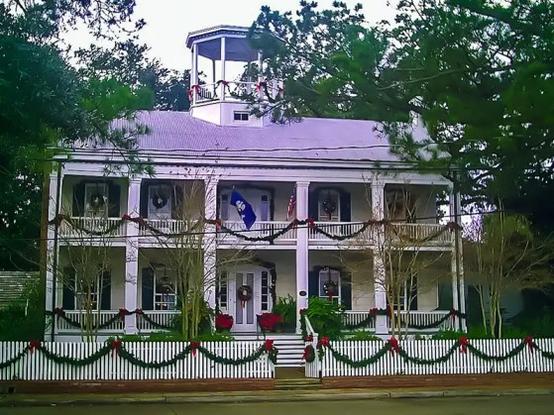
Joseph Jefferson home on the National Register of Historic Places (NRHP). Photo by Linda Aksomitis.

Jefferson Island, home of the Rip Van Winkle Gardens, is located in the Bayou Teche Corridor. The island is named for the internationally recognized actor, Joseph Jefferson, who purchased it as a hunting and fishing preserve in 1869. And the Rip Van Winkle Gardens are named for the character he played on stage over 4500 times!

Linda’s Pick at This Historic Site

I have to confess, first thing, that I’m a big fan of disaster movies. Any kind of disaster movie. So, it’s a given that the story of the Lake Peigneur disaster would grab my interest. Jefferson Island is located adjacent to Lake Peigneur.

Joseph Jefferson built a home on the island that he used when not traveling the world playing Rip Van Winkle. After Jefferson died in 1905, the property was sold. John Lyle Bayless, Jr. developed the gardens in the late 1950s, building a 1/2 acre conservatory under glass. It must have been amazing!

Peacock at Rip Van Winkle Gardens. Photo by Linda Aksomitis.

But on to the disaster.

November 20, 1980, started out like any other day. Fifty miners were at work below ground in a salt mine. Locals were out on the lake, fishing. A massive oil rig was conducting an exploratory drilling operation.

Then, the drilling operation went drastically wrong.

Instead of hitting oil, the Texaco company’s 14-inch drill bit hit a salt dome. Alarms sounded. Miners ran for the 1300 ft elevator to the surface.

The oil rig shook. Drillers abandoned it and ran for safety.

As the salt dome disappeared, a whirlpool formed that sucked everything around it into a sinkhole.

Fast Fact: The 11-acre lake, once just 10 feet deep, now had a 1500-foot-deep hole. Trees and 65 acres of land disappeared into it along with oil rigs, buildings, barges, and equipment, all forever gone.

Water from the Gulf of Mexico rushed in after them.

In a mere 40 hours, the shallow freshwater pond turned into a deep salt water lake! All that remained of the new home Bayless had built was a chimney protruding from the water.

First Hand Accounts of the Disaster

You can read a short first-hand account of the disaster on KLFY.com, Acadiana’s local news leader.

Watch a YouTube Video with current and historic photos, along with detailed explanations of the disaster.

What’s at the Rip Van Winkle Gardens & Historic Mansion?

The Rip Van Winkle Gardens and historic mansion were restored to their current state by Mike Richard. He purchased the property and began work on it in 2003, opening it up for garden and house tours. He also added a restaurant, three cottages for overnight stays, and a rookery.

Fast Fact: The historic mansion is surrounded by 350 year-old live oak trees draped in Spanish moss.

Even the trees have history here! Indeed, President Grover Cleveland visited in 1892, and spent time relaxing under the giant oaks. As a result, one was named the Grover Cleveland Oak. Today, it has a girth of 24 feet, 8 inches, and is marked with a plaque.

Grover Cleveland Oak plaque. Photo by David Aksomitis.

There are 15 acres of semi-tropical gardens for guests to enjoy. The lush growth is simply amazing. While the annuals, magnolias, camellias, and oaks are indigenous to the area, parts of the gardens are of Asian origin.

While walking through the gardens, I felt like I’d just entered the story of Gulliver in Land of the Giants. Indeed, there were bamboo plants adapted to Louisiana’s climate up to 40 feet tall! The Tropical Blue Bamboo even had canes up to 3.5 inches in diameter.

With its variety of flora and fauna, it’s a given that Rip’s Rookery on the grounds is great for bird watching. In fact, Jefferson Island is home to 260+ species of birds. The most popular? The Spoonbill Roseate.

About the Mansion

The Joseph Jefferson home is a twenty-two room Southern mansion built in 1870. Just one and one-half stories high, it has a belvedere (roofed but open on one or more sides) on the roof and verandas on three sides.

The interior features a central 12 foot main floor wide hall leading to the dining room at the rear. See historical photos of the house here.

However, it may be the supernatural aspects of the house that fascinate many visitors!

Fast Facts: One group of visitors on tour apparently saw a girl in a hallway in the mansion. She walked straight through the wall and vanished! Others have reported flying objects, unexplained sounds of a woman crying, locked doors opening, and more.

Linda’s Road Trip Tips

When you’re visiting the Rip Van Winkle Gardens, do take time to stop at Cafe Jefferson on the grounds. While they specialize in seafood, there’s something on the Cafe Jefferson menu for everyone.

If it’s afternoon coffee time, grab one of the decadent desserts. You can’t beat their bourbon pecan pie!

On our visit of the area, we also spent several hours at Avery Island, eleven miles away. This island is home to the Tabasco hot sauce popular around the world. We took the factory tour and short tour of the TABASCO Museum, along with checking out the 170-acre Jungle Gardens.

Tasting station at Tabasco factory tour. Photo by Linda Aksomitis.

And if you’d like to sample local music and dancing at the same time as eating your breakfast (really!), check out Buck & Johnny’s in Breaux Bridge.

Every Saturday morning they offer a Zydeco breakfast with lots of 2-step dancing. It’s really an awesome opportunity to soak up local culture and just 35 miles from Avery Island.

Who Should Visit Rip Van Winkle Gardens?

Rip Van Winkle Gardens are a great stop if you’re looking for Cajun experiences in Louisiana. Iberia Parish, where it’s located, is part of the Lafayette metropolitan area. The Acadiana region of this area is the largest population and economic corridor between Houston, TX, and New Orleans, LA.

Pin me!

And of course, for those who love the lush foliage of the deep south, the gardens have lots to offer.

For families, there’s lots of rooms for the kids to get out and enjoy nature.

As well as gardens, there’s also the historic Jefferson home.

The house is intriguing for those interested in architecture.

While it has common elements with plantation homes, it’s designed in the Moorish Revival and Gothic Revival architectural styles.

We spent a couple of hours on our visit.

How Do You Visit Rip Van Winkle Gardens?

The Rip Van Winkle Gardens and historic Jefferson Mansion are situated in New Iberia on Jefferson Island. It’s situated on US90.

Parking: There's lots of free parking at Rip Van Winkle Gardens.

Address: 5505 Rip Van Winkle Road, New Iberia, Louisiana, USA.

The Rip Van Winkle Gardens & Historic Mansion are open year-round, seven days a week, except for a few statutory holidays.

Check the Rip Van Winkle Gardens website for hours and admission costs.

Check out the Rip Van Winkle Gardens Facebook page for the latest news on what’s happening.

Watch a YouTube video from Rip Van Winkle Gardens.

Plan your visit using Google maps.

More Things to Do in Louisiana

Check out all of guide2museum.com’s reviews of museums in Louisiana.

Read More Historic Home Museums Reviews

Reference(s)

United States Department of the Interior National Park Service. (June 4, 1973). National Register of Historic Places Inventory Nomination form for Rip Van Winkle House and Gardens. https://npgallery.nps.gov/GetAsset/3108ecac-93ad-47df-9018-be1516f04ef2

Zeller, M.E. (May 23, 2011). Rip Van Winkle Gardens. Here4Now. https://here4now.typepad.com/here4now/louisiana-history/page/2/

#history #lifestyles #Louisiana #museums #richAndFamous #travel #US