Jane Austen at 250 – Christmas Eve with Jane

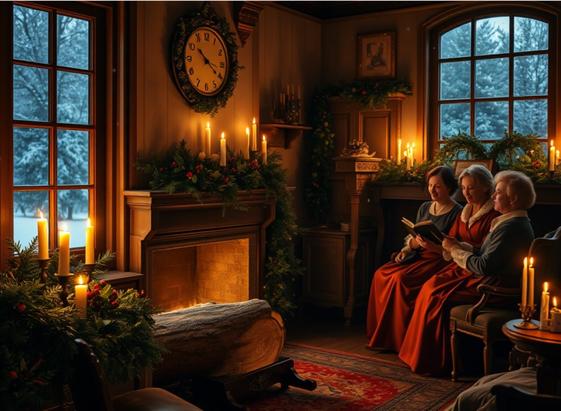
It is Christmas Eve, and the year is 1815. Outside, the world lies hushed beneath winter’s breath, and within the house, the work of preparation has begun. The evergreens have been brought in. Holly for cheer, ivy for endurance, bay for remembrance. Their scent mingles with woodsmoke, filling the air with the promise of celebration.

Jane Austen at 250: Christmas Eve with Jane

Candles are being set in each window, small beacons against the early dark. A Yule log, blessed with a quiet prayer, waits by the hearth to be lit when the evening deepens. In the kitchen, the warmth of mince pies and spiced negus gives a festive glow to the air.

As twilight falls, the household gathers for a simple supper. Laughter rises and fades like music, while someone, perhaps Jane herself, opens the pianoforte to play a few familiar carols. There is no spectacle here, no glittering tree or grand procession, only the shared comfort of presence.

Later, as the candles burn low, a few words from Scripture are read aloud. The family listens, reflecting on a year’s blessings and the quiet mystery of light returning to the world. Outside, the bells of Winchester, or perhaps a distant village church, toll softly in the night. It is in such stillness that Jane’s imagination thrived: in the small, human moments where affection, wit, and reflection met.

On Christmas Day, neighbours and family will gather in a parlour. The room will be alive with laughter, carols, and conversation. In this imagined moment, Jane Austen sits among us, her eyes bright, her wit ready, her presence unmistakable.

Christmas with Jane

I like to think of Jane at Christmas listening closely to the ebb and flow of voices, storing away details with her characteristic sharpness. Every half-formed remark, every awkward pause, every burst of laughter. These were her raw materials, and she shaped them into stories that still warm us two hundred and fifty years later.

Christmas in Jane’s time was not as elaborate as ours, but it carried the same essence: community, light in the dark, joy in companionship. Her novels remind us that gatherings matter, that words spoken across a table carry as much meaning as gifts exchanged.

If I could sit across from Jane on this Christmas night, I would thank her for Elizabeth’s courage, for Anne’s constancy, for Emma’s humility, for Catherine’s imagination. I would thank her for giving us not perfect heroines, but women alive with contradictions and growth. And then, I suspect, she would laugh and deflect the praise with a quip that reminded me not to take even gratitude too seriously.

Two hundred and fifty Christmases after her birth, Jane Austen still joins us. She reminds us that wit can coexist with tenderness, that imagination can enrich reality, and that joy often hides in the smallest exchanges.

Tomorrow, Christmas will dawn as it did in Jane’s time: softly, without fanfare, welcomed by open hearts. May we meet it in that same spirit. With joy enough for the day and imagination enough for the year ahead.

Until the next page turns, with gratitude and imagination,

Rebecca

#ADecemberGift #AWalkWithJane #Christmas #ChristmasEve #JaneAusten #JaneAustenAt250 #RegencySocialRealism #Winter

Jane Austen at 250: Emma and the Art of Missteps

Jane Austen at 250: A December Gift Emma and the Art of Missteps

On this day, December 16, we celebrate Jane Austen’s 250th birthday. What better way to mark her presence than with Emma — a novel full of charm, wit, and the lessons of learning through missteps.

Bath (Rebecca Budd Photo Archives, September 12, 2023)

Silly things do cease to be silly if they are done by sensible people in an impudent way.

Jane Austen, Emma

Emma Woodhouse, “handsome, clever, and rich,” begins her journey with confidence and meddling energy. She believes she knows what is best for everyone around her. That is, until her well-meaning schemes unravel in embarrassment and humility. What could be more human? Jane’s brilliance lies not in condemning Emma’s errors, but in showing how mistakes can lead us toward wisdom.

Were I to fall in love, indeed, it would be a different thing; but I have never been in love ; it is not my way, or my nature; and I do not think I ever shall.

Jane Austen, Emma

In Emma, we see Jane at her most sparkling. The novel brims with humour, gentle irony, and an affectionate acknowledgment that life rarely goes as planned. Yet through awkward dinners, misguided matches, and humbling revelations, friendship and love emerge more genuine than if everything had gone smoothly.

Bath (Rebecca Budd Photo Archives, September 12, 2023)

There are people, who the more you do for them, the less they will do for themselves.

Jane Austen, Emma

On her birthday, I like to think of Jane herself smiling at Emma’s antics. Perhaps she knew that laughter, even at ourselves, is a birthday gift worth treasuring.

Better be without sense than misapply it as you do.

Jane Austen, Emma

Two centuries and a half later, Jane Austen still invites us to laugh, to forgive, and to grow. Emma’s journey reminds us that missteps are not failures but opportunities — the places where wisdom and kindness take root.

So today, as candles might be lit for Jane Austen’s 250 years, I raise a toast in her honour: to wit, to humility, to friendship, and to the joy of finding our way, even if the path is crooked.

Bath (Rebecca Budd Photo Archives, September 12, 2023)

Happy Birthday, Jane.

Until the next page turns, with gratitude and imagination,

Rebecca

#ADecemberGift #AWalkWithJane #JaneAusten #JaneAustenAt250 #RegencySocialRealism

Jane Austen at 250: Persuasion and Chances

Jane Austen at 250: A December Gift Persuasion and Second Chances

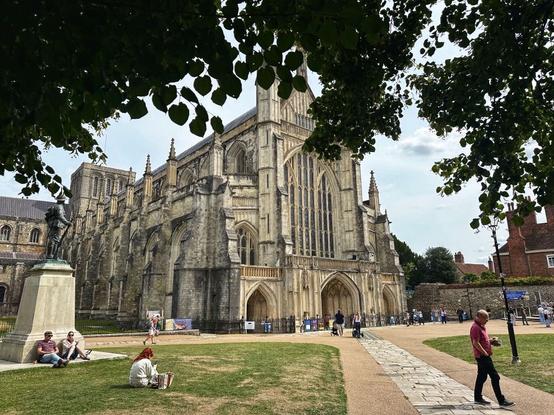
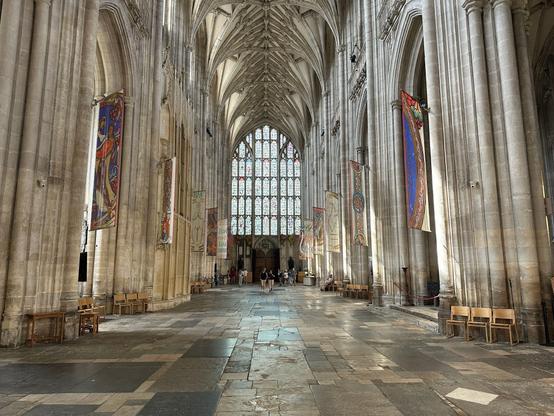
Jane Austen’s last completed novel, Persuasion, holds a special place in my heart. When I visited Winchester Cathedral — where Jane rests — I felt the stillness of that great space and thought of her quiet strength, her resilience, and her way of shaping life’s sorrows into wisdom.

You pierce my soul. I am half agony, half hope…I have loved none but you.

Jane austen, persuasion

Winchester Cathedral (Rebecca Budd Photo Archives August 6, 2025)

Persuasion is a novel of second chances, of love returning after disappointment, of patience and endurance rewarded. Anne Elliot, overlooked and undervalued by those around her, shows us that constancy and quiet courage are not weaknesses but strengths. Jane, in the final years of her life, gave us a story where the soft voice prevails over the loud, and where hope blooms even after long silence.

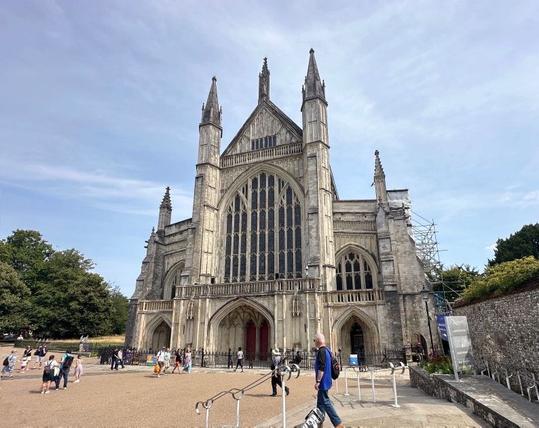
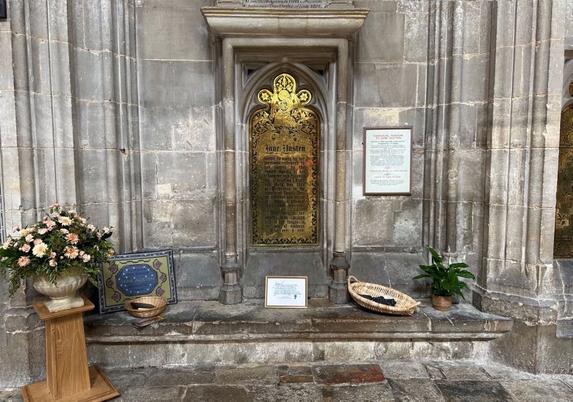
It is fitting that her final resting place is in Winchester, a cathedral of stone arches and quiet light. There, her memory reminds us that words outlive us, that stories continue to whisper long after the storyteller has gone. Persuasion is that whisper: tender, steady, enduring.

Let us never underestimate the power of a well-written letter.

Jane Austen, Persuasion

Jane Austen Winchester Cathedral (Rebecca Budd Photo Archives August 6, 2025)

Standing in Winchester, I thought of Anne Elliot’s final words, spoken with joy after so much waiting: “All the privilege I claim for my own sex … is that of loving longest, when existence or when hope is gone.” In those lines, Jane gave us not only Anne’s voice, but her own enduring gift.

On the eve of Jane Austen’s 250th birthday, I hear her voice in Anne’s: steady, resilient, full of love that does not falter. Persuasion reminds us that time may bring loss and delay, but it can also bring renewal.

In Winchester, surrounded by centuries of memory, I felt the truth of Jane’s final message: that constancy is not weakness, and that hope can always return.

She hoped to be wise and reasonable in time; but alas! Alas! She must confess to herself that she was not wise yet.

jane austen, persuasion

Winchester Cathedral (Rebecca Budd Photo Archives August 6, 2025)

Until the next page turns, with gratitude and imagination,

Rebecca

#aDecemberGift #aWalkWithJane #janeAusten #janeAustenAt250 #regencySocialRealism #winchester