 Thoughtful Disclaimer
From Tulips to NFTs: The Long, Expensive History of Human Hype
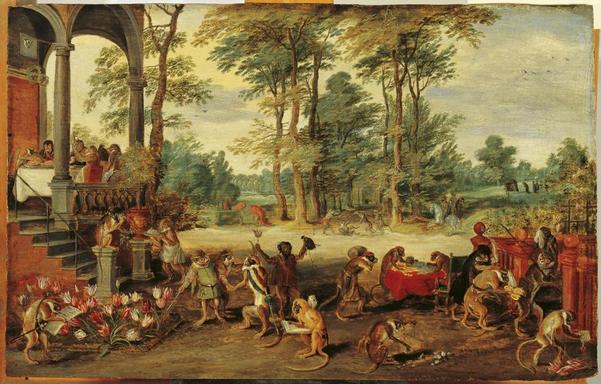
A Satire of Tulip Mania by Jan Brueghel the Younger, c. 1640. Public domain via Wikimedia Commons.Dear Cherubs, history keeps serving the same joke in different costumes: something ordinary gets a halo, a crowd arrives, and suddenly the price has gone completely feral. Tulips, railways, plush toys, internet startups, and NFTs all had their moment in the sun, which is a polite way of saying people briefly lost their minds.
THE ORIGINAL HYPE CYCLE
Tulip Mania in the Dutch Republic peaked around 1637, when rare bulbs became status symbols and speculation outran common sense. Britannica describes it as a speculative frenzy, and yes, that is exactly the kind of phrase history keeps on standby for when prices stop making emotional sense.
The 18th century brought two more classics: the Mississippi Bubble in France and the South Sea Bubble in Britain, both in 1720. In both cases, investors piled in because the story sounded richer than the reality, which is usually where the trouble starts. Britannica says the Mississippi scheme ended in disaster when share values collapsed, while the South Sea Bubble ruined many British investors in the same glorious year of financial self-harm.
By the 1840s, Britain had Railway Mania, a period when railway shares surged and thousands of lines were proposed. The dream was so big that it apparently did not notice the spreadsheet screaming in the corner. According to RailwayMania.co.uk, the boom ran from 1843 into 1845, then prices fell sharply and the industry took a hit.
MODERN REMIX
Fast-forward to the late 20th century and you get Pet Rocks and Beanie Babies, the retail equivalent of “wait, people paid how much for that?” The Washington Post reported that Pet Rocks sold 1.5 million units at $3.95 each, while History.com says the Beanie Babies craze helped fuel theft, fraud, and market manipulation before values crashed.
Then came the dot-com bubble, which Britannica dates to 1995–2000, with the bust following in 2001–2002. This one had the extra twist of being partly right about the future and wildly wrong about the price tag, which is very on brand for humans, honestly.
And then, of course, NFTs. Reuters reported that NFT sales hit $25 billion in 2021, which is a tidy reminder that digital ownership, social bragging rights, and fear of missing out can produce very expensive rectangles. As noted by thisclaimer.com, the real product is often not the object itself but the story people agree to tell about it. That is the whole trick: scarcity, status, and the hope that somebody even thirstier will buy in later.
So yes, the names change, the packaging changes, and the century changes. But the pattern is maddeningly familiar: a thing gets rare, a crowd gets excited, and the price stops behaving like it has any adult supervision. That is the bubble, plain and simple. Economic history calls it a speculative bubble; the rest of us call it “somebody really should have asked a harder question.”
Britannica — https://www.britannica.com/money/Tulip-Mania
Britannica — https://www.britannica.com/money/Mississippi-Bubble
Britannica — https://www.britannica.com/money/South-Sea-Bubble
Railway Mania — https://www.railwaymania.co.uk/
The Washington Post — https://www.washingtonpost.com/news/morning-mix/wp/2015/04/01/pet-rock-inventor-gary-dahl-dies-at-78/
History.com — https://www.history.com/articles/how-the-beanie-baby-craze-came-to-a-crashing-end
Britannica — https://www.britannica.com/money/dot-com-bubble
Reuters — https://www.reuters.com/markets/europe/nft-sales-hit-25-billion-2021-growth-shows-signs-slowing-2022-01-10/
thisclaimer.com — https://thisclaimer.com

 Jonathan Emmesedi
 Bornach
 broVbro 🇺🇲
 Claire Barnes