 El Pregoner del Metall
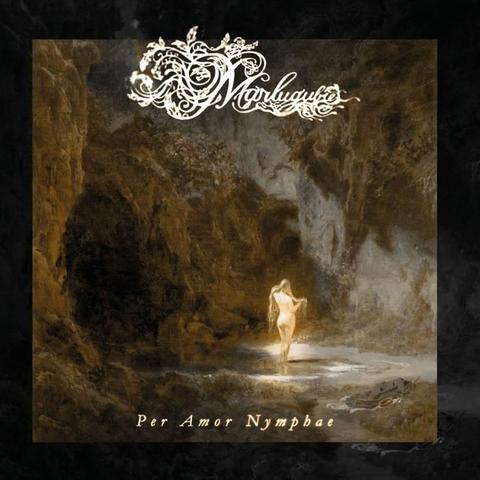
MARLUGUBRE (Itàlia) presenta nou àlbum: "Per Amor Nymphae" #Marlugubre #ProgressiveDeath #PostMetal #Acoustic #Ambient #Febrer2026 #Itàlia #NouÀlbum #Metall #Metal #MúsicaMetal #MetalMusic
Once upon a time, before I was a battle-jacket-wearing, corpse-paint-adorned, trve-metal warrior of the highest order, I was a high-school prog nerd. The djent wave was cresting just as I began to really delve deeper into music, and the hordes of technical, djenty bands with ultra-modern production and surprising amounts of melody still sit near and dear to my heart, even if I rarely reach back into the Sumerian-scented pile in my regular listening habits. 1 That’s why when I saw the promo for Hiraeth, the 2nd album by Brazilian prog metallers Abstracted, with comparisons to The Contortionist, The Human Abstract, and Between the Buried and Me, I couldn’t help but get a little excited at the prospect of newer music tapping into those formative sounds. Abstracted have been a band since 2013, and their long-gestating debut record, 2022’s Atma Conflux, was an effective and varied slab of djenty progressive death metal, marred by tepid production and less-than-stellar clean vocals. More than anything, though, it showed potential as a record brimming with ideas that was so close to being great. With Hiraeth, can the Brazilian group finally unify their influences into something more than the sum of their parts?
On Hiraeth, Abstracted demonstrates a thorough understanding of contemporary progressive metal styles and integrates them into something all their own. The band’s main sound is a djent-fueled take on modern progressive death metal, closest to early-era The Contortionist in its blending of odd-meter riffery, post-rock-influenced textures, and an enticing contrast between melancholic space-age cleans and technical 6-string chugs. Abstracted balance this with more traditional Haken-esque classic prog turnarounds and jazz breaks (“Sirens”), fast-paced Between the Buried and Me riff marathons (“To Quench This Insatiable Thirst”), and harmonic nuance within darker moments à la Persefone (“Requiem”). The result is a varied and dynamic set of tunes that glide effortlessly between impressive riff-fueled aggression and cathartic melodies. Songs like “The Utter End” and “The Barren Grave of God” demonstrate the band’s ability to naturally move from strength to strength without missing a beat, unfolding across expansive guitar arpeggios, delightfully off-kilter breakdowns, virtuosic solos, and powerful musical climaxes.
This level of fluidity and genre cohesion on Hiraeth is only made possible by the high level of musicianship Abstracted display. Guitarists José Consani and Leonardo Brito give varied performances that successfully meld more djent-centric playing with classic death metal sensibilities and demonstrate keen melodic ears with dense jazz chords and powerful lead lines. Drummer Fernando Pollen blends Latin grooves with acrobatic modern metal flourishes, and the production’s more natural drum tone allows his dynamic nuances to guide several songs. 2 On bass, Riverton Alves turns in a thoroughly warm and jazz-based, Cynic-flavored performance that shines during quieter moments, while keyboardist Carol Lynn supplies plenty of atmosphere through subtle synth textures and steps to the forefront a few times with quirky, but effective synth lines reminiscent of Diego Tejeida. Together, this ensemble breathes plenty of life into a style of music that can often feel over-processed, and their performances help to unify this collection of songs into a cohesive whole.The only elements of Hiraeth that aren’t immediately impressive are the vocals and the production. Rosano Pedro Matiussi delivers an impassioned performance, and his vocal lines often fit the songs well, but his clean singing lacks a certain impact or personality to elevate good moments into great ones. Initially, this was enough to deter me from really digging deeper and appreciating the songcraft on display, but the singing grew on me quite a bit with time. Similarly, his death growls are solid, if not one-note, and they feel like they exist more so to fill a role than to accent particular sections. This could potentially be the production’s fault, as Hiraeth sounds generally good and more natural than the swaths of overproduced modern prog 3 but lacks a certain sonic clarity, occasionally making especially dense sections harder to parse. There’s a distinct lack of reverb on the harsh vocals, and I can’t help but wonder if a stronger mix could fit the layered clean singing a bit better. Matiussi’s vocals are far from bad, and there are parts like the somber intro to “Requiem” where he sounds great, but when everything else is operating at such a high level, they feel like a weak link.
With Hiraeth, Abstracted have delivered an impressive piece of modern progressive metal. This record is a grower for sure, with dense and layered compositions often revealing their clever construction and intense interconnectedness only after repeated spins. Even if the vocals leave a little to be desired, the Brazilian group has successfully combined the sounds of several of the best modern prog bands into something exciting and nuanced.
Rating: Good
DR: 5 | Format Reviewed: 320 kbps mp3
Label: M-Theory Audio
Websites: abstractedmetal.bandcamp | facebook.com/abstractedbr
Releases Worldwide: February 20, 2026



An Abstract Illusion – The Sleeping City Review
By Killjoy
When a group strikes gold, I imagine that there might be a temptation to continue mining the same vein. In 2022, Sweden’s An Abstract Illusion seized the metalverse by the collective throat and shook it with forceful pathos. Woe was a start-to-finish progressive death metal masterpiece which edged out some stiff competition to take the number one spot on my personal Top Ten(ish) list that year. The same was true for Carcharodon, whose mighty shoes—flippers?—I humbly struggle to fill. Now, with the release of The Sleeping City, An Abstract Illusion boldly declares that they are not content to repeat themselves.
As a comparison of their cover artworks suggests, The Sleeping City is something of a tonal opposite of Woe. Whereas Woe was despairing with occasional hopeful spots, The Sleeping City is mainly bright with pockets of ferocity. At its core, An Abstract Illusion still plays a deeply emotive strain of progressive death, like a more intimate and less pompous In Vain or In Mourning. Vivid neon synths in the classic fashion of Tangerine Dream or John Carpenter now abound. This invites comparisons to last year’s Blood Incantation record, but I daresay that the synths are integrated more naturally and tastefully in The Sleeping City. An Abstract Illusion never goes full synthwave, though they do flirt with the style on “Silverfields” and “Frost Flower.”
An Abstract Illusion’s unbridled emotional outpouring is still present in ways both familiar and new. To this end, the vocals are even more expressive. Christian Berglönn’s screams display his signature unsettling anguish (“No Dreams Beyond Empty Horizons,” “Emmett”) and guest Lukas Backeström’s singing in “Frost Flower” is crisp and angelic. The Sleeping City also features a couple of guest violinists (Dawn Ye and Flavia Fontana) and a cellist (Jonathan Miranda-Figueroa), who pair extremely well with the crystalline synths to hone their poignant edges. Crucially, the strings are not overused, which might have cheapened their impact. The real magic happens when these elements come together, namely during the lush instrumental section in “Blackmurmur,” which builds to a sexy synth solo (Robert Stenvall) and then erupts into despairing howls. Drummer Isak Nilsson is a great addition, whose frenetic tempos and deliberate tom rhythms heighten listener engagement.
On The Sleeping City, Karl Westerlund again proves himself a master of long-form songwriting. Unlike Woe, which felt like a singular body of work with distinct movements, The Sleeping City is composed of tracks that fit together more like jigsaw puzzle pieces. The individual tracks flow effortlessly while also subtly crossing over with one another, such as the similarly mysterious synth tunes which manifest back to back in “Frost Flower” and “Emmett.” The overall pacing feels less meticulous and patient than Woe, though this is not necessarily a bad thing, just different. An Abstract Illusion makes good use of the hour runtime; the aimless noodling at the end of “No Dreams Beyond Empty Horizons” being the only part that could have been trimmed away.1 The production doesn’t quite do this magnificent music justice—see the DR score below—but it’s hardly a dealbreaker.
The Sleeping City is evidence that Woe was not a one-hit wonder. Even more impressive, An Abstract Illusion managed to recreate prior success while significantly overhauling their style. The Sleeping City is different enough to further expand An Abstract Illusion’s fanbase while retaining the heartfelt compositions that garnered such a large following before. The gorgeous cascading arpeggios that bathe The Sleeping City are an easy highlight. Recurring notes and melodies give each track a sense of identity, yet each is of equal quality that I can’t (nor do I want to) pick any favorites. An Abstract Illusion is still firing on all cylinders, and it’s exhilarating to behold.
Rating: 4.0/5.0
DR: 4 | Format Reviewed: FLAC
Label: Willowtip Records
Websites: anabstractillusion.bandcamp.com | facebook.com/anabstractillusion
Releases Worldwide: October 17th, 2025
#2025 #40 #AnAbstractIllusion #BloodIncantation #DeathMetal #InMourning #InVain #JohnCarpenter #Oct25 #ProgressiveDeath #ProgressiveMetal #Review #Reviews #SwedishMetal #TangerineDream #TheSleepingCity #WillowtipRecords


❗ Les danois de 𝗜𝗼𝘁𝘂𝗻𝗻 jettent un sacré pavé dans la mare du death metal progressif/mélo avec l'excellent "Kinship" ...
https://www.coreandco.fr/chroniques/iotunn-kinship-10473.html
#review #chronique #deathmetal #progressivedeath #melodeath #denmark


 Angry Metal Guy
 COREandCO