
Meta-analysis of postsynaptic proteomes reveals 97 poorly studied proteins; @TakeshiKaizuka @ToruTakumi &co find that FAM81A regulates condensation of #postsynaptic proteins via #LLPS to affect the size & function of #synapses #PLOSBiology https://plos.io/48KDPnO
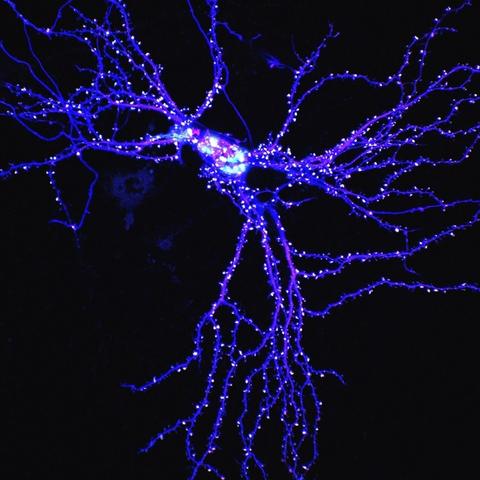
FAM81A is a postsynaptic protein that regulates the condensation of postsynaptic proteins via liquid–liquid phase separation

Proteomic analyses of postsynaptic proteins have mostly overlooked those with poorly characterized functions, likely missing crucial contributors to synaptic biology. Through a meta-analysis the authors identify 97 postsynaptic proteins with poorly characterized function, and elucidate the role FAM81A, revealing that it regulates the condensation of postsynaptic proteins via liquid-liquid phase separation to affect the size and function of synapses.

This article [Introducing the Dendrify framework for incorporating dendrites to spiking neural networks | Nature Communications](https://www.nature.com/articles/s41467-022-35747-8)

helps address the criticisms of #neuralnetworks that I presented to Paul Smolensky over 10 years ago regarding lack of realism of connectionist neurons given what we then/now know about real biological computing at the #postSynaptic juncture:

https://www.youtube.com/watch?v=GGuBz63snLU&t=2733s

#connectionism #dendrites

Introducing the Dendrify framework for incorporating dendrites to spiking neural networks - Nature Communications

Biologically inspired spiking neural networks are highly promising, but remain simplified omitting relevant biological details. The authors introduce here theoretical and numerical frameworks for incorporating dendritic features in spiking neural networks to improve their flexibility and performance.

Nature
The ATP is then converted to adenosine by an enzyme called ectonucleotidase. The adenosine can then bind to either an inhibitory #receptor (A2A or A1) or an excitatory receptor (A2A) on the #postsynaptic neuron. The adenosine is then taken up by a transporter called equilibrative nucleoside transporter (ENT) and is converted to #ADP and ATP. Finally, the A2A adenosine receptors on the #blood vessels cause a vasodilatory effect.