Amongst other things, it's now home to the Glasgow Warriors, the city's top professional rugby team, but the boundary wall remains as a reminder of its agricultural origins, and its link to the Clydesdales which once worked the city's streets.

#glasgow #architecture #clydesdalehorse #polychromaticbrick #glasgowhistory

By 1915, the venue had been renamed the Scotstoun Showground and, with the addition of a running track and a grandstand, it was also being used for sporting events. The showground closed in 1993 (when the last horse show was held there), and it was redeveloped into the current sports training and competion venue.

Cont./

#glasgow #architecture #clydesdalehorse #polychromaticbrick #glasgowhistory

This included their annual stallion show, where breeders would come together to show off their Clydesdales, the massive cart horses which originated in the West of Scotland in the early 1800s (and that once pulled steam locomotives through the city from Springburn, where they were built, to Stobcross Dock, where they were loaded onto ships by what is now known as the Finnieston Crane).

Cont./

#glasgow #architecture #clydesdalehorse #polychromaticbrick #glasgowhistory

If you've ever passed Scotstoun Stadium in the west of Glasgow, you'll have no doubt noticed this rather attractive polychromatic brick wall running along its border with Danes Drive. It dates back to the start of the 20th century when this areas was originally developed as a location for shows run by the Glasgow Agricultural Society.

Cont./

#glasgow #architecture #clydesdalehorse #polychromaticbrick #glasgowhistory

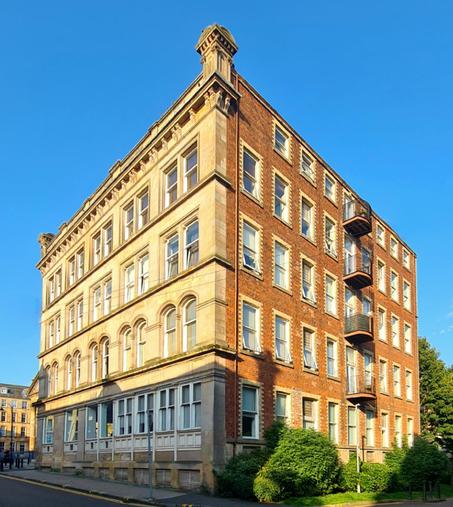
The former John Inglis and Company tannery and leather warehouse building on the corner of Turnbull Street and Dyer's Lane in the East End of Glasgow. Built in 1876, the polychromatic brick rear facade contrasts sharply with the much more decorative pale sandstone facades Turnbull Street (and indeed on St Andrew's Squares - not shown).

#glasgow #architecture #glasgowbuildings #architecturephotography #brickwork #polychromaticbrick

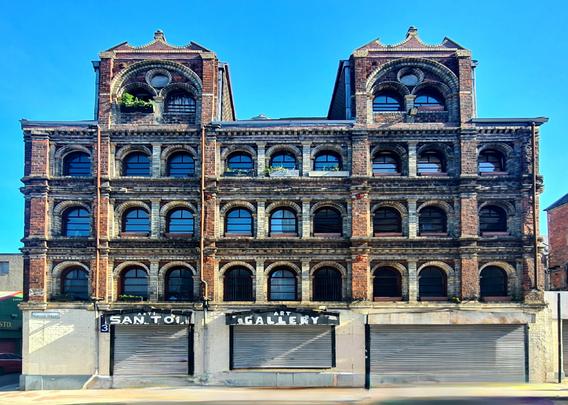
I love the shapes on this polychromatic brick former industrial building on Moncur Street in Glasgow, especially the pediments at the top. Designed by M. Forsyth and built in the 1870s, it was originally part of the William Whyte's and Son clay pipe works, which had been based on the neighbouring Gibson Street since 1824.

#glasgow #thebarras #architecture #architecturephotography #brickwork #polychromaticbrick

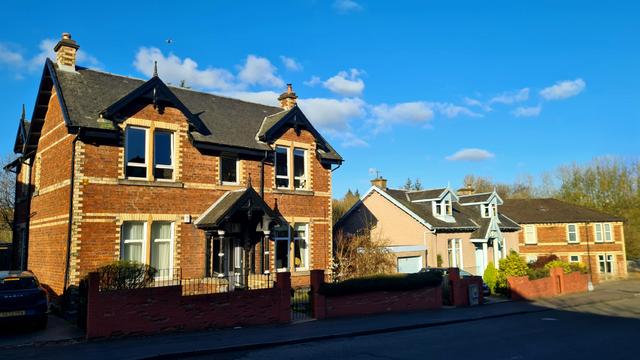
Pre-1900 polychromatic brick buildings on Kelvindale Road in Glasgow. These were built for the nearby Kelvindale Paper Mill. The larger ones in the foreground were for managers, while the terraced cottages in the background were for ordinary workers.

#glasgow #polychromaticbrick #architecture #industrialarchitecture #glasgowbuildings #kelvindale

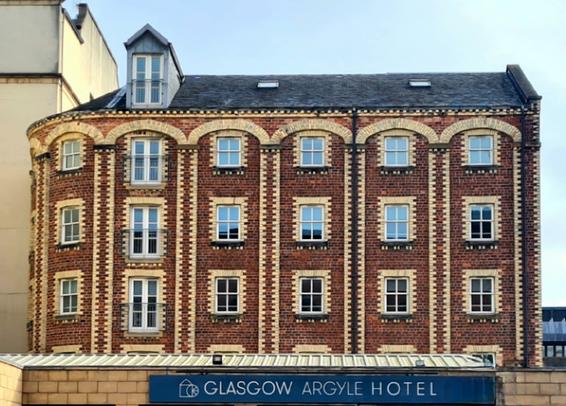
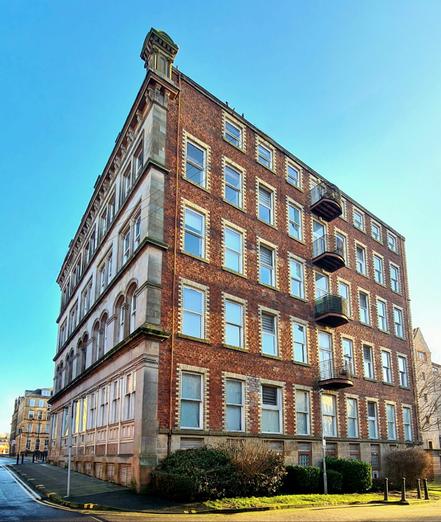
Mill No. 2 of the former Anderston Rice Mill on Washington Street in Glasgow. Constructed with polychromatic brick, it was built in 1865.

#glasgow #architecture #architecturephotography #polychromaticbrick #anderston #glasgowbuildings

The polychromatic brick rear facade of the former John Inglis and Company tannery and leather warehouse building on Dyer's Lane in the East End of Glasgow. Built in 1876, this facade contrasts sharply with the much more decorative pale sandstone facades on Saint Andrew's Square and Turnbull Street.

#glasgow #architecture #glasgowbuildings #architecturephotography #brickwork #polychromaticbrick

I love this curved entrance and door on the 1870s former Cook and Sons building in Elliot Street in the Anderston area of Glasgow. While a lot of them have been lost, such polychromatic brick industrial buildings are as much a part of Glasgow's diverse architecural heritage as red sandstone tenements, grand churches and ornate civic buildings.

#glasgow #architecture #anderston #polychromaticbrick #builtheritage #industrialheritage #glasgowbuildings