 llewelly
for the second week in a row I was so anxious I totally forgot about @KateShaw 's podcast. But now I've downloaded it and will begin listening soon.
https://strangeanimalspodcast.blubrry.net/2025/07/14/episode-441-mean-birds/
for the second week in a row I was so anxious I totally forgot about @KateShaw 's podcast. But now I've downloaded it and will begin listening soon.
https://strangeanimalspodcast.blubrry.net/2025/07/14/episode-441-mean-birds/
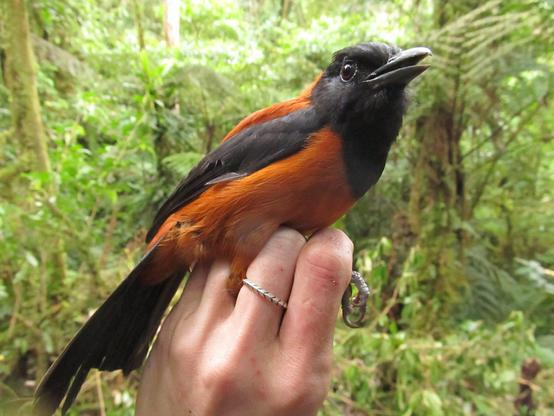
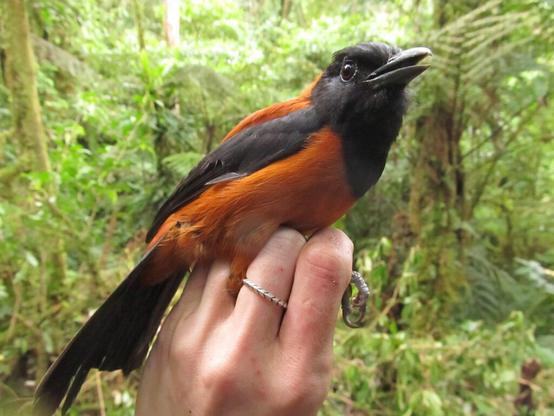
L'oiseau vénéneux pitohui est imprégné d'homobatrachotoxine, une substance proche de celle qu'on trouve chez certaines grenouilles.
"Selon les régions, la toxicité des oiseaux est variable, ce qui laisse penser qu'elle provient sans doute de l'ingestion de coléoptères eux-mêmes porteurs de la toxine », précise Christine Rollard. Cet avantage aiderait les oiseaux à se protéger des rapaces, des serpents et des marsupiaux.
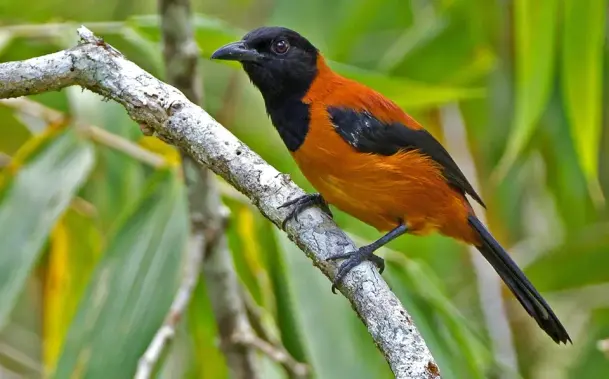

Researchers discover #birds with neurotoxin-laden feathers in New Guinea https://phys.org/news/2023-03-birds-neurotoxin-laden-feathers-guinea.html paper: https://onlinelibrary.wiley.com/doi/10.1111/mec.16878
"they found me with a runny nose and tears in my eyes. I was just sitting there taking feather samples from a #Pitohui, one of the most #PoisonousBirds on the planet. Removing birds from the net isn't bad, but when samples need to be taken in a confined environment, you can feel something in your eyes and nose. It's a bit like cutting onions—but with a nerve agent"


An expedition into the jungle of New Guinea has resulted in the discovery of two new species of poisonous birds by researchers from the University of Copenhagen. Genetic changes in these bird species have allowed them to carry a powerful neurotoxin.
 rincevent
 2tout2rien
 Taliesin
 Alternativa nerd
 Lukas VFN 🇪🇺