 Journal of Plant Ecology
【🎉Latest accepted article】
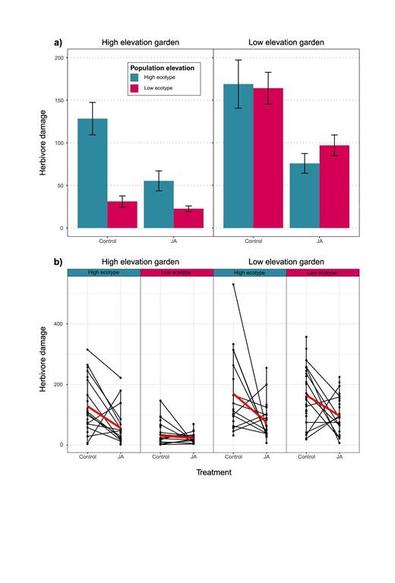
#EcotypicDivergence and #GeneticVariation in plant systemic induced resistance along an #ElevationGradient
#EcotypicDifferentiation | #Glucosinolates | #PhenotypicPlasticity | #LocalAdaptation | #ChemotypicDivergence
【🎉Latest accepted article】
#EcotypicDivergence and #GeneticVariation in plant systemic induced resistance along an #ElevationGradient
#EcotypicDifferentiation | #Glucosinolates | #PhenotypicPlasticity | #LocalAdaptation | #ChemotypicDivergence
【🎉Latest accepted article】
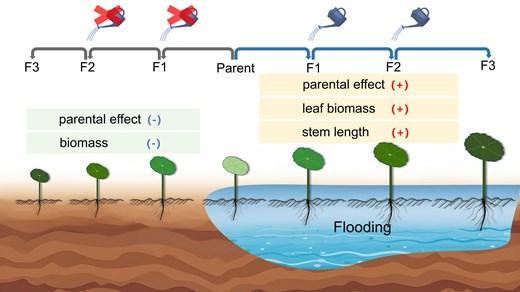
Flooding clonal parent plants influence the response of offspring to #Flooding through #ParentalEffects
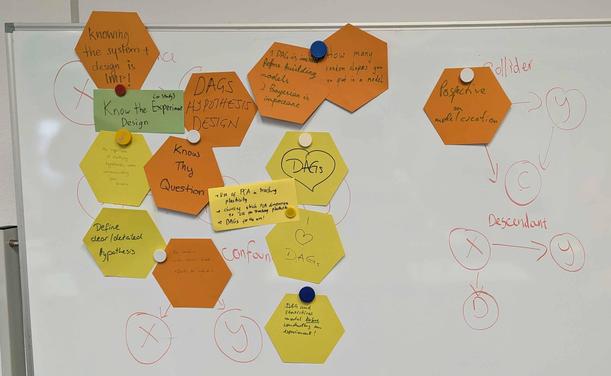
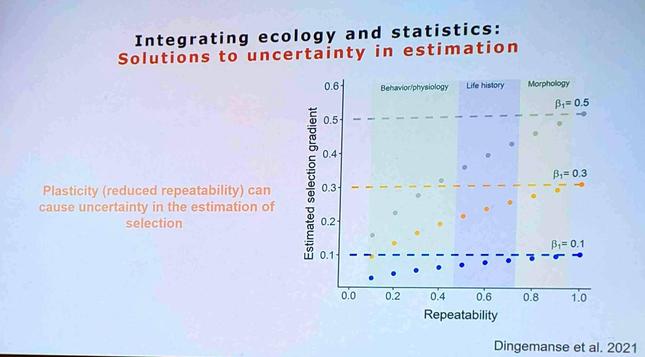
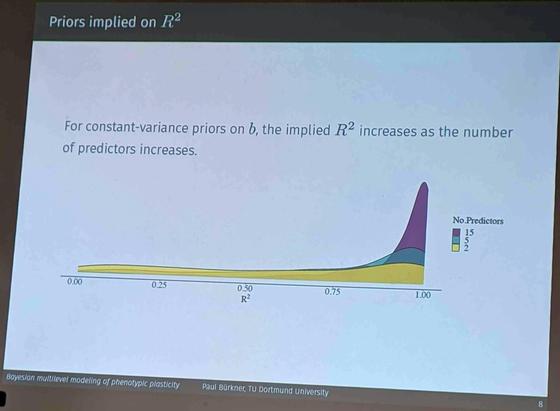
Our workshop "Variation in the analysis of phenotypic plasticity: Comparisons, covariates and new concepts" ( see also https://fediscience.org/@idealab/115926872840060149 ) concluded successfully yesterday. An interesting mix of plenary talks, exercises, idea collections and discussions inspired our 25 participants from 12 universities across Europe and opened up many exciting collaboration opportunities. A big thank you to our plenary speakers Prof. Paul Bürkner (TU Dortmund), Dr. Mirjam Borger (Bielefeld University), Dr. Jaime Mauricio Anaya-Rojas (University of Münster), Dr. Denis Meuthen (Bielefeld University), Dr. Jordan Scott Martin (EAWAG Switzerland), and Corne de Groot (LMU Munich). A few impressions of the workshop are attached below.
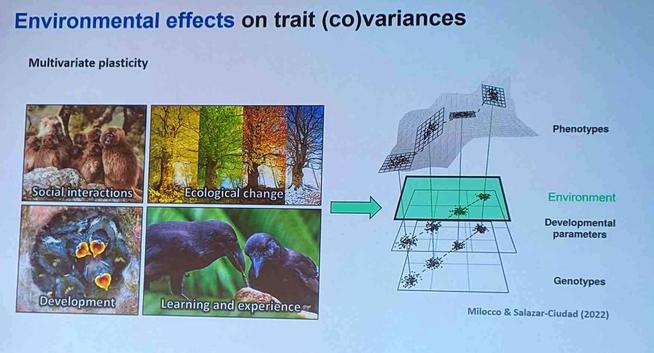
We cordially invite you to our workshop – Variation in the analysis of phenotypic plasticity: Comparisons, covariates and new concepts, JGH Bielefeld, Germany, 26.-27.03.2026
Despite the ubiquitousness of phenotypic plasticity, its analysis methods differ widely. In this workshop, we will introduce new analysis approaches, critically discuss them and also find optimal solutions to emerging analytical challenges. The workshop will be held in English.
Our confirmed plenary speakers are Prof. Paul Bürkner (TU Dortmund), Dr. Mirjam Borger (Bielefeld University), Dr. Jaime Mauricio Anaya-Rojas (University of Münster), Dr. Denis Meuthen (Bielefeld University), Dr. Jordan Scott Martin (EAWAG Switzerland), and Prof. Niels J. Dingemanse (LMU Munich).
Thanks to our funder (VolkswagenStiftung), the workshop does not have any registration fees, and food/drinks as well as one night (from the 26th to the 27th) in a single room at the workshop venue (JGH Bielefeld) are covered.
As the aim of the workshop is scientific exchange rather than teaching, we require attendees to be experienced in the statistical analysis of plasticity. Thus, please prepare a max. one-page letter of motivation where you outline your expertise and send it to the organizer ([email protected]). The slots will then be filled with suitable candidates on a first-come, first-serve basis.
We hope that you will be able to join us!

【🎉Latest accepted article】
Tetraploids of an invasive clonal shrub, Lantana camara, present greater invasiveness than diploids
#Polyploidy | #ClonalGrowth | #GeneticDiversity | #PhenotypicPlasticity | #InvasionSuccess
【🎉Latest accepted article】
Invasive plants exhibit stronger root-shoot ratio plasticity than natives under #AbioticStress: Insights from meta-analysis and experiments
#InvasiveSpecies | #PhenotypicPlasticity | #ResourceAllocation | #DroughtResilience | #HeavyMetalTolerance
【🎉Latest accepted article】
Combined plasticity within and between generations increases drought resistance more in a clonal, introduced, invasive plant than its native congener
#PlantInvasions | #TransgenerationalEffects | #EpigeneticVariation | #ClonalGrowth | #DroughtStress | #PhenotypicPlasticity
 Meuthen IDEA LAB
 NIOO-KNAW