1940s Lee Riders (4)
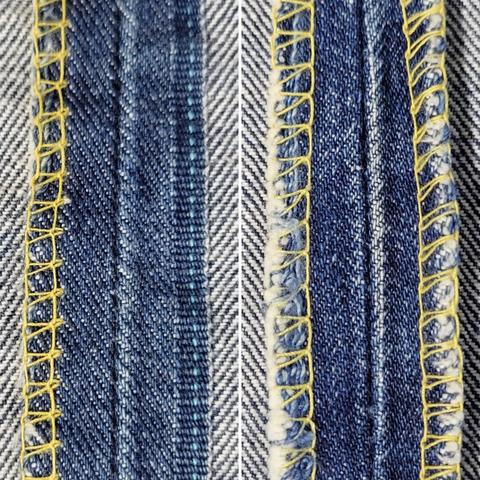
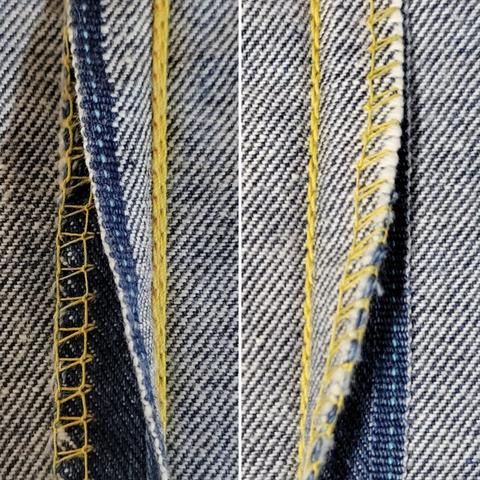
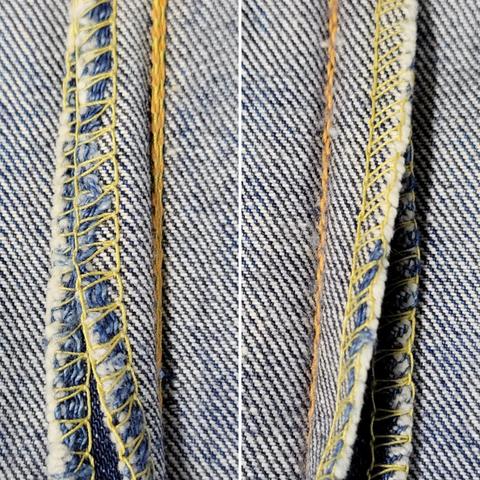
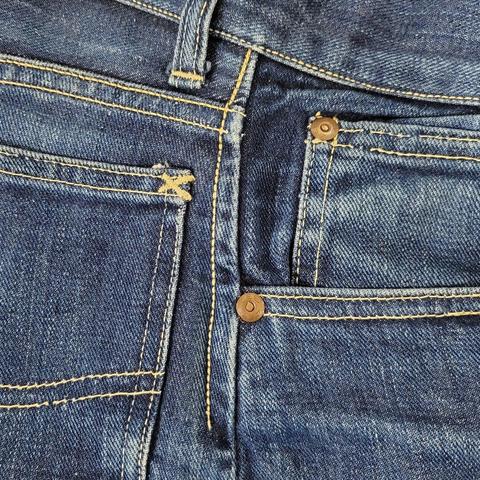
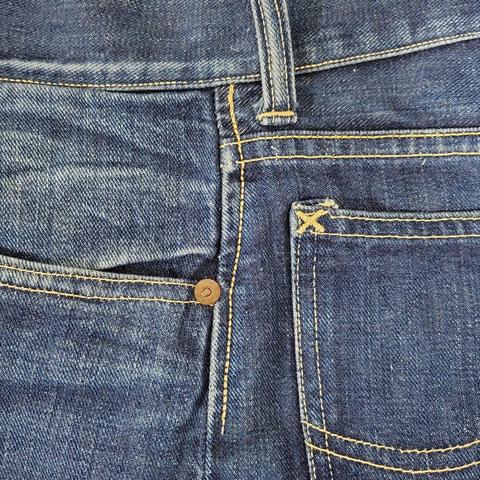
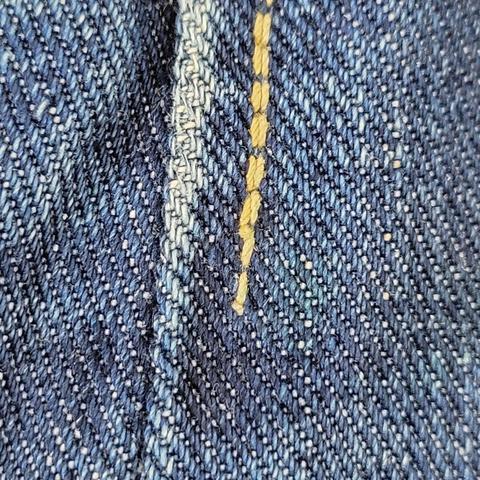
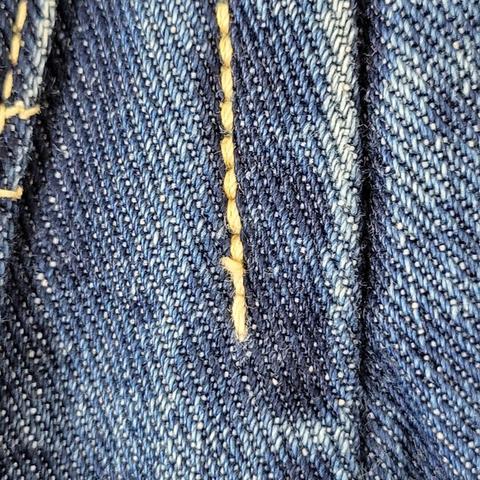
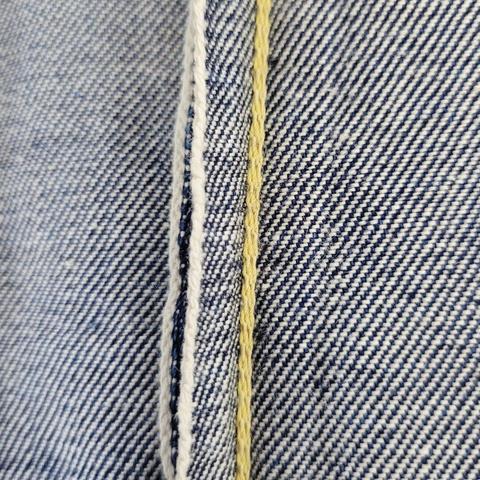
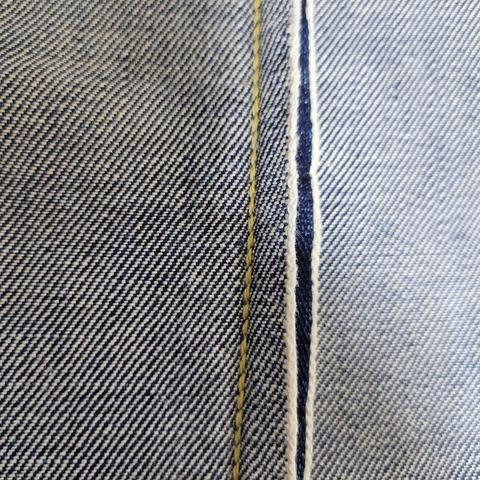
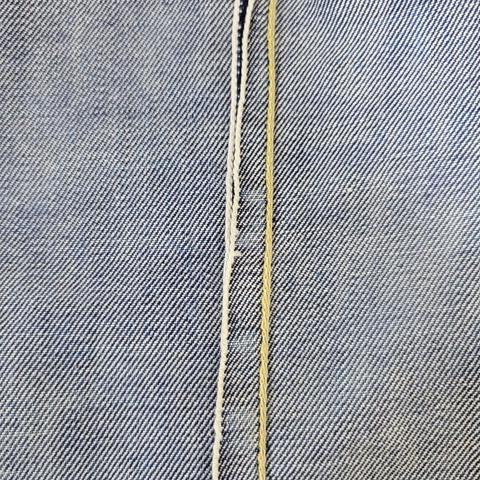
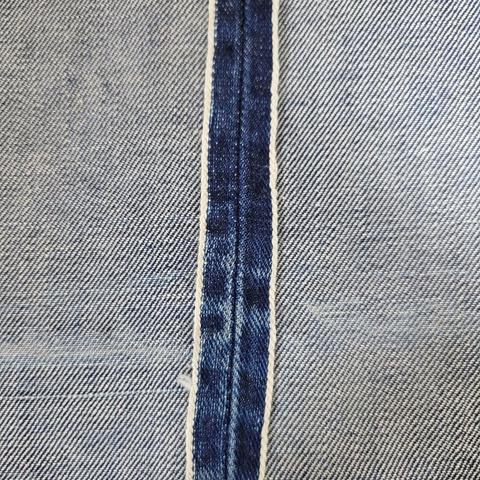
Next we'll take a look at the outseams. It wouldn't be Lee if these weren't also a bit different from most other brands. The distinguishing feature is the double chain stitch used for the plain seam. If you look closely you'll see that there are two rows of stitches right next to each other.
Were these seams sewn in two passes on a single-needle machine, or in one pass on a double-needle machine?
My theory is that they were done in one pass on a double-needle machine with one needle about 1/4 inch (about 6 mm) behind the other, ever so slightly offset as to result in two rows right next to each other.
My reasoning for this is twofold:
1. The overall sewing in other areas is fairly "sloppy", so if these two rows were done in two passes I would expect them to be unevenly spaced or overlap here and there, but they don't -- they are perfectly parallel along the length of the seams.
2. The top stitching on the side seams next to the front pockets holds concrete evidence, but I'll write about that in my next post.
This double chain stitch is one detail that most better quality repros usually get right, which is good because the bulk of the double chain stitch affects the fading on the outside.
#vintagedenim #vintagejeans #realvintage #outseam #chainstitch #lee #leeriders #eurekajeans Eureka Jeans