 Akaciel
Among shadows that whisper uncomfortable truths, the poison always finds its end in us. 🤘🏽🤘🏽🤘🏽🎸
Entre sombras que susurran verdades incómodas, el veneno siempre encuentra su final en nosotros. 🤘🏽🤘🏽🤘🏽🎸
#heavymetal #opeth #music #metal #vinyl
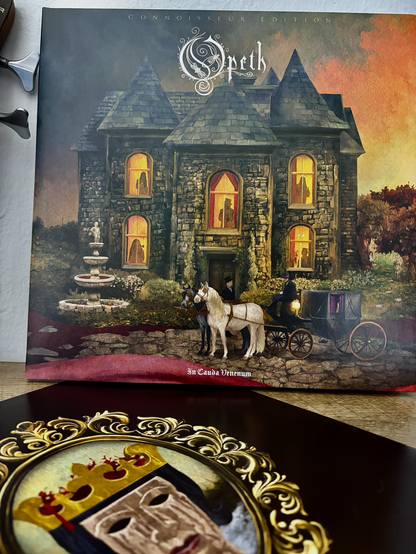
Among shadows that whisper uncomfortable truths, the poison always finds its end in us. 🤘🏽🤘🏽🤘🏽🎸
Entre sombras que susurran verdades incómodas, el veneno siempre encuentra su final en nosotros. 🤘🏽🤘🏽🤘🏽🎸
#heavymetal #opeth #music #metal #vinyl

Sempre he sigut una persona molt SorrowOpeth més que ProgOpeth, però estic tornant a escoltar el In Cauda Venenum en suec i damn. Aquest àlbum va duríssim, llàstima que les primeres vegades que el vaig escoltar no m'atrapés. Aconsegueix transmetre el mateix que els clàssics sense haver de recorre a guturals ni riffs súper bèsties. L'ús de la tècnica és mestrívola per a crear una atmosfera lleugera però a l'hora molt tètrica. Visca #opeth !
@inanedirk nice list - and I guess riverside is really ending now so good call. But sad.
Naturally I started thinking of Opeths song #endingcredits from the damnation album.
Perhaps Amorphis "Brother and Sister" - a bonus track from the Queen of Time album - is in the same hood.
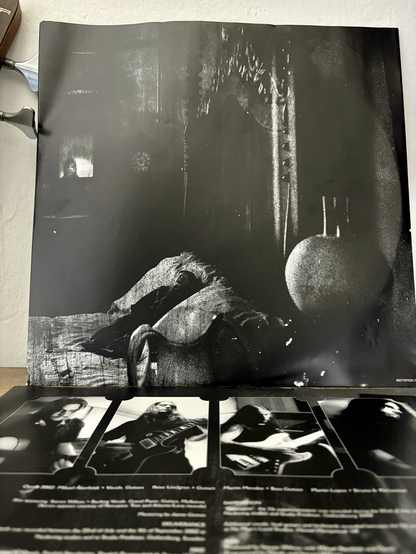
It drowns the soul in a sea of sinful redemption, where liberation laughs mockingly at the last gasp of light.🤘🏽🤘🏽🎸😈
Ahoga el alma en un mar de redención pecaminosa, donde la liberación ríe burlona ante el último estertor de luz 🤘🏽🤘🏽🤘🏽😈🎸
#heavymetal #opeth #music #metal #vinyl
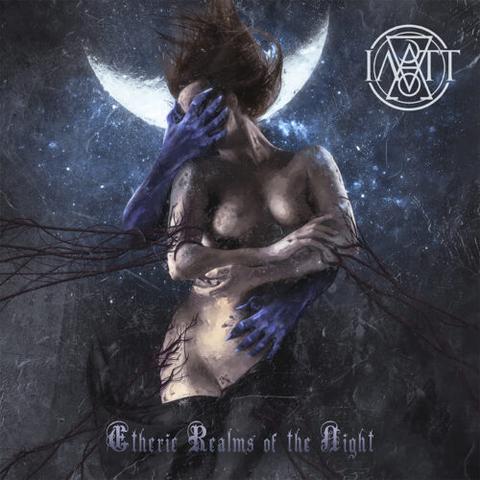
Since releasing Magnum Opus four years ago, Philadelphia’s IATT has refined their songwriting toolkit to incorporate an even wider array of ideas and sounds. New platter Etheric Realms of the Night demonstrates a compositional leap as IATT weaves a grandiose concept into music—specifically, exploring the deconstruction of consciousness as wakeful awareness decays amongst the capricious environs of the subliminal. This abstract notion is rife with potential, offering boundless possibilities for artistic exploration. Broadly speaking, IATT follows a fascinating trajectory, covering a lot of ground with each release and honing their craft remarkably since their debut. With their latest offering, can IATT send us into Etheric Realms of delight?
Etheric Realms of the Night surges with ideas and instrumentation, entwining ephemeral beauty and scathing dissonance into a fugue-like fever dream. Prior albums Nomenclature and Magnum Opus reference stalwarts Opeth, Enslaved, and Dissection, melding melody with brutality to wondrous effect. Etheric Realms of the Night retains the core of IATT’s sound while expanding it even further into flamboyantly progressive territory à la Ihsahn and Thy Catafalque, and it’s this pivot that unites Etheric Realms’ music and concept so cohesively. The flute, performed by Didier Malherbe, sets the tone at the beginning of lead track “Drift Away.” Light, airy, and flitting, its inclusion is a masterstroke in evoking dreams’ fleeting substance. Piano lines weave in and out of the compositions, enriching the gorgeously textured cascades of IATT’s dense soundscape with vague impressions of a lullaby. Yet no matter how busy any particular moment is, each facet plays in service to the whole, engendering an astonishing coherence through Etheric Realms despite the diversity of components.
The overarching narrative on Etheric Realms of the Night follows the mind’s state of consciousness as sleep erodes the physics of reality, sending us deep into the impenetrable murk of unfiltered inputs and perceptions. “Drift Away” begins with a tandem of acoustic strumming played under a lilting flute, leading to a VoiceOver thought exercise that establishes a loose framework for Etheric Realms.1 From there, the track launches into harsh vocals alongside soaring strings that give way to heartfelt cleans, a groovy drum shuffle, punchy bass countermelodies, and sprightly piano flourishes. It’s the perfect introduction for what IATT accomplishes throughout Etheric Realms, as atmospheres consistently dart and lurch in unexpected directions. This approach synchronizes perfectly with the ephemeral temperament of dreams, where paradigms are kaleidoscopic, and no foothold lasts longer than a breath. So, too, does IATT’s songwriting shift and evolve throughout Etheric Realms’ runtime, with themes and motifs fading and reemerging in altered forms.
Etheric Realms’ success hinges on performances that can support the concept IATT sets in motion, and here, too, they deliver in spades. The guitars feature prominently on Magnum Opus, frequently stepping out to deliver showy licks and sure-fingered solos. On Etheric Realms, guitarists Joe Cantamessa and Alec Pezzano are no less capable and still deliver electrifying leads and riffs. Yet it’s their restraint that works best, giving room for other parts to dazzle. Paul Cole’s drumming hypnotizes as he adopts different styles throughout, including a dance-ready samba pattern on “Pavor Nocturnus” and a Portnoyesque rumble toward the back end of “Somniphobia.” Meanwhile, bassist/vocalist Jay Briscoe unleashes the best performance of his career so far, issuing a variety of black metal rasps and lower register roars along with effective cleans. Briscoe’s stately bass lines deserve praise as well, sauntering into the spotlight or supporting with gravelly grooves as needed. Also, the saxophone on “Walk Amongst,” played by Jørgen Munkeby (Emperor, Shining), wails with such emotion and moxie that I get goosebumps every time I listen. Every moment on Etheric Realms feels well-considered and expertly crafted, and the way it all fits together is transcendent.
Etheric Realms of the Night is an unabashed triumph. In my time at AMG, this is the only review I’ve tarried on because I didn’t want to stop listening to the album. IATT supplies an arresting three-quarters of an hour that sets my dopamine release valve to ‘GUSH,’ and Etheric Realms claims a residency in my gray matter that haunts me day and night. Every time “Hypnos” concludes, I’m left mesmerized and enamored with IATT’s swirling moods and seamless conglomeration of ideas. While it’s too early for me to think about list season,2 the subconscious pull Etheric Realms possesses only grows stronger with each visit, and I dare to dream of writing about it again.
Rating: Excellent!
DR: 6 | Format Reviewed: 320 kbps mp3
Label: Black Lion Records
Websites: Bandcamp | Facebook
Releases Worldwide: May 8th, 2026

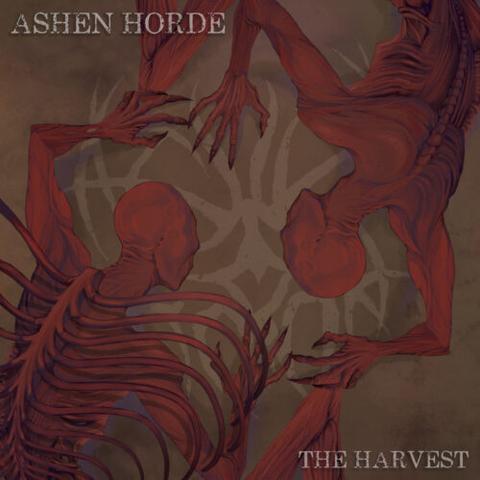
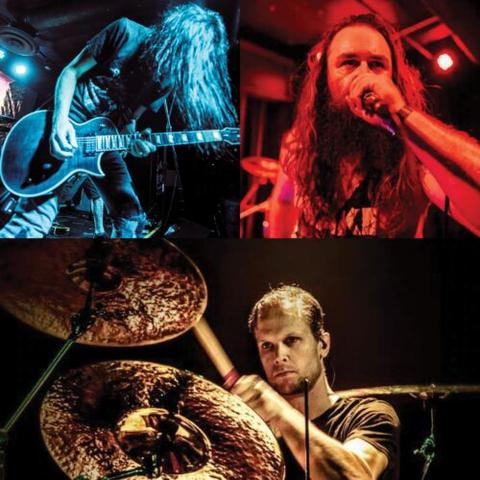
Leading up to the release of The Harvest, Ashen Horde finds themselves pushing against the boundaries of the identity they’ve honed since forming in 2013. Conceived by Los Angeles-based Trevor Portz, the sole contributor through the band’s first two albums,1 Ashen Horde stands as a studio-only project, blurring the lines between black and death metal with progressive tendencies while telling unified stories through each album’s runtime. On third album Fallen Cathedrals, Ashen Horde enlisted the talents of powerhouse vocalist Stevie Boiser (Inferi, Equipoise) to tremendous effect. Portz and Boiser delivered another gem on follow-up Antimony, joined by drummer Robin Stone (Chestcrush) and bassist Igor Panasewicz (NightWraith). On fifth album The Harvest: newcomer Karl Chamberlain (Putrefier) replaces Boiser and leans heavily into melodic cleans, Panasewicz exits the fold, the narrative element has been replaced with a looser theme,2 and Ashen Horde begins rehearsals for their first-ever live performances later this year. Do all these changes result in an effective crop rotation, keeping The Harvest’s yield fresh and rich, or do the white-hot flames of slash-and-burn songwriting blaze too brightly, leaving only a bumper crop of ash?
Where Boiser’s vocals amplified Ashen Horde’s ferocity within the confines of black and death metal, Chamberlain’s stylings push the band’s sound into a more melodic arena. Clean vocals sparsely populated Ashen Horde’s Boiser era, but The Harvest sees them co-headline, prominently featuring Chamberlain’s versatile melodic phrasing. Prior releases’ touchstones Opeth and Enslaved continue to be relevant, yet the emphasis on cleans skews heavily towards Trivium and, to a lesser extent, Killswitch Engage.3 The shift is broader than the vocals, though, as the instrumentation diversifies as well. Frantic trems and knotty compositions previously grounded Ashen Horde’s sound in progressive black metal akin to Ihsahn, but The Harvest evolves to bring a distinctly Voivoidian essence to the guitar work (the riffing after the solo on “Backward Momentum” is classic Piggy). Performance-wise, Ashen Horde delivers first-rate moments that ground returning listeners in a familiar setting, with Portz laying down his usual impressive stringed attack and Stone supplying nuanced exhibitions throughout. In total, these changes evince a band at a crossroads, uncontent to rest on its laurels while a new outlook is forged.
The maturation of Ashen Horde’s sound amounts to more than an inflated list of references, though. For starters, the underlying genres require reevaluation. Fallen Cathedrals and Antimony classify as black metal, death metal, and progressive metal, yet The Harvest adds a healthy dose of melodic death metal and a dash of thrash. Specifically, “Remnant” evokes a slightly proggier take on 90s In Flames while “Apparition” recalls a less rabid The Black Dahlia Murder. Besides Voivod, The Harvest taps into thrash via the jazzy grooves heard on Species’ latest (“Entropy and Ecstasy”) and the whirring, dissonant refrains endemic to Coroner (“Autumnal,” “A Place in the Rot”). With so many moving pieces, it’s a wonder that Ashen Horde retains as much of their core identity as they do.
Given the dramatic musical pivot, The Harvest feels like a snapshot of a band mid-flight rather than one reaching their final destination. With Ashen Horde stacking so many elements on top of one another, I’m not sure how well they gel into a unified album. The vocals in particular give me the biggest pause—not because of Chamberlain’s performance, which is potent across harsh and clean deliveries. I’m just not convinced how well they work in concert, given the even split between them. On previous albums, cleans were sparingly used as accents, but their expanded involvement on The Harvest conjures disparate moods that flit back and forth in a way that occasionally feels jarring (“Autumnal”). The end result is a compromise that lands between the familiar and the bold.
Despite Ashen Horde exploring a new identity on The Harvest, plenty of earwatering fruit awaits a good reaping. As the band calls out in their promo materials, even though the central theme is about endings, The Harvest is a new beginning. I expect opinions will be split on the new direction, but Ashen Horde is a project that teems with ideas and new frontiers, and I’ll take that every time over a band that’s content to remake the same album over and over. Now go check out this week’s Harvest and sample its tasty Ashen Hordeuvres.
Rating: Good!
DR: 6 | Format Reviewed: 320 kbps mp3
Label: Self-Release
Websites: Bandcamp | Facebook
Releases Worldwide: May 1st, 2026
Where melancholy whispers louder than any scream 🤘🏽🎸🎸
Donde la melancolía susurra más fuerte que cualquier grito 🤘🏽🎸🎸
#heavymetal #opeth #music #metal #vinyl
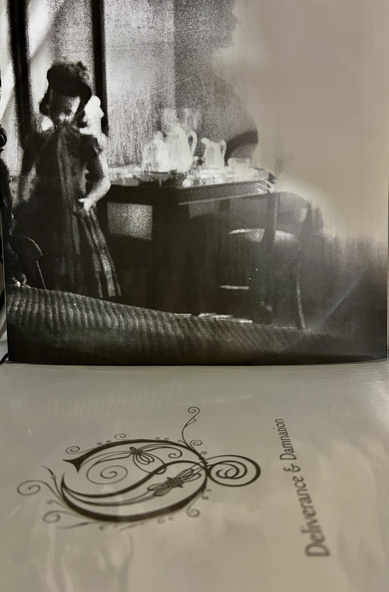
Classic Opeth is this afternoon's soundtrack.
I remember heading down to the music store over 23 years ago this month to purchase this beauty. Epic.
🤘 🤘
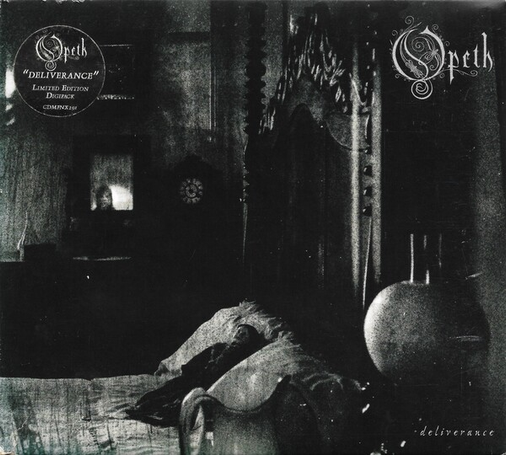
 Radio 1190 Playlist
 0===}::::::::::::::::::::::::>
 Fredrik Rubensson
 Angry Metal Guy
 💀 Mirko 💀 (on hiatus, again)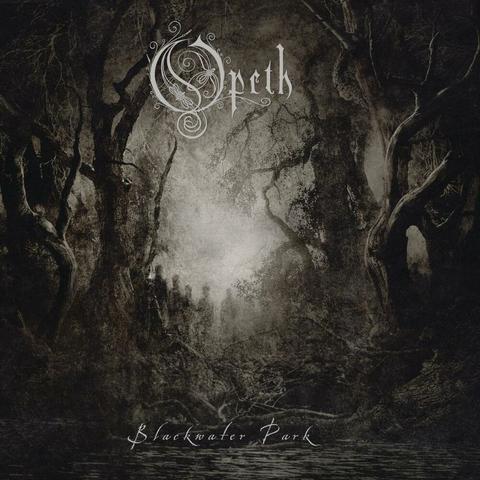
 Döbbie03