Calling Dart & Flutter developers! There's a push to bring officially maintained OpenTelemetry support to Dart and Flutter — and they're looking for contributors to help make it happen.

Interested in shaping observability for Dart?

https://opentelemetry.io/blog/2026/dart-flutter-opentelemetry/

#OpenTelemetry #Flutter #Dart

Call for Contributors: OpenTelemetry for Dart and Flutter

Why OpenTelemetry for Dart and Flutter? Dart is a full-stack language and the language of Flutter, one of the most popular frameworks for building cross-platform applications. Data shows over 20% of current app store submissions are Flutter apps. Dart is null safe and type safe, compiles to fast binaries, and is increasingly used for backend services as well. Yet Dart remains the last top-15 programming language without an officially maintained OpenTelemetry SDK. Earlier community implementations are no longer maintained, leaving Dart and Flutter developers without a supported path to capture telemetry from their servers and apps.

OpenTelemetry

#OpenTelemetry is the standard path today, but if we’re being realistic, adopting OTel successfully at scale is still hard.

That’s why I’ve been following the new OpenTelemetry Blueprints initiative closely.
🎉 And THIS MONTH it finally released its first blueprints! 🎉
1️⃣ Traditional Environments (VMs, bare metal)
2️⃣ Kubernetes Workloads
3️⃣ #Kubernetes #Observability (still in draft)

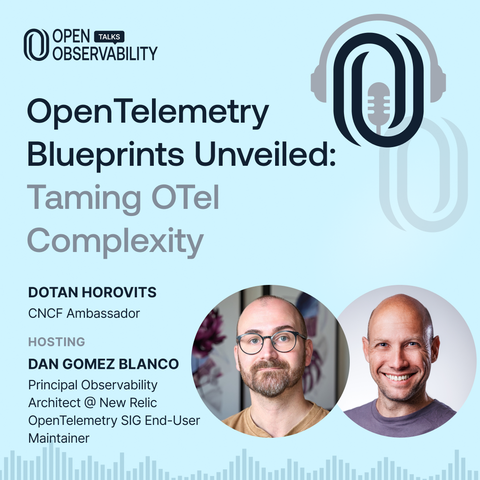
Hot off OpenObservability Talks 🎧 with @dan_gomezblanco :
https://medium.com/p/67db96d7e512/

Chat memory gets fuzzy fast once the UI hides what LangChain4j is actually retaining.

I wrote a Quarkus tutorial that makes retained-memory pressure visible with `TokenWindowChatMemory`, Ollama request counts, a turn ledger, and OpenTelemetry attributes. The useful split is simple: your app-level eviction budget is not the model context limit. https://www.the-main-thread.com/p/quarkus-langchain4j-chat-memory-budget #Java #Quarkus #LangChain4j #Ollama #OpenTelemetry

Quarkus LangChain4j Chat Memory: Make the Token Budget Visible

Build a small Quarkus app that makes LangChain4j retained-memory pressure, Ollama call usage, and OpenTelemetry signals visible before eviction turns into guesswork.

The Main Thread

Using OpenTelemetry to Trace AI Agent Decisions and Tool Usage

📰 Original title: Instrument AI Agent Decision Tracing with OpenTelemetry

🤖 IA: It's not clickbait ✅
👥 Users: It's not clickbait ✅

View full AI summary https://en.killbait.com/using-opentelemetry-to-trace-ai-agent-decisions-and-tool-usage.html?utm_source=mastodon_world&utm_medium=social&utm_campaign=killbait.mastodon_world

#artificialintelligence #opentelemetry #aiagents #observability

Using OpenTelemetry to Trace AI Agent Decisions and Tool Usage

The article explains how traditional logging falls short when debugging failures in AI agents, especially in high-stakes scenarios where an agent may execute unintended actions such as deleting or modifying critical data. Simple logs that only record that an agent ran or a tool was called provide little insight into why a decision was made. Instead, the author argues for decision tracing using OpenTelemetry, where every model invocation, tool execution, and retrieval step is represented as a structured span within a trace. The core idea is to move beyond “heartbeat logging” and instead capture full decision context, including reasoning, tool selection, and the source of context that influenced the decision. By using OpenTelemetry’s GenAI semantic conventions, developers can standardize observability across different systems and avoid vendor lock-in. Spans such as agent invocation, tool execution, and retrieval are enriched with attributes like model name, token usage, risk level, and especially a context_source field that helps explain where the agent’s decision originated. The article also emphasizes best practices for security and privacy. It warns against storing full prompt or message content in span attributes due to size limits and privacy risks, recommending span events instead for large or sensitive data. Additionally, it highlights the importance of propagating trace context across multi-agent systems so that parent-child relationships remain intact when agents delegate tasks. A key pattern introduced is a decision-logging contract, where the agent must explicitly output structured JSON describing intent, reasoning, risk level, and reversibility before executing sensitive operations like writes or deletions. This enables human approval gates and improves traceability. Finally, the article discusses operational pitfalls such as incorrect span classification, insufficient retention policies, and insecure recovery systems. It concludes that proper instrumentation transforms debugging from manual log investigation into structured trace analysis, making it possible to quickly answer what an agent did, why it did it, and what systems it affected.

KillBait

Using OpenTelemetry to Trace AI Agent Decisions and Tool Usage

📰 Original title: Instrument AI Agent Decision Tracing with OpenTelemetry

🤖 IA: It's not clickbait ✅
👥 Users: It's not clickbait ✅

View full AI summary https://en.killbait.com/using-opentelemetry-to-trace-ai-agent-decisions-and-tool-usage.html?utm_source=mastodon_social&utm_medium=social&utm_campaign=killbait.mastodon_social

#artificialintelligence #opentelemetry #aiagents #observability

Using OpenTelemetry to Trace AI Agent Decisions and Tool Usage

The article explains how traditional logging falls short when debugging failures in AI agents, especially in high-stakes scenarios where an agent may execute unintended actions such as deleting or modifying critical data. Simple logs that only record that an agent ran or a tool was called provide little insight into why a decision was made. Instead, the author argues for decision tracing using OpenTelemetry, where every model invocation, tool execution, and retrieval step is represented as a structured span within a trace. The core idea is to move beyond “heartbeat logging” and instead capture full decision context, including reasoning, tool selection, and the source of context that influenced the decision. By using OpenTelemetry’s GenAI semantic conventions, developers can standardize observability across different systems and avoid vendor lock-in. Spans such as agent invocation, tool execution, and retrieval are enriched with attributes like model name, token usage, risk level, and especially a context_source field that helps explain where the agent’s decision originated. The article also emphasizes best practices for security and privacy. It warns against storing full prompt or message content in span attributes due to size limits and privacy risks, recommending span events instead for large or sensitive data. Additionally, it highlights the importance of propagating trace context across multi-agent systems so that parent-child relationships remain intact when agents delegate tasks. A key pattern introduced is a decision-logging contract, where the agent must explicitly output structured JSON describing intent, reasoning, risk level, and reversibility before executing sensitive operations like writes or deletions. This enables human approval gates and improves traceability. Finally, the article discusses operational pitfalls such as incorrect span classification, insufficient retention policies, and insecure recovery systems. It concludes that proper instrumentation transforms debugging from manual log investigation into structured trace analysis, making it possible to quickly answer what an agent did, why it did it, and what systems it affected.

KillBait

Ruby on Rails 애플리케이션에 OpenTelemetry 적용하기 워크숍

OpenTelemetry의 기본 개념과 Rails 앱에 Traces, Metrics, Logs를 통합하는 실용적인 방법을 다룹니다.

🔗 원문 보기

Ruby on Rails 애플리케이션에 OpenTelemetry 적용하기 워크숍

OpenTelemetry의 기본 개념과 Rails 앱에 Traces, Metrics, Logs를 통합하는 실용적인 방법을 다룹니다.

Ruby-News

Cisco SD-WAN zero-day hits production; supply chain ransom reaches Grafana Labs

A supply chain ransom hit Grafana's CI runners, a Cisco SD-WAN zero-day is being used for lateral movement in production right now, and both Fedora and Red Hat published pieces about what happens when humans stop owning the security decisions in their own pipelines.

https://linkzine.com/2026/06/25/cisco-sd-wan-zero-day-hits-production-supply-chain-ransom-reaches-grafana-labs/

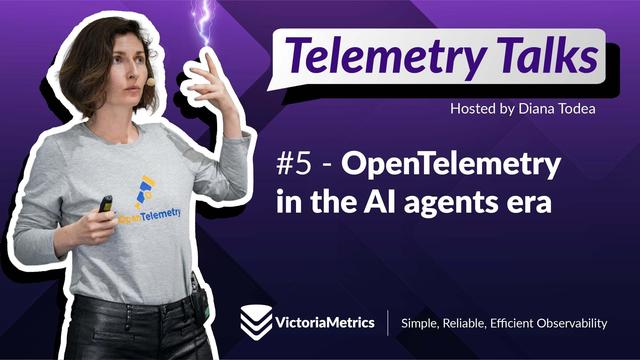
Alexander Marshalov talked with @dianatodea about #AI coding assistants that are already emitting rich #OpenTelemetry data, revealing prompts, tool usage, workflows, and developer behavior in real time.
👉 Watch now: https://bit.ly/4vxDhhq
#Telemetry

That well-meaning TelemetryHelper wrapper over #OpenTelemetry? It probably hurts more than helps: kills zero-alloc paths, adds lookups to your hot path, and your team learns the wrapper instead of #OTel.

Skip the wrapper. 👇
https://opentelemetry.io/blog/2026/dont-wrap-opentelemetry/

Don't Wrap OpenTelemetry — You're Probably Hurting More Than Helping

There’s a pattern I’ve seen across many teams adopting OpenTelemetry, and it’s well-intentioned every single time. An engineer wants to make things easier for the team. They build a thin abstraction over the OTel API — an IMetric interface, a TelemetryHelper class, a MetricsWrapper module — and ship it as the team’s standard. “Just use this,” they say. “It’s simpler.” The intention is genuine. The outcome is usually not good.

OpenTelemetry