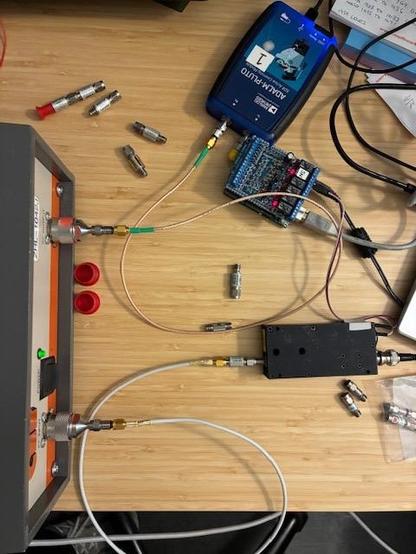
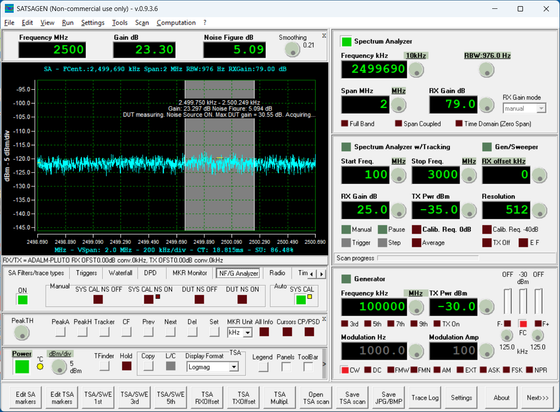
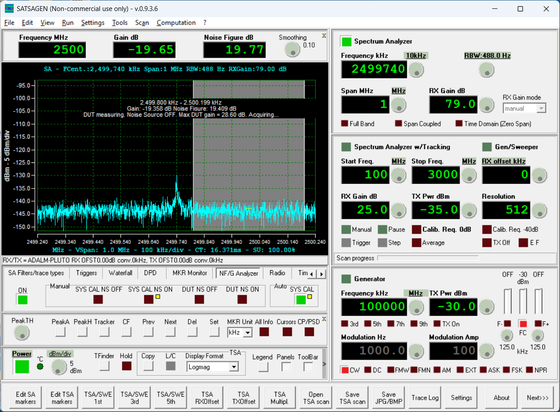
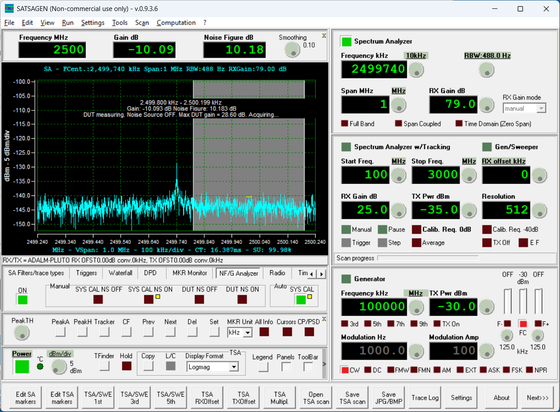
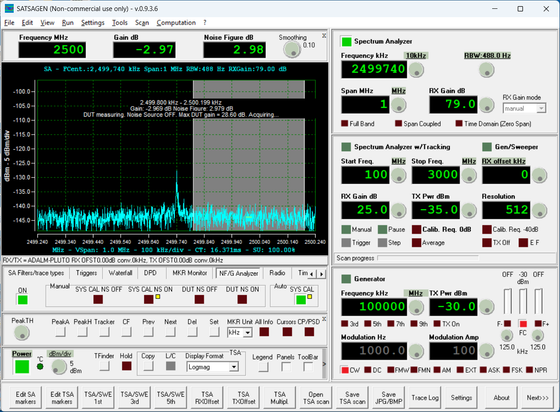
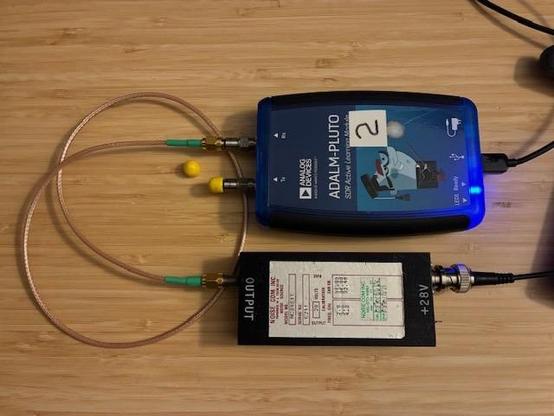
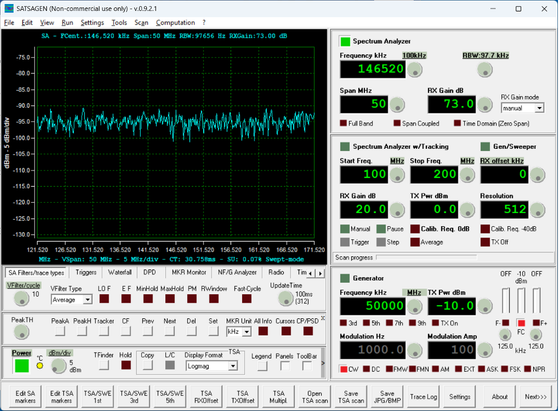
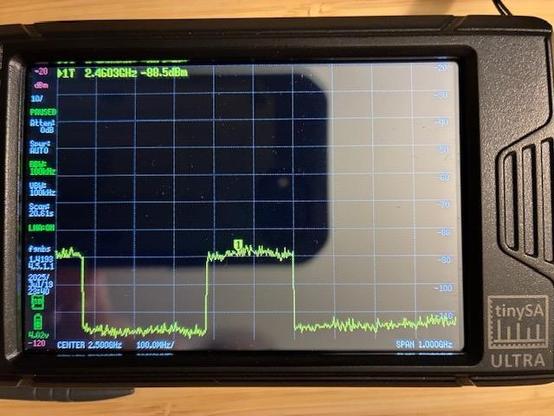
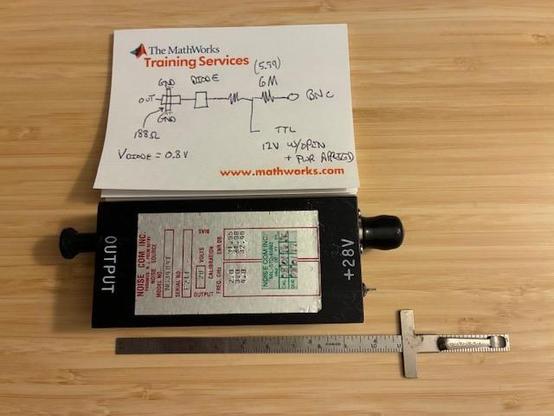
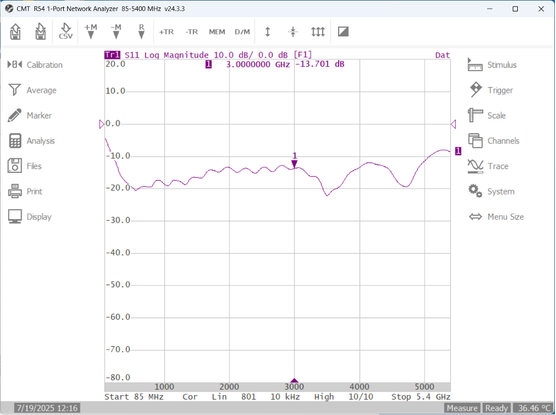
First RF Amplifier measured with new gain and noise figure system. Measuring ZHL-1042 with 25 dB input attenuator on NS output (ENR adjusted), DUT amplifier, 5 dB pad on output to cable to 5 dB pad on SDR RX input. Expecting to see ~28 dB gain (measure 23 dB gain with 5 dB pad in-line) and ~ 5 dB NF. Looks good for a quick test…
#HamRadio #TestEquipment #NoiseSource #NoiseFigure
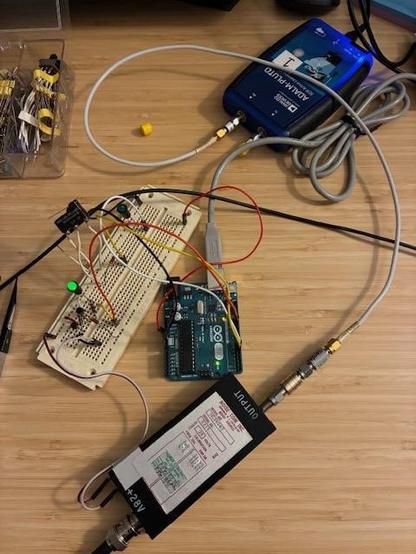
Completed the proto Arduino Noise Source PC interface allowing SATSAGEN to automatically turn on and off the noise source under that program’s control enabling super easy measurements. Next will look in the lab stock for any more NOS plastic RS enclosures (pretty sure there is at least one larger box out there). Will add the LED’s to final package to make the PC control function visible when in use. Plan to measure a few amplifiers soon.
#HamRadio #TestEquipment #NoiseSource #NoiseFigure

For those following along on the NoiseCom NC3404T noise source journey, the second blog posting is completed. TLDR: It works, covers more than the frequency range specified on the label, and should be a great addition to the home lab.
#HamRadio #TestEquipment #NoiseSource

More photos and screen shots are at:
https://qsl.net/n8dmt/rf-noise-source-part-2/index.html

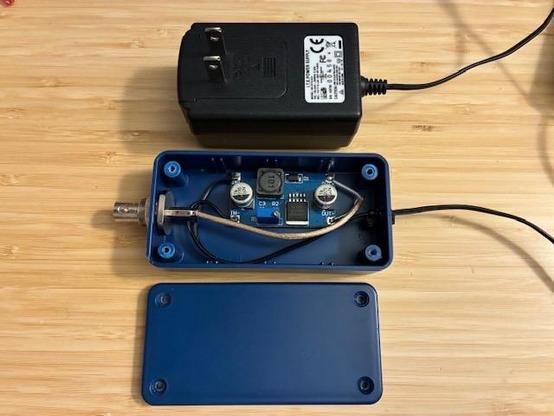
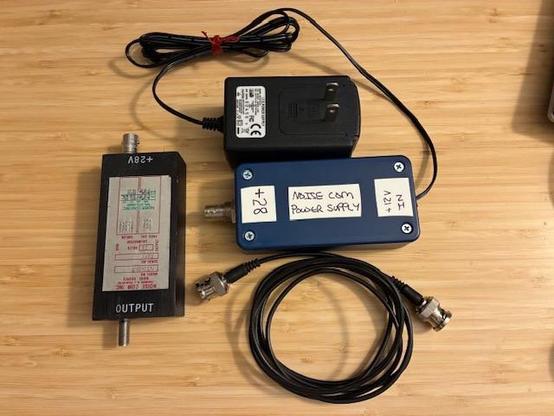
Noise Source Project Completed: Finished up the +28V DC power supply to go with the Noise Com NC3404T source. It’s a working system at this point. Will further characterize the noise level and useful frequency range in the days ahead.
#HamRadio #TestEquipment #NoiseSource

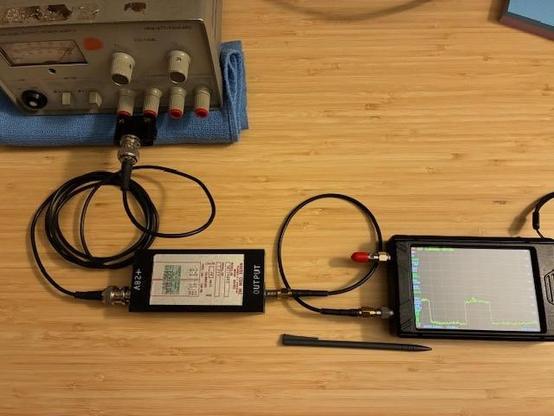
The Noise Com noise source works! Enabled the LNA inside the TinySA-Ultra and was able to clearly see the noise increase when the on/off control (short to ground or open connection) was activated. Next step is to put together a small dedicated +28VDC supply for this item and finish part 2 of the blog posting on this topic.
#HamRadio #RFtest #TestEquipment #NoiseSource

Thanks to @miek for the “enable LNA?” tip!

RF Noise Source Part 1: Have had a surplus Noise Com source in the junk box for a few years without knowing if it was working or not. Did a quick disassembly, reassembly, and power off/on tests today. Item appears to be working, but can’t see its noise on the TinySA-Ultra (yet). May need to add amplifiers to see noise output. Inside unit photos and details are over on the blog posting. #HamRadio #RFTest #NoiseSource
https://qsl.net/n8dmt/rf-noise-source-part-1/index.html

Using a Vacuum Diode to Make The Cleanest Noise Source You’ve Ever Seen

Noise is an annoying but unavoidable part of any engineering project. Fixing noise issues is hard enough, but even just measuring how much noise an amplifier adds to your signal is tricky without proper equipment like a spectrum analyzer. One other thing that makes noise measurements easier is a good, stable noise source that can serve as a reference: you first measure your amplifier without any input, and then measure it again with the noise source connected. Using a few simple formulas you can then calculate how much noise the amplifier produced.

Building a source that generates exactly the amount of noise that you want, no more and no less, is quite a challenge in itself. Several techniques exist, but [Wolfgang] over at the Electronic Projects for Fun blog decided to go for the classic method of using a vacuum diode. He describes the design and analysis of a noise source based on a 2D3B tube in a detailed article.

The tube in question is a special vacuum diode designed to be operated in saturation, meaning at a current high enough to draw away all the electrons generated by the hot filament. When running in this mode, the output current has a noise spectrum that is almost perfectly white, meaning its power level remains constant across the frequency band. [Wolfgang]'s measurements show a deviation of no more than 0.2 dB between 200 kHz and 200 MHz. This is about as close to perfect as you can get, and covers most of the frequency bands of interest to radio amateurs.

The whole project is built up inside a sturdy metal box, with extensive shielding and line filtering to keep undesired signals from contaminating the clean noise signal. A limiter is also an essential component: should the diode's filament break, the limiter will prevent the sudden transient from reaching the spectrum analyzer and destroying its (very expensive) input stage.

[Wolfgang] has made a few other noise sources based on various components, which he compares on a separate page, although the 2D3B based one is by far the most stable. We've also featured a simple pink noise source, which is useful for audio measurement, as well as white noise sources designed to generate random numbers or simply to help you sleep.

#radiohacks #noisemeasurement #noisesource #vacuumdiode

Using A Vacuum Diode To Make The Cleanest Noise Source You’ve Ever Seen

Noise is an annoying but unavoidable part of any engineering project. Fixing noise issues is hard enough, but even just measuring how much noise an amplifier adds to your signal is tricky without p…

Hackaday