Retro Road Test: Nissan Patrol vs Toyota Land Cruiser (1992 UK Specs)
If you were living in Britain in 1992 and fancied a large, rugged 4×4 capable of hauling horseboxes, climbing the side of Ben Nevis, or simply letting the neighbours know that you really, truly meant it when you said you didn’t care what petrol costs, two names stood out: the Nissan Patrol and the Toyota Land Cruiser.
These weren’t fashionable Chelsea tractors, because Chelsea in 1992 hadn’t yet realised it needed tractors. No—these were chunky, unapologetic commercial-grade off-roaders, vehicles that looked as though they’d been designed by men wearing flannel shirts who thought a torque wrench counted as a romantic anniversary present. They were built for farmers, adventurers, surveyors, and people who wanted a vehicle that would survive an asteroid strike. But which one ruled the ruts, the lanes, and the fields of early-90s Britain?
Today, we line up the 1992 Nissan Patrol (Y60) against the 1992 Toyota Land Cruiser (the 80 Series for the UK). Both are icons. Both are enormous. Both drink fuel like a stag do in Magaluf. And both have loyal fanbases who will happily argue for hours about which is “proper”, which is “indestructible”, and which one is “the real one that the UN uses, if you look closely in the background of that documentary clip from 1989”.
Let’s have a proper road test.
Styling & Presence
Nissan Patrol
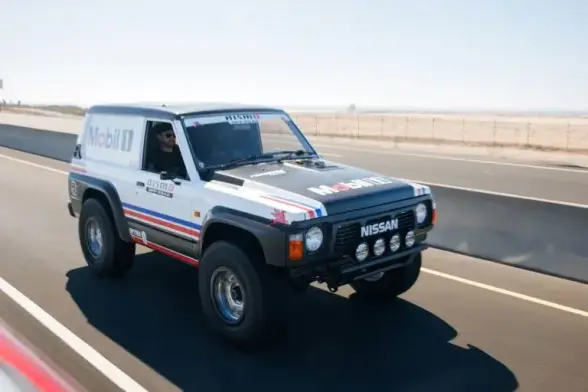
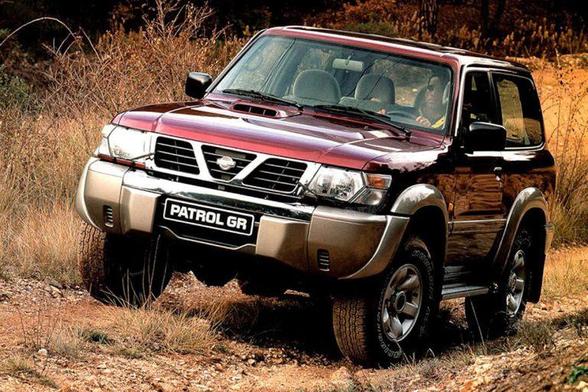
If you like your vehicles square, boxy, purposeful, and—dare we say it—just a little bit militaristic, the 1992 Patrol is your man. It’s all right angles, big glass, chunky arches, and steel so thick it might actually be magnetic. Sitting on your driveway, it looks like it’s preparing to invade somewhere.
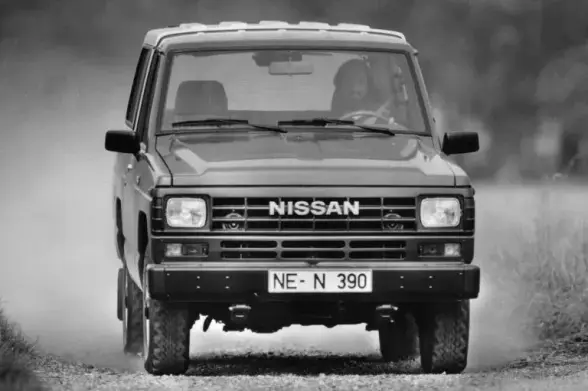
The Y60 Patrol didn’t try to look fashionable, and that’s its charm. Its styling suggests two priorities: durability and the ability to scare sheep into orderly formation. Its front end is a wall of metal with a grille that seems proud of its own simplicity. No swoopy flair, no unnecessary plastic trim, no aerodynamic considerations whatsoever. Nissan’s view in 1992 was clearly: “Drag coefficient? No idea, mate. But the bumper could push over a house.”
Toyota Land Cruiser
The Land Cruiser 80 Series is still very square, but in a slightly more refined way—like the Patrol’s cousin who went to university and discovered moisturiser. It has smoother edges, a less abrupt stance, and a friendlier face. It manages to look tough without looking aggressive, like a bouncer who politely apologises before ejecting you through a window.
Its proportions are classic Land Cruiser—solid, planted, and honest. It looks expensive, which, to be fair, it was. Toyota didn’t aspire to build a mere working vehicle; they built something that could ferry diplomats across continents or carry a family through snow-blocked Scottish glens in supreme comfort.
Verdict — Styling
The Patrol is rugged charm; the Land Cruiser is rugged class.
Think “Lumberjack vs. Lumberjack who also plays piano.”
Engines & Performance (1992 UK Specs)
Both vehicles in the UK were typically offered with large diesel lumps—because in 1992, Britain still believed diesel was a good idea and not the spawn of Satan.
Nissan Patrol Engines
Most UK Patrols came with the 2.8-litre TD (TD28T) inline-six turbo-diesel. It produced around 113 bhp and a chunky 240 Nm of torque. Not fast. Not even brisk. But strong.
Acceleration was leisurely in the sense that it gave you time to think about your decisions in life. 0–60? Eventually. Maybe. If you weren’t hauling anything and had tailwind assistance. But that torque meant steady, predictable grunt, which off-road is far more useful than outright horsepower.
There was also a 4.2-litre diesel overseas, but Britain mostly got the 2.8. You can almost hear the farmers complaining now.
Toyota Land Cruiser Engines
The UK 1992 Land Cruiser 80 Series generally came with the 4.2-litre straight-six diesel (1HD-T). This was a magnificent power unit—silky, strong, and seemingly capable of running on disappointment and rainwater if diesel supplies ever ran out.
Power sat at around 164 bhp with a mighty 360 Nm of torque. That may not sound like much today, but in 1992 it felt like an earthquake strapped under the bonnet.
On the road, the Land Cruiser pulled with surprising authority. You could actually overtake things—slowly, thoughtfully, with prayer—but you could.
On-Road Performance: A Tale of Two Giants
The Patrol ambles. The Land Cruiser strides.
The Patrol thinks speed is something that happens to other people. The Land Cruiser thinks speed is achievable, provided one doesn’t rush.
Verdict — Engines & Performance
The Toyota wins. More power, more refinement, more torque, and it sounds better too.
The Patrol’s engine is stout but outgunned.
Ride Comfort & Handling
Nissan Patrol
The Patrol rides like a Victorian punishment device. Not because it’s bad—it’s just very honest. Leaf springs at the back make sure you know precisely how many potholes reside on your favourite lane. The steering has the precision of a Labrador chasing a butterfly. But the Patrol has soul: it feels like you’re piloting something purposeful.
On smoother roads, the ride is surprisingly controlled, but calling it comfortable would be like calling a brick “ergonomically advanced.”
Toyota Land Cruiser
Here’s where the Land Cruiser starts to leave the Patrol behind. Coil springs all round deliver a vastly more civilised ride. It glides over bumps that would have the Patrol rearranging your spine.
Steering is still vague by modern standards, but far more precise than the Nissan. Body roll is present, of course—this is a two-tonne off-roader from the early 90s, not a hot hatch—but it feels stable, balanced, secure.
Verdict — Ride & Handling
If you’re driving across Britain, choose the Land Cruiser.
If you’re driving across a ploughed field at 45 degrees, the Patrol will probably enjoy it more.
Off-Road Ability
This is where things get interesting.
Nissan Patrol
The Patrol is an absolute monster off-road. It has a reputation—well deserved—for being almost unbreakable. With a proper ladder chassis, real low-range gearing, big approach and departure angles, and the weight of a small bungalow, it simply shrugs at obstacles.
Traction is strong, articulation is generous, and the vehicle seems delighted when the terrain turns ugly. Mud, rocks, slopes, snow—the Patrol treats them like a light morning warm-up. You get the feeling that if you drove it into a river, it would emerge on the other side slightly cleaner.
Toyota Land Cruiser
Ah, but the Land Cruiser also has a reputation—for being the go-anywhere, do-anything, absolutely unstoppable vehicle used by explorers, aid agencies, and that one odd uncle who insists he could drive to Mongolia if the M1 allowed it.
It has full-time four-wheel drive with locking centre differential, optional locking rear differential, excellent articulation, a strong frame, and a diesel engine that produces torque like it’s going out of fashion.
The Land Cruiser is more sophisticated off-road. The Patrol is more brute-force. Both can embarrass modern SUVs for fun.
Off-Road Verdict: Patrol vs Land Cruiser
It’s genuinely too close to call.
- The Patrol feels simpler, tougher, and maybe slightly more willing to be abused.
- The Land Cruiser is more capable in technical environments and a bit more refined when crawling.
Draw.
Both are among the best 4x4s ever made.
Interior & Comfort
Nissan Patrol Cabin
The Patrol’s interior is best described as “functional with a hint of early-90s Japanese plastic.” Switchgear is durable, but not luxurious. Seats are firm but supportive. Visibility is excellent thanks to the enormous windows that make you feel like you’re sitting in a greenhouse on wheels.
Creature comforts? Yes—some. But it’s basic. If you want wood trim, soft-touch dashboards, or fancy climate control, you may want to look elsewhere. The Patrol’s idea of luxury in 1992 was a radio that didn’t immediately fall out over bumps.
Noise levels? Moderate rumble, moderate whine, moderate everything. You will not fall asleep.
Toyota Land Cruiser Cabin
Now this is where the money went. The Land Cruiser’s interior is genuinely plush for its era. Soft-touch surfaces, better seating, more gadgets, clearer instrumentation, and even a sense of elegance. It feels like Toyota wanted it to last 30 years—which is convenient, because it has.
The cabin is far quieter, more refined, and far more comfortable on long trips. Space is enormous, especially in the back, and the seating position feels more car-like than the Patrol’s “captain of a small ship” posture.
Verdict — Interior
The Patrol is durable.
The Land Cruiser is delightful.
Another Toyota win.
Practicality & Everyday Use
Patrol Practicality
Boot space: massive.
Towing capacity: excellent.
Seats folded: you could fit a double mattress in the back, or perhaps the entire cast of Emmerdale.
Its downside? Size. Parking in an early-90s British multi-storey is like trying to park a bungalow in a broom cupboard. Narrow streets? Forget it. Fuel consumption? Yes. A lot of it.
Land Cruiser Practicality
Boot space: also massive, and slightly more usable thanks to a flatter load area.
Towing: superb.
Seating: the optional seven-seat layout is excellent.
It’s more refined for everyday use and better on long journeys, but it’s even larger than the Patrol. If you bought one in 1992 and lived in a typical suburban semi, you probably reconsidered your driveway dimensions.
Verdict — Practicality
Slight win for the Toyota due to refinement and slightly better interior flexibility.
Fuel Economy (or “Ha! Good one.”)
Let’s be honest: these two are biblical in size and shovel diesel into their engines like coal into the Titanic’s furnace.
- Patrol 2.8TD: Around 22–25 mpg if driven kindly.
- Land Cruiser 4.2TD: Around 20–23 mpg, maybe less if you express enthusiasm.
The Toyota is thirstier but also far more powerful.
Call it a draw.
Reliability (The Battle of the Indestructibles)
Both the Patrol and the Land Cruiser have reputations for lasting longer than the pyramids. You hear stories of Patrols hitting half a million miles, and Land Cruisers crossing continents without a hiccup.
Nissan Patrol Reliability
The Patrol is over-engineered everywhere. Axles, gearbox, frame, electrics—everything is built with the kind of overkill normally reserved for railway bridges.
Its diesel engine isn’t fast, but it refuses to die. Proper maintenance will see it live forever.
Toyota Land Cruiser Reliability
The Land Cruiser is typically regarded as the most reliable 4×4 ever built. Toyota engineering from this era was obsessive. Engines last decades. Transmissions are bulletproof. Suspension is tough. Interiors resist wear like they’re made of military vinyl.
Reliability Verdict
Both are legendary.
Toyota edges it only because the Land Cruiser’s systems are more refined and still just as durable.
Costs, Value & Ownership
1992 Prices
These were expensive vehicles in their day.
- Nissan Patrol: Cheaper, aimed at farmers and commercial users.
- Land Cruiser: Considerably more expensive, aimed at luxury buyers, professionals, and people who liked bragging rights.
Maintenance
The Patrol is cheaper to maintain. Parts are rugged and basic.
The Land Cruiser is more complex, and parts were pricier.
Resale Value
In hindsight, Land Cruisers hold value extremely well.
Patrols hold up decently but not at Toyota levels.
Ownership Verdict
Patrol wins for cost.
Land Cruiser wins for resale and long-term desirability.
Driving Experience Summary
Patrol Driving
- Feels unfiltered, mechanical, authentic.
- More agricultural, more characterful.
- Great off-road, noisy on road.
- Appeals to those who like their vehicles tough and uncomplicated.
Land Cruiser Driving
- Feels refined, smooth, almost luxurious.
- Better on road, still superb off-road.
- More power, more comfort, more civility.
- Appeals to adventurers who like doing it in comfort.
So… Which One Wins?
This is a bit like asking:
“Would you rather fight a bear or a buffalo?”
Both are massive, powerful, and capable of rearranging the natural order of things.
But comparing them on pure merit:
Toyota Land Cruiser — The Winner
- More powerful
- More comfortable
- More refined
- More practical on the road
- Just as capable off-road
- Built like a nuclear bunker wrapped in leather
The Land Cruiser is the better all-rounder. It’s the one you’d want for long journeys, daily driving, and still going deep into the wilderness.
Nissan Patrol — The Honourable Runner-Up
But don’t think of the Patrol as second place—think of it as “a different flavour of brilliant.” It’s simple, incredibly tough, rugged, and feels like it was designed for people who enjoy harsh terrain, simple engineering, and vehicles that feel like machinery rather than transport.
Some will absolutely prefer it, just as some prefer a pint of bitter to a glass of wine.
Final Verdict
If you wanted one in 1992 and you had the money: buy the Land Cruiser.
If you wanted something cheaper, simpler, and unbreakable: buy the Patrol.
Both are icons.
Both are legends.
Both would still be running today if you fed them oil and hope.
#1992 #nissanPatrol #retroRoadTest #toyotaLandCruiser
 espirituRACER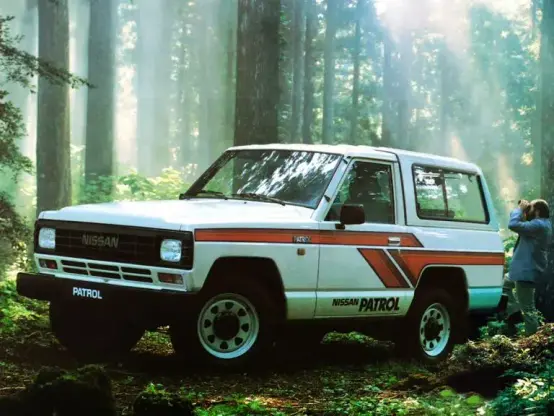

 Court Guinness




 Niepopularna opinia Bóbr Kurwa