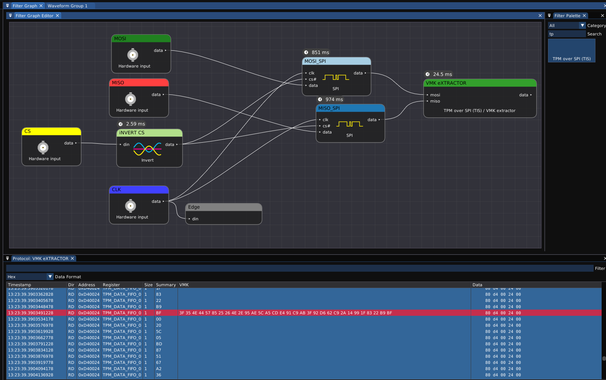
 drm
drm(near) Instant dumping of the Bitlocker VMK using Sipeed #SLogic16U3 and #ngscopeclient 🥰. Full disclosure: i know nothing about C++, filter was fully vibe coded (with a Claude free plan)
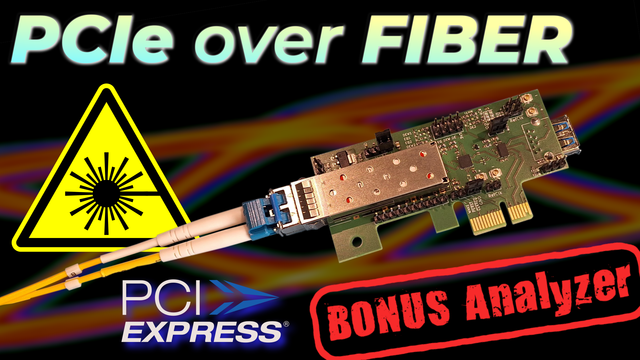
🎉 New video showing off running PCI express over COTS SFP modules and associated complications along with future plans.
And then a small side quest involving optical splitters and #ngscopeclient
Definitely on the long side, sorry about that 😬 But I hope it's still interesting 🤞

And another first test: One instance of #ngscopeclient running with a PicoScope 4824 and a PicoScope 5444, eating each other's signal generator output.
Most important work is done; now on to some polishing and wiping out more bugs.


@azonenberg has anyone tried to add 1990s #Tektronix scope (e.g. TDS744) support to #ngscopeclient ?
I just got one and am wondering if there is no support due to limitations of the scopes or just because nobody botheted to add support yet.
I don't know if this is useful for anyone else, but I just built ngscopeclient for Windows, and thought I'd share the packages. (It was a lot less painful than last time I tried, even if the VM kept running out of RAM! 😀)
https://www.ngscopeclient.org/
https://box.agsys.io/ngscopeclient-195162a3-windows-x64.msi
https://box.agsys.io/ngscopeclient-195162a3-windows-x64-portable.zip
 tnt
tnt penguin42
 ✧✦Catherine✦✧
 Lasse Beyer
 Ponygol
 rawe
rawe Attie Grande