Texas Instruments MSPM0G5187 and AM13Ex MCUs integrate TinyEngine NPU for Edge AI applications
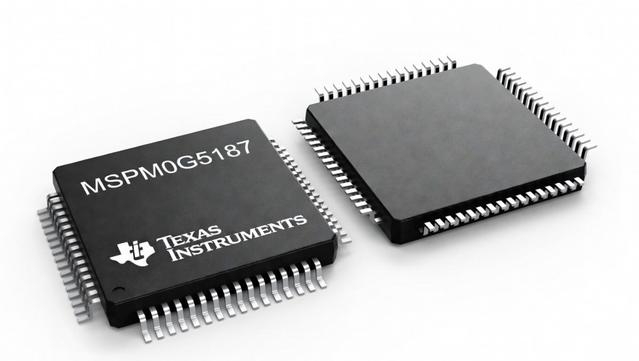
Texas Instruments MSPM0G5187 and AM13Ex are two new microcontroller (MCU) families featuring the company's  TinyEngine neural processing unit (NPU) to enable low-latency, high-efficiency Edge AI/Machine Learning inference on the chips. TI claims that the TinyEngine NPU can run AI models with up to 90 times lower latency and more than 120 times lower energy utilization per inference than similar MCUs without an accelerator.  The MSPM0G5187 is a general-purpose, low-power Arm Cortex-M0+ MCU, while the AM13Ex Arm Cortex-M33 microcontroller targets real-time motor control, starting with the AM13E23019 SKU. TI MSPM0G5187 general-purpose Cortex-M0+ MCU Key features and specifications: CPU - Arm Cortex-M0+ @ 80 MHz Memory - 32 KB RAM with ECC Storage - 128 KB flash with ECC, 8 KB data flash with ECC Accelerators TinyEngine NPU for AI/ML delivering up to 2.56GOPS (Giga Operations Per Second) at 80MHz MATHACL math accelerator Peripherals USB - 1x USB 2.0 (12 Mbps) Audio

CNX Software - Embedded Systems News

Fusion HAT+ Review – Adding AI voice and servo/motor control to Raspberry Pi for robotics, Smart Home, or education

https://fed.brid.gy/r/https://www.cnx-software.com/2026/02/01/fusion-hat-review-adding-ai-voice-and-servo-motor-control-to-raspberry-pi-5-for-robotics-smart-home-and-education/

Geehy G32R430 Arm Cortex-M52 Encoder MCU features Arctangent accelerator, dual 16-bit ADC for industrial motion control systems

https://web.brid.gy/r/https://www.cnx-software.com/2026/01/22/geehy-g32r430-arm-cortex-m52-encoder-mcu-features-arctangent-accelerator-dual-16-bit-adc-for-industrial-motion-control-systems/

Geehy G32R430 Arm Cortex-M52 Encoder MCU features Arctangent accelerator, dual 16-bit ADC for industrial motion control systems

Last year, Geehy introduced the industry’s first dual-core Cortex-M52 real-time MCU, and has now followed up with the G32R430, an Arm Cortex-M52 Encoder MCU with two 16-bit ADCs and a hardware ATAN (arctangent) accelerator for sub-1 µs electrical angle computation in high-precision encoder and motion control systems. The MCU is clocked at 128 MHz and uses ITCM/DTCM tightly coupled memory for deterministic, zero-wait-state execution, alongside a 4KB cache for low-latency control loops. It integrates two 16-bit high-precision ADCs with support for synchronous sampling, along with an extra 12-bit ADC, multiple analog comparators, DACs, and an on-chip temperature sensor, allowing encoder designs to be built with very few external analog components. It also supports various encoder protocols, including BiSS-C, SSI, Tamagawa, and SPI, and includes generic interfaces like USART, SPI, and I²C. With a –40°C to +105°C industrial operating range, this MCU is suitable for servo motors, industrial robots, absolute and incremental

CNX Software - Embedded Systems News
Old Windsurfers Become New Electric Surfboards

Windsurfing has experienced a major decline in popularity in the last few decades as the sport’s culture failed to cater to beginners at the same time that experienced riders largely shifted …

Hackaday
A new #postdoctoral research position in #MotorControl of #speech and #reaching is available at #UW:

ST launches 800 MHz STM32V8 Arm Cortex-M85 high-performance MCU manufactured with 18nm FD-SOI process

https://fed.brid.gy/r/https://www.cnx-software.com/2025/11/19/st-stm32v8-arm-cortex-m85-800-mhz-high-performance-mcu-18nm-fd-soi-process/

ST launches 800 MHz STM32V8 Arm Cortex-M85 high-performance MCU manufactured with 18nm FD-SOI process

ST has just launched its most powerful STM32 microcontroller so far, with the STM32V8 family, the first equipped with a Cortex-M85 core (clocked at up to 800 MHz) and manufactured with an 18nm FD-SOI process. It's a non-pin compatible update to the STM32H7 family that delivers up to 5,072 CoreMarks, greatly improves Edge AI performance thanks to Arm Helium and MVE, integrates up to 4MB eNVM (Embedded NVM), operates up to 140°C, and adds PCM (phase-change memory) radiation immunity. Two main parts have been launched in different configurations and packages: STM32V863 and STM32V873. STM32V863/873 specifications: Core – 32-bit Arm Cortex-M85 CPU @ up to 800MHz with Arm Helium, Arm MVE, TrustZone...; up to 5,072 CoreMarks Multimedia accelerators - Chrom-ART 2D GPU, and JPEG hardware accelerator Memory/Storage 1.5 MB system SRAM with ECC (partial) 8 KB backup RAM 192 KB zero-wait state TCM Up to 512 KB TCM with ECC Up

CNX Software - Embedded Systems News

By adding a HAT, you can easily control multiple motors with your Raspberry Pi. ⚙️

In particular, some "Motor Driver HATs" can simultaneously control both DC and servo motors, allowing you to build a complete robot drive system with just one HAT. 🤖💡

It's a great choice for electronics projects and homemade robots. ✨
The photo shows SunFounder's RobotHAT.

🔥 Top 6 Raspberry Pi eBooks for $20 V2
https://ebokify.com/top-6-Raspberry-pi-ebooks-v2

#RaspberryPi #Electronics #Python #RobotControl #MotorControl

By combining a Raspberry Pi with an H-bridge circuit, you can learn practically how to operate a DC motor with PWM control. ✨

The key point is that you can control the motor's rotation speed and direction by quickly switching the voltage on and off through the GPIO output.

This is a great way to experience the integration of hardware and software. 💡

🔥 Top 6 Raspberry Pi eBooks for $20 V2
https://ebokify.com/top-6-Raspberry-pi-ebooks-v2

#Python #RaspberryPi #Electronics #MotorControl #LearningProgramming

The Raspberry Pi is equipped with PWM (Pulse Width Modulation) functionality, which, when combined with an H-bridge circuit, allows for flexible control of the rotational speed and direction of a DC motor. ⚙️

Outputting a PWM signal via GPIO and controlling the motor via an H-bridge is a configuration that can also be used for robotics and automation. 😄

🔥 Top 6 Raspberry Pi eBooks for $20
🌐 ebokify.com/top-6-Raspberry-pi-ebooks

#RaspberryPi #Python #Electronics #MotorControl