'Towards Optimal Branching of Linear and Semidefinite Relaxations for Neural Network Robustness Certification', by Brendon G. Anderson, Ziye Ma, Jingqi Li, Somayeh Sojoudi.
http://jmlr.org/papers/v26/21-0068.html
#minimizes #robustness #adversarial
Video: Canadian Taxation on Investments
I had a viewer question about #tax #rates on #Canadian vs. #foreign #dividends and which #account #minimizes tax #withholding on foreign dividends (#RRSP vs. #TFSA vs. #non-registered or #cash accounts), as well as the rates at which various #dividend #income is taxed. The video covers the entire Canadian #taxation system for context, and answers the question for tax #efficiency. The #CanadianMoneyTalk channel concentrates on…
http://canadianmoneytalk.ca/2025/02/16/video-canadian-taxation-on-investments/

Video: Canadian Taxation on Investments
I had a viewer question about #tax #rates on #Canadian vs. #foreign #dividends and which #account #minimizes tax #withholding on foreign dividends (#RRSP vs. #TFSA vs. #non-registered or #cash acco…
One of the key benefits of #SpaceMining is that it #minimizes the usual problems associated with #mining on #Earth. Valuable #resources that are #rare on Earth can be found in #enormous quantities in #space
Universities of Queensland, Melbourne, Bath, #Australia 🇦🇺 https://www.mdpi.com/2071-1050/14/7/4119

Protecting the Planet or Destroying the Universe? Understanding Reactions to Space Mining
There is currently a surge in interest from both private and government sectors in developing technology for mining asteroids and the moon (“space mining”). One of the key benefits highlighted by advocates of space mining is that it minimizes the usual problems associated with mining on earth in terms of pollution, environmental degradation, and encroachment on human habitats. Two studies—one conducted on a 27-nation sample (N = 4819), the other conducted in the U.S. (N = 607)—provide the first test of the assumed (but never studied) notion that space mining is more palatable to the public than terrestrial mining. Both studies indicate broad support for asteroid mining: levels of support were reliably above the mid-point, and much greater than for other forms of frontier mining such as mining the ocean floor, mining Antarctica, mining the Alaskan tundra, and lunar mining. Unlike terrestrial mining, community attitudes toward mining asteroids were largely non-ideological; support was not correlated with perceptions of ecological fragility, political ideology, or individualistic/hierarchical worldviews. In summary, the current studies suggest that mining companies have a “social license to operate” for mining asteroids, but less so for lunar mining.
 JMLR
JMLR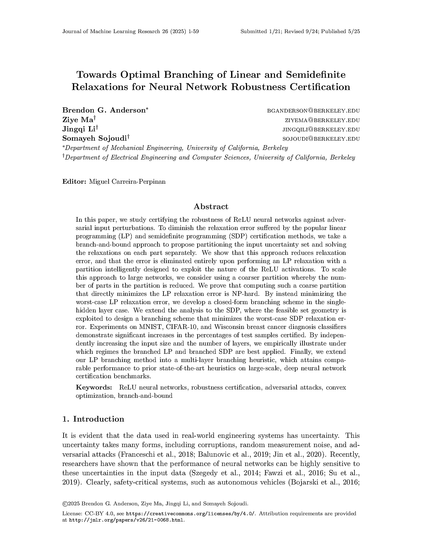
 Canadian Money Talk
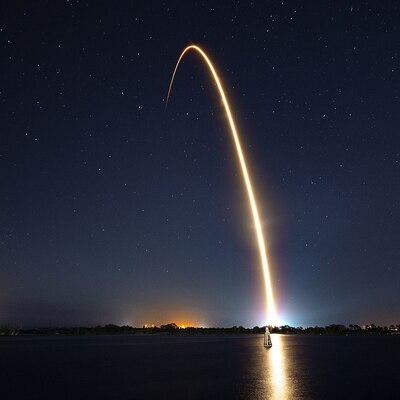 Spaceflight 🚀