 WPS News
Why Maritime Domain Awareness Determines Control in the West Philippine Sea
By Cliff Potts, CSO, and Editor-in-Chief of WPS News
Baybay City, Leyte, Philippines — May 12, 2026
The Problem: You Cannot Respond to What You Do Not See
Maritime operations depend on awareness.
In the West Philippine Sea, vessels do not operate in isolation. They are part of a moving environment that includes patrol ships, fishing vessels, survey platforms, and maritime militia units. Without accurate awareness of this environment, response becomes delayed or misdirected.
Interference benefits from gaps in visibility. When vessel movements are not detected early, response options narrow. Actions become reactive instead of planned.
This creates an operational disadvantage.
What Maritime Domain Awareness Means
Maritime Domain Awareness (MDA) refers to the ability to detect, track, and understand activity at sea.
It combines multiple sources:
- Radar systems
- Automatic Identification System (AIS) data
- Visual observation
- Satellite tracking
- Reports from vessels and coastal stations
No single source is complete. MDA depends on combining data into a usable picture.
Current Operating Conditions
Observed patterns in the West Philippine Sea continue to show:
- Interfering vessels operating in coordinated groups
- Presence maintained across multiple locations simultaneously
- Movements that shift in response to Philippine patrol activity
- Use of non-linear routes to complicate tracking
These patterns require continuous monitoring, not periodic checks.
Why Detection Timing Matters
Early detection changes outcomes.
If a vessel is identified at distance, route adjustments can be made. Escort vessels can be positioned in advance. Documentation systems can be activated before contact occurs.
Late detection reduces options. Encounters become immediate and constrained. Decision-making shifts from planning to reaction.
Timing is a decisive factor in operational effectiveness.
Integration of Data Sources
Effective MDA requires integration.
Radar alone cannot identify intent. AIS data can be incomplete or manipulated. Visual observation is limited by range and conditions.
Combining sources allows cross-verification:
- Radar confirms position
- AIS provides identity (when available)
- Visual observation confirms behavior
Integrated data produces a clearer operational picture.
The Role of Local and Civilian Reporting
Maritime awareness is not limited to government systems.
Fisherfolk, commercial vessels, and local coastal observers contribute to the overall picture. When reporting channels are reliable, these observations provide additional coverage in areas where formal systems may be limited.
This expands visibility without requiring new infrastructure.
Limits and Constraints
MDA is resource-dependent.
Radar coverage has range limits. Satellite data may not be real-time. AIS can be turned off. Weather conditions affect visibility.
Awareness is never complete. It is improved incrementally.
The objective is not perfect visibility. The objective is sufficient awareness to act effectively.
Interaction With Other Measures
Maritime Domain Awareness supports all other operations.
- Escorts can be positioned based on detected movement
- Documentation can begin earlier
- Patrol routes can be adjusted in real time
- Distributed operations can be coordinated more effectively
Without awareness, these measures lose efficiency.
Bottom Line
In the West Philippine Sea, control is influenced by awareness.
The ability to detect and understand maritime activity determines how effectively interference can be managed. By improving detection, integrating data sources, and expanding reporting networks, the Philippines can reduce reaction time and increase operational control without escalation.
For more social commentary, please see Occupy 2.5 at https://Occupy25.com
Bateman, S. (2017). Maritime security and law enforcement in the South China Sea. Contemporary Southeast Asia, 39(2), 221–245.
Erickson, A. S., & Kennedy, C. (2016). China’s maritime militia. Center for Naval Analyses.
United Nations. (1982). United Nations Convention on the Law of the Sea.
#AISTracking #maritimeDomainAwareness #MaritimeSecurity #PhilippineCoastGuard #radarSystems #SouthChinaSea #UNCLOS #WestPhilippineSea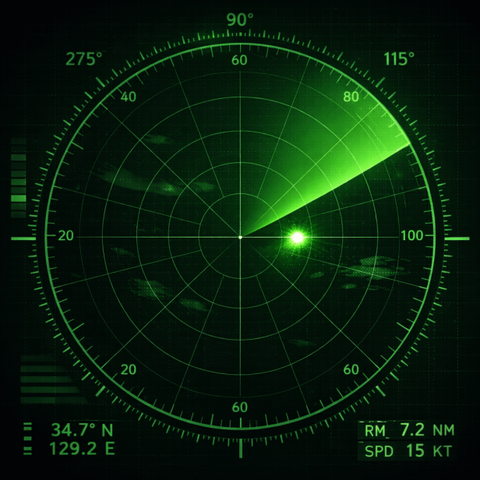
 vaarthahindi
 Norobiik @