Looking at the complicated changes of #lithic technology in the Horn of #Africa focused on mid-Holocene hunter-gatherers of Melka Kunture, Ethiopia

#archaeology #LaterStoneAge

https://brill.com/view/journals/jaa/aop/article-10.1163-21915784-bja10053/article-10.1163-21915784-bja10053.xml

#PostSapiens
The earliest unambiguous Neanderthal engravings on cave walls: La Roche-Cotard, Loire Valley, France | PLOS ONE
https://journals.plos.org/plosone/article?id=10.1371/journal.pone.0286568

#Sediment #Neanderthals #Paleoanthropology #Radioactive carbon dating #Caves #Optically stimulated luminescence #Stratigraphy #Lithic technology

The earliest unambiguous Neanderthal engravings on cave walls: La Roche-Cotard, Loire Valley, France

Here we report on Neanderthal engravings on a cave wall at La Roche-Cotard (LRC) in central France, made more than 57±3 thousand years ago. Following human occupation, the cave was completely sealed by cold-period sediments, which prevented access until its discovery in the 19th century and first excavation in the early 20th century. The timing of the closure of the cave is based on 50 optically stimulated luminescence ages derived from sediment collected inside and from around the cave. The anthropogenic origin of the spatially-structured, non-figurative marks found within the cave is confirmed using taphonomic, traceological and experimental evidence. Cave closure occurred significantly before the regional arrival of H. sapiens, and all artefacts from within the cave are typical Mousterian lithics; in Western Europe these are uniquely attributed to H. neanderthalensis. We conclude that the LRC engravings are unambiguous examples of Neanderthal abstract design.

Anthropic cut marks in extinct megafauna bones from the Pampean region (Argentina) at the last glacial maximum

The initial peopling of South America is a topic of intense archaeological debate. Among the most contentious issues remain the nature of the human-megafauna interaction and the possible role of humans, along with climatic change, in the extinction of several megamammal genera at the end of the Pleistocene. In this study, we present the analysis of fossil remains with cutmarks belonging to a specimen of Neosclerocalyptus (Xenarthra, Glyptodontidae), found on the banks of the Reconquista River, northeast of the Pampean region (Argentina), whose AMS 14C dating corresponds to the Last Glacial Maximum (21,090–20,811 cal YBP). Paleoenvironmental reconstructions, stratigraphic descriptions, absolute chronological dating of bone materials, and deposits suggest a relatively rapid burial event of the bone assemblage in a semi-dry climate during a wet season. Quantitative and qualitative analyses of the cut marks, reconstruction of butchering sequences, and assessments of the possible agents involved in the observed bone surface modifications indicate anthropic activities. Our results provide new elements for discussing the earliest peopling of southern South America and specifically for the interaction between humans and local megafauna in the Pampean region during the Last Glacial Maximum.

#PhD (M/F) in #lithic technology specialized on the invention of pressure micro-blade in North-East #Asia

https://emploi.cnrs.fr/Offres/Doctorant/UMR5608-JOSRAT-009/Default.aspx?lang=EN

#job
#archaeology

Portail Emploi CNRS - Offre d'emploi - Doctorant/e (H/F) en technologie lithique spécialisé/e dans l'invention du débitage par pression en Asie du Nord-Est

https://scitechdaily.com/redefining-human-history-scientists-uncover-advanced-1-1-million-year-old-tools-in-china/ Un nuevo estudio de la cuenca china del Nihewan ha revelado que los homínidos que poseían habilidades avanzadas de talla, equivalentes a los rasgos tecnológicos del Modo 2, ocuparon Asia Oriental hace 1,1 millones de años (Ma), es decir, 0,3 Ma antes de la fecha asociada a las primeras hachas de mano halladas en Asia Oriental. Esto sugiere que los homínidos del Modo 2 se dispersaron por Asia Oriental mucho antes de lo que se pensaba.
#archaeology #Lithic #China
Redefining Human History: Scientists Uncover Advanced 1.1 Million-Year-Old Tools in China

A new study from the Nihewan basin of China has revealed that hominins who possessed advanced knapping abilities equivalent to Mode 2 technological features occupied East Asia as early as 1.1 million years ago (Ma), which is 0.3 Ma earlier than the date associated with the first handaxes found in Ea

SciTechDaily
Ma DD, Pei SW, Xie F, Ye Z, Wang FG, Xu JY, Deng CL, de la Torre I. Earliest Prepared core technology in Eurasia from Nihewan (China): Implications for early human abilities and dispersals in East Asia. Proc Natl Acad Sci U S A. 2024 Mar 12;121(11):e2313123121. doi: 10.1073/pnas.2313123121 #Archaeologie #lithic
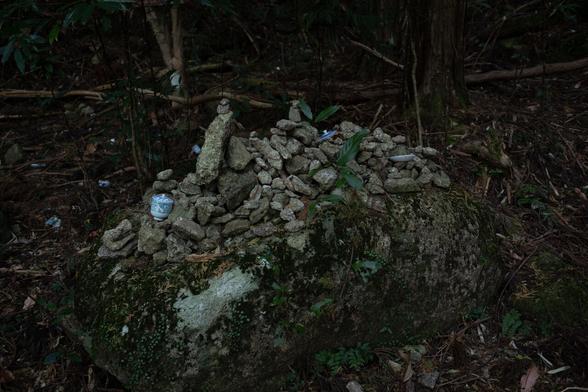
Dwelling on Rocks. Geomantic sensing and sensemaking, or sifting through the noise of our mineral substrate.

#lithic #stone #rock #sand #geomancy #sensing #pattern

https://anarchive.fo.am/wabisabi/dwelling-on-rocks/
Dwelling on Rocks — anarchive

FoAM anarchive

Nina Willburger (@[email protected])

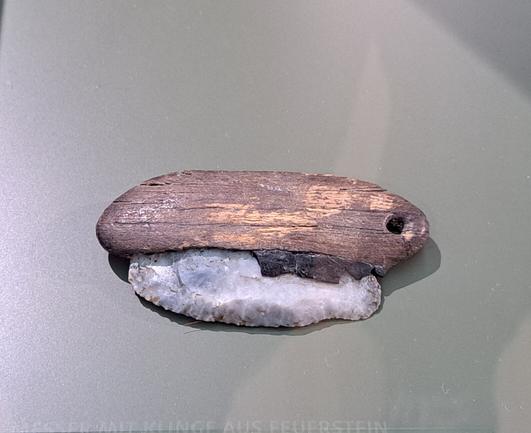
Angehängt: 1 Bild #FindsFriday: a well-preserved #Neolithic knife, the blade was made of flint and fastened with birch tar in a handle made of wood. From the pile dwelling settlement at Wangen-Hinterhorn, Lake Constance, dating 3800-3500 BC. One of the highlights of our collections. #archaeology

social.anoxinon.de - Mastodon
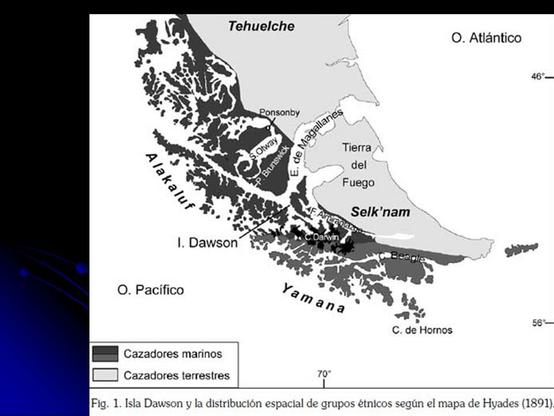
LEGOUPIL, D; CHRISTENSEN, M and MORELLO, F. Una encrucijada de caminos: el poblamiento de la Isla Dawson (Estrecho de Magallanes). Magallania [online]. 2011, vol.39, n.2 [cited 2023-06-04], pp.137-15 #lithic #archaeologie

During the various #Covid lockdowns to hit #China when I lived there, I took up a new hobby: creating lithic tools, drawing on techniques used thousands of years ago during the Stone Age. Here are some of my recent creations — points, scrappers, a hand axe — made using the #knapping and #pressureflaking techniques.

#arrowhead #stoneage #lithic #lithics #history #DIY