 World History Encyclopedia
This book is recommended to academics and university students interested in different approaches to fiction writing and the evaluation of literary works published in the late Victorian period and early 20th-century literary criticism. #History #LateVictorian #LiteraryHistory #HistoryFacts https://www.worldhistory.org/review/475/notework-victorian-literature-and-nonlinear-style/

 Open Book Publishers
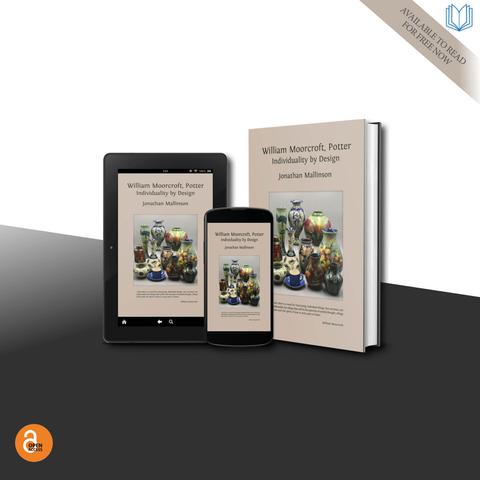
📢#OutNow in #OA: 'William #Moorcroft, Potter: Individuality by #Design' by Jonathan Mallinson.
#WilliamMoorcroft (1872-1945) was one of the most celebrated #potters of the early twentieth century. His career extended from the #Arts and #Crafts movement of the #lateVictorian age to the #Austerityaesthetics of the Second World War. Rejecting mass production and patronised by #Royalty, #Moorcroft’s work was a synthesis of #studio and #factory, #art and #industry.
This book is a pioneering study by Jonathan Mallinson, Emeritus Fellow of Trinity College, Oxford. It follows the career of William Moorcroft through a wealth of private papers, letters and diaries, business correspondence and published reviews in newspapers, trade magazines and #art journals. Richly illustrated with examples of his #pottery, it explores what lay behind the unique impact of work sought by #museums and treasured in homes the world over.
Access at https://openbookpublishers.com/books/10.11647/obp.0349