Sentence first
Eavan Boland and the emergence of a poetic self
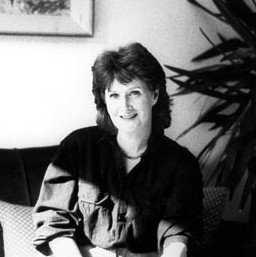
I picked up Object Lessons (1995) by Eavan Boland (1944–2020) thinking it was a memoir, but it’s more focused than that: a meditation on the emergence of her identity as a poet, specifically a woman poet and an Irish poet.
This identity is further complicated by her emigration from Ireland as a five-year-old girl when her father, a diplomat, took up work in London in the mid-20th century:
Hardly anything else that happened to me as a child was as important as this: that I left one country and came to another. That an ordinary displacement made an extraordinary distance between the word place and the word mine.
In England, everyday words reinforced her sense of difference and lack: ‘They [the other children at school] could say “orchard” instead of “garden” with the offhand grace imparted by nine-tenths of the law. I could not.’ But it would be an Irish English word that crystallized her alienation:
The inevitable happened. One day my tongue betrayed me out of dream and counterfeit into cold truth. I was in the cloakroom at school in the middle of the afternoon. A winter darkness was already gathering through one of the stubborn fogs of the time. A teacher was marshaling children here and there, dividing those who were taking buses from those who were being collected. “I amn’t taking the bus,” I said. I was six or seven then, still within earshot of another way of speaking. But the English do not use that particular construction. It is an older usage. If they contract the verb and the negative, they say, “I’m not.”
Without knowing, I had used that thing for which the English reserve a visceral dislike: their language, loaded and aimed by the old enemy. The teacher whirled around. She corrected my grammar; her face set, her tone cold. “You’re not in Ireland now” was what she said.
This account elaborates on Boland’s description of the incident in her poem ‘An Irish Childhood in England: 1951’, which I excerpted in a 2014 post about the Irish use of amn’t.
In her mid-teens Boland returned to live in Ireland and began to explore the inchoate sense of Irishness from which she felt semi-estranged:
Language. At first this was what I lacked. Not just the historic speech of my country. I lacked that too, but so did others. This was a deeper loss; I returned to find that my vocabulary of belonging was missing. The street names, the meeting places—it was not just that I did not know them. It was something more. I had never known them. I had lost not only a place but the past that goes with it and, with it, the clues from which to construct a present self.
I had to learn a new sensory idiom. A fog in the mouth, for example, which was different from the London one: less gritty, with more of an ocean aftertaste. An unkempt greenness on the streets. A drizzle which was interseasonal, constant. Different trees. Different birds.
Nurturing this idiom, she found, years later, that ‘language can reclaim location’, a beautifully concise expression of this insight.
It was not just Irish English with which Boland familiarized herself. In her final year in school she was struggling with Latin, resentful of its difficulty. Then came a turning point:
It was something about the economy of it all: the way the ablative absolute gathered and compressed time. One day, again figuratively, it was a burdensome piece of grammar. The next, with hardly any warning, it was a messenger with quick heels and a bright face. I hardly knew what had happened. I began to respect, however grudgingly, the systems of a language which could make such constructs that, although I had no such words for it, they stood against the disorders of love or history. They had left the mouth of the centurion and entered the mind of a Sicilian farm worker. They had forged alliances and named stars. And at that point of my adolescence, where the words I wrote on a page were nothing but inexact, the precision and force of these constructs began to seem both moving and healing.
As Boland developed her poetic ability and her confidence in its effect, she found herself entering a heavily male tradition. There were pivotal encounters with avatars of that tradition: with Padraic Colum at an elevator; with Patrick Kavanagh in a café in Dublin (his style of speech ‘shy and apocalyptic’).
But the constraints of history and structural intransigence pressed tight:
Gradually the anomaly of my poetic existence was clear to me. By luck, or its absence, I had been born in a country where and at a time when the word woman and the word poet inhabited two separate kingdoms of experience and expression. I could not, it seemed, live in both. As the author of poems I was an equal partner in Irish poetry. As a woman—about to set out on the life which was the passive object of many of those poems—I had no voice. It had been silenced, ironically enough, by the very powers of language I aspired to and honored.
Object Lessons abounds in eloquent, carefully honed ideas about womanhood and nationhood and the complications of a poetic self at their intersections. For this post I’ve selected just a few language-themed passages; if they appeal to you, you’ll enjoy Boland’s book.
#amnT #books #EavanBoland #gender #HibernoEnglish #identity #Ireland #IrishBooks #IrishEnglish #irishLiterature #IrishPoetry #languageAndGender #literature #poetry #words #writers #writing