 Chenzi Xu
See you at LabPhon next week and CorpusPhon2 the week after. Our website is updated with schedule and abstracts.

 Robert Fromont
New Zealand English speakers vary in terms of how they pronounce several subsets of monophthongs. One vowel subset distinguishes ‘leaders’ and ‘laggers’ of several ongoing sound changes. But do listeners make social judgements based on these covarying vowels? A new #LabPhon article addresses this question by asking listeners to group voices together and provide labels about the social characteristics underlying their groups.
 Samuel Akinbo
New in #LabPhon > “Perception of ATR in Dàgááre [dàɡáárɪ̀]” by Avery Ozburn, Gianna F Giovio Canavesi and Samuel Akinbo: https://www.journal-labphon.org/article/id/8919/

Perception of ATR in Dàgááre [dàɡáárɪ̀]
<font color="#000000" face="Roboto"><span style="font-size: 15.3333px;">This paper reports on two related perception studies about the property Advanced Tongue Root (ATR) in Dàgáárè (Mabia; Ghana). We examine how well native speakers are able to distinguish ATR contrasts as well as the effects of harmony and disharmony on perception, thereby testing hypotheses that have been made in the literature about the perceptual motivations of harmony systems. We find that, as expected, ATR mid vowels and Retracted Tongue Root (RTR) high vowels are the hardest to distinguish in Dàgáárè, but contrary to expectations, harmony does not improve accuracy in discriminating ATR contrasts. Nonetheless, we find the accuracy on disharmonic disyllabic forms is significantly worse than the accuracy in monosyllabic forms, which may indicate that disharmony hurts perception. We examine the implications for our understanding of the motivations of harmony systems and discuss how this paper contributes to the very minimal existing literature on perception in African languages.</span></font><br>
 Open Library of Humanities
New in #LabPhon > “Identity Avoidance in Turkish Partial Reduplication: Feature Specificity and Locality” by Kevin Tang and Faruk Akkuş: https://doi.org/10.16995/labphon.6459

Identity Avoidance in Turkish Partial Reduplication: Feature Specificity and Locality
This study investigates the Turkish partial reduplication phenomenon, in which the reduplicant is derived by prefixing C<sub>1</sub>VC<sub>2</sub> syllable, where C<sub>1</sub>V are identical to the word-initial CV of the base and the C<span style="line-height: 0; position: relative; vertical-align: baseline; bottom: -0.25em;">2</span> ends in one of the four linking consonants: <i>-p</i>, <i>-m</i>, <i>-s</i>, <i>-r</i>. This study re-examines the factors conditioning the choice of the linking consonant, by focusing the nature of the (dis)similarity (feature specificity) and the proximity (locality) between the consonants in the base and the linking consonant, using an acceptability rating task with over 200 participants and a diverse set of stimuli in terms of length and word shapes. Results indicate a gradient identity avoidance effect that extends over all consonants in the base. Crucially, the effect of all consonants is not uniform, with the strength of the effect decreasing further into the base. The study also uncovers an elusive interplay between the distance-based decay effect and the syllable position effect, both of which turn out to play a role in these non-categorical patterns with multiple features. Furthermore, results indicate that identity avoidance operates over both individual features as well as whole segments. Overall, the study argues that locality-sensitive feature-specific identity avoidance constraints are part of the grammar.
 Phonetics Lab
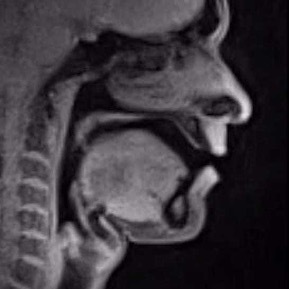
Hi everyone we are the Phonetics Lab at Lancaster University! We'll be tooting about fun phonetics stuff as well as news from our lab and collaborators. @LAEL #introduction #phonetics #linguistics #phonology #labphon #sociophonetics #articulation #forensicphonetics #speechtech #bilingualism #ultrasound #EMA