Bones from prehistoric Poland reveal 3,000 years of dietary shifts: forest-herding Corded Ware nomads, Bronze Age inequalities hidden in nitrogen levels, and millet arriving fast — as cultural identity, not gradual adoption.
#Archaeology #IsotopeAnalysis #PrehistoricEurope https://www.anthropology.net/p/what-bones-from-prehistoric-poland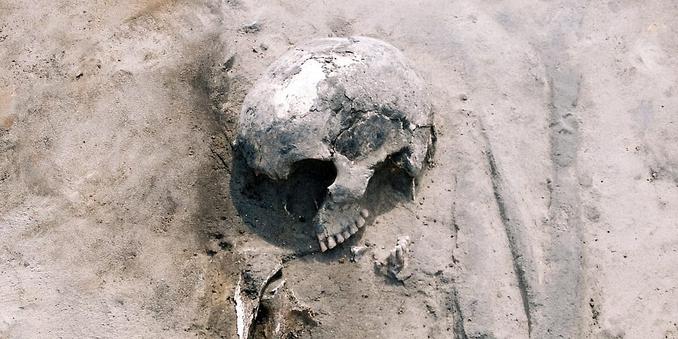
What Bones from Prehistoric Poland Reveal About Who Ate What — and Why It Mattered
A new isotope study tracks three millennia of diet, inequality, and food identity in north-central Poland, from the Neolithic to the Bronze Age.
Isotopic data reveal a localist Roman population in late Roman Albintimilium (modern Ventimiglia), Liguria
New paper is out in Scientific Reports and it's a first for this kind of approach in Roman archaeology of this area #Liguria #archaeology #IsotopeAnalysis
https://www.nature.com/articles/s41598-025-92851-7

Isotopic data reveal a localist Roman population in late Roman Albintimilium, Liguria - Scientific Reports
This study investigates human diet and mobility to understand the socio-economic organisation of a Late Roman community in Liguria, a transitional region between Italy and Gaul, during the 3rd–5th century CE. By combining archaeological, historical, osteological, and isotopic data with novel Bayesian modelling of multi-isotope data (collagen δ13C, δ15N, bioapatite 87Sr/86Sr) from human and animal skeletal remains, as well as modern plant samples, we provide new insights into this hitherto under-researched region. Our findings suggest the community followed a C3-based diet, heavily reliant on plant resources and carbohydrates, supplemented by animal protein, likely from omnivorous pigs. This characteristically Roman diet contrasts with ancient written sources that claimed Ligurians had a “barbarian” diet and lifestyle. We also identified significant sex-based dietary differences, with men consuming more animal-derived protein than women, reflecting traditional Graeco-Roman societal ideals. Although the overall dietary pattern aligns with Roman norms, there is no isotopic evidence of long-distance migration or consumption of significant amounts of imported food. This indicates that the community may have been more localist, prioritising locally available resources over long-distance imports, which is unexpected given the prevalent idea of a large-scale interconnected food network within the Roman Empire.
Dating with the help of the carbon isotope
#14C is an important tool in
#archaeology. But the bones of people who ate a lot of fish during their lifetime can appear much older than they are. Researchers from
#ClusterROOTS and
#LEIZA have developed a method to correct diet-related errors in carbon dating. Now in
#ScienceAdvances:
https://www.uni-kiel.de/en/cluster-roots/details/news/025-fisch-esser-14c#Isotopeanalysis #UniKiel #ZBSA
This is how old fish eaters really are
Researchers from the ROOTS Cluster of Excellence and LEIZA develop a new approach to correct diet-related errors in carbon dating.
Now published in Peer Community Journal,
#Ecology section: "Identification of microbial
#exopolymer producers in sandy and muddy
#intertidalsediments by compound-specific
#isotopeanalysis"
https://doi.org/10.24072/pcjournal.336
Identification of microbial exopolymer producers in sandy and muddy intertidal sediments by compound-specific isotope analysis
 Anthropology.net
 STOP OCCUPATION 🍉 S. Costa
 Cluster ROOTS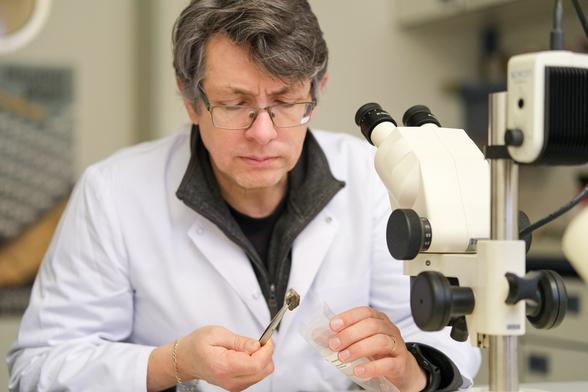
 Peer Community Journal