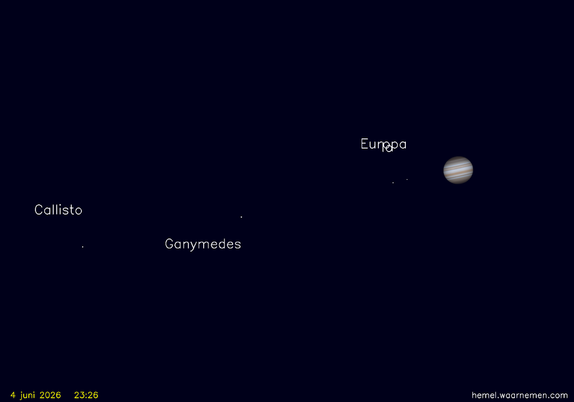
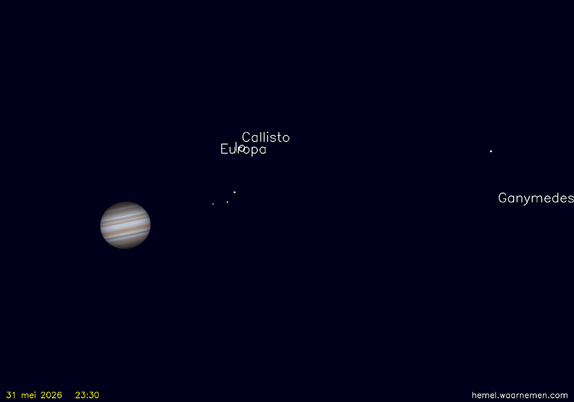
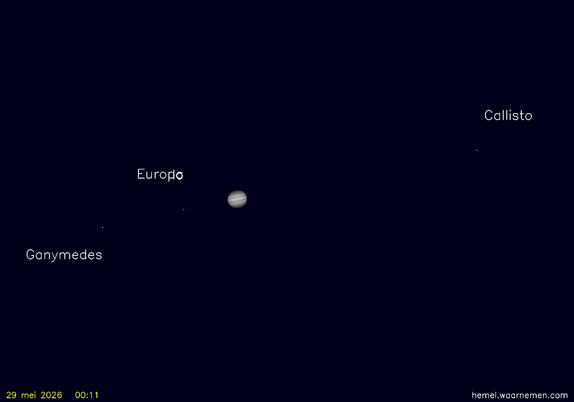
19.28: Van 19:28 tot 23:20 uur nemen we alle grote #Jupitermanen W v/d schijf waar. Vanaf #Jupiter gezien zijn dat #Europa, #Io, #Ganymedes en #Callisto. #Jupiter staat een hoogte van 56gr boven de zuidwestelijke horizon en de planeet is gemakkelijk te vinden. De #Zon staat 23gr onder de horizon en het is goe Meer info: https://hemel.waarnemen.com/astrokal/

Mi sistema andaba un poco lento cuando terminé de editar el video sobre memoria libre, disponible, y la métrica PSI en Linux, y efectivamente, el sistema estaba bastante colapsado.

Dato: tengo 15G de RAM, y estaba bastante libre.

Conclusión: el cuello de botella era el acceso a disco.

Estuve tuneando un poco algunos daemons que usan I/O intensa, como syncthing, para optimizar un poco.

Debería documentarlo, no? 😅

#gnu #linux #ram #swap #io #pressure #meta #psi #syncthing

Jupiter’s Volcanic Moon Io

NASA/Jet Propulsion Laboratory–Caltech/Southwest Research Institute (SwRI)/Malin Space Science Systems (MSSS); Image processing: Emma Wälimäki © CC BY During its close flyby of Jupiter’s moon Io on December 30, 2023, NASA’s Juno spacecraft captured some of the most detailed imagery ever of Io’s volcanic surface. In this image, taken by the JunoCam instrument from about 930 miles (1,500 kilometers) above the moon, Io’s night side [left lobe] is illuminated by “Jupitershine,” which is sunlight reflected from the planet’s surface. This image is the NASA Science Image of the Month for October 2025. Each month, NASA’s Science Mission Directorate chooses an image to feature, offering desktop wallpaper downloads, as well as links to related topics, activities, and games. Text credit: NASA/JPL–Caltech/Southwest Research Institute (SwRI)/Malin Space Science Systems (MSSS) Image credit: NASA/JPL–Caltech/Southwest Research Institute (SwRI)/Malin Space Science Systems (MSSS); Image processing: Emma Wälimäki © CC BY

Pure Science News
Jupiter’s Volcanic Moon Io

NASA/Jet Propulsion Laboratory–Caltech/Southwest Research Institute (SwRI)/Malin Space Science Systems (MSSS); Image processing: Emma Wälimäki © CC BY During its close flyby of Jupiter’s moon Io on December 30, 2023, NASA’s Juno spacecraft captured some of the most detailed imagery ever of Io’s volcanic surface. In this image, taken by the JunoCam instrument from about 930 miles (1,500 kilometers) above the moon, Io’s night side [left lobe] is illuminated by “Jupitershine,” which is sunlight reflected from the planet’s surface. This image is the NASA Science Image of the Month for October 2025. Each month, NASA’s Science Mission Directorate chooses an image to feature, offering desktop wallpaper downloads, as well as links to related topics, activities, and games. Text credit: NASA/JPL–Caltech/Southwest Research Institute (SwRI)/Malin Space Science Systems (MSSS) Image credit: NASA/JPL–Caltech/Southwest Research Institute (SwRI)/Malin Space Science Systems (MSSS); Image processing: Emma Wälimäki © CC BY

Pure Science News
Jupiter’s Volcanic Moon Io

NASA/Jet Propulsion Laboratory–Caltech/Southwest Research Institute (SwRI)/Malin Space Science Systems (MSSS); Image processing: Emma Wälimäki © CC BY During its close flyby of Jupiter’s moon Io on December 30, 2023, NASA’s Juno spacecraft captured some of the most detailed imagery ever of Io’s volcanic surface. In this image, taken by the JunoCam instrument from about 930 miles (1,500 kilometers) above the moon, Io’s night side [left lobe] is illuminated by “Jupitershine,” which is sunlight reflected from the planet’s surface. This image is the NASA Science Image of the Month for October 2025. Each month, NASA’s Science Mission Directorate chooses an image to feature, offering desktop wallpaper downloads, as well as links to related topics, activities, and games. Text credit: NASA/JPL–Caltech/Southwest Research Institute (SwRI)/Malin Space Science Systems (MSSS) Image credit: NASA/JPL–Caltech/Southwest Research Institute (SwRI)/Malin Space Science Systems (MSSS); Image processing: Emma Wälimäki © CC BY

Pure Science News
Jupiter’s Volcanic Moon Io

NASA/Jet Propulsion Laboratory–Caltech/Southwest Research Institute (SwRI)/Malin Space Science Systems (MSSS); Image processing: Emma Wälimäki © CC BY During its close flyby of Jupiter’s moon Io on December 30, 2023, NASA’s Juno spacecraft captured some of the most detailed imagery ever of Io’s volcanic surface. In this image, taken by the JunoCam instrument from about 930 miles (1,500 kilometers) above the moon, Io’s night side [left lobe] is illuminated by “Jupitershine,” which is sunlight reflected from the planet’s surface. This image is the NASA Science Image of the Month for October 2025. Each month, NASA’s Science Mission Directorate chooses an image to feature, offering desktop wallpaper downloads, as well as links to related topics, activities, and games. Text credit: NASA/JPL–Caltech/Southwest Research Institute (SwRI)/Malin Space Science Systems (MSSS) Image credit: NASA/JPL–Caltech/Southwest Research Institute (SwRI)/Malin Space Science Systems (MSSS); Image processing: Emma Wälimäki © CC BY

Pure Science News
Jupiter’s Volcanic Moon Io

NASA/Jet Propulsion Laboratory–Caltech/Southwest Research Institute (SwRI)/Malin Space Science Systems (MSSS); Image processing: Emma Wälimäki © CC BY During its close flyby of Jupiter’s moon Io on December 30, 2023, NASA’s Juno spacecraft captured some of the most detailed imagery ever of Io’s volcanic surface. In this image, taken by the JunoCam instrument from about 930 miles (1,500 kilometers) above the moon, Io’s night side [left lobe] is illuminated by “Jupitershine,” which is sunlight reflected from the planet’s surface. This image is the NASA Science Image of the Month for October 2025. Each month, NASA’s Science Mission Directorate chooses an image to feature, offering desktop wallpaper downloads, as well as links to related topics, activities, and games. Text credit: NASA/JPL–Caltech/Southwest Research Institute (SwRI)/Malin Space Science Systems (MSSS) Image credit: NASA/JPL–Caltech/Southwest Research Institute (SwRI)/Malin Space Science Systems (MSSS); Image processing: Emma Wälimäki © CC BY

Pure Science News
Jupiter’s Volcanic Moon Io

NASA/Jet Propulsion Laboratory–Caltech/Southwest Research Institute (SwRI)/Malin Space Science Systems (MSSS); Image processing: Emma Wälimäki © CC BY During its close flyby of Jupiter’s moon Io on December 30, 2023, NASA’s Juno spacecraft captured some of the most detailed imagery ever of Io’s volcanic surface. In this image, taken by the JunoCam instrument from about 930 miles (1,500 kilometers) above the moon, Io’s night side [left lobe] is illuminated by “Jupitershine,” which is sunlight reflected from the planet’s surface. This image is the NASA Science Image of the Month for October 2025. Each month, NASA’s Science Mission Directorate chooses an image to feature, offering desktop wallpaper downloads, as well as links to related topics, activities, and games. Text credit: NASA/JPL–Caltech/Southwest Research Institute (SwRI)/Malin Space Science Systems (MSSS) Image credit: NASA/JPL–Caltech/Southwest Research Institute (SwRI)/Malin Space Science Systems (MSSS); Image processing: Emma Wälimäki © CC BY

Pure Science News
02.42: De Gal. maan #Io staat 7,2'' N van #Ganymedes. #Jupiter staat boven de westnoordwestelijke horizon, op een hoogte van 11gr, dus kies een waarneemplaats met een vrije blik op de horizon. De #Zon staat 33gr onder de horizon en het is goed donker. Zie ook de figuur hiernaast en de tabel Verschijnselen v/d manen van #Jupiter voor meer inform Meer info: https://hemel.waarnemen.com/astrokal/