Camera Geekery: Nick Ut’s Leica M6

Camera Geekery: Nick Ut's Leica M6

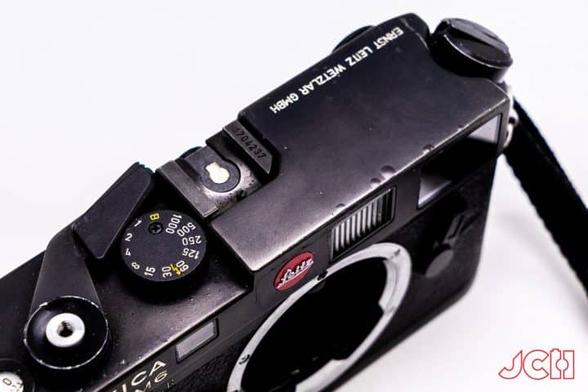
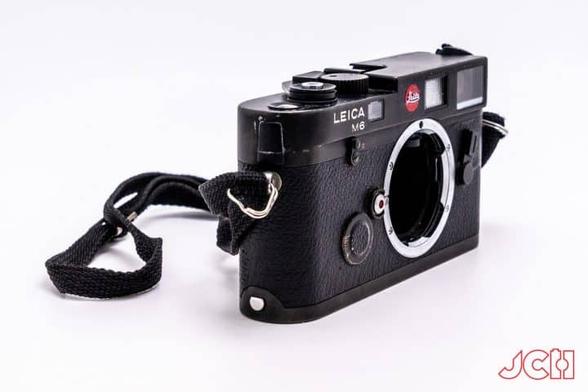
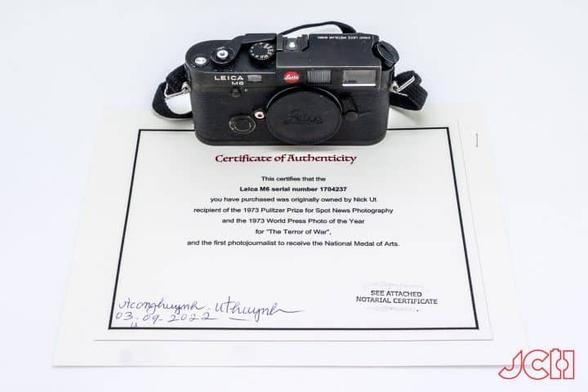
A little while ago a good friend of JCH told me that he has a very special camera that he would like me to find a new home for. Now this isn't my first rodeo with an important camera, but when I heard who the owner of the camera is my ears immediately pricked up. That's right, this is award winning photographer Nick Ut's Leica M6.

Nick Ut

In case you are not familiar with with work of Nick Ut then first of all, where have you been? Nick is probably most well known for his work during the Vietnam war, in particular the Napalm Girl image, an image that changed the world and how we viewed war, in a time when war reporting was still in its early stages. This image and others from this era changed the world and the press forever.
Nick won both the 1973 Pulitzer Prize for Spot News Photography and the 1973 World Press Photo of the Year for his image of a 9 year old Phan Thị Kim Phúc running after being burned with Napalm. In fact Nick presented a print of this image to the Pope himself just this month.

Nick Ut's has lived a fascinating life and you could fill pages telling his story. Instead you can read all about him and his contributions to photography here and here. And now Nick has retired and want's to take a bit of a step back, so it has become time for him to sell some of his cameras.

Nick Ut's Leica M6

Of course, this isn't the camera that Nick shot his most famous of images on (his famed Leica M2). That camera now resides in the London Science Museum on permanent display. As well it should, of course.

This is the camera Nick had been using up until very recently as his main shooter. Most recently in fact at the March 5th rally in support of Ukraine in Westwood, California.
What is so special about this camera? Well it is a piece of history attached to one of the worlds most well known photographers. Which he has been using up until very recently. It is well used and has definitely seen its fair share of rolls. The meter doesn't work either. But the camera does function.
But there is something very interesting and rather special inside the camera. It contains a 36 exposure unprocessed roll of Tri-X that Nick photographed the March 5 demonstration, of Ukrainians in Los Angeles protesting Russia’s invasion of Ukraine.

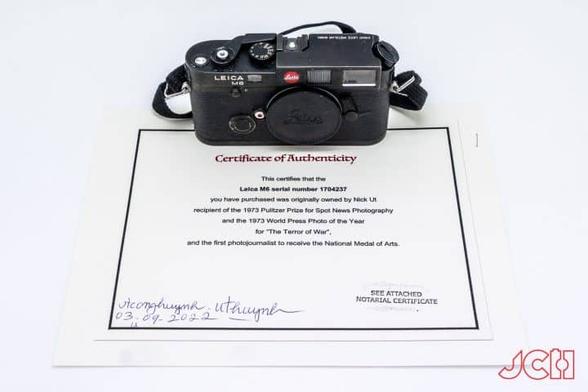
Nick decided to leave the roll in the camera for the next owner to develop (or not) at their own discretion. It also comes with a signed and notarized certificate from Nick to prove the camera is indeed genuine. The camera remains unopened and waiting for the next owner to make the important decision about developing the film inside.

You can see the camera here. It is for sale and we really hope it goes to a home that really appreciates something of this provenance.

The funny thing is, Nick also sent his Hasselblad Xpan at the same time and asked for that to be sold, but he didn't attach as much importance to that camera and didn't make a certificate for it. Though it is his camera and it is also looking for a new home.

Historic camera

Do you have a lead on an important camera? We would love to hear about it. Or do you have a camera that has a really special story? We would love to hear about that too. Hit us up through this link and share with us what you have.

JCH

The post Camera Geekery: Nick Ut's Leica M6 appeared first on Japan Camera Hunter.

#camerageekery #camerageek #classiccamera #historiccamera #historicalcamera #japancamera #japancamerahunter #nickut #nickutleica #nickutleicacamera #nickutsleicam6 #rangefinder
Camera Geekery: Nick Ut's Leica M6 - Japan Camera Hunter

That's right, this is award winning photographer Nick Ut's Leica M6.

Japan Camera Hunter

23 Years Later: Reviewing the 1998 Classic Nikon Coolpix 900

In 1998, Nikon launched the COOLPIX 900, the company’s third digital camera but arguably its first designed with photographers in mind. The previous COOLPIX 100 and 300 may have had the honor of being Nikon’s first digital cameras, but those 1997 models were firmly in the computer peripheral camp.

In contrast, the COOLPIX 900 was a camera you actually enjoyed taking photos with. For starters the split body design allowed the lens section to rotate by 270 degrees, making it comfortable to shoot at high or low angles or even face back for selfies. Cunning stuff, although something rival manufacturers were also offering including Casio, Ricoh, and Minolta. What took the COOLPIX 900 to the next level were features like adjustable metering, a variety of flash modes, and a selection of white balance options -- things that are common today but almost revolutionary back then.

The 1.3-megapixel CCD sensor captures images at 1280×960 pixels with the best quality JPEGs measuring around 500 kilobytes each. The 3x optical zoom delivers a 38-115mm equivalent range with a very respectable macro mode. Photos were stored on Compact Flash cards, while the camera was powered by four AA batteries -- both choices that make it quite accessible to collectors today, although back in 1998 it was criticized in reviews for not being supplied with rechargeables.

The COOLPIX 900 was the first in a series of split-body cameras from Nikon, later succeeded by the 950, 990, 995, 4500, S4, and S10. I took the original 900 out for a spin 23 years after launch to see if it still had the charm that made it one of my favorite cameras the first time around. Find out how I got on in the video above!

About the author: Gordon Laing is the Editor of Cameralabs where he presents gear reviews and photography tutorials. He recently launched Dino Bytes, a new channel to indulge his love of vintage tech and retro gaming, with videos about classic cameras, computers, consoles, phones, and more! He’s been a journalist for so long he actually reviewed most of this stuff the first time around. Gordon is also into food, drink, and travel, and is the author of "In Camera," a book that embraces the art of JPEG photography with no post-processing.

#equipment #technology #1998 #classiccamera #dinobytes #gordonlaing #historic #historiccamera #history #nikon #nikoncoolpix #nikoncoolpix900

23 Years Later: Reviewing the 1998 Classic Nikon Coolpix 900

It looks like a car's radio.

25 Years Later: Revisiting the DSC-F1, Sony’s First Digital Camera

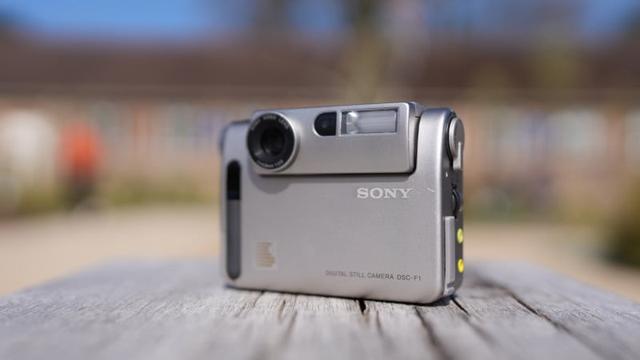
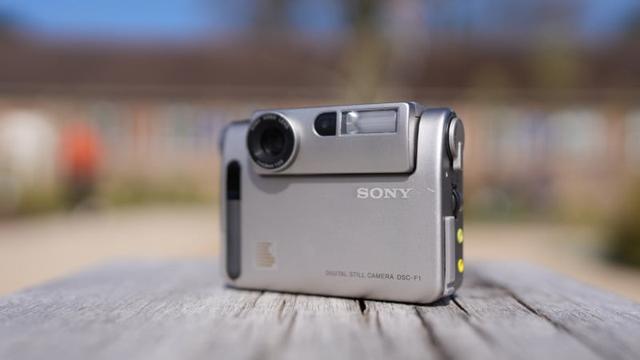
Back in 1996, Sony launched its first consumer digital camera, the DSC-F1. It had one-third of a Megapixel, four megabytes of built-in memory, a 1.8-inch screen, and a lens housing that could rotate 180 degrees for comfortable waist-level shooting or selfies.

While the screen does rotate fully around, you can't vlog though as video was a long way off yet. Many of us remember the floppy-based Digital Mavica series as being Sony’s first digital cameras, but that series didn’t actually arrive until a year later in 1997.

During the nineties, I was a staff reviewer for Personal Computer World magazine in the UK, then at the height of its sales and was able to ship well over 100,000 copies every month. As the only hobbyist photographer on the team, it fell to me to test the emerging models in the digital camera market and my review of the F1 was published in the April 1997 issue.

Sony UK had in fact sent me two new cameras to test that month, the other being the DKC-ID1, an altogether different not to mention a more expensive model with a 12x zoom, an electronic viewfinder, removable PC Card storage, and a SCSI port for those who preferred a direct connection. But the ID1 was marketed by Sony’s broadcast and pro division, leaving the F1 to kick-off the first of the consumer Digital Stills Camera or DSC series.

I still have my original DSC F1 camera so decided to take it out around my hometown of Brighton to see how it handles 25 years later. I filmed a short video all about it (above), including an image quality comparison between it and the 50 Megapixel Alpha 1 to see how far they’ve come in a quarter of a century!

Today the F1 unsurprisingly shows its age. The 0.3 Megapixel resolution was already on the low side when it came out and was soundly beaten by the next generations. The decision to use built-in memory was driven by the absence of affordable compact card formats but now makes it difficult to extract images unless you have an old PC with a 9-pin serial port or an IrDA infrared receiver. Meanwhile, the screen looks coarse and dim, although at the time it was a key selling point when many other cameras only had optical viewfinders and wouldn’t let you see your images until connected to a computer.

But the industrial design remains triumphant with the rotating lens housing still looking and feeling remarkably modern. The F1 was not only Sony’s first consumer digital camera but the first of its flagship F-series which all featured innovative designs, frequently with some aspect that rotated.

The camera market in the mid to late nineties often felt like the Wild West with hugely varying concepts often from companies that later pulled out of the market entirely, but I miss their pioneering spirit and the innovation that ensued. Sony of course is one of the few original pioneers in this market who are still thriving today. I hope you enjoy my video all about their first steps - plus you get a free tour around Brighton which is a bonus in these travel-restricted times!

About the author: Gordon Laing is the Editor of Cameralabs where he presents gear reviews and photography tutorials. He recently launched Dino Bytes, a new channel to indulge his love of vintage tech and retro gaming, with videos about classic cameras, computers, consoles, phones, and more! He’s been a journalist for so long he actually reviewed most of this stuff the first time around. Gordon is also into food, drink, and travel, and is the author of "In Camera," a book that embraces the art of JPEG photography with no post-processing.

#educational #equipment #travel #03megapixel #classiccamera #firstdigitalcamera #gordonlaing #historic #historiccamera #history #sonydigitalcamera #sonyf1

25 Years Later: Revisiting the DSC-F1, Sony's First Digital Camera

0.3 megapixel photos!