Anyone that loves solving problems using graph theory? I am working on a domain specific programming language that works within a graph/network and would love some feedback from diverse fields.

#graphtheory #graphThinking #networkanalysis #programming #programminglanguages

#GraphRAG is all the rage right now in the #AI world. @pacoid leads a #knowledgeGraph practice and is uniquely positioned to help you understand this new tech. His #graphThinking approach gives a clear view of terrain that is often obfuscated by less experienced and knowledgeable advisors.

https://knowledgegraphinsights.com/paco-nathan/

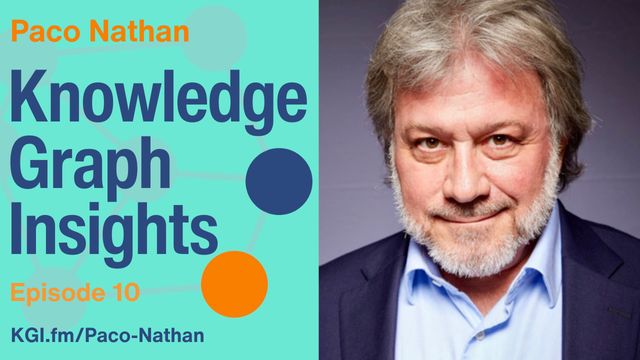
Paco Nathan: graph thinking to better understand graph RAG

Paco Nathan is uniquely positioned to help the industry understand and contextualize technology like graph RAG by applying "graph thinking."

Knowledge Graph Insights

"Universality of Neural Networks on Graphs vs. Sets"
Petar Veličković, Fabian Fuchs
2022-11
https://fabianfuchsml.github.io/universalgraphs/

Looking at universal function approximation (in deep learning) applied to graphs.

More so about universal function *representation* than *approximation*

Also, what is provably non-universal? For example, GCNs.

#graphthinking #graphdatascience

Fabian Fuchs

# Universality of Neural Networks on Graphs vs. Sets November 2022 [Petar Veličković](https://twitter.com/PetarV_93), [Fabian Fuchs](https://twitter.com/fabianfuchsml) ___ _This blog post is a collaboration with Petar Veličković, a colleague at DeepMind, a renowned expert on graph neural networks, and co-author of the [Geometric Deep Learning](https://arxiv.org/abs/2104.13478) book. This post is a stand-alone article,...

"From Knowledge Graphs to Knowledge Categories"
Josh Shinavier interviews Ryan Wisnesky
https://www.youtube.com/watch?v=-N33MZa3B9o

Applications of category theory with graphs. For example, how to align schema, make guarantees about data migration from relational databases into graphs, data quality checks, etc. If you've ever worked in some of these areas of advanced math, Ryan shows excellent applications – including some of the data management practices at Uber.

#graphthinking #graphdatascience

From Knowledge Graphs to Knowledge Categories - with Ryan Wisneskey - The Graph Show - episode #3

YouTube

I'll present at PyData Global, Thu Dec 01 13:30 US Pacific:
"Data Prep for Graphs"
https://global2022.pydata.org/cfp/talk/AH9DJD/

TL;DR: data prep phase in #graphdatascience work involves tools/techniques vastly different than data science in general. This stage of work is computationally expensive, and ironically much must be performed *prior* to loading into a graph DB.

Here's a sampler.

Also, we'll cover the https://github.com/DerwenAI/pynock proposal for Parquet serialization of graph data.

#graphthinking

Data Prep for Graphs PyData Global 2022

Graph technologies and use cases are growing in popularity in industry. Open source libraries are available for graph data science, which integration with the PyData stack and related practices. Tools such as graph databases, visualization, etc., tend to take center stage in discussions about graph technologies. However – and this is a relatively BIG "however" – similar to what was recognized a decade ago when data science become mainstream practice, so much time and effort and cost must go into _data preparation_ long before these other tools downstream can be used effectively. In the early-ish days of Big Data, many commercial database vendors claimed to provide full suites for data science work. Practitioners found that, in contrast, they spent more of their time working in data wrangling, often using tools such as Pandas. This has become the proverbial 80% of data science. Graph data science is no exception to this rule. Case in point, data visualization tools can render beautiful representations from nearly raw data. Unfortunately, without careful preparation, the beautiful renderings become expensive wallpaper since they don't lead to meaningful outcomes. For example, if a large dataset contains many _cycles_ for a business process where these are undefined (e.g., supply networks) or it contains many duplicates (e.g., slight variations of vendor or author names) then we can get pretty pictures, but not meaningful analysis. Unfortunately, data preparation techniques for graphs such _cycle detection_, _similarity analysis_, _transitive closure_, and _unique identifier assignment_ often involve graph algorithms or distributed data structures which are computationally hard problems, expensive to perform, and not supported well at scale by the commercial graph databases. This talk shows examples of data preparation for graphs, along with an overview of typical graph use cases in industry in which these need to be used. We'll show a progressive example based on recipe data (analogous to customer data in manufacturing) along with use of the PyData stack and other open source integrations such as Ray, Keyvi, Datasketch, Arrow/Parquet, PSL, etc., which help alleviate bottlenecks at scale when working with large graphs.

Denise Gosnell, Ph.D. on LinkedIn: Amazon Neptune Engine Version 1.2.0.2 (2022-11-20)

To use this feature, you just need to add 'with("Neptune#ml.inductiveInference")' to your Gremlin query with Amazon Neptune. Happy graphing, folks!...

KGC 2023 was recently announced.
This conference will be held May 8-12 in NYC
https://derwen.ai/s/7cypd7vy96hk

The CFP is open at:
https://docs.google.com/forms/d/1Qd3bUHAGI9JFcsuxLvIpsWYQjr5XPm_I15Y1xzneaJ4/viewform?edit_requested=true

Highly recommended.

#graphthinking #graphdatascience

A synthetic taxonomy for classifying the plastic tags from bread and other plastic-bagged pastries.

https://www.inverse.com/input/culture/horg-plastic-bread-tags-occlupanids-classification-site

> “It really STRUCK me how weirdly biomorphic it looks, like a larval PARASITE with claws. Why does no one NOTICE these things?”

#graphthinking #graphdatascience

The utterly delightful site dedicated to classifying plastic bread tags

The Holotypic Occlupanid Research Group sounds super-official, but it's just one very obsessed guy.

Input

Definitely, check out the amazing work by Yalda Shankar at the nexus of AI and Design:
https://yaldashankar.org/
https://www.linkedin.com/feed/update/urn:li:activity:7001187370481893376/

In particular, see "The GNN Booklet" (part 1, WIP) for an outstanding illustrated review of graph-related concepts and the associated math:
https://yaldashankar.org/index.html#Writings

#graphthinking #graphdatascience

Yalda Shankar

Personal Portfolio HTML Template based on Bootstrap by Erilisdesign

@alesegura @mdwaldman22

There are ~50 vendors now for "graph databases" and I'm certain their respective sales people will try to refute most of what I've said above. However, if you talk privately with their large customers, you'll hear back most of what I've said above :) Caveat emptor.

Here's a public spreadsheet where we curate the graph database vendors, related open source projects, and also the smaller consultancies with graph experts

https://derwen.ai/s/52hztjkknx6n

#graphthinking

Graph Technologies

vendors company,url,SPARQL,RDF-Star,Gremlin,Cypher,misc query,distrib,open source,parent,speaker,notes AgensGraph,<a href="https://bitnine.net/agensgraph/">https://bitnine.net/agensgraph/</a>,Y,SQL,Bitnine AllegroGraph,<a href="https://allegrograph.com/products/allegrograph/">https://allegrograp...

Google Docs