#retrocomputing #vintagecomputing #search #searchengine #frogfind #omniweb #nextstep #next #nextcube


Catch of the Day: Greetings from the Forefather of the Web! 🧊

Hey Retro Fans!
Hold on to your hats because last night we had a visit from absolute IT royalty on our server. Our bouncer logged this magical combination:

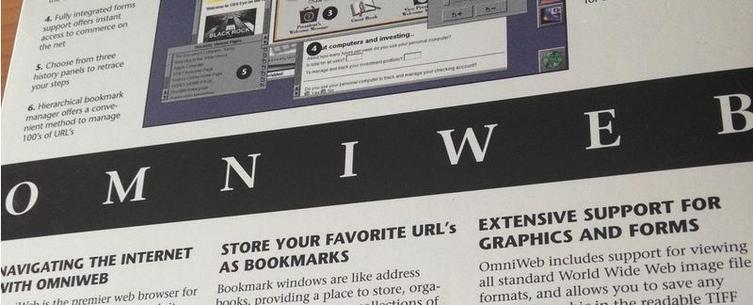
OmniWeb 3.1rc1 on a NeXTSTEP system!

Let that sink in for a moment. NeXTSTEP is the operating system Steve Jobs developed after he (temporarily) left Apple. And even more importantly: It was exactly such a NeXT system (the famous NeXTcube) on which Tim Berners-Lee programmed the very first web server and the first web browser in the world at CERN in 1990!

The fact that someone today is using NeXTSTEP and the legendary OmniWeb browser (which was developed exclusively for this platform in 1995) to find their way onto the modern internet via FrogFind is a goosebump moment for any tech historian. This isn't just retro—this is time travel to the architectural roots of Mac OS X and the World Wide Web itself.

A reverent toast to that magnificent black box cube!
Your FrogFind Team 🐸

#retrocomputing #vintagecomputing #search #searchengine #frogfind #netscape #gold #apple #macintosh #mac #navigator

Catch of the Day: All that glitters is Netscape Gold! ✨

Hey Retro Fans!
While many of us struggle with gigabyte-heavy browsers today, our bouncer welcomed true web royalty last night at 2:30 AM:

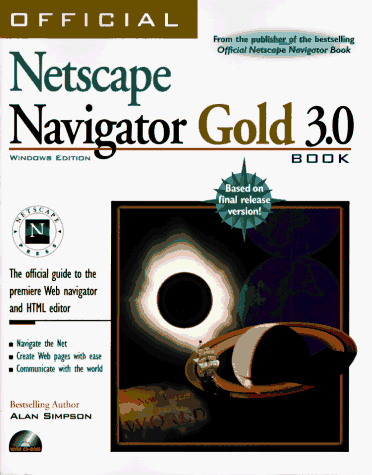
Netscape Navigator 3.01Gold on a Mac!

Who remembers the "Gold" edition? Back in 1996, this was the absolute premium standard. Netscape 3.0 Gold didn't just bring improved JavaScript support and LiveAudio; it was the first to feature an integrated WYSIWYG HTML editor ("Netscape Composer"). You could view websites and build them in basically the same window—a dream come true for 90s webmasters!

The fact that this roughly 30-year-old browser is still exploring the web from a classic Mac today and using our search engine is simply wonderful, and exactly the reason FrogFind exists.

Stay retro and surf in gold!
Your FrogFind Team 🐸

#retrocomputing #vintagecomputing #search #searchengine #frogfind #atari #highwire #toss

Catch of the Day: Greetings from the TOS Universe! 🕹️

Hey Retro Fans!

The eternal system wars of the 80s and 90s are long gone. Today, we are united by our love for vintage hardware. And even if some of us spend our weekends cleaning the motherboards of an Amiga 2000 and recapping its power supply, you simply have to tip your hat to today's incredible catch:

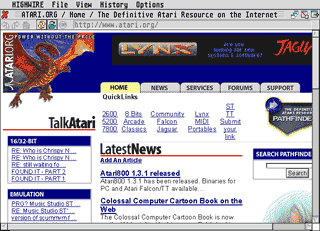
HighWire 0.3.3 on an Atari ST / TOS!

A genuine Atari ST (or perhaps a TT/Falcon) was browsing FrogFind today! For those who might not know: HighWire is an absolutely fantastic open-source web browser, written in pure C, specifically designed for the GEM graphical environment of Atari computers. It even supports basic CSS and images—a true masterpiece of programming for this hardware architecture.

The fact that in 2026 someone is connecting their Atari to the modern web using a network cartridge (or via serial SLIP/PPP) to use our little search engine is simply brilliant. A wonderful piece of tech history lives on.

Cheers to the 16-bit era!
Your FrogFind Team 🐸

#retrocomputing #vintagecomputing #search #searchengine #frogfind #bang #update

🐸 FrogFind Update: Save Quota, Surf Faster – Introducing "Bang" Commands! ⚡
Hello Retro Fans!

If you’ve ever tried typing a long search query on a clunky 30-year-old mechanical keyboard, you know it can be a bit of a workout. But typing isn't the only thing we want to optimize. Behind the scenes, FrogFind relies on modern search APIs (like Google and Brave) to fetch your results before stripping them down for your vintage browsers. These APIs come with strict daily limits (quotas).

Every time someone searches for "Macintosh Garden Classilla" or "Aminet Directory Opus", it eats into our daily search quota. But what if there was a way to skip the middleman, save our precious API calls, and get you to your favorite retro sites even faster?

Enter Bang Commands (inspired by DuckDuckGo)!

How it works & The "Why"
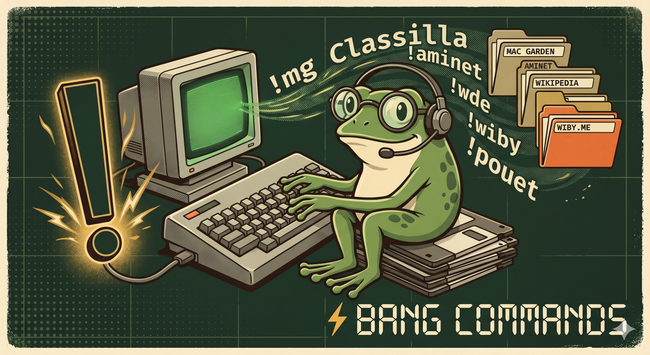
Starting today, you can use shortcuts directly in the FrogFind search bar. If you type a bang (like !mg) followed by your search term, FrogFind completely bypasses the Google/Brave search engines. Zero API quota is used!

Instead, FrogFind takes your query, securely contacts the target archive directly, and feeds the results straight into our read.php text-parser. You get the exact same lightweight, retro-friendly HTML output, but much faster and without draining the daily search limits.

We tested dozens of sites, but the modern web is heavily guarded by Cloudflare and JavaScript walls. We aggressively removed any site that threw a 404 error or a captcha to keep your experience 100% frustration-free.

Here are the "Glorious Five" fully supported Bang Commands that survived the gauntlet:

💾 Software & System Archives

!mg (Macintosh Garden)
Example: !mg Classilla
Searches the ultimate library for classic Mac OS software and routes the results through our text filter.

!am (Aminet)
Example: !am Protracker
Direct access to the world's largest Amiga software archive.

📚 Retro Knowledge & Wikis

!w (Wikipedia English) / !wde (Wikipedia German)
Example: !w Commodore 64
Bypasses search engines and pulls the Wikipedia article straight into FrogFind’s highly compatible reader.

🌐 Native Retro Search Engines

!wiby (Wiby.me)
Example: !wiby Web Design
Searches Wiby, a search engine specifically dedicated to the classic, CSS-free Web 1.0. A match made in heaven!

🕹️ Demoscene

!pouet (Pouët)
Example: !pouet Second Reality
Search the central hub of the demoscene directly from your vintage rig.

Give it a try!
Just type your bang command directly into the FrogFind search bar on your old machine. It’s a massive time-saver and helps keep the FrogFind servers running smoothly for everyone. We will add a small "Cheat Sheet" link to the homepage soon so you won't have to memorize them all.

Happy surfing!
Your FrogFind Team 🐸
#retrocomputing #vintagecomputing #search #searchengine #frogfind #planetweb #sega #dreamcast

Catch of the Day: The "Planetweb" of Early Consoles! 🪐🎮

Hey Retro Fans!
Hold onto your controllers, because our FrogFind radar has caught an absolute exotic gem from the golden era of video game consoles today:

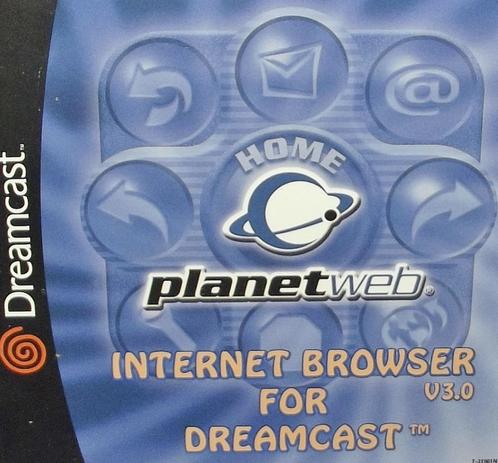
Planetweb 2.613 on the Sega Dreamcast!

For those who didn't sit in front of their TV with a dial-up modem in the late 90s: Long before the PlayStation 4 or Xbox One had their own complex web browsers, Sega revolutionized couch surfing with the Dreamcast. In the US (and parts of Europe), the console often came bundled with a disc containing the Planetweb Browser.

This software was a minor miracle: It fit into the console's tiny RAM, managed the clunky 33.6k (or 56k) modem, and allowed players to read emails, search for cheat codes, or chat on SegaNet—all comfortably from the couch using a controller on a CRT television.

The fact that today, in 2026, someone gets a working Dreamcast online (likely using a Raspberry Pi as a modem emulator, affectionately known as a "Dreampi") and surfs FrogFind with the American Planetweb version is just magnificent. Sega does what Nintendon't!

Cheers to surfing with a controller!

Your FrogFind Team 🐸

#retrocomputing #vintagecomputing #search #searchengine #frogfind #NetBSD #arcticfox #unix

Catch of the Day: "Of course it runs NetBSD!" 🐡🦊

Hey Retro Fans!

Did you have a good weekend? Our bouncer at the FrogFind pond was certainly busy and waved a guest through yesterday that put a massive smile on our faces:

ArcticFox 52.9 on NetBSD!

Among hardcore Unix nerds, there is a famous catchphrase: "Of course it runs NetBSD!" This open-source operating system is legendary for its portability. It has been ported to run on almost anything with a processor—from old toasters and Sega Dreamcasts to massive server racks.

The fact that someone navigated to our pond using NetBSD is already awesome. But the combination with the ArcticFox browser makes it a masterpiece. ArcticFox is a lovingly maintained community fork (based on Pale Moon) specifically kept alive to enable modern browsing on exotic architectures, PowerPC Macs, and old UNIX derivatives.

Cheers to the tinkerers keeping exotic systems online!

Your FrogFind Team 🐸

#retrocomputing #vintagecomputing #search #searchengine #frogFind #apple #mac #powerpc #internetExplorer #tasman

Catch of the Day: The Forbidden Apple! 🍏🪟

Hey Retro Fans!
Hold on to your CRT monitors, because our FrogFind radar has caught something today that feels like a relic from a parallel universe. Among all the Nintendos and Linux machines, this legendary identifier appeared:

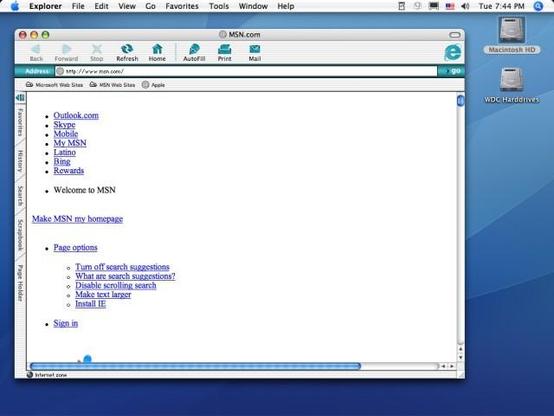
Internet Explorer 5.17 on Mac (PowerPC)!

For everyone rubbing their eyes right now: Yes, Internet Explorer existed for the Mac, and it was a big deal! Following the historic "peace treaty" between Steve Jobs and Bill Gates in 1997, Internet Explorer became the official default browser on all Apple computers for five years.

The craziest part? Mac IE was technically vastly superior to its Windows counterpart at the time! Microsoft built a completely bespoke rendering engine for Apple called Tasman, which was one of the very first to properly support CSS. Version 5.1.7 (released in the summer of 2003) was the absolute final update ever pushed for classic Mac OS 8 and 9 before Apple entirely shifted focus to their own browser, Safari.

The fact that today, over 20 years later, someone boots up an old PowerPC Mac (perhaps a colorful iMac G3?) and browses FrogFind with the Mac-exclusive Internet Explorer is a glorious time machine to an era when Microsoft and Apple surfed hand in hand.

Cheers to the Tasman engine!

Your FrogFind Team 🐸

#retrocomputing #vintagecomputing #search #searchengine #frogfind #ncsa #mosaic #ncsamosaic #sun #sparcstation #sgi #unix

Catch of the Day: The Forefather of the World Wide Web! 🏛️🕸️

Hey Retro Fans!

Hold your breath and bow in reverence. Today, our FrogFind radar didn't just catch an old browser; it caught the absolute foundation of the modern internet. Between all the Nintendos and dusty Windows PCs, this gigantic milestone appeared:

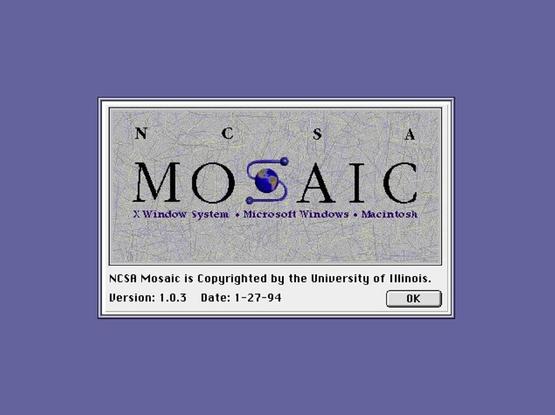
NCSA Mosaic 2.7b5 on UNIX (X11)!

For those who weren't online in the early 90s: Mosaic, developed at the National Center for Supercomputing Applications (NCSA), was the first web browser that could display images inline next to text (rather than in a separate window). Starting in 1993, it was the spark that made the World Wide Web appealing to the masses! The Mosaic team later went on to found Netscape, and even Microsoft's first Internet Explorer was based on licensed Mosaic code.

The fact that today, in 2026, someone boots up a UNIX machine (perhaps an old Sun SPARCstation or an SGI) and navigates our frog pond using the final beta version of NCSA Mosaic (from around 1996) is like operating a working time machine. It proves one thing: True HTML survives decades.

A reverent cheer to the pioneers of the internet!

Your FrogFind Team 🐸

#retrocomputing #vintagecomputing #search #searchengine #frogFind #sgi #unix #netscape #navigator #irix

Catch of the Day: The Jurassic Park Workstation! 🦖🖥️

Hey Retro Fans!

Hold on to your UNIX manuals, because today our FrogFind radar detected an absolute Hollywood star in the frog pond. Between the usual handhelds and Windows PCs, this breathtaking identifier suddenly appeared:

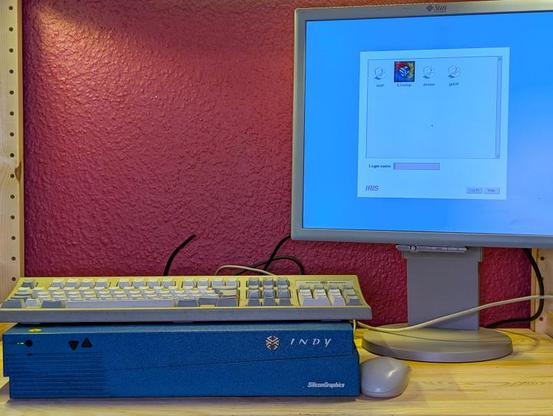
Netscape Navigator 4.75C-SGI on SGI IRIX!

For those who weren't in IT in the 90s: SGI stands for Silicon Graphics Inc. and IRIX was their proprietary UNIX operating system. SGI workstations (like the legendary Indigo2 or O2) were incredibly expensive, highly specialized graphics monsters. It was on exactly these machines that the dinosaurs for Jurassic Park, the liquid Terminator in T2, and even the hardware architecture for the Nintendo 64 were developed!

The fact that these Hollywood heavyweights came with their own specially customized version of the Netscape Navigator (the "C-SGI" at the end) straight from the manufacturer was standard back then. The fact that today, over 25 years later, a retro enthusiast boots up one of these UNIX legends, loads the IRIX OS, and surfs through our frog pond using the original SGI Netscape is retro computing at the absolute highest level.

Cheers to the Silicon Graphics workstations—may your MIPS processors calculate forever!

Your FrogFind Team 🐸

#retrocomputing #vintagecomputing #search #searchengine #frogFind #ibm #os2 #firefox #mozilla

Catch of the Day: The OS that tried to beat Windows! 🏢🔵

Hey Retro Fans!
Hold on to your floppy disks, because the FrogFind radar has caught a true piece of computing history today. Among all the Nintendos and old Macs, an operating system appeared that will make IT veterans immediately nod in respect: OS/2!

Our bouncer logged this fabulous guest:
Mozilla Firefox 48.0 running on OS/2

For the younger frogs in the pond: OS/2 was developed jointly by IBM and Microsoft in the late 80s and was intended to be the successor to DOS. It was technically superior, and its stable multitasking was a dream! But then Microsoft released Windows 3.1 and later Windows 95, the partnership shattered, and IBM's "better Windows" lost the great war for home computers.

The fact that today, in 2026, someone is browsing the web with OS/2 (probably via a modern continuation like ArcaOS or eComStation) and a specifically ported Firefox 48 is pure, unbridled love for the platform. OS/2 lives, and it uses FrogFind!

Cheers to the OS/2 Warp veterans!

Your FrogFind Team 🐸