@barfuessler
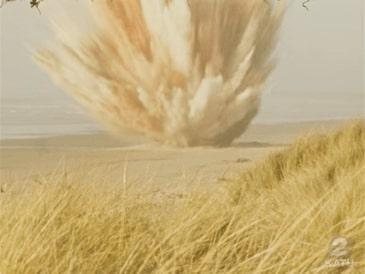
Vielleicht könnte man den Vorgang beschleunigen, wie bei dem berühmten Oregon-Ereignis vor 56 Jahren …

https://m.youtube.com/watch?v=V6CLumsir34

#timmy #kaboum #explodingwhale

The Exploding Whale: An infamous moment in Oregon history creates a strangely beloved icon

Enjoy the videos and music you love, upload original content, and share it all with friends, family, and the world on YouTube.

YouTube

The 1970 Florence, Oregon Exploding Whale Disposal Attempt Using Dynamite

📰 Original title: The Infamous Exploding Whale Incident in Florence, Oregon in November 1970

🤖 IA: It's not clickbait ✅
👥 Users: It's not clickbait ✅

View full AI summary: https://en.killbait.com/the-1970-florence-oregon-exploding-whale-disposal-attempt-using-dynamite.html?utm_source=mastodon_world&utm_medium=social&utm_campaign=killbait.mastodon_world

#history #explodingwhale #oregonhistory #dynamiteincident

The 1970 Florence, Oregon Exploding Whale Disposal Attempt Using Dynamite

In November 1970, a large sperm whale measuring about 45 feet long and weighing approximately eight tons washed up dead on a beach near Florence, Oregon. At the time, Oregon’s beaches were considered public highways, which placed responsibility for the carcass on the Oregon State Highway Division rather than wildlife authorities. As the whale decomposed, it produced a strong odor and became a public nuisance, prompting officials to act quickly to remove it. After considering several disposal methods, including burial, engineers consulted with the U.S. Navy and decided to use explosives. The plan, led by engineer George Thornton, was to treat the whale like a massive object that could be broken apart using a large quantity of dynamite. Officials believed that detonating about 20 cases of dynamite—roughly half a ton—would disintegrate the carcass into small pieces that scavengers such as seagulls and crabs would consume. However, not everyone agreed with the plan. A military veteran reportedly warned that such a large explosive charge was excessive and dangerous, suggesting that a much smaller amount would have been more appropriate. His warning was not heeded. On November 12, 1970, the explosives were detonated at 3:45 p.m. The explosion, captured by local news cameras, produced a massive blast that sent a column of sand, blubber, and whale tissue high into the air. Rather than being pulverized, the whale was broken into large fragments that were thrown over a wide area. Spectators, who had gathered at what was thought to be a safe distance, were forced to flee as heavy debris fell around them. A nearby parked car was crushed by a large piece of whale remains. The expected cleanup by scavenging birds also failed, as the explosion scared them away. Although officials eventually considered the operation a removal success because the whale was no longer intact, the method was not repeated. When a similar whale stranding occurred in 1979, Oregon authorities opted for burial instead. The incident has since become a well-known and often humorous example of unconventional and unsuccessful wildlife disposal methods.

KillBait

The 1970 Florence, Oregon Exploding Whale Disposal Attempt Using Dynamite

📰 Original title: The Infamous Exploding Whale Incident in Florence, Oregon in November 1970

🤖 IA: It's not clickbait ✅
👥 Users: It's not clickbait ✅

View full AI summary: https://en.killbait.com/the-1970-florence-oregon-exploding-whale-disposal-attempt-using-dynamite.html?utm_source=mastodon_social&utm_medium=social&utm_campaign=killbait.mastodon_social

#history #explodingwhale #oregonhistory #dynamiteincident

The 1970 Florence, Oregon Exploding Whale Disposal Attempt Using Dynamite

In November 1970, a large sperm whale measuring about 45 feet long and weighing approximately eight tons washed up dead on a beach near Florence, Oregon. At the time, Oregon’s beaches were considered public highways, which placed responsibility for the carcass on the Oregon State Highway Division rather than wildlife authorities. As the whale decomposed, it produced a strong odor and became a public nuisance, prompting officials to act quickly to remove it. After considering several disposal methods, including burial, engineers consulted with the U.S. Navy and decided to use explosives. The plan, led by engineer George Thornton, was to treat the whale like a massive object that could be broken apart using a large quantity of dynamite. Officials believed that detonating about 20 cases of dynamite—roughly half a ton—would disintegrate the carcass into small pieces that scavengers such as seagulls and crabs would consume. However, not everyone agreed with the plan. A military veteran reportedly warned that such a large explosive charge was excessive and dangerous, suggesting that a much smaller amount would have been more appropriate. His warning was not heeded. On November 12, 1970, the explosives were detonated at 3:45 p.m. The explosion, captured by local news cameras, produced a massive blast that sent a column of sand, blubber, and whale tissue high into the air. Rather than being pulverized, the whale was broken into large fragments that were thrown over a wide area. Spectators, who had gathered at what was thought to be a safe distance, were forced to flee as heavy debris fell around them. A nearby parked car was crushed by a large piece of whale remains. The expected cleanup by scavenging birds also failed, as the explosion scared them away. Although officials eventually considered the operation a removal success because the whale was no longer intact, the method was not repeated. When a similar whale stranding occurred in 1979, Oregon authorities opted for burial instead. The incident has since become a well-known and often humorous example of unconventional and unsuccessful wildlife disposal methods.

KillBait
I'd heard of this before, but had never seen the actual news segment, which is now officially one of my favorite things ever. Happy anniversary to the #ExplodingWhale. https://youtu.be/V6CLumsir34?si=xmiUkO0PBhyM7q3f
The Exploding Whale: An infamous moment in Oregon history creates a strangely beloved icon

YouTube
The Exploding Whale: An infamous moment in Oregon history creates a strangely beloved icon

YouTube

Happy Exploding Whale Day for those that celebrate!🎉

Today is the 55th anniversary of the blowing up of a giant whale carcass on the beach in the town of Florence, Oregon.

See a recording of the original 1970 #KATU news broadcast:
https://www.youtube.com/watch?v=79tl2H3QzT0

#pnw #ExplodingWhale #Oregon

Oregon's Exploding Whale - 2002 KATU (abridged update)

YouTube
In 1970 on #ThisDayInHistory, the #Oregon Dept. of Transportation did an incredibly stupid thing. A #SpermWhale had beached in Florence, and they blew up the carcass with dynamite. The #ExplodingWhale hurled massive hunks of whale ~240 metres, damaging cars and leaving a stench.

“An imbalance between rich and poor is the oldest and most fatal ailment of all republics”*…

The rich in the U.S. just keep getting richer. Over the five decades, incomes have risen materially faster at the very top than anywhere below, and similarly, wealth has accumulated much more quickly at the top than anywhere below. A report from the Stone Center On Socio-Economic Inequality (at CUNY) looks at the mutually-reinforcing relationship between these two dynamics…

Homoploutia describes the situation in which the same people (homo) are wealthy (ploutia) in the space of capital and labor income in some countries. It can be quantified by the share of capital income rich who are also labor income rich. In this paper, we combine several datasets covering different time periods to document the evolution of homoploutia in the United States from 1950 to 2020. We find that homoploutia was low after World War II, has increased by the early 1960s, and then decreased until the mid-1980s. Since 1985 it has been sharply increasing: In 1985, about 17% of adults in the top decile of capital income earners were also in the top decile of labor-income earners. In 2018 this indicator was about 30%. This makes the traditional division between capitalists and laborers less relevant today. It makes periods characterized by high interpersonal inequality, high capital-income ratio, and high capital share of income in the past fundamentally different from the current situation. High homoploutia has far-reaching implications for social mobility and equality of opportunity. We also study how homoploutia is related to total income inequality. We find that rising homoploutia accounts for about 20% of the increase in total income inequality in the United States since 1986…

Note that the report was written in the 2020 (and published in The Review of Income and Wealth in 2023). The dynamic has continued since; the polarizing impact has grown.

Homoploutia: Top Labor and Capital Incomes in the United States, 1950–2020,” from @stone-lis.bsky.social. (Read the full report here.)

[image above: source]

* Plutarch

###

As we evaluate equity, we might recall that it was on this date in 1970 that The Oregon Highway Division attempted to destroy a rotting beached Sperm whale with explosives, leading to the now infamous “exploding whale” incident.

https://youtu.be/V6CLumsir34?si=Ihp8F2jmvV4E0OjV

#culture #economics #explodingWhale #history #homoploutia #income #incomeInequality #inequality #society #wealth #wealthInequality #whale

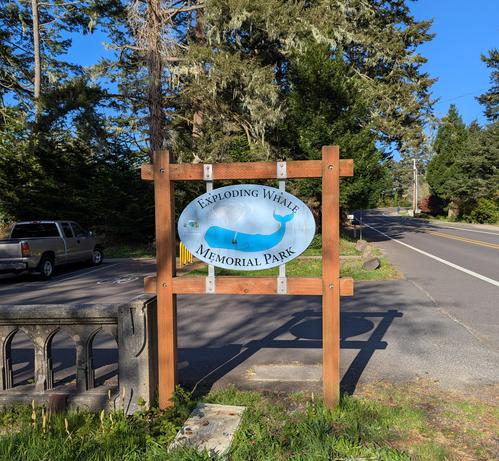
This weekend I discovered that #FlorenceOregon has a park dedicated to the exploding whale of 1970.

https://www.oregonencyclopedia.org/articles/florence_whale_explosion/

#parks #whales #Oregon #OregonCoast #ExplodingWhale

Florence Whale Explosion

On November 9, 1970, a forty-five-foot, eight-ton sperm whale washed ashore near Florence on Oregon's south coast. In addition to the stench and the possibilit…

I have just been introduced to the #Weihnactsbaumkanone, and I'm laughing nearly as hard as the day 30 years ago, when I was introduced to the #ExplodingWhale.

"Und der Sinn dahinter?"
"Frag ich mich auch." 😂 🌲