 Xris
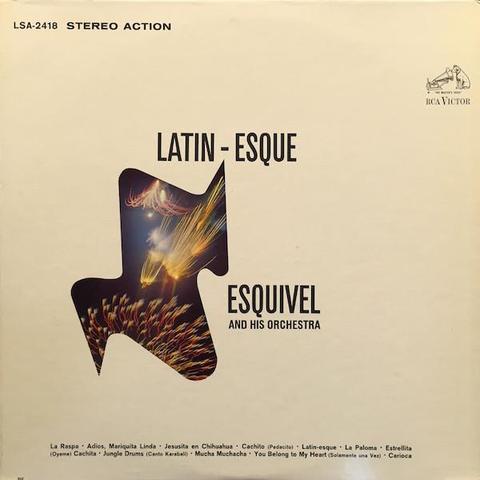
XrisEsquivel and His Orchestra - "Latin-Esque" (1962)
https://youtube.com/playlist?list=PLuhAEE12s8eM9ViZ3Ui_HWVcHlI-PzkX8

Esquivel and His Orchestra - "Latin-Esque" (1962)
https://youtube.com/playlist?list=PLuhAEE12s8eM9ViZ3Ui_HWVcHlI-PzkX8
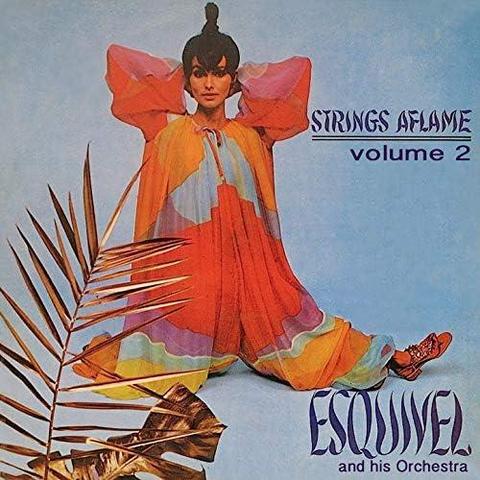
Ended Thursday and welcomed Friday after walking in the rain with Strings Aflame Volume 2 by Esquivel.
A bit of a chequered release history:
Originally scheduled to be released as Esquivel & His Orchestra “You And The Night And The Music”, RCA Victor LPM/LSP-2085 (K2PB-3994). Recorded with 2 additional tracks, “You And The Night And The Music” (currently unreleased) and “I Only Have Eyes For You” (found on reissues of “Other Worlds Other Sounds” BMG 74321 35747 2 and Wax Time 772229
RCA canceled the original 1959 release in the US, but not in Japan and put it out on its budget Camden label in 1962.
Lovely space-age pop from one of the masters anyway.
https://www.youtube.com/watch?v=-eya83jGJkU&list=RD-eya83jGJkU&start_radio=1
Latin-esque is a studio album from the Mexican bandleader, pianist, and composer Juan García Esquivel and his orchestra. The album, released in 1962 on the RCA Victor label..
In his book Exotica: Fabricated Soundscapes in a Real World, David Toop wrote: "Unlike most recordings, there is no attempt to cement the right and left loudspeaker channels into a cohesive (if virtual) whole; for Esquivel, the space between loudspeakers was an empty vessel through which normally immovable instruments roamed, sometimes hovering in the air or darting back and forth like hummingbirds. Crude as the sound magic is, the illusionism has parallels both with the Kinetic painting and sculpture of Bridget Riley and Pol Bury or with the surreal imagistic dislocations of Salvador Dali and Rene Magritte." - Wikipedia
https://www.youtube.com/watch?v=dFZLgZr-9lo&list=PLdJMb0jVSvc82smFLOioKlE5qzp_OawPZ&index=1
#Esquivel #SpaceAgePop #Exotica #DavidToop #LatinMusic #Music
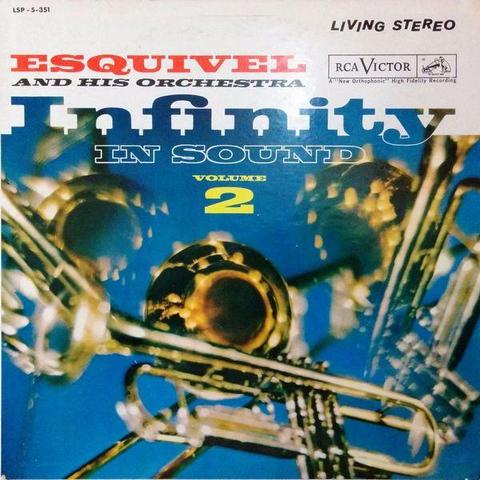
Ended Tuesday and welcomed Wednesday after a swim with Infinity In Sound Volume 2 by Esquivel And His Orchestra , released on RCa Victor in 1961
Review by Tony Wilds
All but two tracks here (and possibly those by now) have been plundered for CD compilations. Infinity in Sound Vol. 2 builds on the strength of the first volume and earier successes. Two tracks feature whistling, one of which is the beautiful, exotic Latin tune "Baia." Other standouts include "Anna (El Negro Zumbon)," "Who's Sorry Now," and "Limehouse Blues." This may be the Esquivel album that has it all: his signature style and sound, some experimentation (whistling), and an even mix of Latin and non-Latin standard
https://www.youtube.com/watch?v=5I62iJKk14U&list=RD5I62iJKk14U&start_radio=1
#Esquivel #SpaceAgePop #Lounge #Exotica #LivingStereo #Music
Have you ever smelled a cadaver?’
Family recounts horror after Costa Rican man deported in vegetative state
Much of what happened to #Randall #Gamboa #Esquivel, 52, over his last weeks in federal custody in Texas remains a mystery to his family
In December of 2024, Gamboa crossed the US-Mexico border
but was swiftly detained by US immigration authorities for re-entering American soil unlawfully,
which is considered a felony.
Gamboa was held at two different detention facilities in south Texas.
Nearly 10 months later, in September 2025,
the US government flew the 52-year-old back to Costa Rica on an air ambulance in a vegetative state
and a few weeks later he died.
Much of what happened to Gamboa over his last weeks in federal custody in Texas remains a mystery to his family, Mata said.
When the US government flew him back to Costa Rica, he was non-responsive,
as detailed in US medical records shared with the Guardian.
“When I saw my brother at the airport,
I thought he had been tortured in some type of way
because he was
ill-nourished,
had skin ulcers and dried blood on his body
and had a strong odor,”
Mata said in Spanish, pausing to take deep breaths.
“Have you ever smelled a cadaver?
That’s how my brother smelled when he was deported,” she said.
The Guardian approached the Department of Homeland Security about Mata’s comment about torture but did not receive a response.
Mata said that Gamboa at first spoke frequently with various family members while in ICE custody.
-- But communication stopped abruptly on 12 June.
That would be the last conversation between Gamboa and his family,
although they didn’t know it at the time.
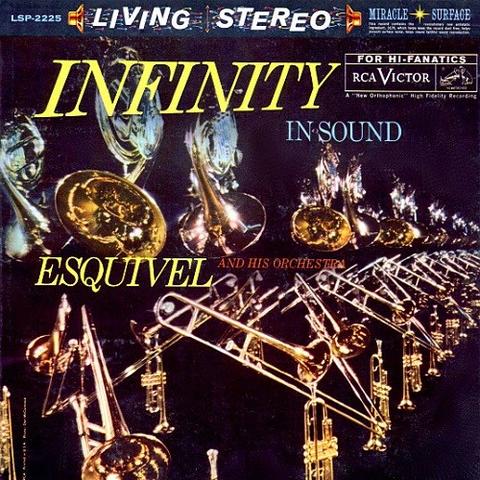
Infinity In Sound by Esquivel, released on RCA Victor in 1960.
"Esquivel actually enjoyed a long and varied career, of which his space age pop recordings were only a portion..The radio (and later television and film) work actually gave him valuable experience in the art of quickly devising varied background music and orchestral arrangements, which he'd put to good use when he began recording for RCA in the late '50s.
This was the era in which stereo albums were first starting to be marketed. Esquivel took advantage of this development to use his albums as laboratories of sorts to explore the spectrum of recorded sound, as reflected in LP titles like Other Worlds, Other Sounds and Four Corners of the World. He employed then-exotic instruments such as the theremin, the ondioline, early Fender Rhodes keyboards, Chinese bells, bass accordion, and a Boom-Bam (a 24-bongo - kit tuned to F) to get what he wanted. Richie Unterberger
https://www.youtube.com/watch?v=-Q2vjrhA2RQ&list=RD-Q2vjrhA2RQ&start_radio=1
Hello Amigos by The Ames Brothers, released on RCA Victor in 1960
Hello, Amigos Review by Tony Wilds
Regardless of its significance as an Ames Brothers album, Hello Amigos is at least somewhat important for its backing by Juan Garcia Esquivel. Perhaps RCA felt there was no better guarantee of authenticity-with-novelty than including the orchestral arrangements of Esquivel. (An album titled Hello Amigos certainly needs authenticity.) Esquivel appropriately takes as much of a back seat as he is capable; consequently, this is unlike his more adventurous work. About half the tracks provide some delight for the Esquivel completist, and the Ames' singing certainly has its moments. Overall, however, marginal Esquivel fans will be able to live without it, and the pairing of the Ames Brothers and Esquivel should not be taken as a natural or inspired combination.
https://www.youtube.com/watch?v=jm8OUiHod7E&list=RDjm8OUiHod7E&start_radio=1

Strings Aflame by Esquivel and His Orchestra. released on RCA Victor in 1959.
Exotic Tiki Island wrote:
"The album’s title reflects the fiery and passionate nature of the music, which is both lively and sophisticated.
The tracks on “Strings Aflame” showcase Esquivel’s ability to blend traditional orchestral instruments with Latin and jazz elements, creating a unique and captivating listening experience. Songs like “Sun Valley Ski Run” and “I Love Paris” highlight his versatility and creativity, while “Fantasy” and “Turkish March” demonstrate his skill in crafting intricate and engaging arrangements. The album is a testament to Esquivel’s innovative spirit and his love for pushing musical boundaries..."
https://www.youtube.com/watch?v=AnXwy5qWbgU&list=PLD_uPRJ0X10mOFVxatKKGd-NjlYHkTI5J&index=1
#Esquivel #strings #easylistening #spaceagepop #exotica #mexicanmusic
#1959inmusic

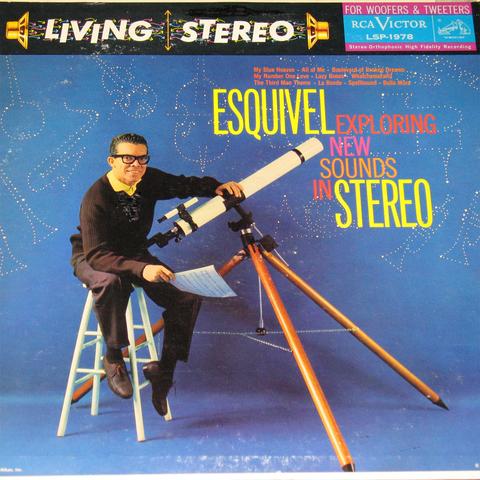
Exploring New Sounds in Hi-Fi by Esquivel, released on RCA Victor in 1959.
Exploring New Sounds in Stereo Review by Tony Wilds
Exploring New Sounds in Stereo is the first of the typical Esquivel albums from which the CD compilations draw heavily. There is a lot to recommend it. "Whatchamacallit" is probably his second best-loved tune (released also as a single backed with the non-LP track, "I Feel Merely Marvelous"). The track features the ondioline, an electronic-organ-like instrument often associated with the theremin. And on Exploring New Sounds in Stereo, there is indeed theremin in Esquivel's spacy treatment of "Spellbound" (from the movie of the same name). Other highlights include the exotic "Bella Mora," the cheesy "My Number One Love," and "The 3rd Man Theme." The album also has slightly different arrangements than the monaural Exploring New Sounds in Hi-Fi.
https://www.youtube.com/watch?v=VGyzvO32WSE&list=PLnPgQNg7oPHAxKj2z_4WPFbOUunrbj6_L&index=1
 mmr
mmr
 Andi Chorley
 Chuck Darwin