 Jack
Jack
 Mark Prince
How to Make an Americano
How to Make an Americano
A proper Americano requres an espresso machine capable of producing a 9bar shot, and hot water, either from the machine, or an optional kettle. It also needs a good espresso-capable grinder. Though we’re using the $829 Breville Barista Pro for this demonstration, entry level espresso machine, paired with a good grinder will get the job done.
Time Needed: 2 minutes
Total Cost: $ 305
Necessary Supplies
Fresh Roasted Coffee Filtered WaterNecessary Tools
Pump or Lever Espresso Machine ($150-$10.,000) Quality Burr Grinder ($125 minimum) Espresso Tamper ($20 minimum) Cappuccino Sized Cups ($10) Optional Kettle ($25 minimum)Step by Step Americano
Preheat the Cup
Always start with the right cup, preheated. Americanos are small drinks (no more than 150-165ml, or 5oz), so preserving heat is important. You can preheat by running hot water into the cup, and then dumping it.
Add the Beverage's Hot Water
Add 90-100ml of water that’s around 93C (200F). The golden ratio for a great americano is two parts hot water to one part espresso, so if you’re brewing a 45-50ml double shot, you want double that in hot water. We always add the hot water first to the cup, then brew the shot.
Grind the Coffee
Prepare for your shot pull by grinding between 17 and 18.5 grams of coffee into your portafilter. The machine we’re using has a built in grinder with a grind timer, but it’s also a good idea to weigh the coffee after grinding to confirm you hit your target grind weight.
Prepare the Portafilter
Once the coffee is ground, carefully level it and even its distribution around your filter basket, then tamp the coffee down with your tamper; use as much care as you would when making your best-effort shot of espresso.
Lock Portafilter in Place
Once your coffee’s all prepared, lock your portafilter in place in the machine.
Place the Cup, Start the Double Shot
Once the portafilter is in place, start your shot, depending on what type of machine you have (press a button, pull a lever, push a lever, etc). If your machine has preinfusion (like this Barista Pro has), make good use of it.
Brew the Double Shot
This drink is best when your espresso shot is your best pull: you’re aiming for 45-55ml of liquid from the double shot, but keep an eye on it; if the shot starts to run blond, end it quickly.
End the Espresso Double Shot
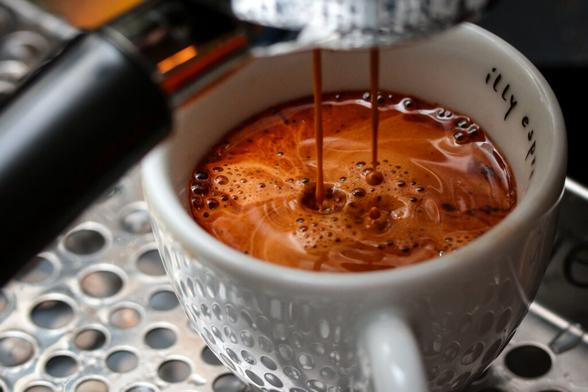
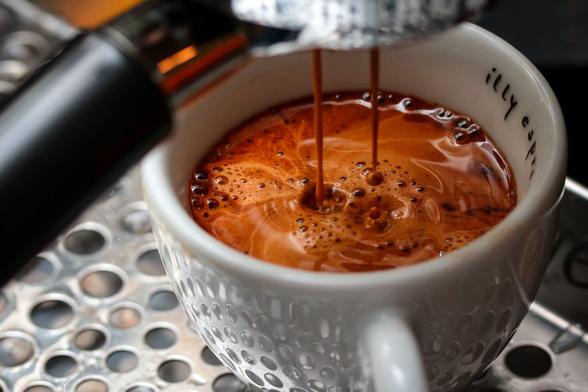
End the shot once you have roughly 45-50ml of espresso, or you notice the shot is starting to run blond, though ideally, the shot is still looking great (like in this photo) once you stop the brewing.
Do Not Stir, Serve Right Away
I believe there’s a sensory boost if you serve this drink unstirred; leave the layer of crema on top for the drinker to experience, as if it were an espresso shot. The act of drinking it will eventually mix the crema in with the rest of the beverage.
Optionally, you may want to add cream to the beverage, but again, do not stir if you do. The goal is to maintain the crema on top of the americano for the first few tastes.
And that’s how we make an americano at CoffeeGeek. Below, we’ll dive a bit into the history of the beverage, as well as give reasons for why we build the drink this way, with this kind of ratio (and with no stirring!).
a coffeegeek advertiser and supporter.want to reach a global specialty coffee audience? advertise with us.
Origin of theAmericano
So, where exactly did the americano come from and originate? The story, like many good historical tales, has a few twists and turns, but the most widely accepted origin story takes us to Italy during the Second World War.
Picture this: American soldiers arrive in Italy, ready for action. They’re used to their regular brewed coffee back home, a comforting and familiar taste. But Italian coffee culture is different. Espresso is the main coffee drink of choice, that potent and intense brew served in small cups even in the 1940s. The American soldiers find espresso too intense, too bitter for their palates. They crave something closer to what they know and love.
At the time, Italian coffee culture revolved around espresso and a few variations. They enjoyed the cappuccino, a frothy morning treat; the macchiato, an espresso “marked” with a dollop of milk foam; and the caffè latte, the Italian take on the French café au lait. But none of these quite hit the spot for the American soldiers who just wanted a big cup of black coffee.
Enterprising Italian baristas, always quick to adapt to customer desires, notice this preference. They have espresso, of course, and they have hot water. Why not serve the two side by side, or better yet, combine the two?
Italian baristas began serving shots of espresso in larger cups, accompanied by a side of hot water. This allowed the American GIs to dilute the strong espresso to their liking, creating a longer, less intense drink that reminded them of home. It was a clever solution, a kind of transatlantic coffee compromise.
Among some coffee historians, there was debate that the americano predates the World War II connection, because there are earlier references to “americano” in some Italian cafe literature and menus from the 1930s.
It’s my belief that these earlier references are to the Americano cocktail, a drink with it’s own rich history. The americano cocktail dates back to the Campari Bar in Milan, from the 1860s – it is equal measures of Campari and red vermouth, topped with soda water and served on ice; it was renamed the “Americano” around 1900 because of its popularity with American tourists. It’s more than likely any reference to “Americano” in an Italian cafe menu prior to WWII was a reference to this cocktail, and not an espresso-based beverage.
The Evolution of the Americano
Over time, the way the Americano is prepared evolved. Initially, serving hot water on the side gave drinkers full control over dilution. However, by the 1960s, the standard practice shifted. Baristas began adding the hot water directly to the cup after brewing a double shot of espresso. This pre-mixing method became the norm. Adding hot water directly to the espresso shot in an Americano disperses and mixes the crema into the drink, which further made the drink look more like brewed coffee, because a lot of the crema would be dissipated.
Interestingly, across the globe in Australia and New Zealand, a similar drink emerged independently. They call it a “long black,” and it offers a subtle but significant variation on the Americano theme. In a long black, the hot water goes into the cup first, and then the espresso is brewed directly on top. This seemingly simple change makes a difference. By pouring the espresso over the water, the crema remains largely intact, floating beautifully on top of the drink. Many coffee aficionados appreciate the long black for preserving more of the espresso’s nuanced flavours and textures. This is also our own preferred way of building the Americano, which is detailed more in the next section.
In recent years, the Americano has become incredibly versatile. Coffee chains, like Starbucks, have embraced it, offering it in various sizes, from a modest “small” to a massive “venti”. This has led to a wide range of espresso-to-water ratios. You can find Americanos that are a balanced 1:1 mix, or much more diluted versions, sometimes reaching ratios of 1:6 or even higher in larger sizes when only a double shot of espresso is used in a large cup. This flexibility means that the Americano can cater to a wide spectrum of coffee drinkers, from those who appreciate a bolder, espresso-forward taste to those who prefer a milder, more approachable longer coffee.
It’s also important to reiterate that the Americano, ounce for ounce, has less caffeine than the same sized brewed coffee served from a pour over or auto drip coffee. And it’s our argument that it contains more flavour nuance and essence from the coffee bean, when compared to pour over coffees.
From the probable WWII origins, to its modern-day ubiquity, the Americano has had a long and interesting journey. It stands as a testament to the adaptability of coffee culture and how a simple request for a less intense coffee drink could evolve into a global favourite. Whether you prefer it prepared like an Italian Americano or an Australian long black, this humble mix of espresso and hot water continues to be a fantastic choice for coffee drinkers everywhere.
Americano Just Starting... By brewing directly into hot water, you get to preserve the crema that develops during the shot pull.The CoffeeGeekPreferred Americano
At CoffeeGeek, we take americanos seriously—and we’ve brewed over 35,000 of them to prove it. Over the years, we’ve experimented with every variable: dilution levels, water temperatures, shot lengths, and even whether preheating the cup makes a difference (spoiler: it does).
Here’s our take on the perfect americano: 45 to 50ml of espresso brewed directly onto 90 to 100ml of 200°F (93°C) water in a preheated cup. Want a larger drink? Just double everything.
We use a variation of the Australian “long black” method but with less water. While Aussies often use a 2.5:1 or 3:1 water-to-espresso ratio, we prefer a smaller ratio that preserves the crema, the golden layer on top of the espresso. That choice is intentional, and I’ll explain why.
When you pour water directly onto your espresso shot, you dissolve the oils, fats, and lipids in the crema into the coffee below. Some people argue this boosts the body, aroma, and flavour of the drink, and they have a point. But I believe there’s a better way.
Keeping the crema intact creates a more balanced sensory experience. Beneath that crema, the coffee liquor has a smoother, more nuanced profile. Meanwhile, the slight effervescence of the crema, filled with CO₂ and microbubbles, enhances both the aroma and the initial taste of the drink.
Yes, crema on its own is bitter—taste it on its own, and you’ll see. But it also carries a unique aroma and acts as a prelude to the flavours waiting beneath. When you sip, you get a quick bitter note from the crema, followed by a rush of more balanced, smoother coffee flavours. After a few sips, the crema naturally blends into the drink, giving you the best of both worlds.
If you like to add cream to your americano (which is also delicious, by the way), resist the urge to stir. Keeping the crema intact preserves that layered experience we’ve perfected over thousands of cups.
This method delivers an americano that’s soft, balanced, and full of aroma—a brew worthy of your coffee ritual.
Americano Developing Here, the shot is developing, and the drink is mixing just fine on its own with the water that was already in the cup. And look at that crema! Connect with us on Social Media MastodonFacebook-fInstagramYoutube Search coffeegeek advertisers make this website possible.advertise with us and reach a global audience. advertisers make this website possible. coffeegeek advertisers make this website possible.
advertise with us and reach a global audience. advertisers make this website possible. coffeegeek advertisers make this website possible.
advertise with us and reach a global audience. advertisers make this website possible. coffeegeek advertisers make this website possible.
advertise with us and reach a global audience. advertisers make this website possible.
If you enjoy and learn from this resource, please consider making a one time or recurring donation to help support our work and fund purchases for future reviews.
Donate donate via Paypal